
Top 5 Best Podcasts for Learning Chinese in 2025

Learning Chinese has never been more accessible, thanks to the growing popularity of podcasts tailored for language learners. Whether you're a beginner or advancing toward fluency, podcasts offer a flexible and engaging way to improve your listening, vocabulary, and cultural understanding. In 2025, the best podcasts combine expert instruction, real-life conversations, and interactive exercises to keep learners motivated. From structured lessons to immersive storytelling, these top five podcasts stand out for their quality content, clear explanations, and practical insights. Discover the perfect podcast to match your learning style and take your Chinese skills to the next level this year.
Top 5 Best Podcasts for Learning Chinese in 2025
1. ChinesePod: Comprehensive Lessons for All Levels
ChinesePod is one of the most popular podcasts for learning Mandarin, offering structured lessons for beginners, intermediate, and advanced learners. Each episode includes real-life dialogues, vocabulary breakdowns, and cultural insights. The hosts explain grammar points clearly, making it ideal for self-study. With a vast library of episodes, you can choose topics that match your interests and proficiency level.
| Feature | Details |
|---|---|
| Levels | Beginner to Advanced |
| Format | Dialogues, Vocabulary, Grammar |
| Frequency | New episodes weekly |
2. Slow Chinese: Authentic Listening Practice
Slow Chinese focuses on improving listening skills by narrating stories and articles at a slower pace. The podcast covers diverse topics, from history to modern life, helping learners grasp pronunciation and intonation. It’s perfect for intermediate learners who want to transition to natural-speed Mandarin while expanding their vocabulary.
See AlsoHow to learn Chinese in the long term with intrinsic motivation| Feature | Details |
|---|---|
| Levels | Intermediate |
| Format | Narrated Stories, Cultural Topics |
| Frequency | Bi-weekly |
3. Learn Chinese | ChineseClass101: Structured Curriculum
ChineseClass101 provides a well-organized learning path with audio lessons, PDF notes, and interactive exercises. The podcast covers essential phrases, grammar, and cultural tips, making it great for travelers and serious learners alike. The hosts keep lessons engaging, ensuring steady progress in speaking and comprehension.
| Feature | Details |
|---|---|
| Levels | Beginner to Advanced |
| Format | Audio Lessons, PDF Notes, Quizzes |
| Frequency | Daily |
4. Mandarin Monkey: Fun and Casual Learning
Mandarin Monkey takes a relaxed approach to learning Chinese, featuring conversational episodes between native and non-native speakers. The podcast emphasizes practical language use, slang, and humor, making it enjoyable for learners who prefer a less formal style. It’s especially useful for improving listening and colloquial expressions.
| Feature | Details |
|---|---|
| Levels | Intermediate to Advanced |
| Format | Conversational, Slang, Humor |
| Frequency | Weekly |
5. The Chairman’s Bao: News-Based Learning
The Chairman’s Bao offers news articles read aloud in Mandarin, tailored for different proficiency levels. Each episode includes vocabulary explanations and slow-paced audio, helping learners stay updated on current events while improving language skills. It’s an excellent resource for advanced learners preparing for fluency.
See Also7 mistakes I made when writing Chinese characters and what I learnt from them| Feature | Details |
|---|---|
| Levels | Intermediate to Advanced |
| Format | News Articles, Vocabulary Lists |
| Frequency | Daily |
What is the most effective way to learn Chinese?
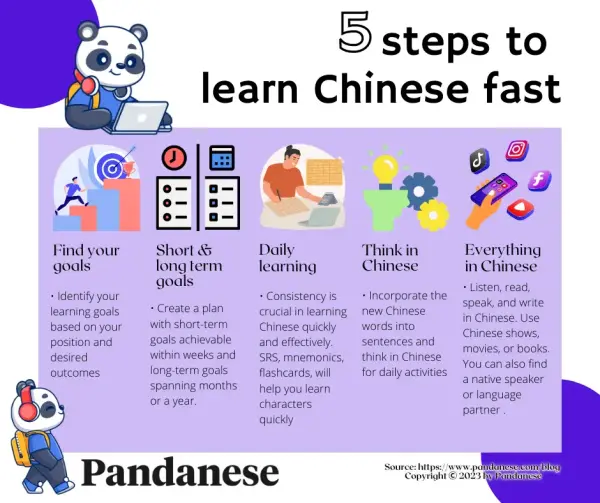
Immerse Yourself in the Language
The most effective way to learn Chinese is through immersion. Surround yourself with the language as much as possible to accelerate your understanding and fluency.
- Watch Chinese media like movies, TV shows, and news to familiarize yourself with pronunciation and context.
- Listen to Chinese music or podcasts to train your ear for tones and natural speech patterns.
- Change device languages to Chinese to force daily interaction with vocabulary.
Master Pinyin and Tones Early
Pinyin and tones are foundational for accurate pronunciation and comprehension in Chinese.
See AlsoHow Many Sections Are In Duolingo Portuguese In 2025?- Practice tone pairs to distinguish between similar-sounding words.
- Use apps like Pleco to hear correct pronunciations and reinforce learning.
- Record yourself speaking and compare it to native speakers for improvement.
Prioritize High-Frequency Vocabulary
Focusing on high-frequency words ensures you learn practical language skills quickly.
- Start with HSK word lists to build a strong foundational vocabulary.
- Learn common phrases for daily conversations rather than obscure terms.
- Use flashcards (Anki, Quizlet) to reinforce retention through spaced repetition.
Practice Speaking Daily
Speaking practice is crucial for fluency and overcoming the fear of making mistakes.
- Find language partners on apps like Tandem or HelloTalk.
- Shadow native speakers by repeating sentences immediately after hearing them.
- Join language exchange meetups to practice in real-life scenarios.
Consistent Writing Practice
Writing reinforces character recognition and improves memory retention.
See AlsoChinese characters that share the same components but are still different- Learn radicals first to understand character composition.
- Write characters daily using grid paper for proper stroke order.
- Use apps like Skritter to practice writing digitally with instant feedback.
How much Chinese can I learn in 1 year?

How Much Vocabulary Can You Learn in 1 Year?
In one year, a dedicated learner can acquire around 1,000 to 2,000 Chinese words, depending on study habits and exposure. This vocabulary range allows for basic conversations and comprehension of simple texts. Key factors influencing progress include:
- Daily practice: Consistent study sessions of 30-60 minutes yield better results.
- Flashcards: Tools like Anki or Pleco help reinforce memorization.
- Immersion: Watching Chinese media or speaking with natives accelerates retention.
Can You Achieve Conversational Fluency in 1 Year?
Reaching conversational fluency in Mandarin within a year is challenging but possible with intense effort. Focus areas should include:
See AlsoMy best advice on how to learn Chinese characters- Speaking practice: Regular language exchanges or tutoring sessions.
- Listening skills: Podcasts, TV shows, or music to adapt to tones and speed.
- Grammar basics: Mastering sentence structures like SVOC (Subject-Verb-Object-Complement).
How Well Can You Read Chinese in 1 Year?
After a year, learners can typically read 300-500 characters, enough for basic signs or short paragraphs. To improve reading:
- Character drills: Writing characters repeatedly aids recognition.
- Graded readers: Start with children’s books or HSK-level materials.
- Context learning: Pair characters with vocabulary to understand usage.
Is It Possible to Pass HSK 3 or HSK 4 in 1 Year?
Passing HSK 3 (600 words) is achievable, while HSK 4 (1,200 words) requires rigorous study. Strategies include:
- Structured courses: Follow HSK syllabi for targeted learning.
- Mock tests: Simulate exam conditions to identify weaknesses.
- Time management: Allocate more hours to weaker skills (e.g., writing or listening).
What Factors Influence Your Chinese Learning Progress?
Progress varies based on several key factors:
- Prior language experience: Knowledge of tonal languages (e.g., Vietnamese) may help.
- Study environment: Living in a Chinese-speaking region speeds up learning.
- Learning methods: Combining apps, classes, and immersion yields faster results.
What is the best program for learning Chinese?

Best Language Learning Apps for Chinese
When it comes to learning Mandarin Chinese, several apps stand out for their effectiveness and user-friendly interfaces. Here are the top choices:
- Duolingo: Great for beginners, offering gamified lessons and bite-sized exercises.
- HelloChinese: Focuses on speaking and listening, with interactive exercises.
- Pleco: A must-have dictionary app with flashcards and OCR for translating text.
Online Courses for Mastering Chinese
Structured online courses provide a systematic approach to learning Chinese. The best options include:
- Yoyo Chinese: Video-based lessons with clear explanations and real-life scenarios.
- ChineseClass101: Offers audio and video lessons for all proficiency levels.
- Coursera (Peking University): University-level courses for serious learners.
Best Programs for Learning Chinese Characters
Mastering Chinese characters requires specialized tools. These programs excel in character learning:
- Skritter: Uses spaced repetition to teach writing and recognition of characters.
- Anki: Customizable flashcards with stroke order diagrams and pronunciation guides.
- Hanzi Hero: Gamifies character learning with mnemonics and quizzes.
Immersion-Based Chinese Learning Programs
For those who prefer immersion, these programs simulate real-life language use:
- FluentU: Uses authentic Chinese videos with interactive subtitles.
- italki: Connects learners with native tutors for personalized lessons.
- Rosetta Stone: Emphasizes immersion without translations for natural acquisition.
Free Resources for Learning Chinese
Budget-conscious learners can still access high-quality free resources:
- Memrise: Free community-made courses for vocabulary and phrases.
- BBC Languages (Chinese): Offers basic lessons and cultural insights.
- Chinese Grammar Wiki: A comprehensive free resource for grammar rules.
Can you be fluent in Chinese in 3 years?

Is It Possible to Achieve Fluency in Chinese in 3 Years?
Achieving fluency in Chinese within three years is challenging but possible with dedication, structured learning, and immersion. Chinese is a complex language due to its tonal nature, characters, and grammar. However, learners who commit to daily practice and immersive experiences can reach a high level of proficiency.
- Consistent daily study (2-3 hours) focusing on listening, speaking, reading, and writing.
- Immersion through living in a Chinese-speaking environment or engaging with native speakers.
- Utilizing resources like textbooks, apps, and language exchange partners.
What Factors Influence Learning Chinese in 3 Years?
Several factors determine whether someone can become fluent in Chinese within three years. These include the learner's prior language experience, learning methods, and exposure to the language.
- Background in tonal languages (e.g., Vietnamese or Thai) may accelerate learning.
- Quality of instruction—formal classes or tutors can provide structure.
- Cultural engagement, such as consuming Chinese media, enhances retention.
How Many Hours of Study Are Needed for Fluency?
The time investment required to achieve fluency varies, but estimates suggest around 2,200–3,000 hours for Mandarin Chinese. Over three years, this translates to roughly 2-3 hours of daily study.
- Beginner stage (0-6 months): Focus on pinyin, basic vocabulary, and tones.
- Intermediate stage (6-18 months): Expand vocabulary, grammar, and character recognition.
- Advanced stage (18-36 months): Refine fluency through conversation and complex texts.
What Are the Best Learning Strategies for Chinese?
Effective strategies combine active practice, repetition, and real-world application. Passive learning alone is insufficient for fluency.
- Spaced repetition systems (SRS) like Anki for memorizing characters.
- Shadowing technique—repeating spoken Chinese to improve pronunciation.
- Writing practice—daily journaling or composing sentences.
Can Immersion Speed Up Fluency in Chinese?
Immersion significantly accelerates fluency by forcing the brain to adapt to the language naturally. Living in China or Taiwan, or creating an immersive environment at home, can yield faster results.
- Daily conversations with native speakers improve speaking and listening.
- Media consumption (TV shows, podcasts, news) enhances comprehension.
- Cultural participation (events, travel) deepens contextual understanding.
Frequently Asked Questions (FAQ)
What are the top 5 best podcasts for learning Chinese in 2025?
In 2025, the top 5 podcasts for learning Chinese include ChinesePod for its structured lessons, Slow Chinese for improving listening skills, Learn Chinese | ChineseClass101 for comprehensive content, Mandarin Corner for real-life conversations, and The Chairman's Bao for news-based learning. Each podcast offers unique features, from beginner to advanced levels, ensuring learners find the right fit for their goals.
How do these podcasts help improve Chinese language skills?
These podcasts enhance Chinese skills through immersive listening, vocabulary building, and cultural insights. For example, ChinesePod breaks down grammar and pronunciation, while Slow Chinese uses clear, paced speech for comprehension. Mandarin Corner focuses on conversational practice, and The Chairman's Bao reinforces reading and listening with current events. Regular exposure to native speakers accelerates fluency and confidence.
Are these podcasts suitable for beginners?
Yes, most of these podcasts cater to beginners. ChineseClass101 and ChinesePod offer introductory lessons with basic phrases and grammar. Slow Chinese is ideal for beginners due to its slower speech pace. However, learners should check each podcast’s difficulty level, as some, like The Chairman's Bao, are better suited for intermediate or advanced students.
Can I use these podcasts for free, or do they require a subscription?
Most podcasts provide free episodes, but premium subscriptions unlock full content. For instance, ChineseClass101 and ChinesePod offer limited free material, while their paid versions include transcripts and quizzes. Slow Chinese and Mandarin Corner have more free resources, but advanced features may require payment. Always check the podcast’s website for the latest pricing and free trial options.
Leave a Reply
Related Posts