
7 ways to write Mandarin tones

Mastering Mandarin tones is essential for accurate pronunciation and effective communication in Chinese. With four distinct tones and a neutral tone, each can change the meaning of a word entirely. For learners, writing and remembering these tones can be challenging, but several techniques can simplify the process. This article explores seven practical methods to write Mandarin tones clearly and consistently. From using tone marks and numbers to color-coding and mnemonic devices, these strategies cater to different learning styles. Whether you're a beginner or refining your skills, these approaches will help you visualize and internalize tones, improving both your spoken and written Mandarin.
7 Effective Ways to Write Mandarin Tones Correctly
1. Understanding the Four Main Mandarin Tones
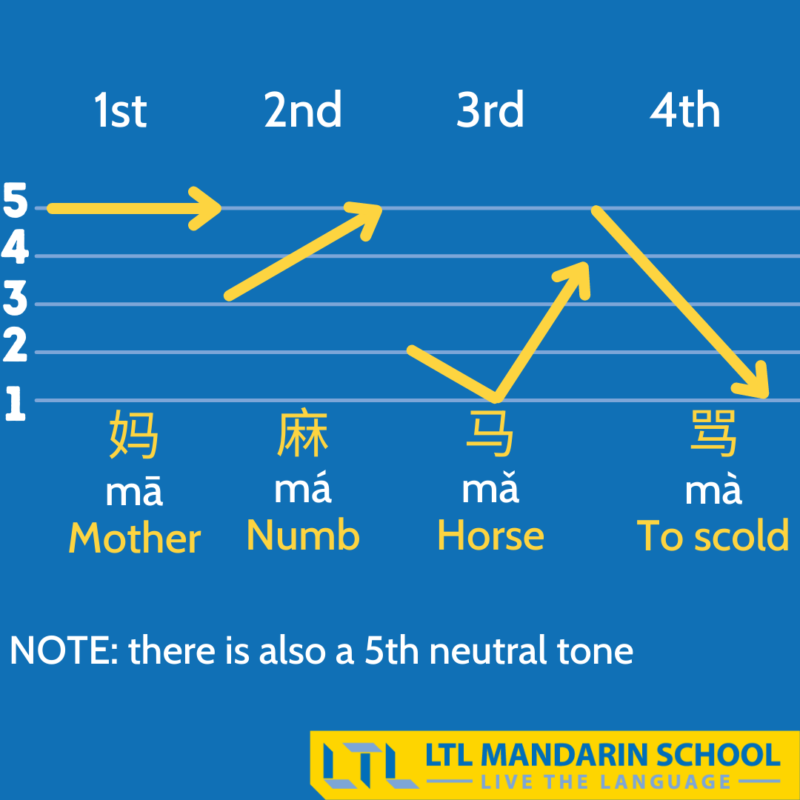
Mandarin Chinese has four primary tones and a neutral tone, each changing the meaning of a word. The first tone (high-level) is flat, the second tone (rising) goes up, the third tone (falling-rising) dips, and the fourth tone (falling) drops sharply. Mastering these is essential for accurate pronunciation and writing.
| Tone | Description | Example (Pinyin) |
|---|---|---|
| 1st Tone | High and level | mā (妈 - mother) |
| 2nd Tone | Rising | má (麻 - hemp) |
| 3rd Tone | Falling then rising | mǎ (马 - horse) |
| 4th Tone | Sharp falling | mà (骂 - scold) |
2. Using Pinyin Tone Marks
Pinyin, the Romanization system for Mandarin, uses diacritical marks to indicate tones. The first tone has a macron (¯), the second an acute accent (´), the third a caron (ˇ), and the fourth a grave accent (`). For example: hē (喝 - drink) vs. hè (和 - and).
See AlsoHow learning some basic theory can improve your Mandarin pronunciation| Tone | Mark | Example |
|---|---|---|
| 1st Tone | ¯ (macron) | shū (书 - book) |
| 2nd Tone | ´ (acute) | shú (熟 - ripe) |
| 3rd Tone | ˇ (caron) | shǔ (鼠 - mouse) |
| 4th Tone | ` (grave) | shù (树 - tree) |
3. Memorizing Tone Pairs
Tone pairs help learners practice two-syllable combinations, as Mandarin words often consist of multiple characters. Common patterns include 2nd + 3rd tone (e.g., méi guǒ - 没果) or 4th + neutral tone (e.g., shì qing - 事情). Practicing these improves fluency.
| Tone Pair | Example (Pinyin) | Meaning |
|---|---|---|
| 1st + 2nd | kāi xué (开学) | start school |
| 3rd + 4th | hǎo kàn (好看) | good-looking |
4. Writing Tones in Zhuyin (Bopomofo)
Zhuyin, a phonetic system used in Taiwan, represents tones with symbols at the end of syllables. The first tone is unmarked, the second uses a rising mark (ˊ), the third a dipping mark (ˇ), and the fourth a falling mark (ˋ).
| Tone | Zhuyin Symbol | Example |
|---|---|---|
| 1st Tone | None | ㄇㄚ (mā) |
| 2nd Tone | ˊ | ㄇㄚˊ (má) |
5. Avoiding Common Tone Mistakes
Beginners often confuse the 3rd tone (falling-rising) with a low-flat tone or misplace tone marks in Pinyin. For example, writing ma instead of mǎ changes horse (马) to a question particle (吗).
See AlsoAsking the experts: How to learn Chinese grammar| Mistake | Correction | Impact |
|---|---|---|
| Missing tone mark | ma → mǎ | Changes meaning |
| Wrong tone pair | hěn hǎo → hén hǎo | Incorrect pronunciation |
How are Chinese tones written?
How Are Chinese Tones Represented in Pinyin?
In Pinyin, the romanization system for Mandarin Chinese, tones are written using diacritical marks above the vowels. There are four main tones and a neutral tone, each represented by a specific symbol:
- First tone (flat): A macron (ˉ) as in mā (mother).
- Second tone (rising): An acute accent (ˊ) as in má (hemp).
- Third tone (falling-rising): A caron (ˇ) as in mǎ (horse).
- Fourth tone (falling): A grave accent (ˋ) as in mà (scold).
- Neutral tone: No mark, as in ma (question particle).
What Are the Rules for Tone Placement in Pinyin?
Tone marks in Pinyin follow specific placement rules based on vowel order and syllable structure:
See Also10 of the Best Chinese Graded Readers and Where to Find Them- If a syllable has multiple vowels, the tone mark goes over the vowel that appears first in this order: a, o, e, i, u, ü.
- For compound finals like iu or ui, the tone is placed on the second vowel (e.g., liú, duì).
- In syllables with ü, the tone mark replaces the umlaut (e.g., lǜ).
How Are Tones Written in Chinese Characters?
Chinese characters themselves do not visually indicate tones. However, their pronunciation (including tone) is determined by:
- Historical phonetic components within characters, though these are not always reliable.
- Dictionaries or learning materials that pair characters with Pinyin and tone marks.
- Contextual usage, as the same character may have different tones in different words.
Are There Alternative Systems for Writing Chinese Tones?
Besides Pinyin, other systems represent tones differently:
- Zhuyin (Bopomofo): Uses small symbols beside characters (e.g., ㄇㄚˇ for mǎ).
- Numbered notation: Tones are written as superscript numbers (e.g., ma3 for the third tone).
- IPA (International Phonetic Alphabet): Uses pitch contour numbers (e.g., [ma˨˩˦] for the third tone).
How Do Tones Affect Meaning in Written Chinese?
While tones are not visible in characters, they critically distinguish meanings:
- The same Pinyin syllable with different tones represents different characters (e.g., shī (诗, poem) vs. shí (十, ten)).
- Miswriting or omitting tones in Pinyin can lead to ambiguity (e.g., mai could mean buy 买 or sell 卖).
- Tone changes (like tone sandhi) are not reflected in writing but must be known for pronunciation.
Are there 5 official tones in Mandarin Chinese?

How Many Official Tones Are There in Mandarin Chinese?
Mandarin Chinese is known for its tonal system, which plays a crucial role in distinguishing word meanings. Officially, there are 4 primary tones and a neutral tone, making it a total of 5 distinct pitch patterns. Here’s a breakdown:
- First Tone (High-Level Tone): A steady, high-pitched sound (e.g., mā 妈 - mother).
- Second Tone (Rising Tone): A rising pitch, similar to asking a question (e.g., má 麻 - hemp).
- Third Tone (Falling-Rising Tone): A dip in pitch, then a rise (e.g., mǎ 马 - horse).
- Fourth Tone (Falling Tone): A sharp, abrupt drop in pitch (e.g., mà 骂 - scold).
- Neutral Tone (Light Tone): A short, unstressed tone with no fixed pitch (e.g., ma 吗 - question particle).
Why Are Tones Important in Mandarin Chinese?
Tones are essential because they differentiate words that otherwise share the same pronunciation. Misusing tones can lead to misunderstandings. Key reasons include:
- Meaning Differentiation: The same syllable with different tones can mean entirely different things (e.g., shī (诗 - poem) vs. shí (十 - ten)).
- Grammatical Function: Some tones indicate grammatical roles, like the neutral tone in particles.
- Natural Flow: Tones contribute to the rhythmic and melodic nature of spoken Mandarin.
How Are the 5 Tones Represented in Pinyin?
In Pinyin, the Romanization system for Mandarin, tones are marked with diacritics over vowels. Here’s how:
- First Tone: ā (e.g., bā 八 - eight).
- Second Tone: á (e.g., bá 拔 - pull).
- Third Tone: ǎ (e.g., bǎ 把 - hold).
- Fourth Tone: à (e.g., bà 爸 - father).
- Neutral Tone: No diacritic (e.g., ba 吧 - modal particle).
What Are Common Challenges When Learning Mandarin Tones?
Non-native speakers often struggle with Mandarin tones due to:
- Tone Confusion: Mixing up the rising (Second) and falling-rising (Third) tones.
- Tone Sandhi: Rules that alter tones in specific contexts (e.g., two Third Tones in a row change the first to a Second Tone).
- Neutral Tone Mastery: Its unpredictable pitch and brevity make it tricky to perfect.
Are There Regional Variations in Mandarin Tones?
While Standard Mandarin (based on Beijing pronunciation) has 5 tones, regional dialects may differ:
- Taiwanese Mandarin: The Third Tone is often pronounced with a lighter fall-rise.
- Southern Dialects: Some merge the Second and Third Tones or use fewer tones.
- Neutral Tone Usage: Frequency and pitch of the neutral tone vary by region.
What is the 3 3 tone rule in Mandarin?
What is the 3-3 Tone Rule in Mandarin?
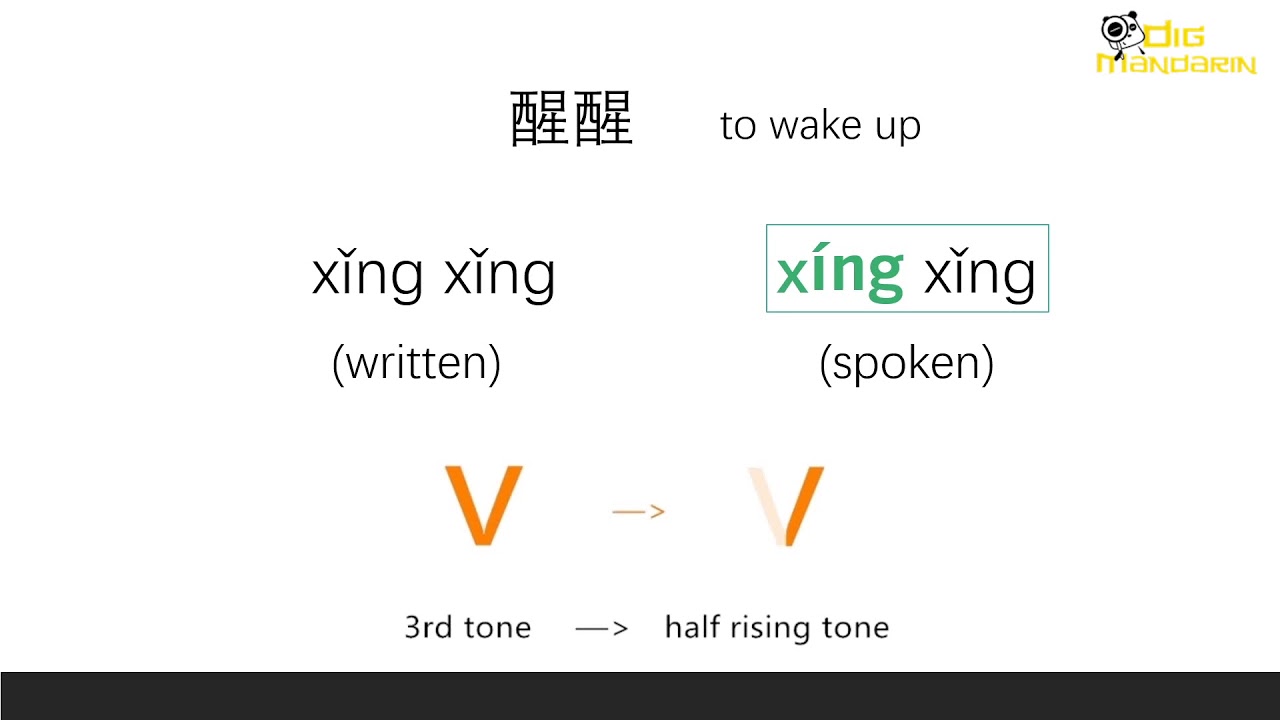
The 3-3 tone rule in Mandarin refers to a tonal sandhi rule where two third-tone syllables appear consecutively. In this case, the first third tone changes to a second tone to make pronunciation smoother. This rule is essential for natural-sounding speech.
- First syllable modification: The initial third tone rises like a second tone.
- Second syllable retention: The following syllable remains a full third tone.
- Purpose: Avoids awkward tonal clashes and improves fluency.
Why Does the 3-3 Tone Rule Exist?
The rule exists because two consecutive low-dipping third tones are difficult to pronounce clearly. Mandarin speakers naturally adjust tones for smoother communication.
- Phonetic ease: Prevents excessive vocal strain.
- Rhythm improvement: Maintains speech flow.
- Standardization: Ensures consistency across dialects.
Examples of the 3-3 Tone Rule in Mandarin
Common words and phrases demonstrate this rule, such as nǐ hǎo (hello), which is pronounced as ní hǎo.
- 你好 (nǐ hǎo): Pronounced ní hǎo.
- 很好 (hěn hǎo): Pronounced hén hǎo.
- 可以 (kě yǐ): Pronounced ké yǐ.
Exceptions to the 3-3 Tone Rule
Not all third-tone pairs follow this rule. Some exceptions occur in specific contexts.
- Slow speech: When emphasizing words, tones may remain unchanged.
- Proper nouns: Names sometimes retain original tones.
- Poetic or dramatic effect: Artistic expression may ignore the rule.
How to Practice the 3-3 Tone Rule
Mastering this rule requires listening and repetition.
- Listen to native speakers: Mimic natural pronunciation.
- Drill tone pairs: Practice common third-tone combinations.
- Use tone-checking tools: Apps can verify accuracy.
Frequently Asked Questions (FAQ)
What are the 7 ways to write Mandarin tones?
The 7 ways to write Mandarin tones refer to different methods of representing the four main tones and the neutral tone in Mandarin Chinese. These include tone marks (e.g., ā, á, ǎ, à), tone numbers (e.g., ma1, ma2, ma3, ma4), color-coding, bold or italic text, underlining, superscript notation, and pinyin with diacritics. Each method serves to visually distinguish tones, aiding learners in pronunciation and comprehension.
Why is it important to learn different ways to write Mandarin tones?
Learning multiple methods to write Mandarin tones is crucial because it enhances flexibility in reading and writing Chinese. Some resources use tone numbers, while others rely on diacritics or colors. Familiarity with all systems ensures you can adapt to different materials, from textbooks to digital apps. Additionally, certain methods, like color-coding, can improve memory retention by associating tones with visual cues.
Which method is the most common for writing Mandarin tones?
The most common method for writing Mandarin tones is the tone mark system, which uses diacritics (e.g., mā, má, mǎ, mà). This approach is widely used in educational materials and official pinyin standards. However, tone numbers (e.g., ma1, ma2) are also popular, especially in digital contexts like typing or dictionaries. The choice often depends on the context and the learner's preference.
How can color-coding help with learning Mandarin tones?
Color-coding is a highly effective visual aid for learning Mandarin tones because it associates each tone with a specific color. For example, the first tone might be red, the second green, and so on. This method leverages visual memory, making it easier to recall tones during speaking or listening. Many language apps and flashcards use this technique to reinforce tone recognition and improve pronunciation accuracy.
Leave a Reply
Related Posts