
Chinese listening strategies: Passive listening

Passive listening is a valuable yet often overlooked strategy for improving Chinese language skills. Unlike active listening, which requires focused attention and deliberate practice, passive listening involves absorbing the language naturally through background exposure. This method allows learners to familiarize themselves with the rhythm, tones, and flow of Mandarin without the pressure of immediate comprehension. By incorporating Chinese podcasts, music, or TV shows into daily routines, learners can enhance their auditory recognition and subconscious understanding over time. While not a substitute for active practice, passive listening complements other learning techniques by reinforcing pronunciation and intonation. This article explores how to effectively integrate passive listening into your Chinese language journey.
Chinese Listening Strategies: The Power of Passive Listening
What Is Passive Listening in Chinese Learning?
Passive listening refers to the practice of absorbing the Chinese language without active focus, such as playing audio in the background while doing other tasks. This method helps learners familiarize themselves with tones, pronunciation, and rhythm naturally. While it doesn’t replace active practice, it reinforces language patterns subconsciously.
| Key Aspect | Benefit |
|---|---|
| Background Exposure | Enhances intonation recognition |
| Repetition | Strengthens memory retention |
How to Implement Passive Listening Effectively
To maximize passive listening, choose clear, native-level content like podcasts, news, or audiobooks. Set a daily routine (e.g., 30–60 minutes) during commutes or chores. Avoid distractions that compete for attention, and prioritize consistent exposure over volume.
See AlsoHow to Prepare for a Chinese Test| Method | Example |
|---|---|
| Audio Loops | Repeating dialogues for pattern recognition |
| Themed Content | Focus on daily conversations or workplace Chinese |
Best Resources for Passive Chinese Listening
Opt for authentic materials like Chinese radio (e.g., CRI), YouTube channels (e.g., Learn Chinese with Emma), or apps (e.g., Pleco’s audio). Slow-paced beginner content is ideal early on, advancing to native speed later.
| Resource Type | Recommendation |
|---|---|
| Podcasts | Slow Chinese for intermediate learners |
| Music | Mandopop to grasp colloquial phrases |
Common Mistakes to Avoid in Passive Listening
A frequent error is using overly complex content too soon, leading to frustration. Others include neglecting repetition or treating passive listening as a primary study method. Balance it with active listening exercises.
| Mistake | Solution |
|---|---|
| Inconsistent Exposure | Schedule fixed listening times |
| Ignoring Context | Pair audio with transcripts occasionally |
Measuring Progress with Passive Listening
Track improvement through spontaneous comprehension, like recognizing common phrases in unrelated contexts. Use self-tests (e.g., summarizing clips) or note increased comfort with native speed.
See AlsoChinese listening strategies: Background listening| Progress Indicator | Checkpoint |
|---|---|
| Phrase Recall | Identifying 5+ new words weekly |
| Speed Adaptation | Understanding 70% of normal-speed audio |
What are passive listening strategies?
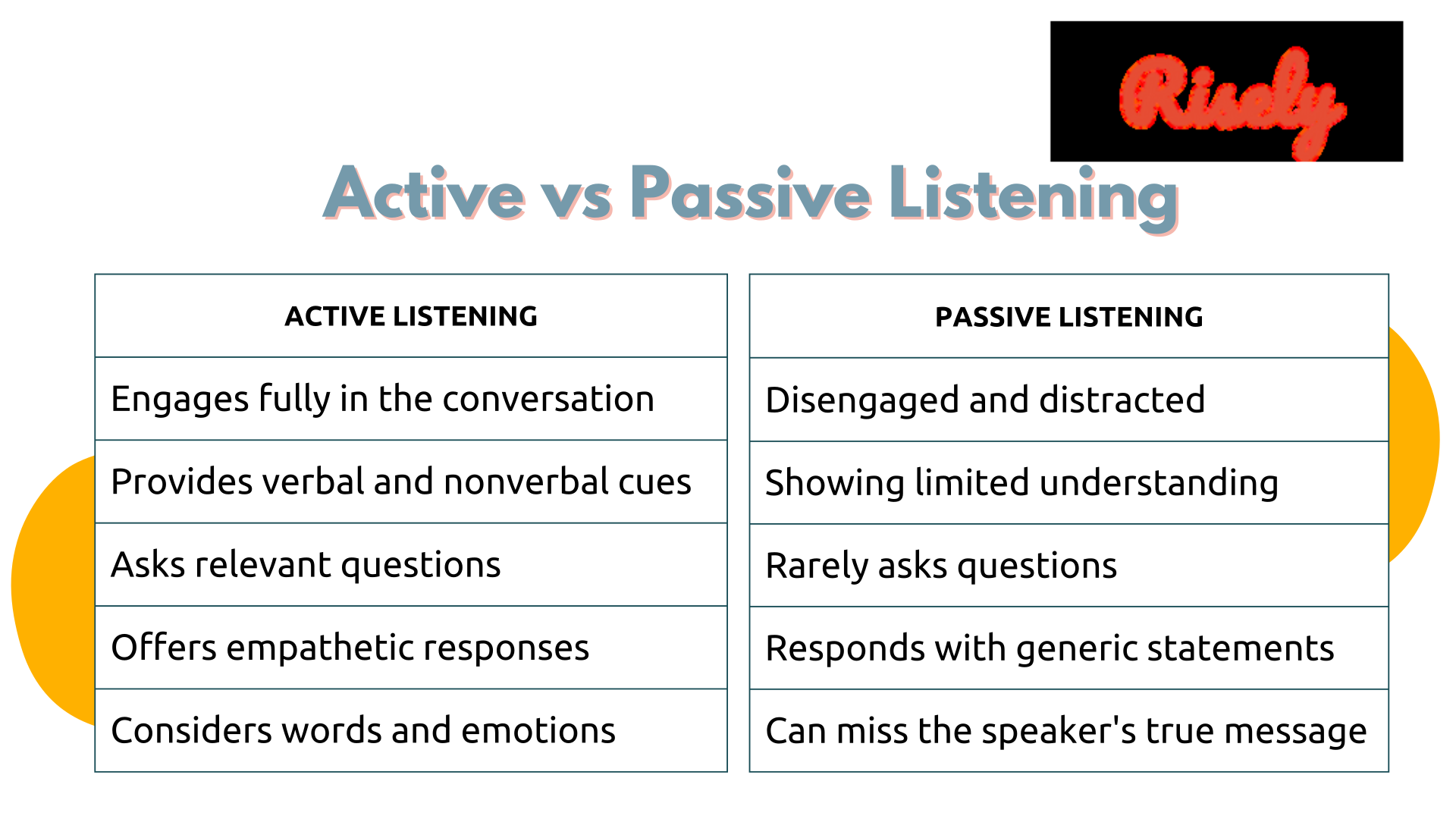
What Are Passive Listening Strategies?
Passive listening strategies involve absorbing information without actively engaging or responding to the speaker. This approach focuses on hearing rather than analyzing or interacting, making it useful for casual or background learning.
- Minimal effort: The listener does not actively participate but still processes the information.
- No immediate feedback: Unlike active listening, passive listening does not require responses or questions.
- Background absorption: Often used in environments like listening to podcasts or music while multitasking.
How Does Passive Listening Differ from Active Listening?
While active listening demands engagement and feedback, passive listening is more about receiving information without interaction.
See AlsoWho Has The Most XP On Duolingo? Top Users Ranked In 2025- Engagement level: Active listening involves questions and summaries; passive listening does not.
- Purpose: Active listening aims for comprehension; passive listening may focus on exposure.
- Retention: Active listening often leads to better retention due to deeper processing.
When Is Passive Listening Useful?
Passive listening can be beneficial in specific scenarios where active engagement is unnecessary or impractical.
- Language learning: Exposure to native speech patterns through media.
- Relaxation: Listening to music or ambient sounds without focus.
- Multitasking: Absorbing information while performing other tasks.
Limitations of Passive Listening
Despite its uses, passive listening has drawbacks, particularly in contexts requiring deep understanding.
- Lower retention: Lack of engagement reduces memory retention.
- Misinterpretation: Without clarification, misunderstandings may occur.
- Limited feedback: No opportunity to correct errors or reinforce learning.
Examples of Passive Listening in Daily Life
Passive listening occurs frequently in everyday situations, often without conscious effort.
- Radio/TV: Background noise while working or relaxing.
- Public announcements: Hearing but not actively processing information.
- Podcasts/audiobooks: Consuming content without note-taking or repetition.
How to do well for Chinese listening?

1. Build a Strong Vocabulary Foundation
To excel in Chinese listening, you must first develop a robust vocabulary. Recognizing words when spoken requires familiarity with their meanings and pronunciations.
- Learn high-frequency words commonly used in daily conversations, news, or media.
- Use flashcards or apps like Anki to reinforce memorization.
- Practice pinyin to associate sounds with characters accurately.
2. Listen to Authentic Chinese Materials
Exposing yourself to native speech is crucial for improving listening comprehension.
- Watch Chinese TV shows, movies, or YouTube channels with subtitles initially, then without.
- Listen to Chinese podcasts or radio on topics that interest you.
- Use platforms like Netflix or Bilibili for varied content.
3. Practice Active Listening Techniques
Passive listening isn’t enough—engage actively to sharpen your skills.
- Repeat sentences aloud to improve pronunciation and retention.
- Summarize what you hear in your own words.
- Use dictation exercises to test comprehension.
4. Focus on Tone Recognition
Mandarin is a tonal language, so mastering tones is essential.
- Practice distinguishing between the four tones and neutral tone.
- Use tone-pair drills to recognize how tones change in context.
- Mimic native speakers to internalize correct intonation.
5. Take Mock Listening Tests
Simulate real exam conditions to assess and improve your performance.
- Use past HSK or TOCFL listening papers for practice.
- Time yourself to build stamina and focus.
- Review mistakes and identify recurring weaknesses.
What are examples of passive listening?
Everyday Examples of Passive Listening
Passive listening occurs when someone hears sounds or speech without actively engaging or responding. Common examples include:
- Background music in a café or store, where the listener isn’t focusing on lyrics or melodies.
- TV or radio playing while doing chores, with minimal attention to the content.
- Public announcements in transit hubs, often heard but not consciously processed.
In social interactions, passive listening might appear as:
- Nodding along to a conversation without retaining details.
- Overhearing chats in crowded places without participating.
- Multitasking during meetings, missing key points.
Passive Listening in Education
Students often experience passive listening during lectures or presentations when:
- Daydreaming while the teacher speaks, absorbing little information.
- Copying notes mechanically without understanding the material.
- Distracted by devices, leading to superficial hearing.
Workplace Scenarios of Passive Listening
In professional environments, passive listening can manifest as:
- Tuning out during lengthy conference calls.
- Ignoring colleagues while focusing on emails or tasks.
- Skimming through training videos without engagement.
Passive Listening in Media Consumption
Media often encourages passive listening through:
- Podcasts or audiobooks played while driving or exercising.
- News channels left running in the background.
- Streaming services autoplaying content without active selection.
What are the 5 listening strategies?

1. Active Listening
Active listening involves fully concentrating on the speaker, understanding their message, and responding thoughtfully. This strategy requires mental engagement and avoids distractions. Key elements include:
- Maintaining eye contact to show attentiveness.
- Nodding or using verbal cues like I see to acknowledge understanding.
- Avoiding interruptions to let the speaker finish their thoughts.
2. Reflective Listening
Reflective listening focuses on mirroring the speaker's words and emotions to ensure clarity. It helps build trust and confirms comprehension. Techniques include:
- Paraphrasing the speaker's message in your own words.
- Asking clarifying questions to avoid misunderstandings.
- Validating emotions by acknowledging feelings expressed.
3. Critical Listening
Critical listening involves analyzing and evaluating the speaker's message for logic, credibility, and relevance. It is essential for decision-making. Steps include:
- Identifying biases in the speaker's arguments.
- Assessing evidence to support claims.
- Questioning assumptions to uncover hidden meanings.
4. Empathetic Listening
Empathetic listening focuses on understanding the speaker's emotions and perspective without judgment. It fosters deeper connections. Practices include:
- Showing genuine interest in the speaker's feelings.
- Avoiding advice unless requested.
- Using open body language to convey support.
5. Comprehensive Listening
Comprehensive listening aims to grasp the full meaning of the message, including details and context. It is vital for learning and retention. Methods include:
- Taking notes to capture key points.
- Summarizing the information afterward.
- Focusing on structure to follow the speaker's logic.
Frequently Asked Questions (FAQ)
What is passive listening in the context of Chinese language learning?
Passive listening refers to the practice of exposing yourself to the Chinese language without actively focusing on understanding every word or structure. Instead of intently studying or translating, you let the sounds, tones, and rhythms of the language wash over you. This method helps your brain subconsciously absorb pronunciation patterns, intonation, and common phrases, which can improve your listening comprehension over time. It’s particularly useful for beginners who need to familiarize themselves with the natural flow of Mandarin.
How can passive listening improve my Chinese comprehension skills?
By regularly engaging in passive listening, you train your ears to recognize the sounds and tones of Mandarin without the pressure of immediate understanding. Over time, this exposure helps your brain differentiate between similar-sounding words and grasp the natural cadence of spoken Chinese. Studies suggest that passive listening can enhance phonetic awareness, making it easier to pick up new vocabulary and improve overall fluency when combined with active learning methods.
What are the best resources for passive listening in Chinese?
Ideal resources for passive listening include Chinese podcasts, radio stations, audiobooks, or even background TV shows and movies. Platforms like Ximalaya (for podcasts) or YouTube channels with Mandarin content are excellent choices. The key is to select materials that match your current proficiency level—beginners might opt for slower, clearer speech, while advanced learners can challenge themselves with native-speed conversations. Consistency matters more than complexity in this approach.
How long should I practice passive listening daily to see results?
For noticeable improvements, aim for at least 30 minutes to an hour of passive listening daily. However, since this method requires minimal active effort, you can incorporate it into your routine—like during commutes or chores. The cumulative effect over weeks or months is what leads to progress. Remember, passive listening works best as a supplement to active study sessions, where you focus on vocabulary, grammar, and speaking practice.
Leave a Reply
Related Posts