
Chinese characters that share the same components but are still different

Chinese characters, known for their intricate structure, often share common components yet remain distinct in meaning and pronunciation. These similarities can be both fascinating and challenging for learners, as subtle differences in strokes or radicals can completely alter a character’s significance. For instance, the component 木 (mù, meaning tree) appears in characters like 林 (lín, forest) and 森 (sēn, dense woods), each conveying a unique idea despite their shared root. Understanding these nuances is essential for mastering written Chinese, as it reveals the logical yet complex system behind character formation. This article explores such characters, highlighting how slight variations create entirely different words.
- Chinese Characters with Shared Components but Different Meanings
- What is the hǎo symbol?
- What are Chinese characters grouped together according to their common components known as?
- What is the most complicated Chinese character copy?
- What is Wŏ in Chinese?
-
Frequently Asked Questions (FAQ)
- What are Chinese characters that share the same components but are still different?
- Why do some Chinese characters look almost identical but have different meanings?
- How can learners distinguish between visually similar Chinese characters?
- Are there any tools or resources to help identify and learn these similar Chinese characters?
1. Understanding Radicals and Phonetic Components
Chinese characters often consist of a radical (indicating meaning) and a phonetic component (hinting at pronunciation). For example, the characters 妈 (mā, mother) and 骂 (mà, scold) share the same phonetic component 马 (mǎ, horse), but their radicals (女 female vs. 讠 speech) change their meanings entirely.
| Character | Pinyin | Meaning | Shared Component |
|---|---|---|---|
| 妈 | mā | mother | 马 (mǎ) |
| 骂 | mà | scold | 马 (mǎ) |
2. Characters with Identical Structures but Different Meanings
Some characters share the exact same components but are arranged differently, altering their meanings. For instance, 呆 (dāi, foolish) and 杏 (xìng, apricot) both contain 木 (mù, tree) and 口 (kǒu, mouth), but their positioning changes their definitions.
See AlsoAn Insight into China’s ‘Invisible Homes’, Where 40 Million Live| Character | Structure | Meaning |
|---|---|---|
| 呆 | 口 + 木 | foolish |
| 杏 | 木 + 口 | apricot |
3. Common Phonetic Series with Divergent Meanings
Many characters belong to phonetic series, where the same sound component appears in multiple characters. For example, 青 (qīng, blue/green) is the phonetic in 清 (qīng, clear), 请 (qǐng, request), and 情 (qíng, emotion), but their radicals (氵 water, 讠 speech, 忄 heart) differentiate them.
| Character | Radical | Meaning |
|---|---|---|
| 清 | 氵 (water) | clear |
| 请 | 讠 (speech) | request |
4. Visually Similar Characters with Different Pronunciations
Some characters look nearly identical but have no shared etymology. For example, 己 (jǐ, self), 已 (yǐ, already), and 巳 (sì, snake hour) differ only by minor strokes but are unrelated in meaning or sound.
| Character | Stroke Difference | Meaning |
|---|---|---|
| 己 | Open top | self |
| 已 | Half-closed top | already |
5. Historical Variants and Simplified Confusions
Simplified characters sometimes merge formerly distinct characters. For example, 发 (fā/fà) represents both 發 (fā, send) and 髮 (fà, hair) in Simplified Chinese, despite having different radicals (癶 foot vs. 髟 hair) in Traditional forms.
See Also7 ideas for smooth and effortless Chinese listening practice| Simplified | Traditional | Meaning |
|---|---|---|
| 发 | 發 | send |
| 发 | 髮 | hair |
What is the hǎo symbol?

The Meaning of the Hǎo Symbol
The hǎo symbol (好) is a Chinese character that translates to good or well in English. It is composed of two parts: the left radical 女 (nǚ), meaning woman, and the right radical 子 (zǐ), meaning child. Together, they symbolize harmony and positivity.
- Represents goodness, approval, or well-being.
- Commonly used in greetings like nǐ hǎo (你好), meaning hello.
- Reflects traditional Chinese values of family and balance.
Origins and History of the Hǎo Symbol
The hǎo symbol has deep roots in Chinese culture, dating back to ancient script forms. Its structure emphasizes the importance of relationships and unity in Confucian philosophy.
See AlsoChinese listening strategies: Background listening- Emerged from oracle bone script over 3,000 years ago.
- Evolved through seal script and regular script.
- Symbolizes the ideal social order in classical texts.
Cultural Significance of Hǎo
In Chinese culture, the hǎo symbol extends beyond language, representing prosperity, health, and positive outcomes.
- Used in festivals and celebrations to convey blessings.
- Common in business to wish success (e.g., hǎo yùn 好运).
- Associated with feng shui for attracting good energy.
Usage in Modern Chinese Language
The hǎo symbol is versatile, appearing in daily conversations, idioms, and compound words.
- Forms phrases like hǎo kàn (好看, good-looking).
- Used in questions (e.g., hǎo ma? 好吗, okay?).
- Modifies verbs to indicate completion or readiness.
Hǎo in Calligraphy and Art
The hǎo symbol is a popular subject in Chinese calligraphy, admired for its balanced structure.
See AlsoThe benefits of a comprehension-based approach for teaching and learning Chinese- Often practiced by calligraphy students for its strokes.
- Featured in decorative art and scrolls.
- Symbolizes aesthetic harmony in traditional paintings.
What are Chinese characters grouped together according to their common components known as?
Chinese characters grouped together according to their common components are known as radicals or bushou (部首). These radicals help organize characters in dictionaries and provide clues about their meaning or pronunciation.
What Are Chinese Radicals?
Chinese radicals are the building blocks of characters, often indicating meaning or sound. They are essential for:
See AlsoUsing Audacity to learn Chinese (speaking and listening)- Dictionary lookup – Characters are indexed by their radicals.
- Meaning association – Many radicals hint at a character's general meaning.
- Learning efficiency – Recognizing radicals simplifies memorization.
How Many Radicals Exist in Chinese?
There are 214 traditional radicals in the Kangxi Dictionary, which serve as the standard classification system. Key points include:
- Historical roots – Many radicals date back to ancient scripts.
- Variations – Some radicals have simplified forms.
- Frequency – Not all radicals are equally common.
What Is the Role of Radicals in Character Formation?
Radicals contribute to a character's structure in multiple ways:
- Semantic component – Often relates to the character's meaning.
- Phonetic component – Sometimes suggests pronunciation.
- Organizational tool – Helps categorize characters systematically.
How Do Radicals Assist in Learning Chinese Characters?
Radicals make learning characters more manageable by:
- Breaking complexity – Dividing characters into recognizable parts.
- Providing context – Offering clues about meaning or sound.
- Enhancing recall – Serving as memory aids.
Are There Exceptions to Radical Classification?
While radicals are useful, some exceptions exist:
- Irregular characters – Some don’t follow standard radical rules.
- Multiple radicals – A character may have more than one radical.
- Evolving usage – Modern simplifications sometimes alter radical functions.
What is the most complicated Chinese character copy?
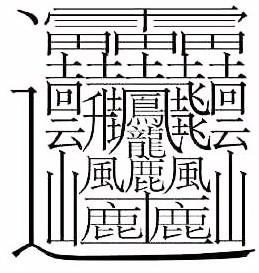
The Most Complicated Chinese Character: Biáng
The most complicated Chinese character is widely considered to be Biáng, used in the name of a type of Shaanxi noodle dish, Biáng Biáng noodles. This character is so complex that it is not included in standard dictionaries or digital fonts due to its extreme stroke count (often cited as 56 or more strokes). Its complexity arises from multiple radicals and repetitive components, making it a challenge to write or memorize.
- Stroke count: Ranges between 56 and 84 strokes depending on the variant.
- Structure: Combines radicals like 馬 (horse), 月 (moon), and 心 (heart) in a layered arrangement.
- Usage: Primarily appears in regional dialects and culinary contexts, not in formal writing.
Why Is Biáng So Difficult to Write?
The difficulty in writing Biáng stems from its unconventional structure and lack of standardization. Unlike most Chinese characters, it incorporates multiple radicals stacked vertically and horizontally, requiring precise stroke order. Additionally, its rarity means learners rarely encounter it, adding to its mystique.
- Non-standard composition: No clear phonetic or semantic clues.
- Memory challenge: The sheer number of strokes makes it hard to recall.
- Digital limitations: Unavailable in most font sets, forcing handwritten or artistic renditions.
Historical and Cultural Significance of Biáng
The character Biáng holds cultural importance in Shaanxi Province, where it symbolizes local pride and culinary tradition. Its origin is debated, with some attributing it to a folk tale about a scholar who invented the character to avoid paying for noodles. The character's complexity reflects the richness of Chinese script evolution.
- Regional identity: Represents Shaanxi’s unique dialect and cuisine.
- Oral tradition: Often taught through mnemonics or stories rather than formal education.
- Artistic value: Frequently used in calligraphy as a test of skill.
How to Learn and Write Biáng
Mastering Biáng requires patience and a systematic approach. Beginners should break it down into smaller components, practice stroke order, and use mnemonic devices to remember its structure. Calligraphy enthusiasts often tackle it as a benchmark for advanced skill.
- Deconstruct the character: Study each radical (e.g., 馬, 月) separately.
- Follow stroke-order rules: Write top-to-bottom, left-to-right.
- Use visual aids: Reference diagrams or videos demonstrating its writing.
Biáng in Modern Digital Contexts
Despite its complexity, Biáng has gained online popularity as a curiosity. However, its absence from Unicode means it cannot be typed digitally, leading to creative workarounds like images or handwritten scans. Some advocate for its inclusion to preserve cultural heritage.
- Unicode exclusion: Not yet encoded, limiting digital use.
- Social media trends: Viral posts often feature attempts to write it.
- Advocacy efforts: Campaigns push for its formal recognition in digital systems.
What is Wŏ in Chinese?
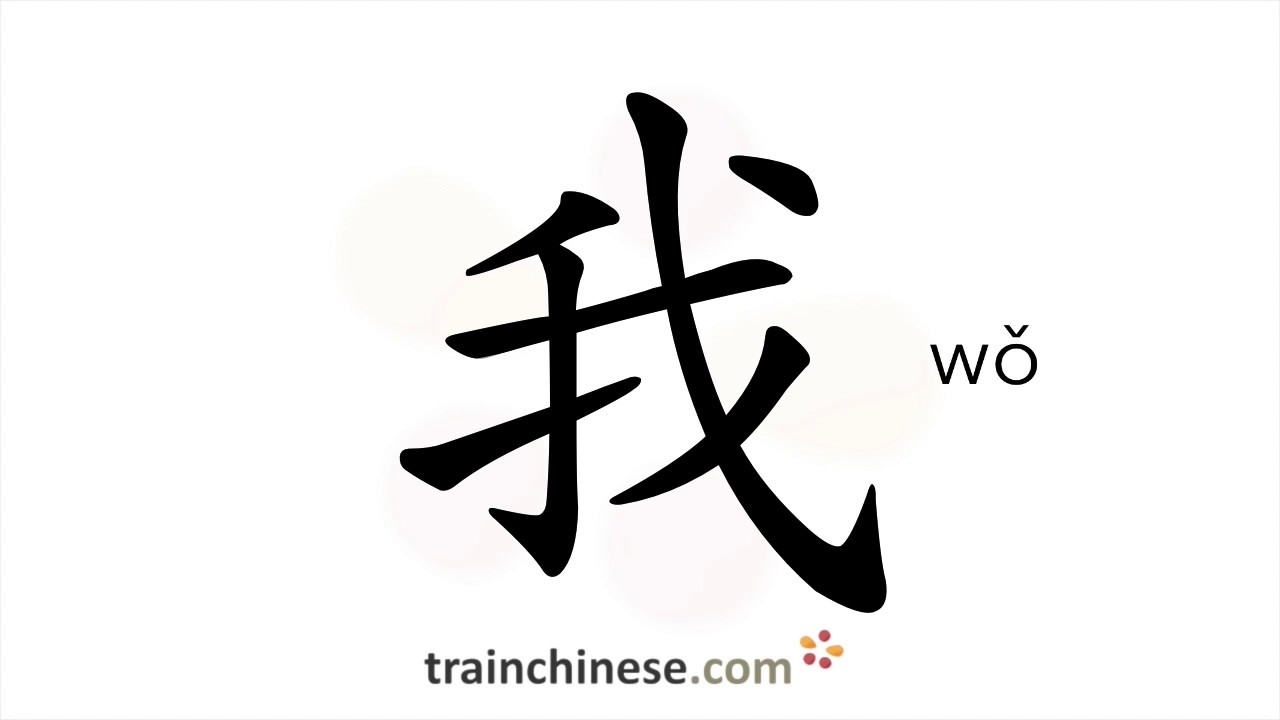
The Meaning of Wŏ in Chinese
The term Wŏ (我) in Chinese is the first-person singular pronoun, equivalent to the English word I or me. It is one of the most basic and frequently used pronouns in Mandarin Chinese. Here are some key points about its usage:
- Pronunciation: Wŏ is pronounced with a third tone, which starts mid-level, dips down, and then rises.
- Characters: The character 我 is composed of the radical 戈 (gē), meaning spear, and the component 手 (shǒu), meaning hand, though its modern meaning is unrelated to these components.
- Formality: It is neutral and can be used in both formal and informal contexts.
Grammatical Role of Wŏ in Sentences
Wŏ serves as the subject or object in sentences, similar to how I or me functions in English. Here’s how it works grammatically:
- Subject: Wŏ xuéxí Hànyǔ (我学习汉语) translates to I study Chinese.
- Object: Tā rènshi wŏ (他认识我) means He knows me.
- Possessive: When combined with 的 (de), it becomes possessive, as in Wŏ de shū (我的书), meaning my book.
Common Phrases Using Wŏ
Wŏ appears in many everyday phrases and expressions. Here are some examples:
- Wŏ jiào... (我叫...): My name is...
- Wŏ ài nǐ (我爱你): I love you.
- Wŏ bù zhīdào (我不知道): I don’t know.
Cultural Significance of Wŏ
In Chinese culture, the use of Wŏ reflects both individuality and collectivism. Here’s how:
- Individuality: It emphasizes personal identity, as in self-introductions or personal opinions.
- Collectivism: It often appears in group contexts, such as Wŏmen (我们), meaning we or us.
- Politeness: In formal settings, alternatives like zìjǐ (自己) or titles may replace Wŏ to show humility.
Differences Between Wŏ and Other Pronouns
Wŏ differs from other first-person pronouns in Chinese. Here’s a comparison:
- Wŏ vs. Wŏmen: Wŏ is singular (I), while Wŏmen (我们) is plural (we).
- Wŏ vs. Zìjǐ: Zìjǐ (自己) means oneself and is more reflexive.
- Wŏ vs. Běn rén: Běn rén (本人) is a formal or humble way to refer to oneself.
Frequently Asked Questions (FAQ)
Chinese characters that share the same components but remain distinct are known as homophonous or visually similar characters. These characters often contain identical radicals or phonetic elements but differ in meaning, pronunciation, or additional strokes. For example, the characters 休 (xiū, rest) and 体 (tǐ, body) both include the 亻 (person) radical, but their meanings and usage are entirely different. Recognizing these subtle differences is crucial for accurate reading and writing in Chinese.
Why do some Chinese characters look almost identical but have different meanings?
Some Chinese characters appear nearly identical due to shared structural components, yet they convey different meanings because of minor variations in strokes or radicals. For instance, 日 (rì, sun) and 目 (mù, eye) look similar but differ in their inner lines. These distinctions often arise from historical evolution or semantic differentiation, where slight modifications were made to represent new concepts. Misinterpreting these characters can lead to confusion, making it essential to study their nuanced differences carefully.
How can learners distinguish between visually similar Chinese characters?
Learners can distinguish between visually similar Chinese characters by focusing on their unique components and contextual usage. Analyzing stroke order, radical placement, and phonetic clues can help identify differences. For example, 未 (wèi, not yet) and 末 (mò, end) differ only in the length of their horizontal strokes. Practicing with flashcards, writing exercises, and mnemonic devices can reinforce memory and improve accuracy in recognizing these characters.
Are there any tools or resources to help identify and learn these similar Chinese characters?
Yes, several tools and resources can aid in identifying and learning similar Chinese characters. Online dictionaries like Pleco or Hanping provide detailed breakdowns of characters, including radicals and stroke counts. Apps such as Skritter and Anki offer spaced repetition to reinforce memory. Additionally, textbooks and workbooks specifically designed for character comparison, like The Key to Chinese Characters, can be invaluable. Engaging with native speakers or language tutors also provides practical exposure to correct usage and pronunciation.
Leave a Reply
Related Posts