
My best advice on how to learn Chinese characters

Learning Chinese characters can seem daunting at first, but with the right approach, it becomes an engaging and rewarding journey. Unlike alphabetic systems, Chinese relies on logograms, each representing meaning and sound. To master them effectively, focus on understanding radicals—the building blocks of characters—and practice writing regularly. Mnemonics and spaced repetition tools can boost retention, while immersing yourself in real-world contexts, like reading signs or subtitles, reinforces learning. Consistency is key; even dedicating 15 minutes daily yields progress. Whether you're a beginner or refining your skills, this guide shares practical strategies to make character learning manageable and enjoyable. Let’s dive in.
My Best Advice on How to Learn Chinese Characters Effectively
1. Start with the Most Common Characters First
Learning Chinese characters can be overwhelming, but focusing on the most common characters first will give you a strong foundation. Studies show that knowing just 1,000 characters allows you to recognize around 90% of written content in everyday contexts. Begin with simple, high-frequency characters like 人 (rén - person), 日 (rì - sun/day), and 月 (yuè - moon/month) before moving to more complex ones.
| Character | Pinyin | Meaning |
|---|---|---|
| 人 | rén | person |
| 日 | rì | sun/day |
| 月 | yuè | moon/month |
2. Break Characters into Radicals and Components
Chinese characters are often made up of smaller parts called radicals and components. Understanding these building blocks helps in memorization. For example, the character 好 (hǎo - good) consists of 女 (nǚ - woman) and 子 (zǐ - child). Learning radicals like 氵(water) or 火 (fire) can also help you guess meanings of unfamiliar characters.
See AlsoLearning Chinese is easier than you think| Character | Radical/Component | Meaning |
|---|---|---|
| 好 | 女 + 子 | good |
| 河 | 氵+ 可 | river |
3. Use Spaced Repetition Systems (SRS)
Spaced Repetition Systems (SRS) like Anki or Pleco are powerful tools for memorizing Chinese characters. These apps use algorithms to show you characters at optimal intervals, ensuring long-term retention. Create flashcards with characters, pinyin, and example sentences to reinforce learning.
| Tool | Use Case |
|---|---|
| Anki | Custom flashcards with SRS |
| Pleco | Dictionary + flashcard system |
4. Practice Writing Characters by Hand
Writing characters by hand reinforces muscle memory and helps you recognize stroke order. Start with grid paper to maintain proportions and follow the correct stroke order rules (top-to-bottom, left-to-right). For example, the character 永 (yǒng - eternal) includes all eight basic strokes, making it a great practice character.
| Character | Stroke Order |
|---|---|
| 永 | 1. Dot 2. Horizontal 3. Vertical 4. Hook 5. Rising 6. Left-falling 7. Right-falling 8. Press |
5. Learn Characters in Context
Instead of memorizing isolated characters, study them in words and sentences. For example, learning 电 (diàn - electricity) becomes more meaningful when paired with 电话 (diànhuà - phone) or 电视 (diànshì - TV). Reading short stories or news articles helps reinforce character recognition in real-world contexts.
See AlsoA guide to Pinyin traps and pitfalls: Learning Mandarin pronunciation| Character | Compound Word | Meaning |
|---|---|---|
| 电 | 电话 | phone |
| 学 | 学生 | student |
What is the most effective way to learn Mandarin?

Immerse Yourself in the Language
The most effective way to learn Mandarin is through immersion. Surrounding yourself with the language accelerates comprehension and fluency. Here’s how:
- Live in a Mandarin-speaking environment: Relocating to China or Taiwan forces daily interaction in Mandarin.
- Consume Mandarin media: Watch movies, listen to music, or follow news in Mandarin to train your ear.
- Practice with native speakers: Engage in conversations via language exchange platforms or local communities.
Master the Tones and Pronunciation Early
Mandarin tones are critical for clear communication. Mispronouncing tones can change meanings entirely. Focus on:
See AlsoDuolingo Free: Zero-Cost Language Learning Guide [2025 Features]- Listening and mimicking: Use apps like Pimsleur or YouTube tutorials to practice tones.
- Recording yourself: Compare your pronunciation with native speakers to identify gaps.
- Working with a tutor: A teacher can correct mistakes in real-time.
Build a Strong Foundation in Characters and Vocabulary
Learning Chinese characters and vocabulary systematically is essential. Break it down:
- Start with radicals: Understanding character components makes memorization easier.
- Use spaced repetition: Tools like Anki or Pleco reinforce long-term retention.
- Read simple texts: Graded readers or children’s books build confidence.
Prioritize Speaking and Listening Over Perfection
Many learners stall by focusing too much on grammar or writing. Instead:
- Speak daily: Even short conversations help solidify skills.
- Embrace mistakes: Errors are part of the learning process.
- Use shadowing techniques: Repeat dialogues from podcasts or shows to improve fluency.
Leverage Technology and Structured Courses
Modern tools can streamline your Mandarin learning journey. Consider:
- Language apps: Duolingo, HelloChinese, or Skritter for interactive practice.
- Online courses: Platforms like Coursera or Yabla offer structured lessons.
- Flashcards and quizzes: Test yourself regularly to track progress.
Which Chinese characters should I learn first?
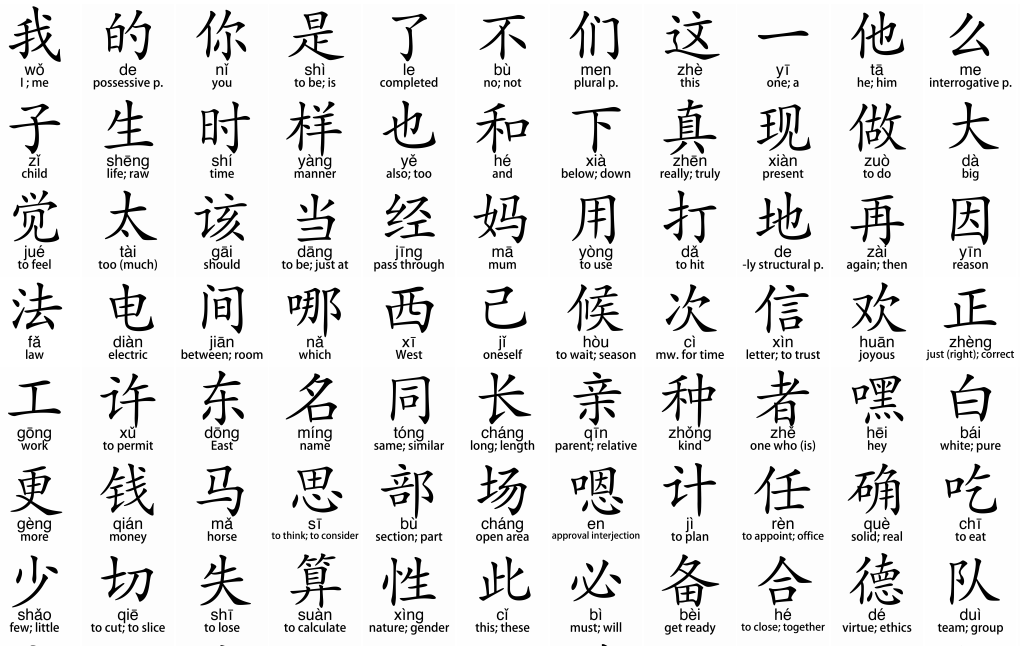
Basic Chinese Characters for Beginners
When starting to learn Chinese, focus on high-frequency characters that form the foundation of the language. These include simple, commonly used symbols that appear in daily conversations and written texts. Below are some essential characters to begin with:
- 一 (yī) - Meaning one, this is the simplest character and introduces stroke order.
- 人 (rén) - Translates to person and is a building block for compound words.
- 日 (rì) - Means sun or day and appears in many date-related terms.
Characters for Everyday Communication
To quickly engage in basic conversations, prioritize practical characters related to greetings, questions, and common objects. These will help you navigate daily interactions:
- 你 (nǐ) - Means you, essential for addressing others.
- 好 (hǎo) - Translates to good, used in phrases like 你好 (nǐ hǎo, hello).
- 吗 (ma) - A question particle, e.g., 好吗? (hǎo ma?, OK?).
Mastering numerical characters is crucial for telling time, shopping, and scheduling. Start with these foundational numbers and time terms:
- 十 (shí) - Means ten, the basis for counting up to 99.
- 年 (nián) - Translates to year, used in dates and age.
- 现在 (xiànzài) - Means now, helpful for time expressions.
Characters for Directions and Locations
If you plan to travel or navigate Chinese-speaking areas, learn directional characters to ask for or understand directions:
- 上 (shàng) - Means up or above, used in addresses.
- 下 (xià) - Translates to down or below, opposite of 上.
- 左 (zuǒ) - Means left, essential for spatial instructions.
Characters for Common Verbs
To form simple sentences, focus on action-oriented characters that describe basic activities:
- 吃 (chī) - Means to eat, a frequent verb in daily life.
- 喝 (hē) - Translates to to drink, often paired with 吃.
- 去 (qù) - Means to go, useful for making plans.
How can I learn Chinese by myself?
Setting Clear Goals for Learning Chinese
To learn Chinese effectively, start by defining your objectives. Determine whether you want to focus on speaking, reading, writing, or all three. Break your goals into smaller milestones, such as mastering basic greetings or recognizing common characters. Here’s how to approach it:
- Identify your purpose: Are you learning for travel, work, or personal interest?
- Set realistic timelines: Allocate daily or weekly study sessions.
- Track progress: Use apps or journals to monitor improvements.
Building a Strong Foundation in Pronunciation
Pronunciation is critical in Chinese due to its tonal nature. Begin by learning Pinyin, the romanization system for Mandarin sounds. Practice tones repeatedly to avoid misunderstandings. Follow these steps:
- Master the four tones: Use audio resources to mimic native speakers.
- Practice with minimal pairs: Compare similar-sounding words to refine accuracy.
- Record yourself: Compare your pronunciation to native audio samples.
Expanding Vocabulary and Characters
Chinese relies heavily on characters and context. Start with high-frequency words and gradually introduce Hanzi (characters). Use spaced repetition systems (SRS) like Anki for retention. Key strategies include:
- Learn radicals first: Understand character components to decode meanings.
- Contextual learning: Study words in sentences, not isolation.
- Daily writing practice: Reinforce memory by writing characters repeatedly.
Utilizing Immersive Learning Resources
Immersion accelerates fluency. Surround yourself with Chinese through media, apps, and conversation. Passive exposure trains your ear, while active engagement builds skills. Effective methods:
- Watch Chinese shows: Use subtitles initially, then phase them out.
- Listen to podcasts/music: Focus on comprehension and tone recognition.
- Language exchange: Partner with native speakers for practice.
Practicing Consistently and Staying Motivated
Consistency is key to retaining Chinese. Create a routine and mix study methods to avoid burnout. Stay motivated by celebrating small wins. Tips for long-term success:
- Schedule regular practice: Even 15-30 minutes daily helps.
- Join online communities: Engage with learners for support.
- Challenge yourself: Take proficiency tests or set speaking goals.
Frequently Asked Questions (FAQ)
What is the best way to start learning Chinese characters?
Starting with the basics is crucial when learning Chinese characters. Focus on radicals first, as they are the building blocks of most characters. Understanding radicals helps you recognize patterns and meanings in more complex characters. Additionally, practice writing characters by hand to reinforce memory. Using spaced repetition tools like flashcards or apps can also help you retain characters more effectively. Consistency is key—dedicate a small amount of time daily rather than cramming.
How can I memorize Chinese characters more effectively?
Memorizing Chinese characters requires a combination of techniques. Visual association is powerful—linking a character's shape to its meaning or pronunciation can make it stick. Break characters into smaller components and learn their meanings. Repetition is essential, but make it active: write characters repeatedly, use them in sentences, or create stories around them. Tools like mnemonics and spaced repetition software (SRS) can significantly boost retention.
Should I focus on writing or recognizing Chinese characters first?
While both skills are important, beginners should prioritize recognition over writing at first. Being able to read and understand characters builds a foundation for later writing practice. However, writing helps reinforce memory and improves understanding of stroke order and structure. A balanced approach is ideal: start with recognition and gradually incorporate writing practice as you become more comfortable with the characters.
How many Chinese characters do I need to know to be fluent?
Fluency depends on your goals, but a general benchmark is knowing around 2,000-3,000 characters, which covers about 98% of written material in everyday contexts. For advanced proficiency, you may need up to 5,000 characters. However, focus on quality over quantity—mastering common characters and their usage in context is more valuable than memorizing rare ones. Pair character learning with vocabulary and grammar to build practical language skills.
Leave a Reply
Related Posts