
A guide to Pinyin traps and pitfalls: Learning Mandarin pronunciation

Learning Mandarin pronunciation can be a challenging yet rewarding journey, especially when navigating the complexities of Pinyin. While Pinyin serves as a helpful romanization system, it often hides subtle traps and pitfalls that can trip up learners. Mispronunciations, tone errors, and misleading letter combinations are common stumbling blocks that hinder fluency. This guide highlights these frequent mistakes, offering clear explanations and practical tips to avoid them. Whether you're a beginner or an advanced learner, understanding these nuances will sharpen your pronunciation and boost your confidence in speaking Mandarin. Dive in to master Pinyin and speak Chinese more accurately and naturally.
Common Pinyin Traps and Pitfalls: Mastering Mandarin Pronunciation
1. Confusing Similar Pinyin Sounds
One of the biggest challenges in learning Mandarin pronunciation is distinguishing between similar Pinyin sounds. For example, zh, ch, sh, and z, c, s can be easily mixed up by beginners. The retroflex sounds (zh, ch, sh) require the tongue to curl back, while the dental sounds (z, c, s) are produced with the tongue near the teeth. Mispronouncing these can lead to misunderstandings, as they change the meaning of words entirely.
| Pinyin Sound | Example Word | Meaning |
|---|---|---|
| zh | zhī (知) | to know |
| z | zī (资) | resources |
2. The Tricky ü Vowel
The ü vowel is unique to Mandarin and often causes confusion. Many learners mistakenly pronounce it like the English u sound, but it requires rounded lips and a high front tongue position. Words like nǚ (女 - woman) and lǜ (绿 - green) rely on this distinct sound. Without proper pronunciation, these words can be misunderstood or sound unnatural.
See AlsoInternational Users Angered by Huawei Lock Screen Ads| Pinyin | Character | Meaning |
|---|---|---|
| nǚ | 女 | woman |
| lǜ | 绿 | green |
3. Tones: The Make-or-Break Factor
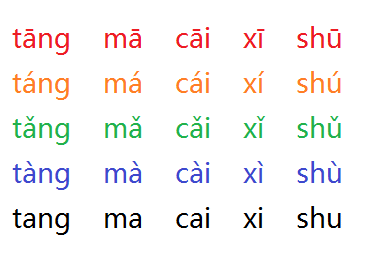
Mandarin is a tonal language, meaning the pitch contour of a syllable affects its meaning. The four main tones—flat (1st), rising (2nd), falling-rising (3rd), and falling (4th)—must be mastered to avoid miscommunication. For example, mā (妈 - mother) and mà (骂 - scold) differ only in tone but have entirely different meanings.
| Tone Number | Example | Meaning |
|---|---|---|
| 1st Tone | mā (妈) | mother |
| 4th Tone | mà (骂) | scold |
4. Silent Letters and Unexpected Pronunciations
Some Pinyin spellings include silent letters or unexpected pronunciations. For instance, iu is pronounced like iou, and ui sounds like uei. Additionally, the e in de (的) is neutral and unstressed, unlike the English e. Misreading these can lead to incorrect pronunciation.
| Pinyin | Actual Pronunciation | Example |
|---|---|---|
| iu | iou | liú (留 - stay) |
| ui | uei | huì (会 - can) |
5. The Neutral Tone: Easy to Overlook
The neutral tone (轻声) is a light, unstressed syllable that appears in words like ma (吗 - question particle) or le (了 - completed action marker). While it seems simple, neglecting its subtlety can make speech sound unnatural. Unlike the four main tones, the neutral tone has no fixed pitch and varies based on context.
See AlsoVocabulary lists that help you learn Chinese and how to use them| Pinyin | Function | Example |
|---|---|---|
| ma | question particle | Nǐ hǎo ma? (你好吗?) |
| le | completed action | Wǒ chī le (我吃了) |
What are the 5 tones of pinyin?

The First Tone: High and Level
The first tone in pinyin is a high, steady pitch. It is represented by a flat horizontal line (¯) above the vowel. This tone is pronounced at a consistently high pitch, similar to singing a sustained musical note. Key characteristics include:
- Pitch: Remains high and level throughout the syllable.
- Example: mā (妈), meaning mother.
- Common mistakes: Avoid letting the pitch drop or rise.
The Second Tone: Rising
The second tone is a rising tone, marked by an upward-slanting line (´) above the vowel. It starts at a medium pitch and rises to a high pitch, resembling the inflection in a question. Key features include:
See AlsoHow technology can stop you from learning Chinese- Pitch: Starts mid-level and ascends sharply.
- Example: má (麻), meaning hemp.
- Common mistakes: Confusing it with the first or third tone.
The Third Tone: Falling-Rising
The third tone is a dipping tone, indicated by a curved line (ˇ) above the vowel. It begins mid-level, dips low, and then rises slightly. In rapid speech, it often simplifies to a low tone. Key details include:
- Pitch: Dips down and then rises slightly.
- Example: mǎ (马), meaning horse.
- Common mistakes: Overemphasizing the rise or skipping the dip.
The Fourth Tone: Falling
The fourth tone is a sharp falling tone, marked by a downward-slanting line (`) above the vowel. It starts high and drops quickly to a low pitch, resembling a command. Key aspects include:
- Pitch: Begins high and falls abruptly.
- Example: mà (骂), meaning scold.
- Common mistakes: Not making the drop sharp enough.
The Neutral Tone: Light and Short
The neutral tone (or fifth tone) is unstressed and lacks a tonal mark. It is short, light, and often appears in weak syllables or grammatical particles. Key points include:
See AlsoBuild It and They Will Come: A Guide to China’s Ghost Cities- Pitch: Varies based on the preceding tone but is always light.
- Example: ma (吗), a question particle.
- Common mistakes: Overpronouncing or ignoring it entirely.
How do these three initials y -/ yi w -/ wu yu -/ yu present as finals?

Understanding the Role of y as a Final
The initial y- or yi can function as a final in certain phonetic contexts. Here’s how it behaves:
- As a glide: The y sound transitions smoothly into the vowel, acting as a semivowel.
- In syllables like yi: The y merges with the vowel i, creating a single, cohesive sound.
- Phonetic representation: It is often transcribed as /j/ in IPA, indicating its consonantal role.
Exploring w and wu as Finals
The initial w- or wu also serves as a final in specific phonetic structures. Key characteristics include:
See AlsoWhat Chinese Zodiac Animals Say About Your Personality- Glide function: The w sound acts as a transitional element before vowels like u.
- In syllables like wu: The w blends with the vowel u, forming a unified pronunciation.
- IPA representation: It is typically written as /w/, highlighting its semivowel nature.
Analyzing yu as a Final
The initial yu- or yu presents unique features when functioning as a final:
- Combination of sounds: The y and u merge, creating a rounded front vowel effect.
- In syllables like yu: The sound resembles the French u or German ü, requiring lip rounding.
- Phonetic notation: Often represented as /y/ or /ɥ/ in IPA, depending on the dialect.
Comparative Analysis of y, w, and yu as Finals
Comparing these initials as finals reveals distinct phonetic behaviors:
- Articulation: y is palatal, w is labial-velar, and yu is a rounded palatal.
- Syllabic roles: All three act as glides but differ in vowel interactions.
- Language-specific usage: Their functions vary across dialects and phonetic systems.
Practical Examples of y, w, and yu in Finals
Here are real-world applications of these initials as finals:
- yi in Mandarin: Appears in words like yī (一), where y merges with i.
- wu in Cantonese: Found in wú (胡), with w blending into u.
- yu in Japanese: Seen in yuki (雪), where yu forms a distinct syllable.
How can I improve my Mandarin pronunciation?

Master the Four Mandarin Tones
Improving your Mandarin pronunciation starts with mastering the four tones. Each tone changes the meaning of a word, so accuracy is crucial.
- First tone (high and flat): Practice sustaining a high, steady pitch, like singing a musical note.
- Second tone (rising): Mimic the upward inflection of a question in English (e.g., Really?).
- Third tone (falling-rising): Start mid, dip low, then rise slightly—focus on the curve.
- Fourth tone (sharp fall): Emphasize a quick, strong drop, like a command (Stop!).
Practice with Native Speakers
Regular conversation with native speakers exposes you to authentic pronunciation and rhythm.
- Language exchange: Partner with a Mandarin speaker learning your language for mutual practice.
- Tutoring: Hire a tutor for personalized feedback on your pronunciation errors.
- Social media groups: Join Mandarin-learning communities to find practice partners.
Use Pinyin and Audio Resources
Pinyin (Romanized Mandarin) and audio tools help bridge the gap between spelling and sound.
- Pinyin charts: Study charts with tone marks to visualize pronunciation rules.
- Apps like Pleco or HelloChinese: Use interactive exercises with audio playback.
- Shadowing technique: Repeat phrases immediately after native speakers in videos or podcasts.
Record and Compare Your Speech
Self-assessment is key to identifying and correcting pronunciation mistakes.
- Record yourself: Use your phone to capture your Mandarin speech.
- Compare to natives: Play your recording alongside a native speaker’s version.
- Focus on problem areas: Isolate words or tones that sound off and drill them.
Learn Mouth and Tongue Positioning
Mandarin sounds often require specific mouth shapes unfamiliar to English speakers.
- Retroflex sounds (zh, ch, sh, r): Curl your tongue backward toward the roof of your mouth.
- Frontal sounds (j, q, x): Position your tongue flat and close to your lower teeth.
- Vowel accuracy: Practice opening your mouth wider for sounds like ü or e.
What is pinyin vs Mandarin?
What is Mandarin?
Mandarin is the most widely spoken language in the world, serving as the official language of China and Taiwan. It belongs to the Sino-Tibetan language family and is characterized by its tonal nature, meaning the pitch or intonation of a word can change its meaning. Mandarin is written using Chinese characters (Hanzi), which are logograms representing words or morphemes.
- Tonal Language: Mandarin has four main tones and a neutral tone, affecting word meaning.
- Writing System: Uses thousands of Chinese characters, each with unique meanings.
- Geographic Reach: Spoken by over a billion people, primarily in mainland China, Taiwan, and Singapore.
What is Pinyin?
Pinyin is a romanization system developed to represent Mandarin Chinese using the Latin alphabet. It was introduced in the 1950s to standardize pronunciation and aid in learning Mandarin, especially for non-native speakers. Pinyin includes tones marks to indicate the correct pronunciation of words.
- Romanization Tool: Converts Chinese characters into the Latin alphabet for easier reading.
- Tonal Indicators: Uses diacritical marks (e.g., ā, á, ǎ, à) to denote tones.
- Educational Purpose: Helps learners associate sounds with characters and improves pronunciation accuracy.
Key Differences Between Pinyin and Mandarin
While Mandarin refers to the spoken and written language itself, Pinyin is merely a phonetic tool to represent Mandarin sounds. Mandarin relies on characters, whereas Pinyin uses the Latin alphabet.
- Function: Mandarin is a language; Pinyin is a transcription system.
- Form: Mandarin uses characters, Pinyin uses letters and tone marks.
- Usage: Pinyin is primarily for learning, typing, or transliteration, while Mandarin is for communication.
Why is Pinyin Important for Learning Mandarin?
Pinyin acts as a bridge for learners to master Mandarin pronunciation before tackling characters. It simplifies the process of reading and typing Chinese on digital devices.
- Pronunciation Guide: Helps learners grasp tones and syllable sounds accurately.
- Typing Efficiency: Enables inputting Chinese characters using a QWERTY keyboard.
- Standardization: Provides a consistent way to teach and learn Mandarin globally.
Common Misconceptions About Pinyin and Mandarin
Many confuse Pinyin as a separate language or script, but it is only a phonetic aid. Similarly, some assume Mandarin is the only Chinese language, overlooking dialects like Cantonese.
- Pinyin ≠ Language: It is a tool, not a standalone writing system.
- Mandarin ≠ All Chinese: China has numerous dialects, but Mandarin is the official standard.
- Characters vs. Pinyin: Native speakers use characters, not Pinyin, for formal writing.
Frequently Asked Questions (FAQ)
What are the most common Pinyin pronunciation mistakes for beginners?
Learning Mandarin pronunciation through Pinyin can be tricky, especially for beginners. Some of the most frequent mistakes include confusing retroflex sounds (like zh, ch, and sh) with their non-retroflex counterparts (z, c, and s). Another common error is mispronouncing the ü vowel, which doesn’t exist in English and often gets replaced with a simple u. Additionally, tones are frequently overlooked, leading to misunderstandings since Mandarin is a tonal language.
How can I avoid mixing up similar Pinyin sounds?
To avoid mixing up similar Pinyin sounds, practice minimal pairs—words that differ by only one sound, such as bā (eight) and pā (to lie down). Listening to native speakers and repeating the sounds aloud helps train your ear and mouth. Using mnemonic devices or associating sounds with familiar words in your native language can also be useful. Consistent practice with tone drills and recording yourself to compare with native pronunciations will further refine your accuracy.
Why are tones so important in Mandarin pronunciation?
Tones are essential in Mandarin because they change the meaning of words entirely. For example, mā (妈) means mother, while mà (骂) means scold. Mispronouncing a tone can lead to confusion or unintended meanings. Since English is not tonal, many learners struggle with this concept at first. To master tones, focus on listening to native speakers, using tone marks in Pinyin as guides, and practicing with tone pairs to understand how tones interact in context.
What resources can help me improve my Pinyin pronunciation?
Several resources can help improve your Pinyin pronunciation, including apps like Pleco or HelloChinese, which offer interactive exercises. Watching Mandarin pronunciation videos on YouTube or using language platforms like FluentU provides real-life examples. Working with a language partner or tutor for feedback is invaluable. Additionally, textbooks like The Pinyin Trainer or online courses from platforms like Coursera can offer structured guidance. Consistent practice with these tools will build confidence and accuracy over time.
Leave a Reply
Related Posts