
How technology can stop you from learning Chinese

Technology has revolutionized the way we learn, offering tools like apps, translation software, and AI tutors to make mastering Chinese seem effortless. Yet, these very advancements may be hindering genuine language acquisition. Over-reliance on instant translations or voice assistants can reduce the need to engage deeply with the language, weakening memory retention and comprehension. Automated corrections and predictive text may discourage active thinking, while passive consumption of digital content often replaces meaningful practice. Ironically, the convenience designed to aid learning can create a false sense of progress. This article explores how technology, when used uncritically, might be slowing down your journey to fluency in Chinese.
How Technology Can Hinder Your Chinese Learning Progress
Technology has revolutionized the way we learn languages, but it can also create barriers when studying Chinese. While apps, translation tools, and digital resources offer convenience, they may inadvertently slow down or even stop your progress. Below, we explore five key ways technology can interfere with mastering Chinese.
1. Over-Reliance on Translation Apps
Many learners depend too heavily on tools like Google Translate or Pleco for instant translations. While helpful, these apps discourage active recall and contextual understanding. Instead of memorizing characters or phrases, users develop a habit of looking up words repeatedly without retaining them.
See AlsoMaking Comparisons: 比 in Chinese Grammar| Issue | Impact on Learning |
|---|---|
| Instant translations | Reduces memory retention |
| Lack of context | Hinders natural comprehension |
2. Distractions from Digital Devices
Smartphones and computers are filled with notifications, social media, and other distractions that break focus. Studying Chinese requires deep concentration, especially for tones and characters, but constant interruptions can fragment learning sessions and reduce efficiency.
| Distraction | Effect on Study Time |
|---|---|
| Social media alerts | Shortens attention span |
| Multitasking | Lowers information retention |
3. Passive Learning Through Videos
Watching Chinese videos or listening to podcasts passively may feel productive, but without active engagement (repeating, writing, or speaking), learners absorb little. True fluency requires interaction, not just exposure.
| Passive Activity | Learning Outcome |
|---|---|
| Binge-watching dramas | Minimal vocabulary gain |
| Background listening | Weak pronunciation skills |
4. Auto-Correct and Pinyin Dependency
Typing in Pinyin with auto-suggest features prevents learners from mastering character writing. Over time, reliance on predictive text weakens the ability to recall Hanzi independently.
See AlsoUltimate Chinese Radicals Quiz What Do They All Mean?| Tech Feature | Negative Effect |
|---|---|
| Pinyin input methods | Weakens character recognition |
| Auto-complete | Reduces active recall |
5. Misuse of Language Learning Apps
Apps like Duolingo or Memrise gamify learning but often prioritize speed over depth. Users may advance without truly grasping grammar rules or tones, leading to superficial knowledge.
| App Limitation | Result |
|---|---|
| Repetitive drills | Lack of real-world application |
| Over-simplification | Incomplete understanding |
What are the disadvantages of learning Chinese?

Complex Writing System
One of the biggest challenges of learning Chinese is its writing system, which relies on thousands of characters rather than an alphabet. This makes memorization and literacy significantly more difficult compared to phonetic languages.
See AlsoChinese Measure Words Quiz How Many Do You Know?- Thousands of characters must be learned to achieve fluency.
- No phonetic clues in many characters, making them hard to pronounce without prior knowledge.
- Stroke order and structure add another layer of complexity.
Tonal Language Difficulties
Mandarin Chinese is a tonal language, meaning the meaning of a word changes based on pitch. This can be extremely challenging for learners from non-tonal language backgrounds.
- Four main tones (plus a neutral tone) must be mastered for accurate communication.
- Mispronunciations can lead to misunderstandings or unintended meanings.
- Listening comprehension is harder due to subtle tonal variations.
Limited Transferability
Unlike languages such as Spanish or French, Chinese has limited linguistic overlap with most Western languages, reducing its immediate usefulness outside specific contexts.
- Few cognates with English or other Indo-European languages.
- Grammar structures differ significantly, requiring mental adaptation.
- Regional dialects (e.g., Cantonese) may not be mutually intelligible.
Time-Consuming Mastery
Achieving fluency in Chinese often takes much longer than learning languages with similar roots to one's native tongue due to its unique features.
See AlsoWhat Are Duolingos Next Languages: Learning Guide 2025- Years of study are typically required for advanced proficiency.
- Constant practice is needed to retain character recognition and tonal accuracy.
- Fewer shortcuts available compared to languages with shared vocabulary.
Limited Resources in Some Areas
While major cities may offer ample learning resources, access to quality Chinese-language education can be scarce in certain regions.
- Fewer native speakers to practice with in non-urban areas.
- Scarce advanced materials for self-learners beyond beginner levels.
- Cultural context may be hard to grasp without immersion.
What makes learning Chinese so difficult?

The Complexity of Chinese Characters
One of the biggest challenges in learning Chinese is mastering its logographic writing system. Unlike alphabetic languages, Chinese uses thousands of unique characters, each representing a word or concept. Memorizing them requires significant time and effort. Additionally:
See AlsoThe Most Difficult Sounds in Chinese to Master- Stroke order must be learned for proper writing and recognition.
- Many characters look similar but have completely different meanings.
- Characters often combine radicals and phonetic components, adding layers of complexity.
Tonal Nature of the Language
Chinese is a tonal language, meaning the pitch or intonation of a word can change its meaning entirely. Mandarin, for example, has four main tones and a neutral tone, making pronunciation a major hurdle. Key difficulties include:
- Distinguishing between similar-sounding words with different tones.
- Mastering the rising, falling, and dipping tonal patterns.
- Overcoming the lack of tonal equivalents in many learners' native languages.
Lack of Cognates with Western Languages
Chinese shares very few linguistic similarities with Indo-European languages like English, Spanish, or French. This makes vocabulary acquisition more challenging because:
- There are almost no loanwords or shared roots to rely on.
- Concepts must often be learned from scratch without familiar reference points.
- Grammar structures, such as the absence of verb conjugations, feel foreign to many learners.
Grammar Differences and Sentence Structure
While Chinese grammar is often considered simpler in some aspects, its differences from Western languages create confusion. Notable challenges include:
- Word order follows a strict Subject-Verb-Object pattern but lacks inflections.
- Particles like 了 (le) and 的 (de) have no direct equivalents in English.
- Context plays a much larger role in conveying meaning, making literal translations unreliable.
Cultural and Contextual Nuances
Chinese is deeply tied to its cultural context, which can be difficult for outsiders to grasp. Understanding idioms, proverbs, and social cues requires more than just linguistic knowledge. Key obstacles include:
- Chengyu (four-character idioms) often reference historical or literary events.
- Politeness and indirect speech are heavily emphasized in communication.
- Regional dialects and slang vary widely, even within Mandarin-speaking areas.
What are the difficulties of learning Chinese?

The Complexity of Chinese Characters
One of the biggest challenges in learning Chinese is mastering its characters. Unlike alphabetic languages, Chinese uses a logographic system, where each character represents a word or a morpheme. This requires memorizing thousands of unique symbols.
- Stroke order must be learned precisely to write characters correctly.
- Many characters look similar, leading to confusion (e.g., 日 vs. 目).
- Characters often have multiple meanings and pronunciations.
Tonal Pronunciation
Mandarin Chinese is a tonal language, meaning the pitch or intonation used when pronouncing a word can change its meaning entirely. This is unfamiliar to speakers of non-tonal languages.
- There are four main tones (plus a neutral tone), each altering word meaning.
- Mispronouncing a tone can lead to misunderstandings (e.g., mā vs. mà).
- Listening comprehension is difficult due to subtle tonal variations.
Grammar Differences
While Chinese grammar is simpler in some aspects (e.g., no verb conjugations), it has unique structures that can be confusing.
- Word order is strict but differs from English (e.g., time phrases come before the verb).
- No plural forms or articles (like a or the).
- Measure words (量词) must be used when counting nouns.
Lack of Cognates
Unlike European languages, Chinese shares very few cognates with English, making vocabulary acquisition more challenging.
- Most words must be learned from scratch without familiar roots.
- Idioms and proverbs are culturally specific and hard to translate.
- Technical or modern terms often differ significantly from English.
Listening and Speaking Speed
Native Chinese speakers often speak quickly, and the language's syllable-dense nature can overwhelm learners.
- Conversational speed makes it hard to distinguish individual words.
- Regional accents and dialects add another layer of difficulty.
- Slang and informal speech are rarely taught in textbooks.
How is technology used in education in China?
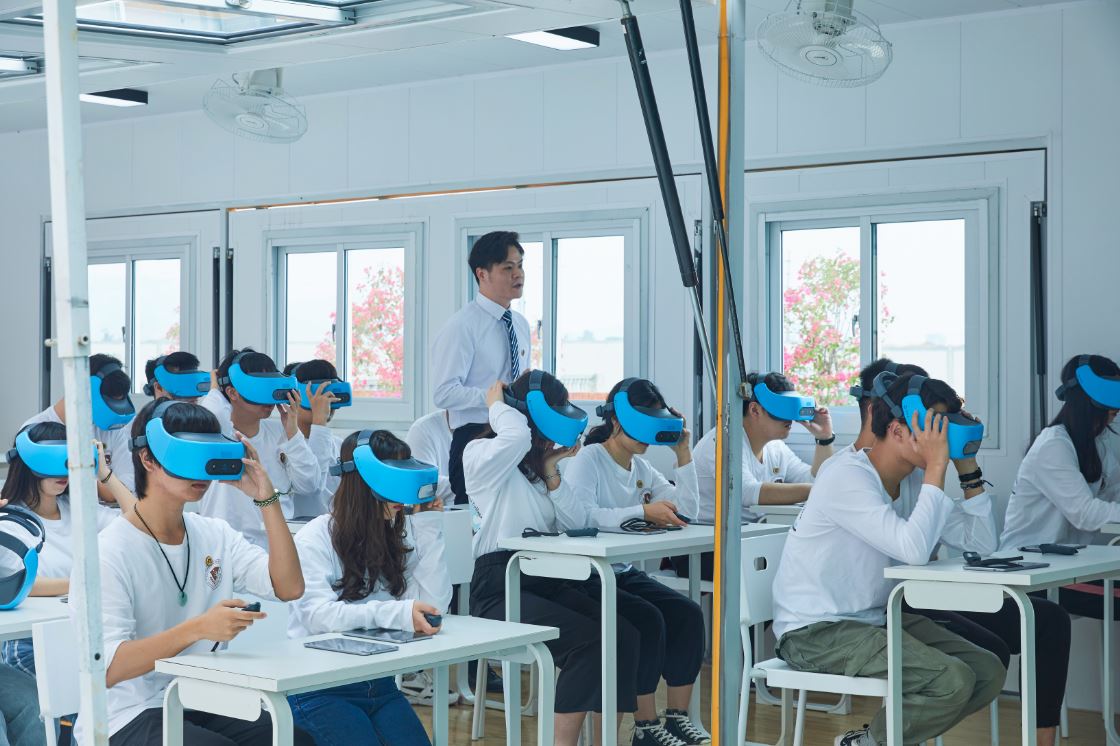
Integration of Smart Classrooms in Chinese Schools
China has heavily invested in smart classrooms, which incorporate interactive whiteboards, digital projectors, and AI-powered tools to enhance learning. These technologies enable teachers to deliver dynamic lessons while students engage with multimedia content. Key features include:
- Real-time feedback systems that allow teachers to assess student comprehension instantly.
- Cloud-based platforms like DingTalk and Tencent Classroom for seamless communication and resource sharing.
- AI-driven analytics to personalize learning paths based on student performance.
Online Learning Platforms and Massive Open Online Courses (MOOCs)
China has embraced online education through platforms like XuetangX and China MOOC, offering courses from top universities. These platforms provide:
- Flexible learning schedules for students in remote or rural areas.
- Certification programs recognized by employers and institutions.
- Gamified learning experiences to increase student engagement.
Artificial Intelligence (AI) in Personalized Education
AI technologies are revolutionizing education in China by tailoring instruction to individual needs. Examples include:
- Adaptive learning software like Squirrel AI, which adjusts content difficulty in real time.
- Voice recognition tools for language learning, such as iFlyTek's speech evaluation systems.
- Automated grading systems that reduce teacher workload and improve accuracy.
Use of Big Data for Educational Insights
Chinese institutions leverage big data to optimize teaching methods and administrative processes. Applications include:
- Predictive analytics to identify at-risk students and intervene early.
- Curriculum optimization based on student performance trends.
- Resource allocation to improve school efficiency and reduce costs.
Virtual and Augmented Reality (VR/AR) in Education
VR/AR technologies are being adopted to create immersive learning experiences in subjects like science and history. Key implementations are:
- Virtual labs for safe, hands-on experimentation in chemistry and physics.
- Historical simulations that bring textbook content to life.
- Collaborative VR classrooms enabling remote group projects.
Frequently Asked Questions (FAQ)
How does relying on translation apps hinder learning Chinese?
Translation apps provide quick and convenient solutions for understanding Chinese, but they can become a crutch that prevents deeper learning. When learners depend on these tools, they miss opportunities to practice reading, writing, or recalling characters on their own. Over time, this reliance weakens memory retention and slows progress in mastering vocabulary and grammar. Additionally, translation apps often lack context, leading to misunderstandings of nuanced phrases or cultural expressions that are essential for fluency.
Can excessive use of pinyin input methods slow down Chinese character recognition?
Yes, relying too heavily on pinyin input methods can delay the ability to recognize and write Chinese characters. While pinyin is helpful for beginners, it bypasses the need to memorize character strokes and structures. Learners who type exclusively in pinyin may struggle to read handwritten text or recall characters during exams. To build true proficiency, it's crucial to balance pinyin use with active writing practice and character drills.
Does watching subtitled content prevent effective Chinese listening practice?
While subtitles can aid comprehension, they often create a dependency on visual text rather than auditory learning. Learners who always rely on subtitles may struggle to distinguish tones or catch spoken words in real conversations. To improve listening skills, it's important to gradually reduce subtitle use and engage with audio-only materials, such as podcasts or radio, to train the ear for natural speech patterns.
How do language learning apps with gamification distract from serious study?
Apps that emphasize gamification—like points, streaks, or rewards—can make learning feel more like entertainment than education. While these features boost motivation, they may encourage superficial engagement, such as rushing through lessons without retaining information. True mastery of Chinese requires focused, repetitive practice, which gamified apps sometimes undermine by prioritizing speed over depth. Supplementing app use with traditional study methods ensures a more balanced approach.
Leave a Reply
Related Posts