
Duolingo Audio Lessons: Improve Language Skills on the Go

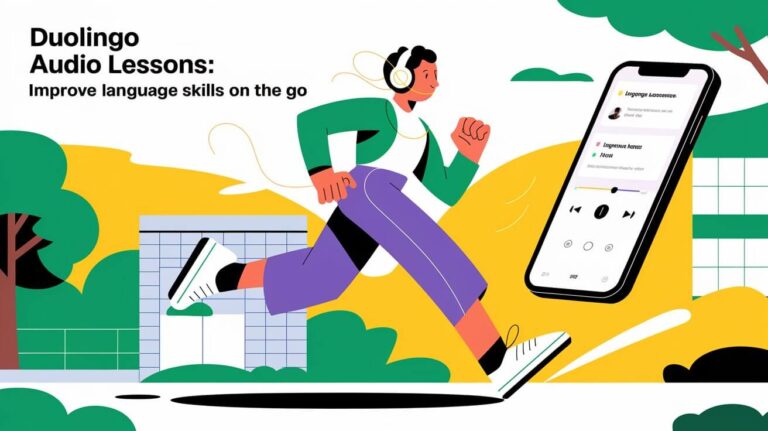
Duolingo Audio Lessons offer a convenient and effective way to enhance language skills for learners on the move. Designed to fit seamlessly into busy lifestyles, these lessons allow users to practice listening and speaking in their target language anytime, anywhere. Whether commuting, exercising, or simply relaxing, learners can immerse themselves in real-life conversations and improve pronunciation through interactive audio exercises. With a focus on practical vocabulary and everyday scenarios, Duolingo Audio Lessons cater to both beginners and intermediate learners. This innovative approach combines flexibility with engaging content, making language learning more accessible and enjoyable for those seeking to master a new language on the go.
Duolingo Audio Lessons: Improve Language Skills on the Go
Duolingo Audio Lessons are an innovative way to enhance your language learning experience, especially for those who are always on the move. These lessons are designed to help you improve your listening and speaking skills by immersing you in real-life conversations and scenarios. Whether you're commuting, exercising, or simply relaxing, Duolingo Audio Lessons allow you to practice your target language anytime, anywhere. With a focus on practical vocabulary and phrases, these lessons are perfect for learners who want to build confidence in their speaking abilities and understand native speakers more effectively.
What Are Duolingo Audio Lessons?
Duolingo Audio Lessons are a series of interactive audio-based exercises that focus on improving your listening and speaking skills. They are designed to simulate real-life conversations, helping you learn how to respond naturally in various situations. These lessons are available for select languages and are integrated into the Duolingo app, making them easily accessible for learners.
See AlsoUnique Language: 5 Things Make Chinese SpecialHow Do Duolingo Audio Lessons Work?
Duolingo Audio Lessons work by presenting you with audio clips of native speakers engaging in conversations. You listen to the dialogue, repeat phrases, and answer questions to test your comprehension. The lessons are structured to gradually increase in difficulty, ensuring that you build your skills step by step. The app also provides instant feedback, helping you correct mistakes and improve pronunciation.
Benefits of Using Duolingo Audio Lessons
Using Duolingo Audio Lessons offers several benefits, including:
- Convenience: Learn anytime, anywhere, without needing to look at your screen.
- Improved Listening Skills: Train your ear to understand native speakers.
- Enhanced Speaking Confidence: Practice speaking in a low-pressure environment.
- Real-Life Scenarios: Learn phrases and vocabulary that are useful in everyday conversations.
Who Can Benefit from Duolingo Audio Lessons?
Duolingo Audio Lessons are ideal for:
- Busy Professionals: Those who want to learn during their commute or breaks.
- Travelers: Individuals preparing for trips to foreign countries.
- Language Enthusiasts: Anyone looking to improve their listening and speaking skills.
- Beginners and Intermediate Learners: Those who want to build a strong foundation in their target language.
How to Get Started with Duolingo Audio Lessons
To get started with Duolingo Audio Lessons, follow these steps:
1. Download the Duolingo App: Available on both iOS and Android.
2. Select Your Target Language: Choose from the available languages that offer audio lessons.
3. Navigate to the Audio Lessons Section: Found within the app's learning modules.
4. Start Listening and Practicing: Begin with the first lesson and progress at your own pace.
| Feature | Description |
|---|---|
| Convenience | Learn on the go without needing to look at your screen. |
| Real-Life Conversations | Practice with dialogues that mimic everyday situations. |
| Instant Feedback | Receive corrections and tips to improve your skills. |
| Progressive Difficulty | Lessons increase in complexity as you advance. |
| Accessibility | Available for select languages within the Duolingo app. |
Does Duolingo improve language skills?
Does Duolingo Improve Vocabulary Acquisition?
Duolingo is effective in helping users acquire basic vocabulary in a new language. The app uses a combination of visual aids, repetition, and spaced repetition techniques to reinforce learning. Key points include:
See AlsoHow Long does it take to Learn Chinese? The Definitive Answer- Gamified learning keeps users engaged and motivated to learn new words daily.
- It introduces vocabulary in contextual sentences, making it easier to understand usage.
- However, it may lack advanced vocabulary needed for fluency.
Can Duolingo Enhance Grammar Skills?
Duolingo provides a structured approach to learning grammar rules through interactive exercises. While it covers foundational grammar, there are limitations:
- It teaches grammar in small, digestible chunks, which is ideal for beginners.
- Users may struggle with complex grammar structures as the app focuses more on basic rules.
- It lacks in-depth explanations, which might require supplementary resources.
Does Duolingo Improve Listening and Pronunciation?
Duolingo includes audio exercises that help improve listening comprehension and pronunciation. However, its effectiveness varies:
- The app uses native speaker recordings to expose users to authentic accents.
- It offers speech recognition to practice pronunciation, though accuracy can be inconsistent.
- Listening exercises are limited in variety, which may not fully prepare users for real-world conversations.
Is Duolingo Effective for Speaking Practice?
While Duolingo encourages speaking through its exercises, it has limitations for developing fluent speaking skills:
See AlsoThe Best Games to Learn Chinese and Boost Your Mandarin- It provides speaking prompts, but these are often short and lack conversational depth.
- There is no real-time interaction with native speakers, which is crucial for speaking fluency.
- Users may need additional practice through language exchange platforms or tutors.
Can Duolingo Help Achieve Language Fluency?
Duolingo is a useful tool for beginners and intermediate learners, but achieving fluency requires more than the app alone:
- It builds a strong foundation in basic language skills, such as vocabulary and grammar.
- Fluency demands real-world practice, which Duolingo cannot fully provide.
- Supplementing Duolingo with immersive experiences, such as travel or conversation practice, is essential for fluency.
Has Duolingo actually helped anyone learn a language?

What is Duolingo and How Does It Work?
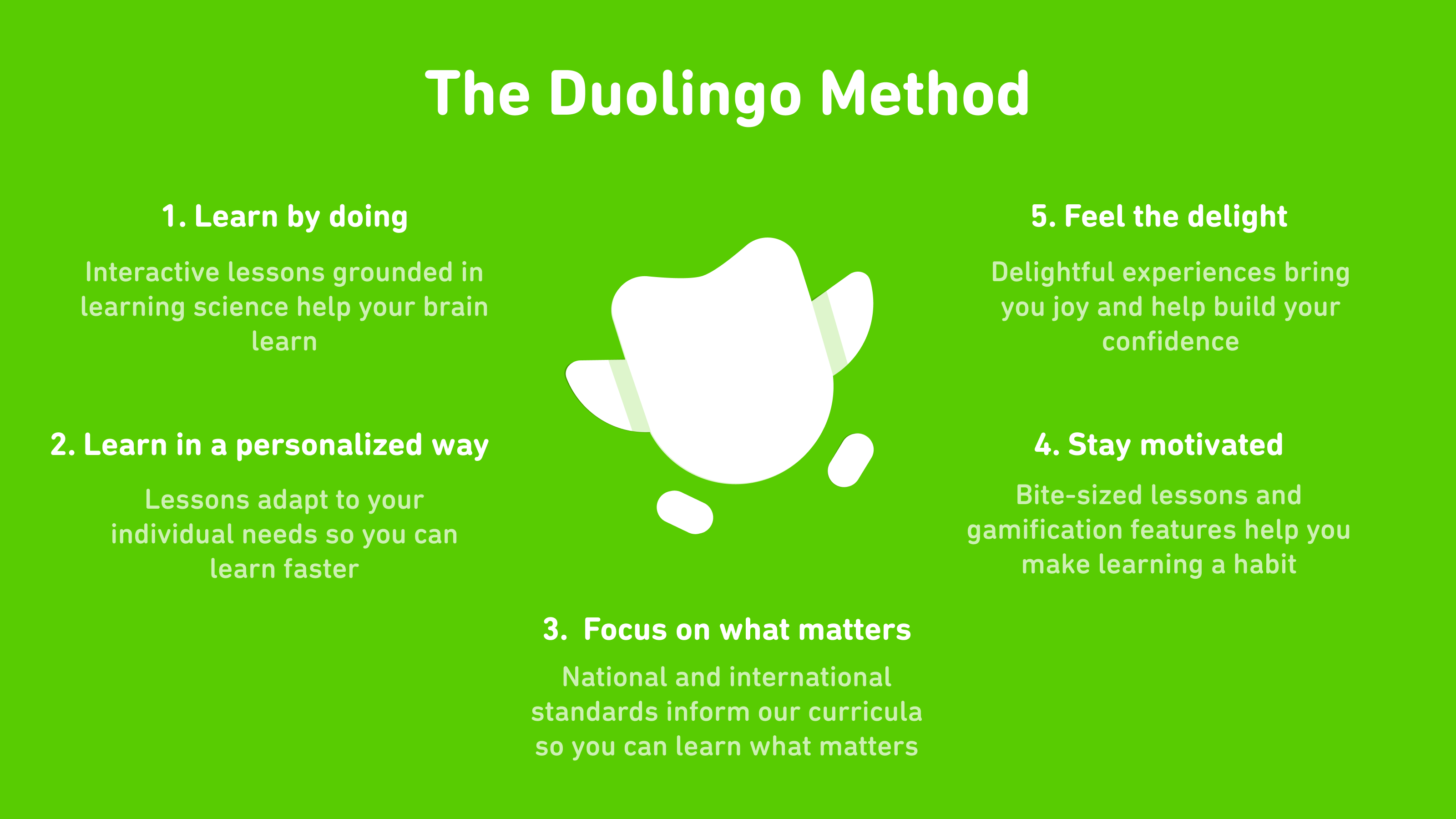
Duolingo is a language-learning platform that uses gamification to teach users new languages. It offers bite-sized lessons that focus on vocabulary, grammar, and pronunciation. The app adapts to the user's learning pace and provides immediate feedback to reinforce learning. Key features include:
See AlsoShould you learn the names of the strokes in Chinese characters?- Interactive exercises like matching, speaking, and listening tasks.
- A streak system to encourage daily practice.
- Personalized learning paths based on user progress.
Can Duolingo Help You Achieve Fluency?
While Duolingo is effective for building foundational skills, it is not designed to achieve full fluency. It excels in teaching basic vocabulary, grammar, and sentence structure. However, fluency requires additional practice, such as:
- Conversing with native speakers to improve speaking and listening skills.
- Immersing yourself in the language through media like books, movies, and podcasts.
- Using supplementary resources like advanced courses or language tutors.
What Do Users Say About Their Experience with Duolingo?
Many users report positive experiences with Duolingo, particularly for beginners. Common feedback includes:
- It makes learning fun and engaging through gamified lessons.
- It helps users develop a daily learning habit.
- Some users feel it lacks depth for advanced learners.
What Are the Limitations of Duolingo?
Despite its popularity, Duolingo has some limitations. These include:
- Limited speaking practice, as the app focuses more on reading and writing.
- Repetitive exercises that may not suit all learning styles.
- Insufficient cultural context, which is crucial for understanding a language fully.
How Does Duolingo Compare to Traditional Language Learning Methods?
Duolingo offers a convenient and accessible alternative to traditional methods like classroom learning or private tutoring. Key comparisons include:
- Duolingo is more affordable than hiring a tutor or enrolling in a course.
- It provides flexibility, allowing users to learn at their own pace.
- However, it may lack the structured guidance and personalized feedback of traditional methods.
What is the disadvantage of Duolingo?
Limited Depth in Language Learning
One of the main disadvantages of Duolingo is its limited depth in teaching languages. While it is great for beginners, it often falls short for advanced learners. Here are some reasons why:
- Vocabulary: The app focuses on basic and intermediate vocabulary, leaving out more complex or specialized terms.
- Grammar: Grammar explanations are often minimal, which can make it difficult to understand more advanced structures.
- Context: The sentences and phrases used are often out of context, making it harder to apply them in real-life situations.
Lack of Speaking Practice
Duolingo's speaking exercises are not as effective as they could be. Here’s why:
- Limited Interaction: The app does not provide real-time feedback or interaction with native speakers.
- Repetitive Phrases: The speaking exercises often use the same phrases repeatedly, which can be monotonous.
- Accuracy: The voice recognition technology is not always accurate, leading to incorrect pronunciation habits.
Over-Reliance on Gamification
While gamification can be motivating, it can also be a drawback. Here’s how:
- Distraction: The focus on earning points and maintaining streaks can distract from actual learning.
- Superficial Learning: Users might prioritize completing lessons quickly over understanding the material deeply.
- Addiction: The game-like elements can lead to addictive behavior, where users focus more on the game than on learning.
Inconsistent Quality Across Languages
The quality of Duolingo courses varies significantly depending on the language. Here’s why this is a problem:
- Popular vs. Less Popular Languages: Courses for popular languages like Spanish or French are well-developed, while less popular languages may lack depth.
- Cultural Context: Some courses do not adequately incorporate cultural context, which is crucial for language learning.
- Updates: Less popular languages may not receive regular updates or improvements.
Limited Real-World Application
Duolingo often fails to prepare users for real-world language use. Here’s why:
- Conversational Skills: The app does not provide enough practice for real-life conversations.
- Listening Skills: The listening exercises are often too simplistic and do not reflect natural speech patterns.
- Writing Skills: There is limited opportunity to practice writing in a way that is useful for real-world communication.
Can I use Duolingo while walking?

Is It Safe to Use Duolingo While Walking?
Using Duolingo while walking can be safe if you take certain precautions. Here are some key points to consider:
- Stay aware of your surroundings to avoid accidents or collisions.
- Use audio-based lessons to minimize the need to look at your screen.
- Choose quiet and familiar routes to reduce distractions.
What Are the Benefits of Using Duolingo While Walking?
Using Duolingo while walking can offer several advantages. Here are some benefits:
- Multitasking: You can combine physical activity with language learning.
- Improved retention: Physical movement can enhance memory and focus.
- Time efficiency: You can make use of time that would otherwise be unproductive.
What Are the Challenges of Using Duolingo While Walking?
While there are benefits, there are also challenges to using Duolingo while walking. Consider the following:
- Distractions: Walking in busy areas can make it hard to focus on lessons.
- Safety risks: Looking at your phone while walking can lead to accidents.
- Limited lesson types: Some exercises may require typing or tapping, which is harder while moving.
How to Optimize Duolingo for Walking?
To make the most of Duolingo while walking, follow these tips:
- Enable audio lessons: Focus on listening and speaking exercises.
- Use headphones: This helps you hear clearly without holding your phone.
- Set a slower pace: Walk at a comfortable speed to maintain focus.
What Are the Best Duolingo Features for Walking?
Certain Duolingo features are better suited for walking. Here are the top ones:
- Podcasts: Great for listening practice without needing to interact with the app.
- Stories: Engaging audio content that doesn’t require much screen interaction.
- Speaking exercises: Perfect for practicing pronunciation while on the move.
Frequently Asked Questions From our Community
What are Duolingo Audio Lessons?
Duolingo Audio Lessons are a feature designed to help learners improve their listening and speaking skills in a new language. These lessons are structured to be portable and convenient, allowing users to practice on the go. They focus on real-life conversations, vocabulary, and pronunciation, making them ideal for learners who want to enhance their language fluency while commuting, exercising, or during other daily activities.
How do Duolingo Audio Lessons work?
Duolingo Audio Lessons are designed to be interactive and engaging. Users listen to native speakers in conversations or scenarios, and then they are prompted to repeat phrases or answer questions. The lessons are structured to gradually increase in difficulty, helping learners build confidence and comprehension over time. The audio format ensures that learners can focus on pronunciation and listening skills without needing to look at a screen.
Can I use Duolingo Audio Lessons offline?
Yes, one of the key benefits of Duolingo Audio Lessons is that they can be downloaded for offline use. This makes them perfect for situations where you don’t have access to the internet, such as during flights or in areas with poor connectivity. Simply download the lessons while connected to Wi-Fi, and you can practice your language skills anytime, anywhere.
Are Duolingo Audio Lessons suitable for beginners?
Duolingo Audio Lessons are designed to cater to learners of all levels, including beginners. The lessons start with basic vocabulary and simple phrases, gradually introducing more complex sentences and conversations as you progress. This step-by-step approach ensures that even those new to a language can build a strong foundation in listening and speaking while gaining confidence in their abilities.
Leave a Reply
Related Posts