
Unique Language: 5 Things Make Chinese Special

Chinese is one of the world’s oldest and most fascinating languages, with a rich history spanning thousands of years. Unlike many other languages, Chinese stands out due to its unique characteristics, from its logographic writing system to its tonal nature. Whether you're a language enthusiast or simply curious, understanding what makes Chinese special offers insight into its cultural and linguistic depth. In this article, we explore five key features that set Chinese apart—its characters, tones, grammar simplicity, regional diversity, and cultural influence. Discover why mastering Chinese is both a challenging and rewarding experience, opening doors to a vibrant and ancient civilization.
- Unique Language: 5 Things That Make Chinese Special
- What makes Chinese language unique?
-
What are the 3 interesting facts about Chinese language?
- The Chinese Language Has the Most Native Speakers Worldwide
- Chinese Characters Are Among the Oldest Writing Systems Still in Use
- Chinese Is a Tonal Language with Unique Pronunciation Rules
- The Chinese Language Has Influenced Many Other Asian Languages
- Chinese Grammar Is Surprisingly Simple Compared to Many Languages
- What is the Speciality of Chinese language?
- What is unique about Chinese characters?
- Frequently Asked Questions (FAQ)
Unique Language: 5 Things That Make Chinese Special
1. The Complexity of Chinese Characters
Chinese characters, or Hanzi, are one of the oldest writing systems still in use today. Unlike alphabetic languages, each character represents a morpheme (a unit of meaning) rather than a sound. There are over 50,000 characters, though only about 20,000 are commonly used. Mastering even 3,000-5,000 characters allows for basic literacy. The complexity arises from strokes, radicals, and the lack of phonetic clues, making memorization a unique challenge.
| Feature | Description |
|---|---|
| Strokes | Basic brush/pen movements (e.g., 横 héng for horizontal strokes). |
| Radicals | Building blocks hinting at meaning/pronunciation (e.g., 水 shuǐ for water-related characters). |
2. Tonal System: Meaning Changes With Pitch
Chinese is a tonal language, where pitch contours alter word meanings. Mandarin has four primary tones (plus a neutral tone):
See AlsoReading aloud in Chinese is really hard| Tone | Example (妈/mā) | Meaning |
|---|---|---|
| 1st (Flat) | mā | Mother |
| 2nd (Rising) | má | Hemp |
| 3rd (Falling-Rising) | mǎ | Horse |
| 4th (Falling) | mà | Scold |
3. No Alphabet, No Verb Conjugations
Chinese lacks an alphabet or grammatical inflections. Verbs don’t conjugate for tense, number, or gender. Instead, time is indicated via context or particles like 了 (le) for past actions. For example:
| English | I eat / I ate / I will eat |
| Chinese | 我吃 (wǒ chī) + 了 (le) or 会 (huì) for future. |
4. Homophones and Wordplay
Due to its limited syllables (~400 in Mandarin), Chinese has many homophones. This enables rich puns and cultural symbolism. For instance, the number 8 (八/bā) sounds like prosperity (发/fā), making it lucky. Conversely, 4 (四/sì) resembles death (死/sǐ), often avoided.
| Word | Pinyin | Homophone Association |
|---|---|---|
| 鱼 (fish) | yú | Abundance (余/yú) |
5. Dialects: One Language, Many Forms
Chinese encompasses seven major dialect groups (e.g., Mandarin, Cantonese), often mutually unintelligible. Mandarin (普通话) is the official language, but regional dialects like Shanghainese or Hokkien retain distinct pronunciation and vocabulary.
See AlsoA guide to Pinyin traps and pitfalls: Learning Mandarin pronunciation| Dialect | Region | Unique Trait |
|---|---|---|
| Cantonese | Guangdong/Hong Kong | 6-9 tones; preserves ancient Chinese sounds |
What makes Chinese language unique?
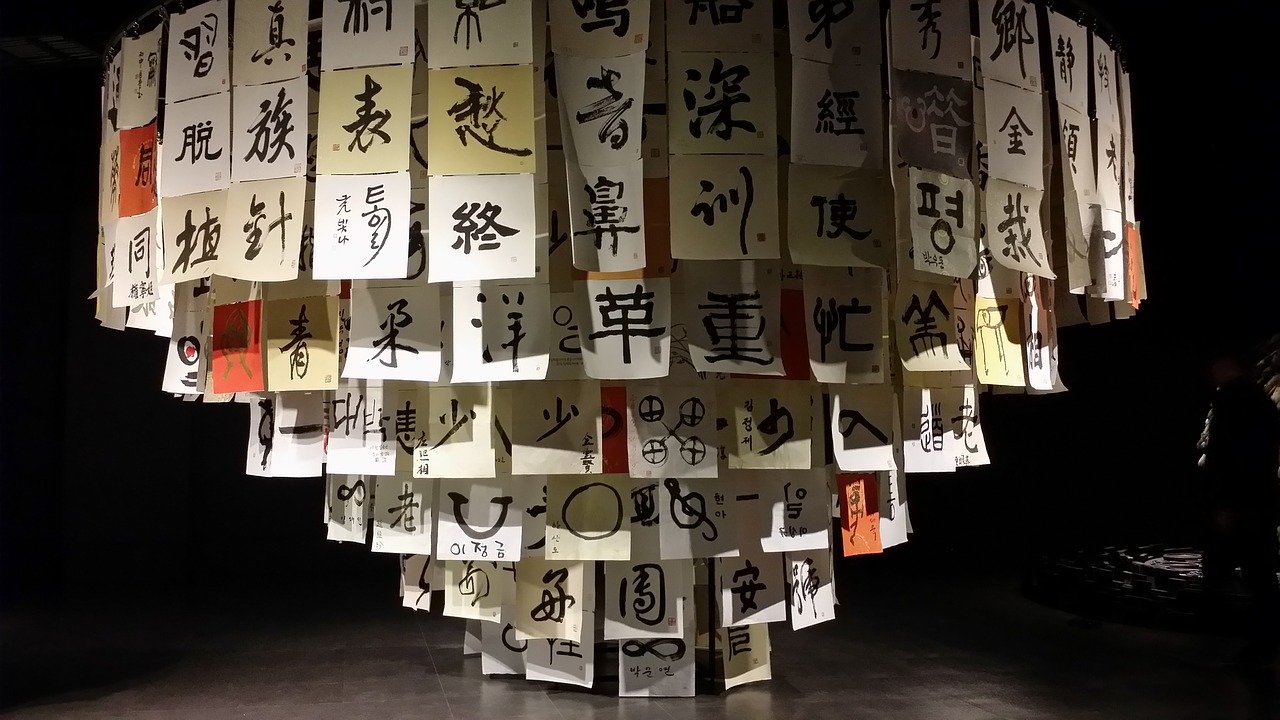
The Complexity of Chinese Characters
The Chinese writing system is one of the oldest and most complex in the world, relying on logograms rather than an alphabet. Each character represents a syllable and often a complete word or concept. Key aspects include:
- Thousands of characters: Over 50,000 exist, though only about 3,500 are commonly used.
- Strokes and radicals: Characters are built from strokes and organized by radicals, which hint at meaning or pronunciation.
- No phonetic consistency: Unlike alphabetic systems, characters don’t always indicate pronunciation.
Tonal Nature of Spoken Chinese
Chinese is a tonal language, where pitch changes alter word meanings. Mandarin, for example, has four primary tones and a neutral tone. Key features include:
See AlsoLearning Chinese is easier than you think- Meaning shifts with tone: The syllable ma can mean mother (first tone) or horse (third tone).
- Regional tonal variations: Cantonese uses up to nine tones, adding complexity.
- Critical for comprehension: Mispronouncing a tone can lead to misunderstandings.
Lack of Verb Conjugation and Tenses
Chinese grammar stands out for its simplicity in verb usage compared to many languages. Notable traits include:
- No conjugation: Verbs remain unchanged regardless of subject or number.
- Time indicated by context: Words like yesterday or tomorrow replace verb tense changes.
- Aspect particles: Words like le (了) mark completed actions instead of past tense.
High Contextual Dependence
Chinese relies heavily on context to convey meaning, making it both flexible and nuanced. Key points include:
- Omitting subjects/objects: Sentences often drop pronouns if context is clear.
- Word order flexibility: Meaning can shift based on phrasing, even with the same words.
- Idiomatic expressions: Proverbs and chengyu (成语) pack layered meanings.
Dialect Diversity and Mutual Unintelligibility
Chinese encompasses numerous dialects, many of which are mutually unintelligible. Highlights include:
See AlsoAn Introduction to Chinese Dialects- Major groups: Mandarin, Cantonese, Shanghainese, and Minnan differ drastically.
- Shared writing system: Characters unite dialects, though pronunciation varies.
- Regional identity: Dialects often reflect cultural and historical distinctions.
What are the 3 interesting facts about Chinese language?
The Chinese Language Has the Most Native Speakers Worldwide
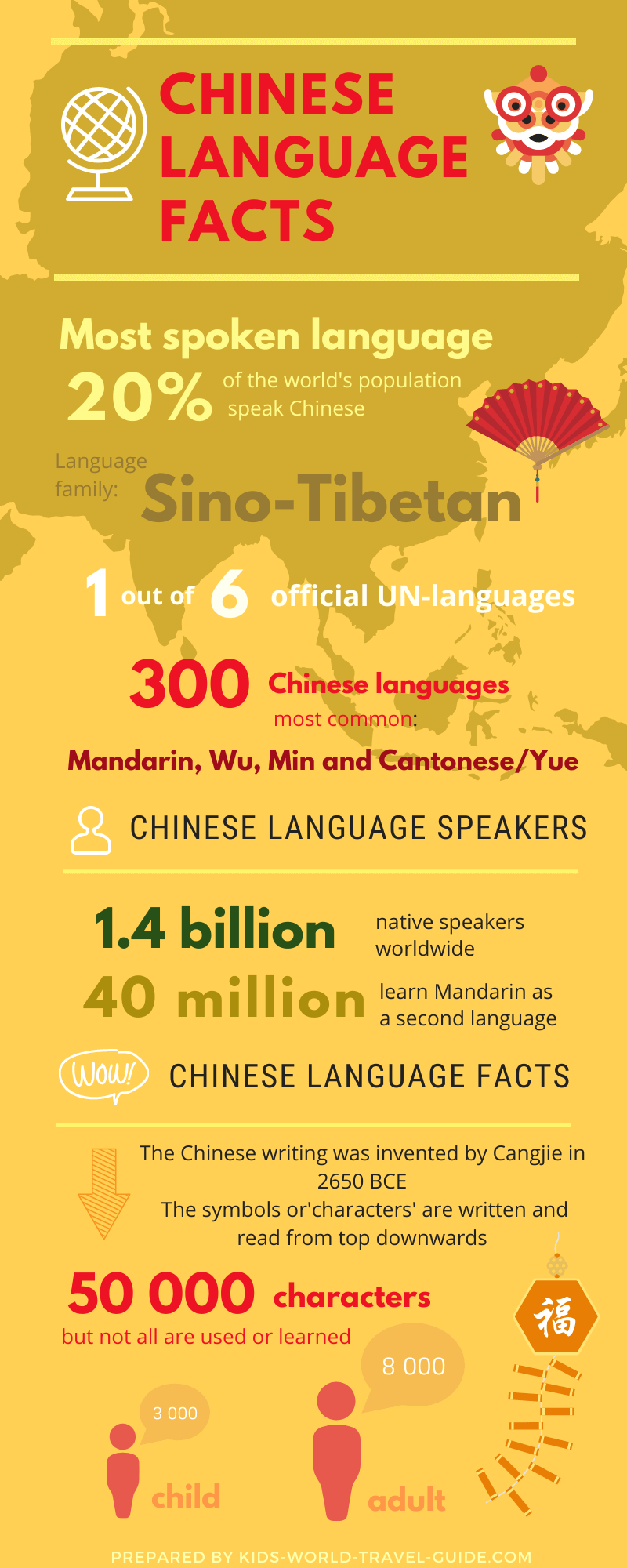
Mandarin Chinese is the most spoken language globally, with over 1.1 billion native speakers. This dominance is due to China's massive population and the widespread use of Mandarin as the official language. Here are some key points:
- Mandarin alone accounts for approximately 14% of the world's population as native speakers.
- Chinese includes multiple dialects, but Mandarin is the standardized form used in education and media.
- It is one of the six official languages of the United Nations.
Chinese Characters Are Among the Oldest Writing Systems Still in Use
The Chinese writing system dates back over 3,000 years, making it one of the oldest continuously used scripts in the world. Unlike alphabetic systems, Chinese uses logograms, where each character represents a word or concept. Key facts include:
See AlsoLearning Chinese as a beginner- There are over 50,000 characters, though only about 20,000 are in modern use.
- To be literate, one must know at least 3,000-4,000 characters.
- The characters evolved from oracle bone script, used for divination in ancient China.
Chinese Is a Tonal Language with Unique Pronunciation Rules
Mandarin Chinese relies on tones to distinguish meaning, making pronunciation critical. A single syllable can have multiple meanings based on its intonation. Here’s why this is fascinating:
- There are four main tones and a neutral tone, each altering a word's meaning.
- For example, mā (妈) means mother, while mà (骂) means scold.
- Mispronouncing tones can lead to confusing or humorous misunderstandings.
The Chinese Language Has Influenced Many Other Asian Languages
Chinese has significantly shaped the vocabulary and writing systems of neighboring languages like Japanese, Korean, and Vietnamese. Here’s how:
- Kanji in Japanese and Hanja in Korean are derived from Chinese characters.
- Over 60% of Korean vocabulary has Chinese origins.
- Classical Chinese was the literary language of East Asia for centuries.
Chinese Grammar Is Surprisingly Simple Compared to Many Languages
Despite its complex writing system, Chinese grammar is relatively straightforward with no verb conjugations, tenses, or grammatical gender. Key features include:
- Verbs remain the same regardless of subject or time (e.g., eat is always 吃).
- Time is indicated by context or adverbs rather than verb changes.
- There are no plural forms or articles like a or the.
What is the Speciality of Chinese language?

The Complexity and Uniqueness of Chinese Characters
The Chinese language is renowned for its logographic writing system, where each character represents a word or a meaningful part of a word. Unlike alphabetic systems, Chinese characters are visually complex and often combine radicals and phonetic components to convey meaning and pronunciation. This system has been used for thousands of years, making it one of the oldest continuously used writing systems in the world.
- Logographic nature: Each character stands for a word or morpheme.
- Radicals: Components that hint at meaning or category.
- Phonetic elements: Parts of characters that suggest pronunciation.
Tonal System in Spoken Chinese
Chinese is a tonal language, meaning that the pitch or intonation used when pronouncing a word can change its meaning entirely. Mandarin, the most widely spoken Chinese dialect, has four main tones and a neutral tone. This feature makes pronunciation critical for clear communication.
- Four main tones: High, rising, falling-rising, and falling.
- Neutral tone: A lighter, unstressed pronunciation.
- Meaning differentiation: The same syllable with different tones can mean different things.
Rich Cultural and Historical Influence
The Chinese language is deeply intertwined with China's history and culture. Classical Chinese literature, philosophy, and poetry have shaped the language over millennia. Many idioms and proverbs derive from ancient texts, reflecting the wisdom and values of Chinese civilization.
- Classical texts: Works like the Analects of Confucius influence modern language.
- Idioms (Chengyu): Four-character phrases with deep historical roots.
- Poetic traditions: Forms like Tang poetry showcase linguistic beauty.
Simplified vs. Traditional Characters
Chinese has two main writing systems: Simplified and Traditional characters. Simplified characters, introduced in the 20th century, are used in mainland China, while Traditional characters remain in use in Taiwan, Hong Kong, and Macau. This distinction reflects regional and political differences.
- Simplified characters: Fewer strokes, easier to learn.
- Traditional characters: Preserve historical forms and calligraphic beauty.
- Regional usage: Depends on political and cultural contexts.
Global Importance and Economic Relevance
With China's rise as a global economic power, learning Chinese has become increasingly valuable. Mandarin is the most spoken language worldwide by native speakers, and proficiency in Chinese opens doors to business, diplomacy, and cultural exchange.
- Economic opportunities: China's market is a major global player.
- Diplomatic significance: Chinese is a key language in international relations.
- Cultural exchange: Understanding Chinese fosters deeper global connections.
What is unique about Chinese characters?
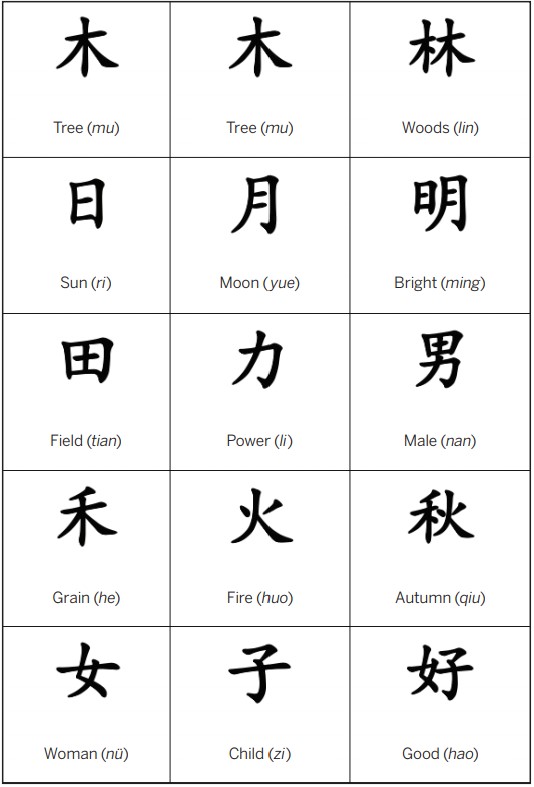
1. Logographic Writing System
Chinese characters are logographic, meaning each character represents a word or a meaningful part of a word, unlike alphabetic systems where letters represent sounds. This makes Chinese writing highly visual and symbolic.
- Each character carries meaning, not just pronunciation.
- Thousands of characters exist, with around 3,500 needed for basic literacy.
- Characters can combine to form new words, adding layers of meaning.
2. Pictographic and Ideographic Origins
Many Chinese characters originated as pictographs (drawings of objects) or ideographs (symbolic representations of ideas). Over time, these evolved into stylized forms.
- Examples: 山 (shān) means mountain and resembles peaks.
- 日 (rì) means sun and originally looked like a circle with a dot.
- Modern characters retain traces of their ancient visual roots.
3. Radicals and Component Structure
Chinese characters are built from radicals (components that hint at meaning or pronunciation). This modular system aids learning and classification.
- 214 radicals form the building blocks of characters.
- Radicals often indicate a character’s general category (e.g., 水 (shuǐ) for water-related words).
- Phonetic components suggest pronunciation but aren’t always reliable.
4. Tonal and Homophone Challenges
Chinese is a tonal language, and characters help distinguish between homophones (words with the same sound but different meanings).
- Example: 妈 (mā) (mother) vs. 马 (mǎ) (horse).
- Characters provide visual differentiation where speech relies on tone.
- This reduces ambiguity in written communication.
5. Calligraphy as an Art Form
Chinese characters are central to calligraphy, a revered art form emphasizing brushstrokes, balance, and aesthetics.
- Styles range from seal script (ancient) to cursive (flowing).
- Mastery requires years of practice to achieve expressive precision.
- Calligraphy reflects cultural values like discipline and harmony.
Frequently Asked Questions (FAQ)
What makes the Chinese language unique compared to other languages?
The Chinese language stands out due to its logographic writing system, where each character represents a word or meaningful syllable, unlike alphabetic systems. Additionally, its tonal nature means that pitch changes can alter word meanings entirely. The language's historical continuity over thousands of years and its cultural depth embedded in idioms and proverbs further distinguish it. Finally, its grammatical simplicity—lacking verb conjugations and tenses—makes it structurally unique among world languages.
How do Chinese characters contribute to the language's uniqueness?
Chinese characters are a defining feature, as they are not based on an alphabet but instead represent meaningful units or morphemes. This system allows for visual storytelling, where radicals and strokes often hint at a character's meaning or pronunciation. The sheer number of characters—over 50,000, though only about 3,500 are commonly used—reflects the language's rich complexity. Moreover, characters unify diverse Chinese dialects, enabling mutual written understanding despite spoken differences.
Why are tones so important in the Chinese language?
Tones are crucial in Chinese because they change word meanings entirely. Mandarin, for example, has four primary tones and a neutral tone, meaning the same syllable can have multiple meanings based on pitch. This tonal precision makes pronunciation vital for clarity. Mispronouncing a tone can lead to misunderstandings, emphasizing the language's oral intricacy. Unlike non-tonal languages, where intonation conveys emotion, in Chinese, tones are grammatical and lexical necessities.
How has Chinese maintained its linguistic traditions over millennia?
The Chinese language has preserved its historical roots through continuous use of classical texts like Confucian works, which remain influential today. The conservative nature of its writing system, evolving gradually from oracle bone script to modern characters, has aided this continuity. Additionally, China's cultural reverence for its language has ensured that ancient idioms, poetry, and proverbs remain in daily use. This unbroken thread connects contemporary speakers to their linguistic heritage in a way few languages can claim.
Leave a Reply
Related Posts