
Chinese Measure Words Quiz How Many Do You Know?

Chinese measure words, or classifiers, are an essential part of Mandarin grammar, used to specify quantities and categorize nouns. While English has simple terms like a piece of or a cup of, Chinese employs a vast array of measure words, each paired with specific objects or concepts. From 个 (gè) for general items to 张 (zhāng) for flat objects, mastering these classifiers can be challenging for learners. How well do you know them? Test your knowledge with this quiz and discover how many Chinese measure words you can correctly identify. Whether you're a beginner or advanced learner, this fun challenge will sharpen your Mandarin skills!
Chinese Measure Words Quiz: How Many Do You Know?
What Are Chinese Measure Words?
Chinese measure words, also known as classifiers, are used between a number and a noun to specify the quantity or type of object. Unlike in English, where you can simply say three books, Mandarin requires a measure word: 三本书 (sān běn shū), where 本 (běn) is the measure word for books. These words add precision and context to sentences.
| Measure Word | Usage | Example |
|---|---|---|
| 个 (gè) | General-purpose | 一个人 (yī gè rén) - one person |
| 张 (zhāng) | Flat objects | 一张纸 (yī zhāng zhǐ) - one sheet of paper |
Why Are Measure Words Important in Chinese?
Measure words are essential in Mandarin because they clarify the relationship between numbers and nouns. Without them, sentences can sound unnatural or confusing. For example, saying 三书 (sān shū) instead of 三本书 (sān běn shū) is grammatically incorrect. Mastering measure words improves fluency and helps learners sound more like native speakers.
See AlsoThe benefits of a comprehension-based approach for teaching and learning Chinese| Importance | Explanation |
|---|---|
| Grammar Rules | Mandarin requires measure words for counting. |
| Context Clarity | They specify the type or shape of objects. |
Common Chinese Measure Words You Should Know
Here are some of the most frequently used measure words in Mandarin:
| Measure Word | Category | Example |
|---|---|---|
| 只 (zhī) | Animals, one of a pair | 一只猫 (yī zhī māo) - one cat |
| 辆 (liàng) | Vehicles | 一辆车 (yī liàng chē) - one car |
How to Practice Chinese Measure Words
To master measure words, try these effective methods: flashcards, quizzes, and immersion. For example, use a quiz like Chinese Measure Words Quiz: How Many Do You Know? to test your knowledge. Listening to native speakers and repeating phrases also helps reinforce learning.
| Method | Description |
|---|---|
| Flashcards | Write measure words and their uses. |
| Quizzes | Test yourself regularly. |
Fun Facts About Chinese Measure Words
Did you know that some measure words are based on ancient traditions? For example, 匹 (pǐ) was originally used for horses because of their importance in historical China. Others, like 条 (tiáo), describe long, flexible objects like snakes or rivers.
See AlsoHow to fake sounding like a native Chinese speaker| Measure Word | Historical Context |
|---|---|
| 匹 (pǐ) | Linked to horses in ancient times. |
| 条 (tiáo) | Used for ribbon-like objects. |
How many Chinese words do you need to know?
How Many Chinese Words Are Needed for Basic Communication?
To achieve basic communication in Chinese, you need to know around 500 to 1,000 words. This vocabulary range allows you to handle everyday conversations, such as greetings, shopping, and asking for directions. Here’s a breakdown:
- Essential phrases: Learn common expressions like 你好 (hello) and 谢谢 (thank you).
- Survival vocabulary: Focus on words related to food, transportation, and numbers.
- Simple questions: Master interrogatives like 哪里? (where?) and 多少钱? (how much?).
How Many Chinese Words Are Required for Intermediate Fluency?
For intermediate fluency, aim for 2,500 to 3,500 words. This level enables deeper discussions, reading simple texts, and understanding TV shows with subtitles. Key areas include:
See AlsoHow do Chinese People Learn to Write Chinese Characters?- Expanded vocabulary: Learn terms for hobbies, work, and travel.
- Grammar structures: Understand more complex sentence patterns.
- Idiomatic expressions: Familiarize yourself with common sayings and slang.
How Many Chinese Words Are Necessary for Advanced Proficiency?
Reaching advanced proficiency requires knowing 5,000 to 8,000 words. At this stage, you can engage in professional discussions, read newspapers, and enjoy literature. Focus on:
- Specialized terminology: Acquire vocabulary related to your field of interest.
- Nuanced language: Learn synonyms and formal vs. informal usage.
- Cultural references: Understand proverbs and historical context.
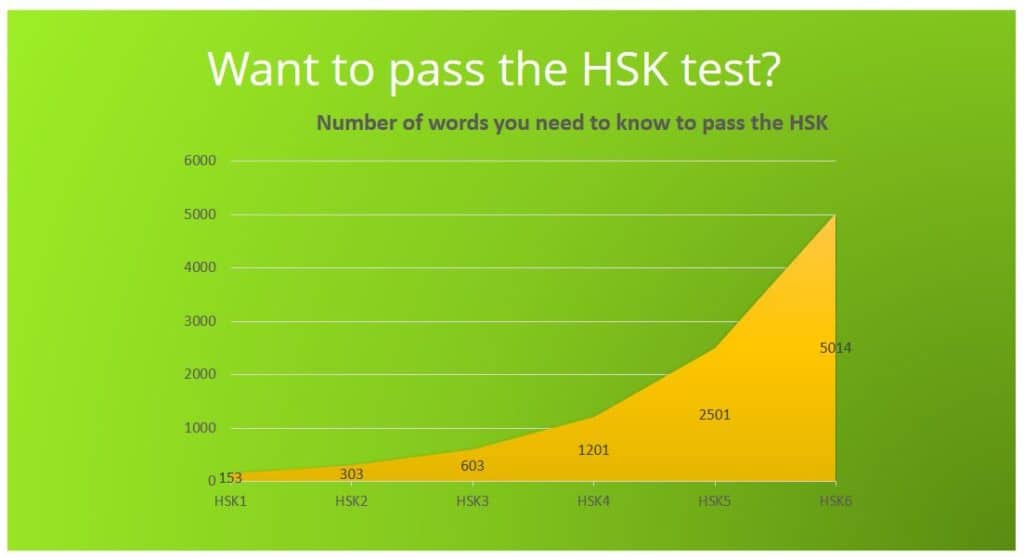
How Do Chinese Word Counts Compare to HSK Levels?
The HSK exam benchmarks vocabulary requirements for each proficiency level. Here’s how they align:
- HSK 1-2: 150-300 words (basic).
- HSK 3-4: 600-1,200 words (intermediate).
- HSK 5-6: 2,500-5,000+ words (advanced).
What Strategies Help Learn Chinese Words Efficiently?
To learn Chinese words effectively, combine these methods:
- Spaced repetition: Use apps like Anki to reinforce memory.
- Contextual learning: Study words in sentences or stories.
- Active practice: Speak and write regularly to retain vocabulary.
What is 家 a measure word for?
What is 家 (jiā) as a Measure Word?
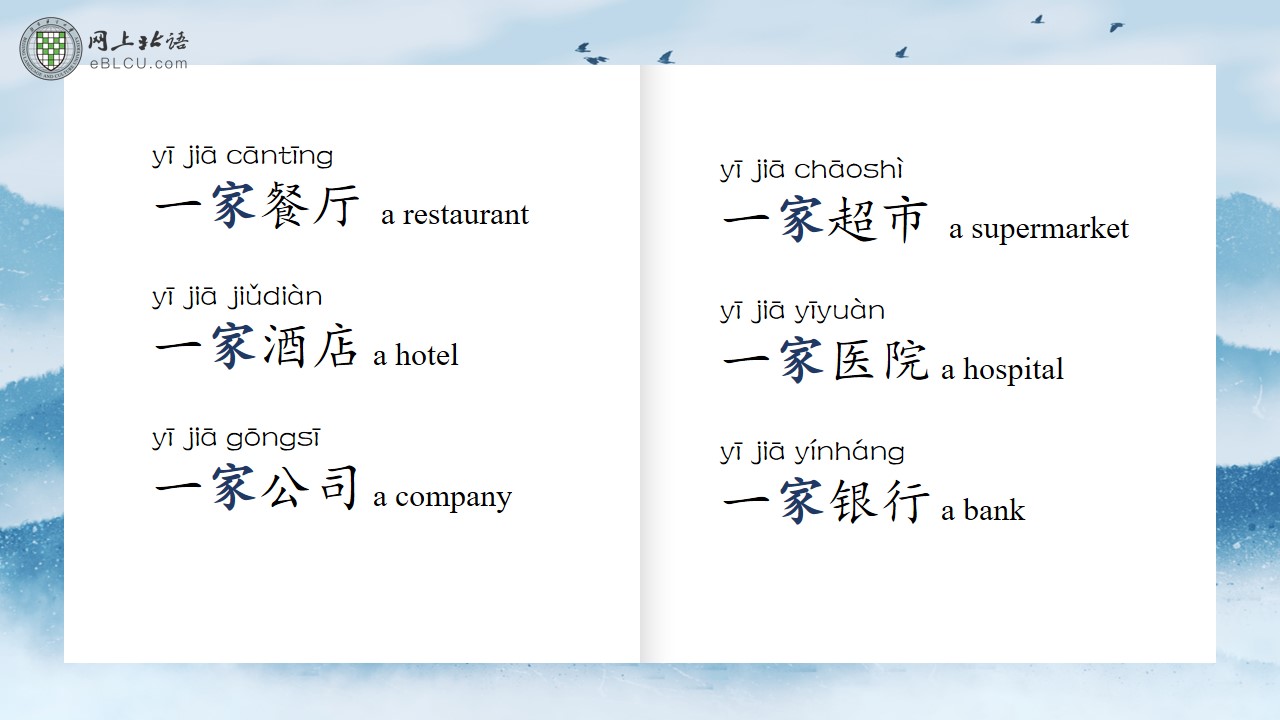
The Chinese measure word 家 (jiā) is primarily used to count or quantify households, families, businesses, or institutions. It emphasizes the idea of a collective unit, often referring to entities that operate as a single establishment or group. For example:
- Families/Households: 一家三口 (yī jiā sān kǒu) means a family of three.
- Businesses/Companies: 两家餐厅 (liǎng jiā cāntīng) translates to two restaurants.
- Institutions: 一家医院 (yī jiā yīyuàn) refers to one hospital.
Common Uses of 家 as a Measure Word
家 is versatile and applies to various contexts where the concept of a unified entity is central. Here are key examples:
- Families: Used for counting family units, e.g., 三家邻居 (sān jiā línjū) – three neighboring families.
- Shops/Restaurants: Quantifies commercial establishments, e.g., 一家超市 (yī jiā chāoshì) – one supermarket.
- Organizations: Includes NGOs, schools, or banks, e.g., 四家银行 (sì jiā yínháng) – four banks.
家 vs. Other Measure Words for Places
Unlike measure words like 个 (gè) or 座 (zuò), 家 specifically highlights the organizational or functional aspect of a place. Compare:
- 家 implies a functioning entity: 一家公司 (yī jiā gōngsī) – a company.
- 座 focuses on buildings: 一座大楼 (yī zuò dàlóu) – one building.
- 个 is general: 一个商店 (yī gè shāngdiàn) – a shop.
Exceptions and Special Cases for 家
While 家 is broadly used, some exceptions exist:
- Non-commercial groups: Rarely used for informal gatherings, e.g., not 一家朋友 (incorrect for a group of friends).
- Geographical locations: Not used for cities or countries, e.g., 一个城市 (yī gè chéngshì) – one city.
- Temporary setups: Avoid for pop-up stalls; use 个 instead.
Cultural Significance of 家 as a Measure Word
The use of 家 reflects the cultural importance of collective identity in Chinese society. Key points:
- Family-centric: Reinforces the value of family as a unit.
- Business cohesion: Highlights enterprises as unified entities.
- Historical context: Linked to Confucian ideals of harmony within groups.
How to learn Chinese measure words?
Understanding the Basics of Chinese Measure Words
Chinese measure words, or classifiers, are used between a number and a noun to specify quantity. They are essential because nouns in Chinese cannot be counted directly. Here’s how to grasp the basics:
- Start with common measure words like 个 (gè), which is the most versatile and often used as a default.
- Learn the general rules: Measure words often relate to the shape, type, or category of the noun.
- Practice with simple nouns such as 人 (person) or 苹果 (apple) to build familiarity.
Memorizing Measure Words Through Categories
Grouping measure words by categories can simplify memorization. Here’s how to approach it:
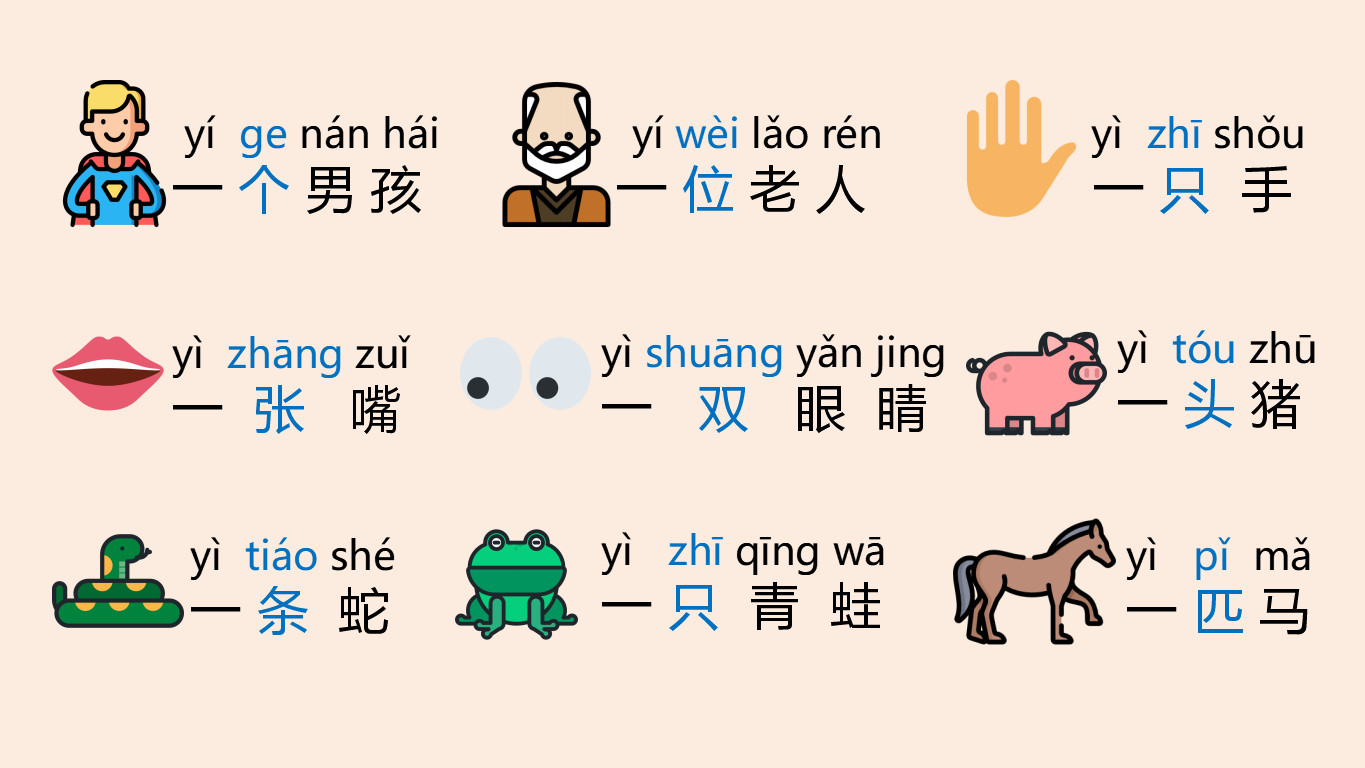
- Animals: Use 只 (zhī) for small animals like cats or birds.
- Flat objects: Use 张 (zhāng) for paper, tickets, or tables.
- Long, thin objects: Use 条 (tiáo) for rivers, roads, or fish.
Using Mnemonics to Remember Measure Words
Mnemonics can help associate measure words with their nouns. Here’s how to apply this technique:
- Create vivid associations: Link 把 (bǎ), used for objects with handles, like grasping a knife.
- Use rhymes or stories: For example, 辆 (liàng) for vehicles sounds like wheels in motion.
- Visualize the noun: Picture 本 (běn) for books as a stack of pages bound together.
Practicing Measure Words in Context
Applying measure words in real-life sentences reinforces learning. Here’s how to practice effectively:
- Write sentences daily: Use new measure words in simple phrases like 三本书 (three books).
- Listen to native speakers: Pay attention to measure words in conversations or media.
- Use flashcards: Include example sentences to see measure words in action.
Common Mistakes to Avoid When Learning Measure Words
Beginners often make errors with measure words. Here’s how to avoid them:
- Overusing 个 (gè): While versatile, it’s not always correct (e.g., 一只猫, not 一个猫).
- Ignoring exceptions: Some nouns use irregular measure words, like 头 (tóu) for cows.
- Mixing up similar measure words: For example, 张 (zhāng) vs. 片 (piàn) for flat objects.
Frequently Asked Questions (FAQ)
What are Chinese measure words and why are they important?
Chinese measure words, also known as classifiers, are essential components of Mandarin grammar used between numerals and nouns. They help specify the quantity or type of object being discussed. Unlike English, where you can say three books directly, Chinese requires a measure word like 本 (běn) for books, resulting in 三本书 (sān běn shū). Mastering measure words is crucial for fluency, as they provide clarity and cultural nuance in communication. Without them, sentences may sound unnatural or confusing to native speakers.
How many Chinese measure words should I learn as a beginner?
For beginners, focusing on the 20-30 most common measure words is a practical starting point. Examples include 个 (gè) for general objects, 张 (zhāng) for flat items like paper, and 只 (zhī) for animals. While there are hundreds of measure words in Chinese, learning the high-frequency ones will cover most everyday situations. As you progress, you can gradually expand your knowledge to include more specialized classifiers.
Are there any tricks to remembering Chinese measure words?
Yes! Grouping measure words by categories (e.g., shapes, functions) can aid memorization. For instance, 条 (tiáo) is used for long, flexible objects like ropes or fish, while 辆 (liàng) is for vehicles. Mnemonics and associations also help—imagine 把 (bǎ) as a grip for objects with handles, like umbrellas. Regular practice through quizzes, flashcards, or real-life usage will reinforce retention and make recall more intuitive over time.
Can I use the general measure word 个 (gè) for everything?
While 个 (gè) is the most versatile and commonly used measure word, relying on it exclusively isn't ideal. Native speakers often use specific measure words to sound more natural and precise. For example, 三个人 (sān gè rén) is acceptable for three people, but 三本书 (sān běn shū) is preferred over 三个书 for three books. Overusing 个 may make your speech sound overly simplistic or even incorrect in certain contexts.
Leave a Reply
Related Posts