
How to fake sounding like a native Chinese speaker

Mastering the nuances of a language goes beyond vocabulary and grammar—it’s about sounding authentic. For those learning Chinese, achieving a native-like accent and flow can be challenging but not impossible. This article explores practical tips to help you mimic the rhythm, tone, and colloquialisms of native Chinese speakers. From mastering tones and common slang to adopting natural speech patterns, these techniques will elevate your fluency and confidence. Whether for travel, business, or personal growth, sounding like a native can bridge cultural gaps and enhance communication. Discover how subtle adjustments in pronunciation and phrasing can make a world of difference.
How to Fake Sounding Like a Native Chinese Speaker
Mastering Common Chinese Phrases and Slang
To sound like a native Chinese speaker, you need to go beyond textbook phrases. Learn colloquial expressions and slang used in daily conversations. For example, instead of saying 很好 (hěn hǎo – very good), natives might say 牛逼 (niú bī – awesome). Watch Chinese dramas or vlogs to pick up informal language.
| Formal Phrase | Native-like Slang |
|---|---|
| 谢谢 (xiè xiè – thank you) | 谢啦 (xiè la – thanks!) |
| 你好吗?(nǐ hǎo ma? – How are you?) | 最近咋样?(zuì jìn zǎ yàng? – What’s up lately?) |
Perfecting Your Chinese Pronunciation and Tones
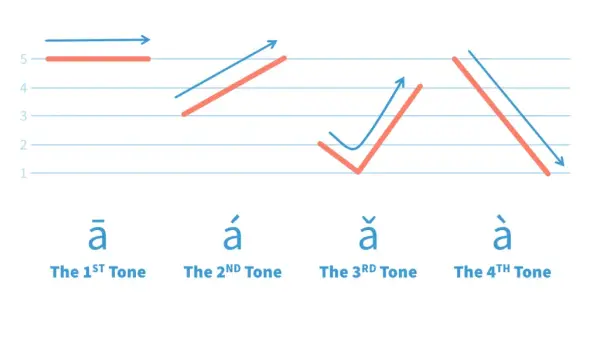
Mandarin Chinese relies heavily on tones, and mispronouncing them can make you sound unnatural. Practice mimicking native speakers by listening to podcasts or repeating after voice recordings. Pay attention to intonation patterns in questions vs. statements.
See AlsoThe time barrel: How to find more time to study Chinese| Word | Tone Pattern |
|---|---|
| 妈妈 (mā ma – mom) | First tone (flat) |
| 买 (mǎi – buy) | Third tone (fall-rise) |
Using Fillers and Natural Pauses
Native speakers often use fillers like 那个 (nèi ge – um/uh) or 就是 (jiù shì – like) in conversations. These small words make speech sound more fluid. Avoid speaking too perfectly—pauses and hesitations are normal.
| Filler Word | Usage |
|---|---|
| 嗯 (ēn – uh-huh) | Agreeing or acknowledging |
| 然后 (rán hòu – and then) | Connecting thoughts |
Adopting Local Accents and Dialect Influences
Different regions in China have unique accents and dialect influences. For example, speakers from Beijing may add an 儿 (ér) sound to words. If mimicking a specific accent, study regional speech patterns through local media.
| Region | Accent Feature |
|---|---|
| Beijing | 儿化音 (ér huà yīn – er suffix) |
| Shanghai | Softer consonants |
Mimicking Native Speaker Body Language
Non-verbal cues like hand gestures, facial expressions, and nodding play a big role in sounding authentic. Chinese speakers often use subtle movements to emphasize points. Observe how natives communicate in videos.
See AlsoWhat native speakers know about Chinese (and what they don’t)| Gesture | Meaning |
|---|---|
| Pointing to nose | Me? (when referring to oneself) |
| Hand wave | Dismissing an idea politely |
How can I sound more like a native speaker?
Master Common Idioms and Expressions
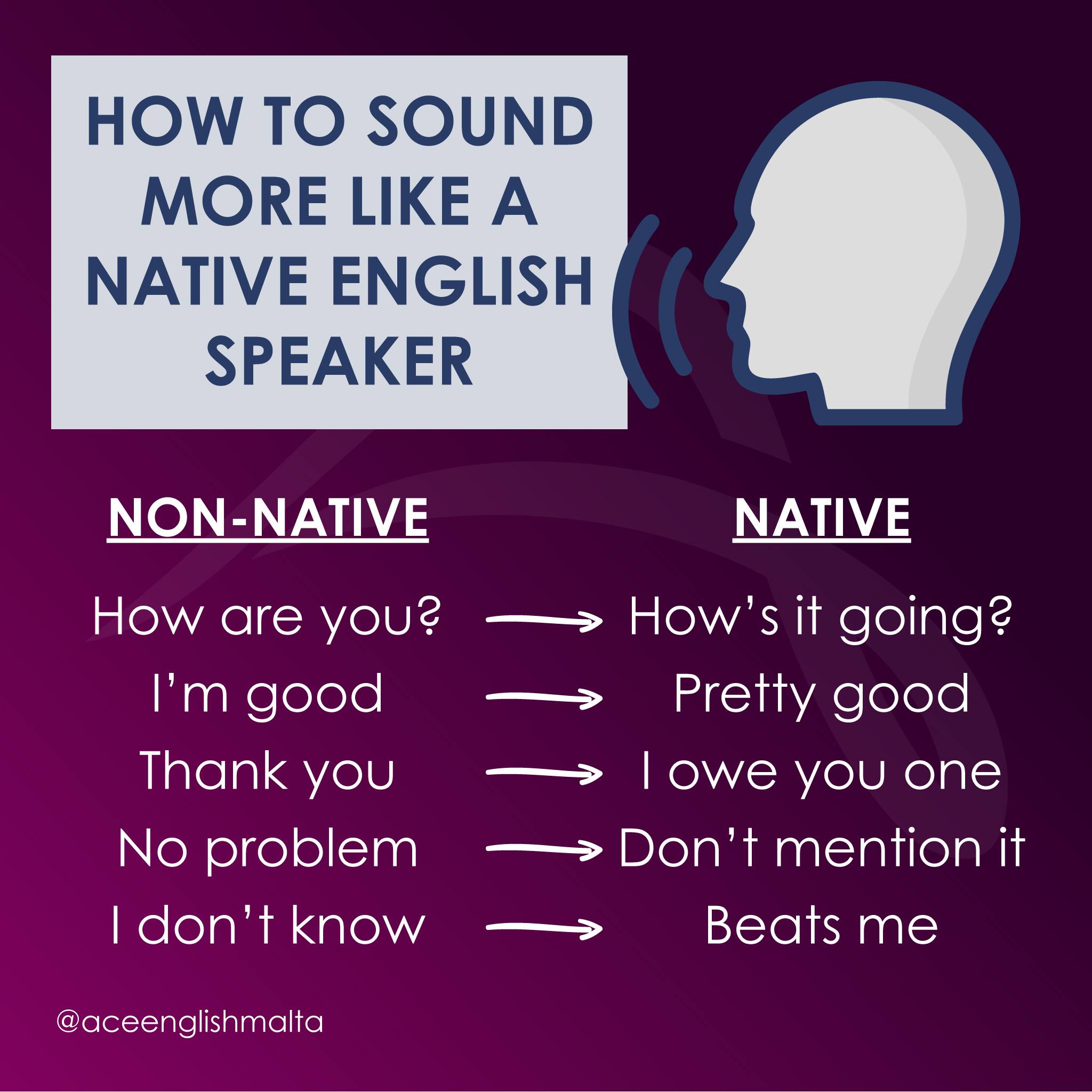
To sound more like a native speaker, familiarize yourself with idioms and colloquial expressions used in everyday conversation. These phrases often don’t translate literally, so learning them in context is key.
- Study common idioms like hit the sack (go to bed) or piece of cake (very easy).
- Listen to native speakers in movies, podcasts, or conversations to hear how they use these expressions naturally.
- Practice using idioms in your own sentences to make them feel more natural.
Improve Your Pronunciation and Intonation
Pronunciation and intonation play a huge role in sounding native. Pay attention to how words are stressed and how the pitch of your voice changes during sentences.
See AlsoChinese Online Slang- Mimic native speakers by repeating phrases exactly as you hear them.
- Use pronunciation tools like Forvo or YouTube tutorials to refine tricky sounds.
- Record yourself and compare your speech to native speakers to identify areas for improvement.
Expand Your Vocabulary with Slang and Informal Words
Native speakers often use slang and informal terms in casual settings. Incorporating these words can make your speech sound more natural.
- Learn slang relevant to your target dialect (e.g., cool, chill, or awesome).
- Avoid outdated terms—slang evolves quickly, so focus on current usage.
- Use slang appropriately, as overusing it or misapplying it can sound unnatural.
Understand and Use Contractions Naturally
Contractions (e.g., I’m, don’t, can’t) are a hallmark of native speech. Using them correctly makes your language flow more smoothly.
- Practice common contractions until they feel automatic in conversation.
- Listen for contractions in spoken English to understand where they fit naturally.
- Avoid over-formal language—native speakers rarely say do not instead of don’t in casual speech.
Immerse Yourself in the Language Daily
Immersion is one of the fastest ways to adopt native-like speech patterns. Surround yourself with English in various forms.
- Watch TV shows and movies in English with subtitles to pick up nuances.
- Engage in conversations with native speakers, even if it’s just online.
- Read books, articles, and social media in English to absorb natural phrasing.
Do native Chinese speakers use tones?
How Important Are Tones in Chinese for Native Speakers?
Tones are absolutely essential for native Chinese speakers because they distinguish word meanings. Mandarin Chinese has four primary tones and a neutral tone, and mispronouncing them can lead to misunderstandings. For example:
- Mā (妈) means mother, while mà (骂) means scold.
- The same syllable shī can mean lion (狮) or poem (诗) depending on the tone.
- Native speakers rely on tones instinctively, just as English speakers distinguish between ship and sheep.
Do Native Chinese Speakers Make Tone Mistakes?
While native speakers use tones naturally, they can still make mistakes, especially in fast speech or regional dialects. Some common errors include:
- Tone sandhi rules, like the third-tone change, can trip up even natives in complex sentences.
- Regional accents may alter tones slightly (e.g., Southern Mandarin speakers often mix second and third tones).
- Slang or casual speech sometimes downplays tones, but context usually clarifies meaning.
How Do Children Learn Tones in Chinese?
Chinese children acquire tones effortlessly through immersion, much like English learners pick up stress patterns. Key observations include:
- Babies mimic tones before mastering vocabulary, often babbling with correct pitch.
- Parents exaggerate tones when speaking to toddlers, reinforcing distinctions.
- By age 3–4, most children use tones accurately, though complex rules (e.g., tone sandhi) come later.
Can Context Override Tones in Chinese?
While tones are critical, context can sometimes compensate for errors. Examples include:
- In predictable phrases (e.g., nǐ hǎo), even a wrong tone may be understood.
- Written Chinese (characters) avoids ambiguity, unlike pinyin, which relies on tones.
- Native speakers use grammatical and situational clues to interpret mumbled or mispronounced tones.
Do All Chinese Dialects Use the Same Tones?
Chinese dialects vary widely in tone systems. For instance:
- Cantonese has six to nine tones, far more than Mandarin.
- Some dialects, like Shanghainese, use pitch accent instead of distinct tones.
- Cross-dialect communication can be challenging due to tone differences, even among native speakers.
Frequently Asked Questions (FAQ)
What are the key pronunciation tips to sound like a native Chinese speaker?
Mastering tones is the most critical aspect of sounding like a native Chinese speaker. Mandarin Chinese has four main tones and a neutral tone, and mispronouncing them can change the meaning of words entirely. Practice with pinyin and listen to native speakers to mimic their intonation. Additionally, pay attention to retroflex sounds like zh, ch, and sh, which are uncommon in English. Using rhythm and flow naturally, rather than speaking word by word, will also make your speech sound more authentic.
How can I improve my vocabulary to sound more like a native?
To sound like a native, focus on learning colloquial phrases and idiomatic expressions that textbooks often overlook. Words like 那个 (nèi ge) as a filler or 靠谱 (kào pǔ) for reliability are commonly used in daily conversations. Incorporate measure words correctly, as natives use them instinctively (e.g., 一本书 (yī běn shū) for a book). Watching Chinese TV shows or listening to podcasts can help you pick up natural vocabulary and slang.
What are common grammar mistakes to avoid when trying to sound native?
Many learners struggle with word order, such as placing time phrases at the beginning of sentences (e.g., 我昨天去了商店 instead of 我去商店昨天). Another pitfall is overusing 是 (shì) for to be, which isn’t always necessary in Chinese (e.g., 我很忙 vs. 我是很忙). Also, avoid translating English sentence structures directly—Chinese often omits subjects or uses shorter, more concise phrasing. Practicing with native speakers can help you internalize these nuances.
How important is cultural context in sounding like a native Chinese speaker?
Cultural context plays a huge role in sounding authentic. Using phrases like 你吃了吗? (Have you eaten?) as a greeting or understanding modesty norms (e.g., downplaying compliments) can make your speech more natural. Familiarize yourself with Chinese humor, proverbs, and etiquette to avoid sounding robotic or out of place. Engaging with native content, such as social media or local news, will help you grasp these subtleties over time.
Leave a Reply
Related Posts