
Learning the second tone in Mandarin Chinese

Mastering the second tone in Mandarin Chinese is a crucial step for learners aiming to achieve accurate pronunciation. Known as the rising tone, it starts at a medium pitch and ascends sharply, similar to the inflection in an English question. Unlike the flat first tone or the falling-rising third tone, the second tone requires a clear upward movement, often challenging for beginners. Mispronouncing it can lead to misunderstandings, as tone changes alter word meanings entirely. This article explores effective techniques to practice the second tone, common pitfalls to avoid, and practical exercises to refine your skills. With consistent practice, you’ll soon distinguish and produce this tone confidently.
Mastering the Second Tone in Mandarin Chinese
Understanding the Second Tone in Mandarin Chinese
The second tone in Mandarin Chinese is a rising tone, represented by the diacritic mark (´) in Pinyin. It starts at a mid-level pitch and rises to a higher pitch, similar to the inflection used in English when asking a question (e.g., Really?). Proper pronunciation is crucial because changing the tone can alter the meaning of a word entirely. For example:
| Pinyin | Character | Meaning (Tone 2) | Other Tone Example |
|---|---|---|---|
| má | 麻 | hemp | mā (妈 - mother, 1st tone) |
How to Pronounce the Second Tone Correctly
To produce the second tone, begin at a natural pitch (like the middle of your vocal range) and glide upward sharply. A helpful trick is to mimic the sound of a question in English (e.g., Huh?). Practice with words like méi (没 - not) or tóng (同 - same) while recording yourself to compare.
See AlsoTop 10 Highest Duolingo Streak: Record Holders| Practice Word | Pinyin (Tone 2) | Meaning |
|---|---|---|
| 来 | lái | come |
Common Mistakes When Learning the Second Tone
Learners often confuse the second tone with the first (flat) or third (dipping) tones. Avoid these errors:
- Starting too high (makes it sound like a shout).
- Rising too slowly (blurs the distinction from the third tone).
- Over-exaggerating the rise (unnatural speech).
| Mistake | Why It Happens |
|---|---|
| Flat contour | Incorrectly mimicking the 1st tone |
Words and Phrases to Practice the Second Tone
Reinforce the tone with high-frequency words:
- nǐ hǎo (你好 - hello) (Note: nǐ is 3rd tone, but hǎo has a 2nd-like rise).
- xué (学 - study).
- shí (时 - time).
| Phrase | Pinyin |
|---|---|
| 你好吗? | Nǐ hǎo ma? |
Exercises to Improve Your Second Tone Pronunciation
Try these drills:
1. Tone pairs: Combine the second tone with others (e.g., mā má (妈麻)).
2. Shadowing: Repeat after native speakers (use apps like HelloChinese).
3. Pitch graphs: Visualize your tone with tools like Praat.
| Exercise | Tool |
|---|---|
| Tone recognition | YouTube tone drills |
How to do second tone in Chinese?
How to Pronounce the Second Tone in Chinese
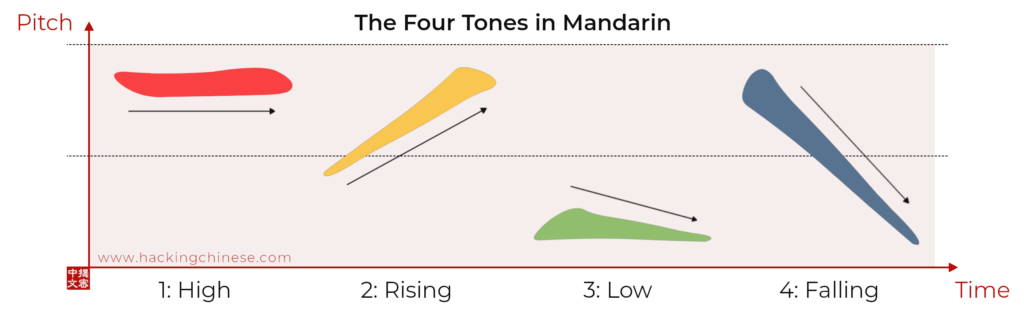
The second tone in Chinese, also known as the rising tone, is marked by a rising pitch that starts at a mid-level and moves upward. To produce it correctly:
- Start at a medium pitch, similar to the neutral tone but slightly higher.
- Raise your voice smoothly, as if asking a question in English.
- Avoid a sharp or abrupt rise—keep the transition natural and steady.
Examples of the Second Tone in Mandarin
Here are common words using the second tone to practice:
See AlsoDuolingo Status Icons: What They Represent and How to Use- má (麻) – hemp or numb
- rén (人) – person
- nǐ (你) – you (Note: The tone changes in context, but the base is second tone.)
Common Mistakes When Using the Second Tone
Avoid these errors to master the rising tone:
- Starting too high or too low—aim for a mid-level beginning.
- Over-exaggerating the rise, making it sound unnatural.
- Confusing it with the first tone (high and flat) or third tone (dipping).
Tips to Practice the Second Tone Effectively
Improve your pronunciation with these methods:
- Use tone pairs—practice words combining the second tone with others (e.g., míngtiān 明天).
- Record yourself and compare with native speakers.
- Mimic questions in English to internalize the rising pitch.
How the Second Tone Changes in Context
In fluent speech, the second tone may adjust slightly:
See AlsoWhy High School in China 5 Reasons Why You Should Do It- Before another second tone, the first one often starts higher.
- In rapid speech, the rise may be less pronounced.
- In questions, it can merge with the sentence’s intonation.
What is the 3-3-3 rule in Mandarin?

What is the 3-3-3 Rule in Mandarin?
The 3-3-3 rule in Mandarin refers to a structured approach for learning and practicing the language. It breaks down the learning process into three key components: 3 words, 3 sentences, and 3 minutes. The idea is to focus on mastering a small set of vocabulary and phrases daily to build consistency and retention.
- 3 words: Learn three new Mandarin words each day to expand vocabulary gradually.
- 3 sentences: Use these words to construct three simple sentences, reinforcing context and grammar.
- 3 minutes: Spend at least three minutes practicing pronunciation and repetition to improve fluency.
Why Use the 3-3-3 Rule for Learning Mandarin?
The 3-3-3 rule is effective because it simplifies language learning into manageable tasks, reducing overwhelm. By focusing on small, daily goals, learners can maintain motivation and track progress more easily.
- Prevents burnout: Short, focused sessions avoid mental fatigue.
- Builds habits: Consistency is key for long-term language retention.
- Encourages active use: Constructing sentences helps apply vocabulary in real-life contexts.
How to Apply the 3-3-3 Rule Daily
Applying the 3-3-3 rule requires discipline and a clear plan. Start by selecting relevant words and crafting sentences that align with your learning goals.
- Choose practical words: Focus on high-frequency vocabulary like greetings or common verbs.
- Write simple sentences: Use basic grammar structures to form meaningful phrases.
- Practice aloud: Repeat sentences to improve pronunciation and confidence.
Benefits of the 3-3-3 Rule for Beginners
Beginners in Mandarin often struggle with consistency, but the 3-3-3 rule provides a clear framework to overcome this challenge.
- Quick wins: Small achievements boost motivation.
- Gradual progress: Avoids cramming and promotes steady improvement.
- Adaptable: Can be adjusted based on individual pace and goals.
Common Mistakes to Avoid with the 3-3-3 Rule
While the 3-3-3 rule is straightforward, learners may encounter pitfalls that hinder progress.
- Skipping days: Consistency is crucial for effectiveness.
- Overcomplicating sentences: Start simple to avoid frustration.
- Neglecting review: Revisit previous words and sentences to reinforce memory.
How do you say 1, 2, 3, 4, 5, 6, 7, 8, 9, 10 in Chinese?

Basic Chinese Numbers from 1 to 10
The numbers from 1 to 10 in Chinese are as follows:
- 1 – 一 (yī)
- 2 – 二 (èr)
- 3 – 三 (sān)
- 4 – 四 (sì)
- 5 – 五 (wǔ)
- 6 – 六 (liù)
- 7 – 七 (qī)
- 8 – 八 (bā)
- 9 – 九 (jiǔ)
- 10 – 十 (shí)
Pronunciation Tips for Chinese Numbers
Correct pronunciation is essential when learning Chinese numbers. Here are key points:
- Yī (1) has a high, flat tone.
- Èr (2) has a falling tone, starting higher and dropping sharply.
- Sān (3) has a mid-level tone that rises slightly.
- Sì (4) has a sharp falling tone, similar to a command.
- Wǔ (5) has a dipping tone, falling then rising.
Writing Chinese Numbers Correctly
When writing Chinese numbers, stroke order matters. Follow these guidelines:
- 一 (yī) is a single horizontal stroke.
- 二 (èr) consists of two horizontal strokes, top to bottom.
- 三 (sān) has three horizontal strokes, written from top to bottom.
- 四 (sì) includes an outer frame before inner strokes.
- 五 (wǔ) starts with a short horizontal stroke, followed by a vertical one.
Common Mistakes When Learning Chinese Numbers
Avoid these frequent errors:
- Confusing 四 (sì) with 十 (shí) due to similar shapes.
- Mispronouncing 七 (qī) as chi instead of a soft chee.
- Forgetting the rising tone in 九 (jiǔ).
- Writing 六 (liù) with incorrect stroke order.
- Mixing up 二 (èr) and 两 (liǎng), both meaning two but used differently.
Practical Uses of Chinese Numbers
Numbers are used daily in Chinese. Examples include:
- Counting objects: 一个苹果 (yī gè píngguǒ) – one apple.
- Telling time: 三点 (sān diǎn) – 3 o’clock.
- Phone numbers: 五五五 (wǔ wǔ wǔ) – 555.
- Prices: 十元 (shí yuán) – 10 yuan.
- Age: 我九岁 (wǒ jiǔ suì) – I am nine years old.
How to memorize Mandarin tones?
Understanding the Basics of Mandarin Tones
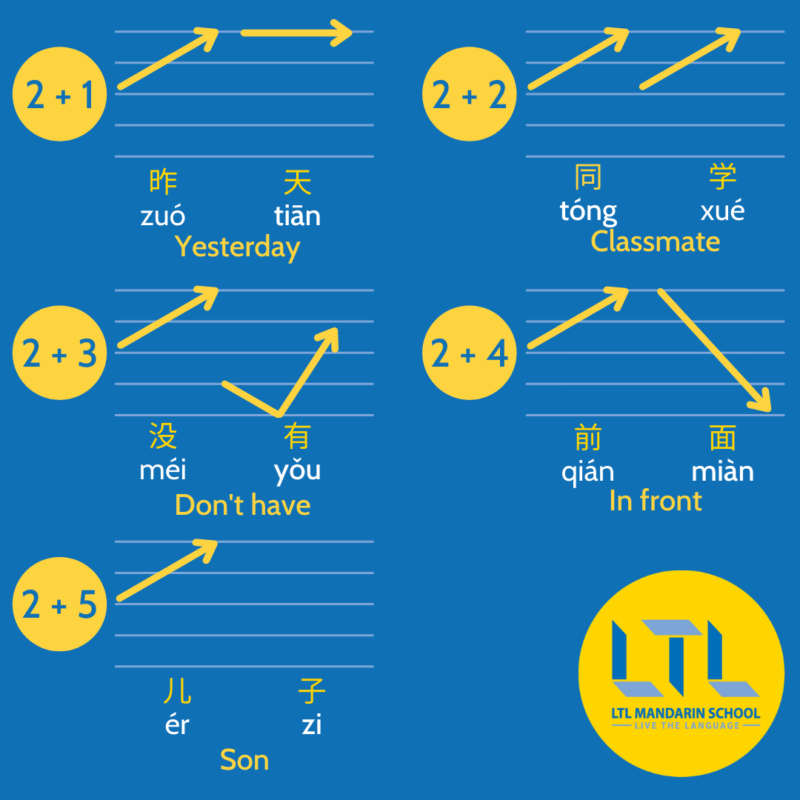
Mandarin Chinese has four primary tones and a neutral tone, each altering the meaning of a word. To memorize them, start by recognizing their distinct pitch patterns:
- First tone (high-level): A steady, high pitch (e.g., mā 妈 - mother).
- Second tone (rising): Starts mid and rises (e.g., má 麻 - hemp).
- Third tone (dipping): Starts mid, dips low, then rises (e.g., mǎ 马 - horse).
- Fourth tone (falling): Starts high and drops sharply (e.g., mà 骂 - scold).
- Neutral tone: Short and light, with no fixed pitch (e.g., ma 吗 - question particle).
Using Mnemonics and Visual Associations
Associating tones with visual cues or mnemonic devices can reinforce memory. For example:
- Imagine the first tone as a flat line (—) or a musical note held steady.
- Picture the second tone as an upward arrow (↗) or a question’s rising inflection.
- Visualize the third tone as a checkmark (✓) or a dip in a rollercoaster.
- Link the fourth tone to a downward arrow (↓) or an emphatic command.
- Use color-coding (e.g., red for falling, green for rising) to reinforce patterns.
Practicing with Tone Pairs and Sentences
Mastering tone pairs and contextual sentences helps internalize patterns naturally. Focus on:
- Drilling common two-syllable combinations (e.g., nǐ hǎo 你好 - hello).
- Listening to native speakers and mimicking their intonation in full sentences.
- Recording yourself to compare your pronunciation with reference audio.
Leveraging Technology and Apps
Use language apps and interactive tools to reinforce tone recognition:
- Apps like Pleco or HelloChinese offer tone-drilling exercises.
- YouTube channels with tone-comparison videos highlight subtle differences.
- Speech recognition tools (e.g., Google Pinyin) provide instant feedback.
Engaging in Active Listening and Repetition
Immerse yourself in Mandarin audio and repeat aloud to build muscle memory:
- Watch Chinese TV shows or listen to podcasts, noting tone shifts.
- Shadowing: Repeat phrases immediately after hearing them, matching pitch and rhythm.
- Practice with a language partner or tutor for corrective feedback.
Frequently Asked Questions (FAQ)
What is the second tone in Mandarin Chinese?
The second tone in Mandarin Chinese is one of the four primary tones used in the language. It is characterized by a rising pitch, similar to the intonation used in English when asking a question. For example, the word má (麻), meaning hemp, starts at a mid-level pitch and rises sharply. Mastering this tone is crucial because mispronunciation can change the meaning of a word entirely, leading to confusion in communication.
How do I practice the second tone correctly?
To practice the second tone effectively, start by listening to native speakers or audio resources to internalize the rising pitch. Use tools like pinyin charts or language apps that provide tone drills. Repeat words like táng (糖, sugar) or xué (学, study), focusing on the upward inflection. Recording yourself and comparing it to native pronunciation can help identify errors. Consistent practice with minimal pairs (e.g., mā vs. má) will sharpen your tonal accuracy.
Why is the second tone difficult for English speakers?
The second tone poses a challenge for English speakers because English relies more on stress and intonation rather than fixed pitch patterns. While English uses rising tones for questions, Mandarin applies them to individual syllables, requiring precise pitch control. Many learners unintentionally flatten the tone or over-exaggerate the rise, making words like yún (云, cloud) sound unnatural. Overcoming this requires active listening and muscle memory training for the vocal cords.
What are common mistakes when using the second tone?
Common mistakes include starting too high or too low, which disrupts the rising contour, or confusing it with the first tone (high and flat). For instance, saying shéi (谁, who) with a flat pitch turns it into shēi, which is incorrect. Another error is ending the rise too abruptly, making it sound like a question mark in English. To avoid these, practice with tone pairs (e.g., hēi + hēi) and seek feedback from tutors or language partners.
Leave a Reply
Related Posts