
How to learn Chinese pronunciation as a beginner

Learning Chinese pronunciation as a beginner can seem daunting, but with the right approach, it becomes manageable and even enjoyable. Mandarin Chinese relies heavily on tones and distinct sounds that may not exist in your native language, making practice essential. Start by mastering Pinyin, the romanization system that helps you understand pronunciation rules. Focus on the four tones, as they change the meaning of words entirely. Listening to native speakers, repeating sounds aloud, and using language apps can significantly improve your accuracy. Consistency and patience are key—regular practice will help you build confidence and clarity in your Chinese pronunciation over time.
How to Learn Chinese Pronunciation as a Beginner
Learning Chinese pronunciation as a beginner can be challenging but rewarding. Mandarin Chinese relies heavily on tones and phonetics, which are different from most Western languages. To master pronunciation, focus on Pinyin (the romanization system for Chinese), tones, and consistent practice with native speakers or audio resources.
1. Understanding Pinyin: The Foundation of Chinese Pronunciation
Pinyin is the romanization system used to represent Chinese characters with the Latin alphabet. It helps beginners pronounce words correctly before learning characters. Key components include:
See AlsoApproaches to reading in Chinese- Initials (consonants)
- Finals (vowels or vowel combinations)
- Tones (pitch variations that change meaning)
| Pinyin Component | Example |
|---|---|
| Initials (b, p, m, f) | bà (dad), pà (fear) |
| Finals (a, o, ai, ei) | mā (mother), mái (sell) |
| Tones (1st to 4th) | mā (mother), má (hemp), mǎ (horse), mà (scold) |
2. Mastering the Four Tones in Mandarin
Mandarin has four tones and a neutral tone, each changing the meaning of a word. Practicing them is crucial:
- First tone (¯) – High and flat (e.g., mā 妈 – mother)
- Second tone (´) – Rising (e.g., má 麻 – hemp)
- Third tone (ˇ) – Falling then rising (e.g., mǎ 马 – horse)
- Fourth tone (`) – Sharp falling (e.g., mà 骂 – scold)
| Tone | Symbol | Example |
|---|---|---|
| First tone | ¯ | mā (mother) |
| Second tone | ´ | má (hemp) |
| Third tone | ˇ | mǎ (horse) |
| Fourth tone | ` | mà (scold) |
3. Practicing with Native Speakers and Audio Resources
Listening and repeating after native speakers improves accuracy. Use:
- Language exchange apps (Tandem, HelloTalk)
- Chinese podcasts (Slow Chinese, ChineseClass101)
- YouTube channels (Yoyo Chinese, Mandarin Corner)
| Resource Type | Examples |
|---|---|
| Apps | Tandem, HelloTalk |
| Podcasts | Slow Chinese, ChineseClass101 |
| YouTube | Yoyo Chinese, Mandarin Corner |
4. Common Pronunciation Mistakes and How to Avoid Them
Beginners often struggle with:
See AlsoChinese character variants and font differences for language learners- Confusing similar sounds (e.g., sh vs. x)
- Ignoring tones (e.g., saying mā instead of mà)
- Mispronouncing finals (e.g., ian vs. iang)
| Mistake | Correction |
|---|---|
| Sh vs. X | shī (teacher) vs. xī (west) |
| Tone errors | mǎ (horse) vs. mà (scold) |
| Finals mix-up | qián (money) vs. qíng (emotion) |
5. Using Technology to Improve Chinese Pronunciation
Apps and tools can provide instant feedback:
- Pinyin chart apps (e.g., Pleco)
- Speech recognition (e.g., Google Translate)
- Tone drills (e.g., ToneScape)
| Tool | Function |
|---|---|
| Pleco | Pinyin charts & flashcards |
| Google Translate | Speech recognition |
| ToneScape | Tone practice exercises |
How do I start learning Chinese for beginners?
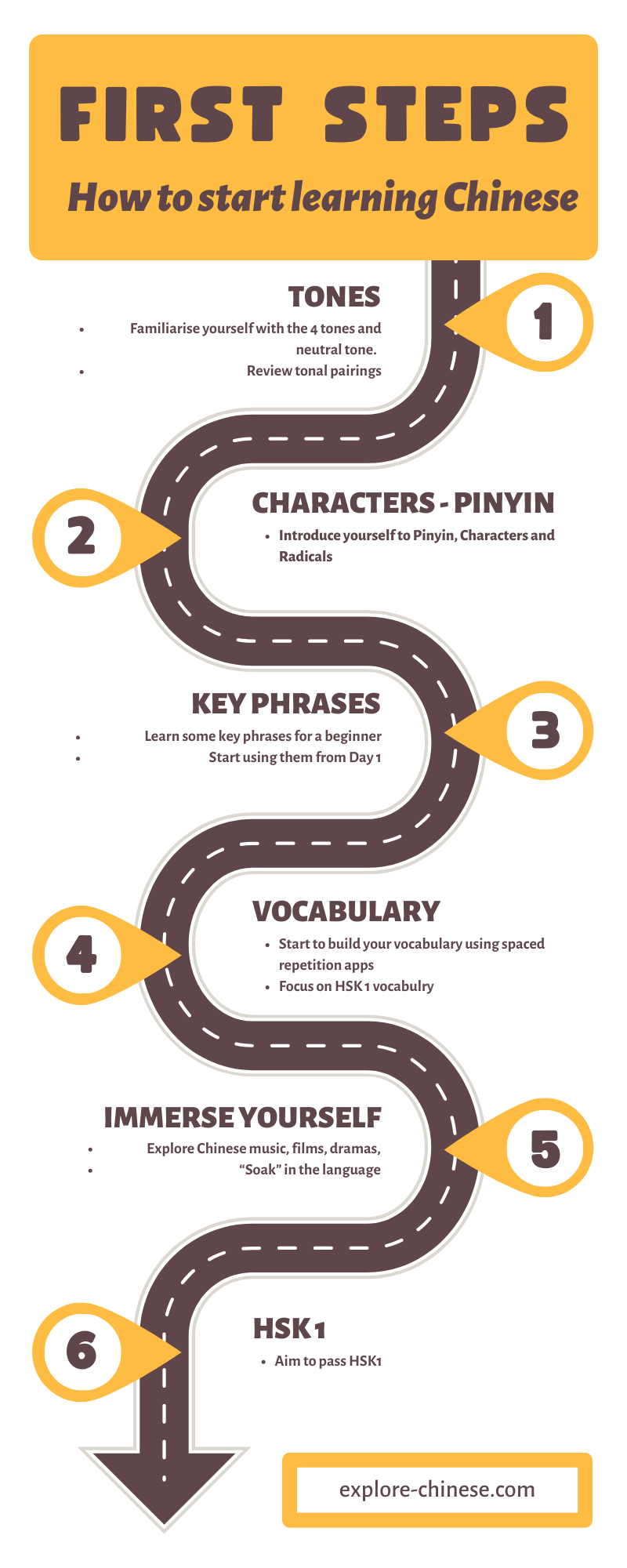
1. Understand the Basics of Chinese Language
Before diving into learning Chinese, it's essential to grasp the fundamentals. Chinese is a tonal language with four main tones and a neutral tone, which can change the meaning of words. Additionally, it uses characters instead of an alphabet, making writing and reading unique challenges.
- Learn Pinyin: Start with Pinyin, the Romanization system for Chinese pronunciation.
- Master Tones: Practice the four tones (flat, rising, falling-rising, falling) to avoid misunderstandings.
- Recognize Characters: Begin with basic characters and radicals to build a foundation.
2. Set Clear Learning Goals
Establishing specific objectives will keep you motivated and focused. Determine whether you want to learn for travel, business, or personal interest, and tailor your approach accordingly.
See Also8 great ways to scaffold your Chinese listening and reading- Short-term Goals: Aim to learn 10-20 new words or characters weekly.
- Long-term Goals: Plan to achieve conversational fluency or pass proficiency tests like HSK.
- Track Progress: Use apps or journals to monitor improvements and adjust strategies.
3. Use the Right Learning Resources
Choosing effective tools is crucial for beginners. A mix of textbooks, apps, and online courses can provide a balanced learning experience.
- Textbooks: Books like Integrated Chinese offer structured lessons.
- Apps: Duolingo, HelloChinese, and Pleco are great for vocabulary and practice.
- Online Courses: Platforms like Coursera or YouTube channels provide free tutorials.
4. Practice Speaking and Listening Daily
Immersion is key to mastering Chinese. Regularly engaging with native speakers or media accelerates learning.
- Language Partners: Use Tandem or HelloTalk to converse with natives.
- Watch Media: Chinese dramas, movies, or news improve listening skills.
- Repeat Aloud: Mimic dialogues or songs to refine pronunciation.
5. Build Vocabulary and Grammar Step by Step
Expanding your word bank and understanding sentence structures will enhance communication. Start simple and gradually increase complexity.
- Common Phrases: Learn greetings, numbers, and daily expressions first.
- Grammar Rules: Study basic sentence patterns (e.g., Subject-Verb-Object).
- Flashcards: Use Anki or physical cards to memorize characters and words.
Can I learn Mandarin in 2 months?

Is It Possible to Learn Mandarin in 2 Months?
While achieving fluency in Mandarin in just 2 months is highly unrealistic, you can make significant progress with intensive study and focused effort. Mandarin is a complex language with tones, characters, and grammar that require time to master. However, if your goal is to learn basic phrases, survival vocabulary, or simple conversations, it is achievable with dedication.
- Immersion: Surround yourself with the language daily through apps, videos, or tutors.
- Prioritize essentials: Focus on high-frequency words and phrases for practical use.
- Practice tones: Mandarin’s tonal nature is critical—consistent practice is key.
What Can You Realistically Achieve in 2 Months?
In two months, a structured approach can help you grasp foundational elements of Mandarin. You won’t be fluent, but you can:
- Introduce yourself and hold basic conversations (e.g., greetings, ordering food).
- Recognize 100-300 characters and understand simple sentences.
- Navigate travel scenarios like asking for directions or shopping.
Best Strategies for Learning Mandarin Quickly
To maximize progress in two months, adopt efficient learning methods:
- Daily practice: Dedicate at least 1-2 hours daily to listening, speaking, and writing.
- Use flashcards: Apps like Anki or Pleco help memorize characters and vocabulary.
- Find a tutor: Personalized feedback accelerates learning, especially for pronunciation.
Common Challenges When Learning Mandarin Fast
Learning Mandarin quickly comes with obstacles:
- Tones: Mispronouncing tones can change meanings entirely (e.g., mā vs. mà).
- Characters: Memorizing Hanzi requires repetition and context.
- Grammar differences: Sentence structure differs from English, requiring adjustment.
Resources to Accelerate Your Mandarin Learning
Leverage these tools to optimize your 2-month study plan:
- Apps: Duolingo, HelloChinese, or Memrise for gamified learning.
- YouTube channels: Yoyo Chinese or ChinesePod for free lessons.
- Language exchange: Platforms like Tandem or HelloTalk to practice with natives.
Frequently Asked Questions (FAQ)
What are the basic sounds in Chinese pronunciation for beginners?
Learning Chinese pronunciation starts with mastering the Pinyin system, which uses the Roman alphabet to represent sounds. Beginners should focus on the four tones (flat, rising, falling-rising, and falling) as they change the meaning of words. Additionally, familiarize yourself with initials (consonant sounds) and finals (vowel sounds). Practicing with audio resources or apps can help you distinguish subtle differences, such as between sh and x or q and ch.
How can I practice Chinese tones effectively as a beginner?
To master Chinese tones, start by listening to native speakers and mimicking their pronunciation. Use tone pairs (two-syllable combinations) to practice transitions between tones naturally. Recording yourself and comparing it to native speech can highlight mistakes. Mnemonics and visual aids, like hand gestures for each tone, also reinforce memory. Consistency is key—daily practice, even for short periods, yields better results than sporadic sessions.
What tools or resources are best for learning Chinese pronunciation?
Beginners should leverage interactive tools like Pinyin trainers, language apps (e.g., HelloChinese, Pleco), and YouTube tutorials. Flashcards with audio (Anki, Quizlet) help reinforce tones and sounds. For real-time feedback, consider language exchange platforms (Tandem, iTalki) to practice with native speakers. Textbooks with accompanying audio, such as Integrated Chinese, provide structured learning. Always prioritize resources with accurate audio examples to avoid developing bad habits.
How long does it take to improve Chinese pronunciation as a beginner?
The time required varies based on practice intensity and language background. With daily focused practice, beginners may notice improvement in 2–3 months, but mastering tones and difficult sounds (like ü or retroflex consonants) can take longer. Immersion—through songs, TV shows, or conversations—accelerates progress. Don’t rush; consistent effort and patience are more important than speed. Tracking progress with recordings can motivate you by highlighting gradual improvements.
Leave a Reply
Related Posts