
Overcoming the problem of having too many Chinese words to learn

Learning Chinese can feel overwhelming due to the sheer number of characters and words required to achieve fluency. With thousands of characters in common use, many learners struggle to retain and recognize them all. However, overcoming this challenge is possible with the right strategies. By focusing on high-frequency words, breaking down characters into radicals, and using spaced repetition systems, learners can build a strong foundation efficiently. Contextual learning and consistent practice also play crucial roles in mastering vocabulary. This article explores practical methods to tackle the vastness of Chinese vocabulary, helping learners progress confidently without feeling buried under an endless list of words to memorize.
- Effective Strategies for Overcoming the Challenge of Learning Too Many Chinese Words
- How can I memorize Chinese words easily?
- What makes learning Chinese so difficult?
- How many Chinese words do you need to learn?
- What is the hardest word to learn in Chinese?
-
Frequently Asked Questions (FAQ)
- What are the most effective strategies for learning a large number of Chinese characters efficiently?
- How can I avoid feeling overwhelmed by the sheer volume of Chinese vocabulary?
- Are there any shortcuts or mnemonics to remember Chinese characters faster?
- How important is writing practice when tackling a large number of Chinese characters?
Effective Strategies for Overcoming the Challenge of Learning Too Many Chinese Words
Learning Chinese can feel overwhelming due to the sheer number of characters and words to memorize. However, with the right strategies, you can streamline your learning process and make steady progress. Below are key approaches to tackle this challenge effectively.
1. Prioritize High-Frequency Words First
Instead of trying to learn every Chinese word at once, focus on the most commonly used ones. Studies show that mastering the top 1,000 words allows you to understand around 70% of everyday conversations.
See AlsoHow To Improve Chinese Vocabulary Using Fast and Effective Methods| Word Frequency | Coverage in Daily Use |
|---|---|
| Top 500 words | ~60% |
| Top 1,000 words | ~70% |
| Top 2,500 words | ~90% |
2. Use Spaced Repetition Systems (SRS)
Spaced repetition is a scientifically proven method to enhance memory retention. Tools like Anki or Pleco help you review words at optimal intervals, ensuring long-term retention without overwhelming your brain.
3. Learn Characters Through Radicals
Chinese characters are built from radicals, which are smaller, meaningful components. By learning these building blocks, you can decode unfamiliar characters more easily and expand your vocabulary faster.
4. Contextual Learning with Sentences
Instead of memorizing isolated words, study them in full sentences. This helps you understand usage patterns, grammar, and collocations naturally, making recall easier in real conversations.
See AlsoRole-playing to learn more Chinese and avoid frustration5. Set Realistic and Measurable Goals
Break down your learning into small, achievable targets, such as 10 new words per day or 5 characters per week. Tracking progress keeps you motivated and prevents burnout.
| Goal Type | Example |
|---|---|
| Daily Target | 10 new words |
| Weekly Target | 50 words + 5 grammar points |
| Monthly Target | 200 words + 20 sentences |
How can I memorize Chinese words easily?
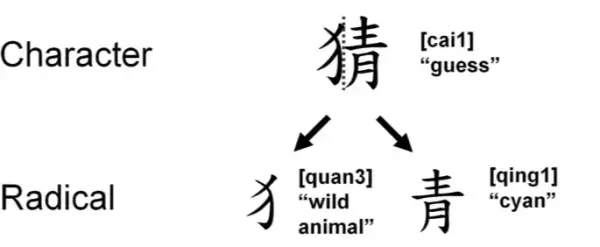
Use Mnemonics to Associate Chinese Characters
Mnemonics are memory aids that help you link new information to familiar concepts. For Chinese characters, this involves breaking them into smaller components and associating them with vivid images or stories. For example:
See AlsoReview: Learning Chinese by video immersion with FluentU- Visualize the character 好 (hǎo, good) as a woman (女) holding a child (子), symbolizing something positive.
- Create exaggerated stories for complex characters like 爱 (ài, love), imagining a friend (友) under a roof (冖) with a heart (心).
- Use apps like Skritter or Anki with built-in mnemonic suggestions.
Practice Writing Characters Regularly
Writing reinforces memory by engaging motor skills. Focus on stroke order and repetition to internalize characters. Key steps:
- Start with basic radicals (e.g., 水 for water-related characters) to build a foundation.
- Use grid paper to maintain proportions and balance.
- Write characters in contextual sentences (e.g., 我喜欢吃水果 – I like to eat fruit) to reinforce usage.
Leverage Spaced Repetition Systems (SRS)
SRS tools like Anki or Pleco schedule reviews based on forgetting curves, optimizing retention. Tips:
- Create flashcards with characters, pinyin, and English meanings.
- Include audio to associate pronunciation with visuals.
- Adjust review intervals if cards feel too easy or hard.
Immerse Yourself in Chinese Media
Exposure to authentic content reinforces vocabulary naturally. Methods:
- Watch Chinese dramas or YouTube channels with subtitles.
- Listen to Mandarin podcasts or music, noting repeated words.
- Read children’s books or graded readers to encounter high-frequency words.
Group Words by Themes or Categories
Organizing vocabulary into thematic clusters (e.g., food, travel) aids recall. Strategies:
- Learn measure words (e.g., 个, 只) alongside related nouns.
- Use mind maps to connect words (e.g., 天气 – weather with 下雨 – rain).
- Label household items with sticky notes in Chinese.
What makes learning Chinese so difficult?

The Complexity of Chinese Characters
One of the biggest challenges in learning Chinese is mastering its logographic writing system. Unlike alphabetic languages, Chinese uses thousands of unique characters, each representing a word or concept. Memorizing these characters requires significant time and effort. Additionally:
- Stroke order must be learned precisely to write characters correctly.
- Many characters look similar but have completely different meanings, leading to confusion.
- Characters often combine radicals and phonetic components, adding layers of complexity.
Tonal Nature of the Language
Chinese is a tonal language, meaning the pitch or intonation of a word can change its meaning entirely. Mandarin, for example, has four main tones and a neutral tone, making pronunciation a major hurdle. Key difficulties include:
- Mispronouncing a tone can result in saying a completely different word.
- Native speakers rely heavily on tones, so errors can lead to misunderstandings.
- Mastering tones requires extensive listening and speaking practice.
Lack of Cognates with English
Unlike many European languages, Chinese shares almost no cognates with English, making vocabulary acquisition more challenging. Learners must:
- Memorize entirely new words with no familiar roots.
- Adapt to a different way of forming concepts and expressions.
- Build vocabulary from scratch without the advantage of shared linguistic history.
Grammar Structure Differences
Chinese grammar differs significantly from English, particularly in its lack of verb conjugations, tenses, and plurals. Instead, it relies on context and particles. Challenges include:
- Understanding how time and plurality are implied rather than explicitly stated.
- Learning sentence structures that may seem counterintuitive to English speakers.
- Grasping the use of measure words, which are mandatory when counting nouns.
Cultural and Contextual Nuances
Chinese is deeply tied to its culture, and many expressions rely on context and historical references. This adds another layer of difficulty:
- Idioms and proverbs often reference classical literature or history.
- Politeness and formality levels vary greatly depending on the situation.
- Regional dialects and slang can differ widely, even within Mandarin.
How many Chinese words do you need to learn?
How Many Chinese Words Are Needed for Basic Communication?
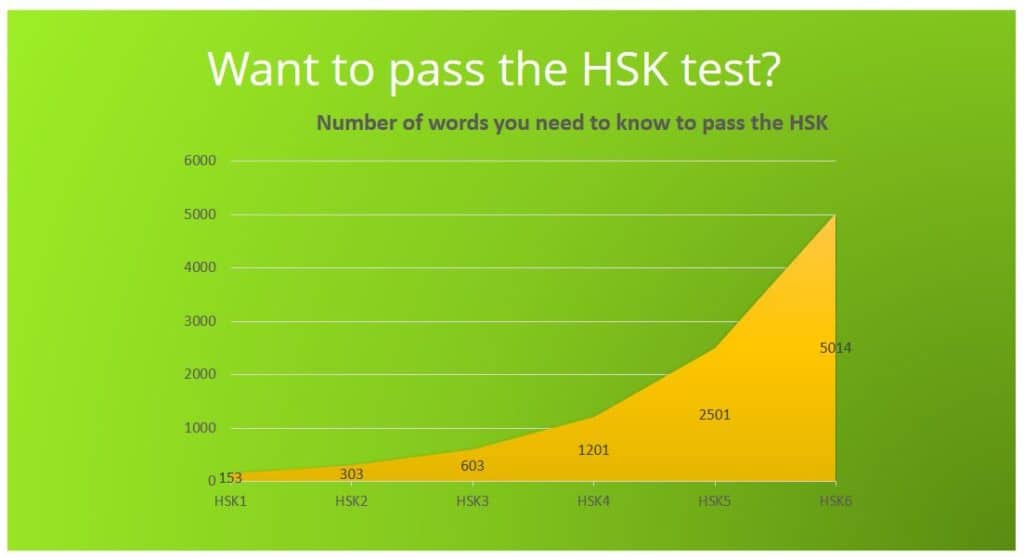
To achieve basic communication in Chinese, learners typically need around 500 to 1,000 words. This vocabulary range allows for simple daily interactions, such as greetings, shopping, and asking for directions.
- Survival phrases: Essential for travel or short-term stays.
- Common verbs and nouns: Key to forming simple sentences.
- Numbers and time expressions: Crucial for scheduling and transactions.
How Many Words Are Required for Intermediate Fluency?
For intermediate fluency, learners should aim for 2,500 to 3,500 words. This level enables deeper conversations, reading basic texts, and understanding more complex ideas.
- Idiomatic expressions: Help sound more natural in speech.
- Work or school-related terms: Necessary for professional or academic settings.
- Cultural references: Enhances comprehension of media and social contexts.
How Many Words Are Needed for Advanced Proficiency?
Advanced proficiency requires 5,000 to 10,000 words, allowing learners to engage in debates, read literature, and grasp nuanced meanings.
- Specialized vocabulary: Needed for fields like business or science.
- Synonyms and antonyms: Adds depth to expression.
- Formal and informal registers: Adapts language to different situations.
How Does HSK Vocabulary Compare to Real-World Needs?
The HSK exam outlines vocabulary benchmarks, but real-world usage often demands more. For example, HSK 6 covers 5,000 words, yet native speakers use 20,000+ words.
- HSK levels: Provide structured learning goals.
- Colloquialisms: Often omitted in standardized tests.
- Regional dialects: May introduce additional vocabulary.
What Strategies Help Learn Chinese Words Efficiently?
Effective strategies include spaced repetition, contextual learning, and active usage to retain and expand vocabulary.
- Flashcards: Tools like Anki reinforce memory.
- Immersion: Watching shows or reading books in Chinese.
- Conversation practice: Applying words in real-life scenarios.
What is the hardest word to learn in Chinese?
Why Are Some Chinese Words Harder to Learn Than Others?
Learning Chinese can be challenging due to its unique writing system, tones, and lack of cognates with English. Some words are particularly difficult because they combine complex characters, multiple tones, and abstract meanings. Here are key reasons:
- Tonal variations: A single syllable can have multiple meanings based on tone.
- Character complexity: Some characters have many strokes and rare radicals.
- Context dependency: Words may change meaning based on usage.
What Makes the Word Biáng Extremely Difficult?
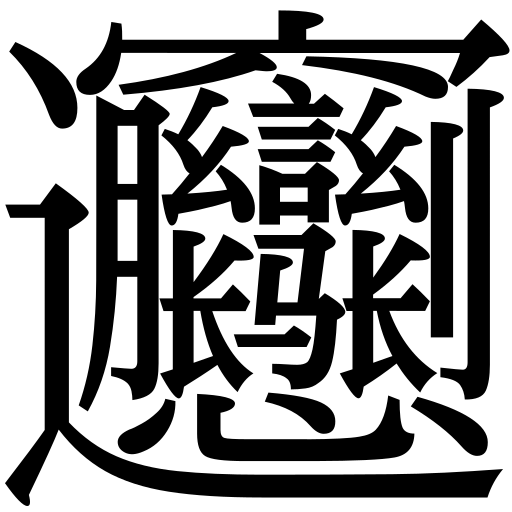
The word Biáng (used in Biáng Biáng noodles) is often considered one of the hardest due to its insane character complexity. Here’s why:
- Stroke count: The character has 58 strokes, making it one of the most complex.
- Rare usage: It’s a colloquial term not found in standard dictionaries.
- No pinyin input: Typing it digitally requires special methods.
How Do Tones Make Words Like Ma Tricky?
The word Ma is a classic example of tonal difficulty. Depending on tone, it can mean:
- First tone (mā): Mother (妈).
- Second tone (má): Hemp (麻).
- Third tone (mǎ): Horse (马).
- Fourth tone (mà): Scold (骂).
Why Are Measure Words Like Ge and Zhī Challenging?
Chinese measure words (量词) are tough because they require memorizing which word pairs with which noun. Examples:
- Ge (个): General measure word, but exceptions exist.
- Zhī (只): Used for animals, yet some objects also use it.
- No direct English equivalent: Forces learners to rethink noun classification.
What Role Does Cultural Context Play in Difficult Words?
Some words are hard because they rely on cultural nuances. For example:
- 关系 (guānxi): Means connections but implies social networks.
- 面子 (miànzi): Translates to face but refers to reputation.
- Idiomatic phrases: Like 对牛弹琴 (playing lute to a cow—wasted effort).
Frequently Asked Questions (FAQ)
What are the most effective strategies for learning a large number of Chinese characters efficiently?
Spaced repetition systems (SRS) like Anki or Pleco are highly effective for memorizing Chinese characters. These tools use algorithms to present words at optimal intervals, ensuring long-term retention. Another strategy is focusing on high-frequency characters first, such as those in the HSK word lists, which cover the most commonly used vocabulary. Additionally, breaking characters into radicals helps learners recognize patterns and meanings more easily, making memorization less overwhelming.
How can I avoid feeling overwhelmed by the sheer volume of Chinese vocabulary?
To prevent burnout, set realistic daily goals, such as learning 5-10 new characters per day, and consistently review older ones. Contextual learning—studying words within sentences or stories—also makes retention easier. Another helpful approach is grouping related words (e.g., food, travel, or business terms) to create mental associations. Lastly, engaging with native content, like TV shows or podcasts, reinforces vocabulary naturally without feeling like rote memorization.
Are there any shortcuts or mnemonics to remember Chinese characters faster?
Yes, mnemonic techniques can significantly speed up learning. For example, associating characters with images or stories (e.g., the character 休 xiū meaning rest resembles a person leaning against a tree). Another method is using phonetic components to guess pronunciation, though this isn't always foolproof. Tools like Remembering the Hanzi by Heisig or apps like Skritter incorporate such mnemonics to make character learning more intuitive and engaging.
How important is writing practice when tackling a large number of Chinese characters?
Writing by hand reinforces memory by engaging motor skills and visual recognition, but it’s not strictly necessary for everyone. If your goal is fluent reading or speaking, you may prioritize recognition over writing. However, practicing stroke order can deepen understanding of character structure. For efficiency, many learners combine typing in Pinyin with selective handwriting practice, focusing on the most essential characters first.
Leave a Reply
Related Posts