
Should you learn Chinese vocabulary from lists?

Learning Chinese vocabulary from lists is a common practice among language learners, but is it the most effective method? While lists offer a structured way to memorize characters and phrases, they often lack context, making retention challenging. Chinese is a tonal language with complex characters, meaning rote memorization alone may not lead to fluency. Lists can be useful for quick reference or targeted study, but they should ideally be supplemented with immersive techniques like reading, speaking, and listening. This article explores the pros and cons of relying on vocabulary lists and suggests strategies to maximize their effectiveness while avoiding common pitfalls in language acquisition.
Should You Learn Chinese Vocabulary from Lists?
Learning Chinese vocabulary from lists can be an effective method for some learners, but it also has its drawbacks. Lists provide a structured and organized way to memorize words quickly, making them useful for beginners or those preparing for exams. However, relying solely on lists may lead to rote memorization without proper context, hindering long-term retention and practical usage.
The Pros of Learning Chinese Vocabulary from Lists
Lists offer a systematic approach to vocabulary acquisition, allowing learners to track progress efficiently. They are particularly helpful for memorizing high-frequency words and HSK exam preparation. Additionally, lists can be easily integrated into flashcard apps like Anki, enhancing spaced repetition learning.
See AlsoHSK 3 Vocabulary Test (300 Words)| Advantage | Description |
|---|---|
| Structured Learning | Organized word groups for focused study |
| Efficient Memorization | Quick recall of essential vocabulary |
| Exam Preparation | Ideal for HSK and standardized tests |
The Cons of Learning Chinese Vocabulary from Lists
While lists are convenient, they often lack contextual usage, making it difficult to apply words in real conversations. Without sentence examples or cultural insights, learners may struggle with natural fluency. Over-reliance on lists can also lead to burnout due to monotonous repetition.
| Disadvantage | Description |
|---|---|
| Lack of Context | Words learned in isolation |
| Limited Retention | Harder to recall without practical use |
| Monotony | Repetitive learning can be demotivating |
How to Make Vocabulary Lists More Effective
To maximize the benefits of vocabulary lists, combine them with real-life practice. Use words in sentences, engage in conversations, and listen to native content. Incorporating mnemonics and visual aids can also improve retention.
| Strategy | Implementation |
|---|---|
| Contextual Learning | Use words in sentences and dialogues |
| Spaced Repetition | Review words at increasing intervals |
| Multisensory Techniques | Combine audio, visuals, and writing |
Alternative Methods to Learn Chinese Vocabulary
Beyond lists, immersive learning through TV shows, podcasts, and books can enhance vocabulary naturally. Language exchange partners and tutoring sessions provide interactive practice, reinforcing word usage in authentic scenarios.
See AlsoHSK 5 Vocabulary Test (450+ Words)| Method | Benefit |
|---|---|
| Immersion | Learn words in cultural context |
| Conversation Practice | Reinforce vocabulary through speaking |
| Reading & Listening | Exposure to varied vocabulary usage |
When Should You Use Vocabulary Lists?
Vocabulary lists are best suited for beginners building foundational knowledge or advanced learners targeting specific terminology. They work well as a supplement but should not replace active usage in speaking and writing.
| Situation | Recommendation |
|---|---|
| Initial Learning Phase | Use lists for core vocabulary |
| Exam Preparation | Focus on HSK-specific word lists |
| Quick Reference | Review before conversations or tests |
How many words is considered fluent in Chinese?

What is the General Word Count for Fluency in Chinese?
Fluency in Mandarin Chinese typically requires knowledge of around 2,500 to 3,000 words. This range allows learners to understand and engage in most daily conversations, read newspapers, and follow TV shows with relative ease. Below are key points to consider:
See AlsoHow to Learn Chinese Characters: Six Effective Techniques- Basic fluency (A2-B1 level) requires about 1,000-1,500 words for simple interactions.
- Intermediate fluency (B2 level) demands 2,000-2,500 words to handle more complex topics.
- Advanced fluency (C1-C2 level) often involves mastering 3,000+ words, including idioms and specialized vocabulary.
How Does HSK Vocabulary Relate to Fluency?
The HSK (Hanyu Shuiping Kaoshi) exam is a standardized test for Chinese proficiency. Its vocabulary tiers provide a structured way to gauge fluency:
- HSK 1-2 covers 300-600 words, suitable for basic communication.
- HSK 3-4 includes 1,200-2,500 words, enabling intermediate discussions.
- HSK 5-6 requires 2,500-5,000 words, reflecting near-native or advanced fluency.
Does Fluency Depend Only on Vocabulary Size?
While vocabulary is crucial, fluency in Chinese also relies on other factors:
- Grammar mastery ensures proper sentence structure and clarity.
- Pronunciation and tones are vital for being understood.
- Cultural context helps in using idioms and colloquialisms appropriately.
How Long Does It Take to Learn Enough Words for Fluency?
The time required to achieve fluency varies based on study methods and consistency:
- 1-2 years of intensive study can yield 2,000-3,000 words (intermediate level).
- 3-5 years may be needed for advanced fluency (3,000+ words).
- Immersion programs can accelerate learning by reinforcing vocabulary in real-life contexts.
Are There Differences Between Spoken and Written Chinese Fluency?
Yes, spoken and written Chinese have distinct vocabulary demands:
- Spoken fluency prioritizes high-frequency words and slang (1,500-2,000 words).
- Written fluency often requires 3,000+ words, including formal and literary terms.
- Characters vs. Pinyin: Reading fluency depends on recognizing characters, while speaking relies on pronunciation.
How much vocabulary is enough for Chinese?

Basic Conversational Fluency in Chinese
To achieve basic conversational fluency in Chinese, you need around 1,000 to 2,000 words. This level allows you to handle everyday interactions, such as introducing yourself, asking for directions, and discussing simple topics. Here’s what this vocabulary range covers:
- Greetings and introductions: Common phrases like 你好 (nǐ hǎo) and 我叫... (wǒ jiào...).
- Daily activities: Words related to eating, shopping, and transportation.
- Survival phrases: Essential questions like 多少钱? (duōshǎo qián?) or 厕所在哪里? (cèsuǒ zài nǎlǐ?).
Intermediate Proficiency in Chinese
For intermediate proficiency, aim for 3,000 to 5,000 words. This level enables deeper discussions, expressing opinions, and understanding more complex sentences. Key areas include:
- Work and studies: Vocabulary for professional or academic settings.
- Cultural topics: Words related to traditions, history, or media.
- Nuanced expressions: Idioms or colloquial phrases like 加油 (jiāyóu) or 没事 (méishì).
Advanced Mastery of Chinese
To reach advanced mastery, you’ll need 6,000 to 10,000+ words. This level allows fluency in specialized fields, literature, and abstract concepts. Focus on:
- Technical jargon: Industry-specific terms for fields like medicine or law.
- Classical Chinese: Foundational phrases from ancient texts.
- Subtle nuances: Synonyms and advanced grammar structures.
Vocabulary for HSK Exams
The HSK exams provide a structured vocabulary framework. Here’s the breakdown by level:
- HSK 1-2: 150-300 words for beginners.
- HSK 3-4: 600-1,200 words for intermediates.
- HSK 5-6: 2,500-5,000+ words for advanced learners.
Balancing Vocabulary and Grammar
While vocabulary is crucial, grammar and context are equally important. Prioritize:
- Sentence patterns: Master common structures like 虽然...但是... (suīrán... dànshì...).
- Listening practice: Reinforce vocabulary through audio materials.
- Usage frequency: Focus on high-frequency words first.
What is the best way to learn Chinese spelling?
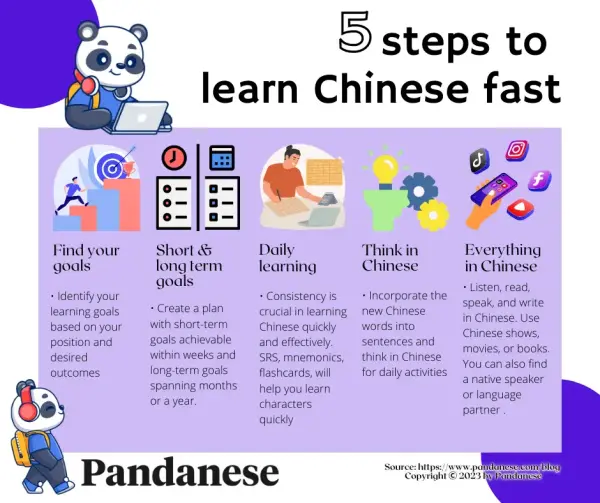
Understanding Chinese Characters and Their Structure
To effectively learn Chinese spelling, it's essential to grasp the structure of Chinese characters. Each character is composed of radicals and strokes, which often hint at meaning or pronunciation. Breaking characters into smaller components makes memorization easier.
- Radicals: Learn common radicals first, as they often indicate a character's category or meaning.
- Strokes: Practice writing strokes in the correct order to build muscle memory.
- Components: Identify recurring components to recognize patterns in characters.
Using Mnemonics for Memorization
Mnemonics are powerful tools for remembering Chinese characters. Associating characters with stories or images helps reinforce memory.
- Visualization: Link characters to pictures or real-life objects.
- Storytelling: Create short stories that connect character components.
- Word association: Relate characters to similar-sounding words in your native language.
Practicing Writing Regularly
Repetition is key to mastering Chinese spelling. Regular writing practice solidifies recognition and recall.
- Handwriting: Write characters repeatedly to internalize stroke order.
- Dictation: Listen and write characters to improve auditory recognition.
- Spaced repetition: Use flashcards to review characters at increasing intervals.
Leveraging Technology and Apps
Modern tools can accelerate learning Chinese spelling through interactive exercises and feedback.
- Flashcard apps: Use apps like Anki or Pleco for spaced repetition.
- Writing apps: Try Skritter or Hanzi Grids for stroke practice.
- Language games: Engage with apps that turn learning into a fun challenge.
Immersing Yourself in Chinese Media
Exposure to Chinese media reinforces spelling through context and repetition.
- Reading: Start with simple books or subtitles to see characters in context.
- Listening: Watch shows or listen to podcasts to hear characters pronounced.
- Writing: Keep a journal or chat with native speakers to practice spelling.
Is learning Chinese worth it in 2025?

Economic Opportunities and Career Growth
Learning Chinese in 2025 can significantly enhance economic opportunities and career growth. China remains a global economic powerhouse, and proficiency in Mandarin opens doors to industries like trade, finance, and technology. Here’s why:
- China’s GDP continues to grow, making it a key player in international markets.
- Multinational companies value employees who can bridge cultural and linguistic gaps with Chinese partners.
- High-demand sectors like e-commerce and manufacturing often require Mandarin-speaking professionals.
Cultural and Global Influence
Mastering Chinese provides deeper access to one of the world’s oldest and most influential cultures. China’s soft power extends through media, literature, and diplomacy, making the language invaluable for global citizens.
- Understanding Chinese traditions and philosophies enriches personal and professional relationships.
- China’s Belt and Road Initiative expands its cultural reach across continents.
- Proficiency allows engagement with Chinese cinema, music, and social media trends.
Technological Advancements and Innovation
China leads in technology and innovation, making Mandarin a strategic asset for professionals in STEM fields. From AI to green energy, Chinese-language resources are abundant.
- Access to cutting-edge research published primarily in Mandarin.
- Collaboration with Chinese tech giants like Huawei and Tencent.
- Opportunities in startup ecosystems within China and Southeast Asia.
Travel and Lifestyle Benefits
For travelers or expats, learning Chinese simplifies navigation and enriches experiences in Mandarin-speaking regions. It also fosters personal connections and cultural immersion.
- Easier communication in mainland China, Taiwan, and Singapore.
- Enhanced understanding of local customs and etiquette.
- Greater independence when exploring off-the-beaten-path destinations.
Challenges and Considerations
While beneficial, learning Chinese presents challenges, such as complex characters and tonal pronunciation. Weighing these factors is crucial before committing.
- Time investment: Mandarin requires consistent practice over years.
- Regional dialects like Cantonese may differ significantly from standard Mandarin.
- Limited utility in non-Chinese-speaking regions compared to languages like Spanish or French.
Frequently Asked Questions (FAQ)
Is learning Chinese vocabulary from lists effective?
Learning Chinese vocabulary from lists can be a useful starting point, especially for beginners who need to build a foundational vocabulary. Lists provide a structured way to memorize common words and phrases quickly. However, relying solely on lists may limit your ability to understand context, pronunciation, and usage in real-life situations. To truly master Chinese, it's essential to complement list-based learning with immersive methods like reading, listening, and speaking practice.
What are the drawbacks of learning Chinese vocabulary from lists?
While vocabulary lists offer convenience, they often lack the depth needed for fluency. One major drawback is the absence of contextual learning, making it harder to remember words in meaningful sentences. Additionally, lists may not cover tone variations, collocations, or cultural nuances, which are critical for accurate communication. Without reinforcement through practical application, words learned from lists may be quickly forgotten.
How can I make learning Chinese vocabulary from lists more effective?
To enhance the effectiveness of vocabulary lists, integrate them with other learning techniques. For example, use flashcards with example sentences to see words in context. Pair your list study with listening exercises to improve pronunciation and tone recognition. Additionally, practice writing or speaking the words in conversations to reinforce retention. Combining lists with multisensory learning methods will yield better long-term results.
Are there better alternatives to learning Chinese vocabulary than lists?
Yes, there are several more engaging and effective alternatives to vocabulary lists. Immersive methods like watching Chinese movies or TV shows, reading books or articles, and engaging in conversations with native speakers provide richer context. Language apps that use spaced repetition systems (SRS) also help reinforce vocabulary naturally. While lists can be a helpful tool, diversifying your approach ensures a deeper and more practical understanding of the language.
Leave a Reply
Related Posts