
Top Tips for Guest Etiquette in China

When visiting China, understanding guest etiquette is essential to show respect and build positive relationships. Chinese culture places great importance on manners, traditions, and social harmony, making proper behavior a key part of any interaction. From dining customs to gift-giving, small gestures can leave a lasting impression. This article explores the top tips for guest etiquette in China, helping you navigate social situations with confidence. Whether attending a business dinner or a family gathering, these guidelines will ensure you avoid common pitfalls and demonstrate cultural awareness. Embrace these practices to foster goodwill and make your visit a memorable and respectful experience.
Top Tips for Guest Etiquette in China
When visiting China, understanding and respecting local customs can greatly enhance your experience and leave a positive impression on your hosts. Chinese culture places high importance on etiquette, especially when it comes to being a guest. Below are key subtopics to help you navigate guest etiquette in China effectively.
1. Proper Greetings and Introductions
In China, greetings are formal and often involve a slight bow or nod, especially in business settings. A handshake is common, but let the Chinese person initiate it. Use titles and last names unless invited to use first names. For example, address someone as Mr. Zhang or Director Li to show respect.
See AlsoHow to start learning Chinese again after a break| Greeting | Appropriate Response |
|---|---|
| Handshake (light grip) | Return with a light grip |
| Nǐ hǎo (Hello) | Respond with Nǐ hǎo |
2. Gift-Giving Customs
Gifts are a significant part of Chinese hospitality. Always present and receive gifts with both hands as a sign of respect. Avoid giving clocks, scissors, or white flowers, as they symbolize bad luck or death. Instead, opt for tea, fruit, or high-quality chocolates.
| Recommended Gifts | Gifts to Avoid |
|---|---|
| Tea sets | Clocks |
| Fruit baskets | White flowers |
3. Dining Etiquette
Chinese dining customs are elaborate. Wait to be seated, as seating arrangements often reflect hierarchy. Never stick chopsticks upright in a bowl of rice—this resembles funeral rituals. Try a bit of every dish to show appreciation, and leave a small amount of food on your plate to indicate you're full.
| Do's | Don'ts |
|---|---|
| Try all dishes | Stick chopsticks upright |
| Use serving chopsticks | Point with chopsticks |
4. Respecting Personal Space and Hierarchy
Chinese culture values hierarchy, so always defer to elders or senior members in a group. Avoid overly personal questions about salary or marital status. Physical contact beyond handshakes is uncommon unless you’re close friends.
See AlsoWhich Chinese learning resources are worth paying for?| Respectful Actions | Avoid |
|---|---|
| Address seniors first | Asking personal questions |
| Maintain modest distance | Hugging or backslapping |
5. Handling Business Cards
In professional settings, exchanging business cards is a formal ritual. Present and receive cards with both hands, and take a moment to read the card before putting it away—never write on it or stuff it in your pocket immediately.
| Correct Way | Incorrect Way |
|---|---|
| Use both hands | One-handed exchange |
| Read the card | Ignoring the card |
What is the etiquette for Chinese guests?
:max_bytes(150000):strip_icc()/GettyImages-526471969-57eecf823df78c690f2e123e.jpg)
Greeting Chinese Guests
When greeting Chinese guests, it is important to show respect and politeness. A slight bow or nod is often appreciated, though handshakes are also common in business settings. Avoid overly physical greetings like hugs unless the guest initiates it.
See AlsoHSK 1 Vocabulary Test - Long & Short Versions- Address them formally using their title and last name unless invited to use their first name.
- Maintain eye contact but avoid prolonged staring, as it may be seen as aggressive.
- Offer a small gift as a token of goodwill, such as tea or fruit, but avoid clocks or sharp objects, which carry negative connotations.
Dining Etiquette with Chinese Guests
Dining with Chinese guests involves several cultural nuances. The host usually orders dishes for the group, and it is polite to try a bit of everything.
- Wait for the host to invite you to start eating before beginning your meal.
- Use chopsticks correctly—never stick them upright in a bowl of rice, as this resembles funeral rites.
- Offer tea or food to others before serving yourself as a sign of respect.
Gift-Giving Customs
Gift-giving is a significant part of Chinese culture and reflects thoughtfulness and relationship-building. However, certain gifts are considered inappropriate.
- Present gifts with both hands to show sincerity and respect.
- Avoid white or black wrapping paper, as these colors are associated with mourning.
- Do not open gifts immediately upon receiving them, as this may appear greedy.
Communication Style
Chinese communication tends to be indirect and hierarchical. Understanding these nuances can prevent misunderstandings.
See AlsoLearn Chinese in 6 Months? (The Truth) - How Far Can You Really Get?- Avoid blunt refusals—Chinese guests may say maybe or I’ll consider it instead of no.
- Respect seniority by addressing the eldest or highest-ranking person first.
- Use moderate tones—loud or aggressive speech can be seen as impolite.
Business Meeting Etiquette
In business settings, formality and patience are key when hosting Chinese guests. Building trust is essential before discussing deals.
- Exchange business cards with both hands and take a moment to read the card before putting it away.
- Avoid rushing negotiations—decisions often take time and multiple meetings.
- Dress conservatively in formal attire to convey professionalism and respect.
How to be a respectful tourist in China?

Understanding Chinese Cultural Norms
To be a respectful tourist in China, it's essential to familiarize yourself with local customs. Chinese culture places high value on politeness, hierarchy, and harmony. Here are key points to consider:
See AlsoHow to find the time and motivation to read more Chinese- Respect elders: Always address older individuals with deference and avoid interrupting them.
- Modest behavior: Avoid loud conversations or public displays of affection, as they may be seen as inappropriate.
- Gift-giving etiquette: If offering gifts, use both hands and avoid items like clocks, which symbolize bad luck.
Dining Etiquette in China
Chinese dining customs are deeply rooted in tradition. Observing proper table manners shows respect for your hosts and the culture.
- Chopstick usage: Never stick chopsticks upright in rice, as it resembles funeral rites.
- Sharing dishes: Meals are communal; wait for the host to invite you to start eating.
- Toasting: If toasting, hold your glass lower than elders or superiors as a sign of respect.
Respecting Religious and Historical Sites
China has many sacred temples and historical landmarks. Visitors should adhere to strict guidelines to show reverence.
- Dress modestly: Cover shoulders and knees when entering religious sites.
- No photography: Follow posted signs; some areas prohibit photos out of respect.
- Quiet demeanor: Speak softly and avoid disruptive behavior in sacred spaces.
Chinese cities are bustling, and observing public etiquette ensures a smooth experience for everyone.
- Queue patiently: Pushing or cutting in line is frowned upon.
- Public transport: Offer seats to elders and avoid loud phone calls.
- Personal space: Be mindful that crowded areas may involve closer proximity than you're used to.
Language and Communication Tips
While many Chinese people speak English, making an effort with the local language is appreciated.
- Basic phrases: Learn simple greetings like Nǐ hǎo (Hello) and Xièxiè (Thank you).
- Politeness: Use honorifics like Qǐng (Please) to show courtesy.
- Non-verbal cues: Avoid pointing with fingers; use an open hand instead.
What are some do's and don'ts in China?

Respecting Chinese Culture and Traditions
When visiting China, it's essential to respect local customs to avoid unintentional offense. Here are key points to remember:
- Use both hands when giving or receiving items, especially business cards or gifts, as it shows respect.
- Avoid public displays of affection, as they are considered inappropriate in traditional Chinese culture.
- Respect elders by addressing them formally and letting them speak first in conversations.
Dining Etiquette in China
Chinese dining customs are deeply rooted in tradition. Follow these guidelines to avoid faux pas:
- Wait for the host to invite you to start eating before beginning your meal.
- Never stick chopsticks upright in a bowl of rice, as this resembles funeral rites.
- Try a bit of every dish offered to show appreciation for the meal.
Communication and Body Language
Understanding non-verbal cues is crucial in Chinese interactions:
- Maintain moderate eye contact - too little seems evasive, too much can be aggressive.
- Avoid pointing with fingers - use an open hand instead.
- Control your tone of voice - loud speech is often perceived as anger or rudeness.
Business Protocol in China
Chinese business culture has specific expectations and norms:
- Bring small gifts to initial meetings, but avoid clocks or sharp objects (bad omens).
- Be punctual as lateness shows disrespect for others' time.
- Expect longer negotiations as building trust takes precedence over quick deals.
Taboos to Avoid in China
Certain actions are considered highly offensive in Chinese culture:
- Never write in red ink as it symbolizes death or severing relationships.
- Avoid discussing sensitive topics like Taiwan, Tibet, or the Tiananmen Square incident.
- Don't touch people's heads - the head is considered sacred in Chinese belief.
What is considered impolite in China?
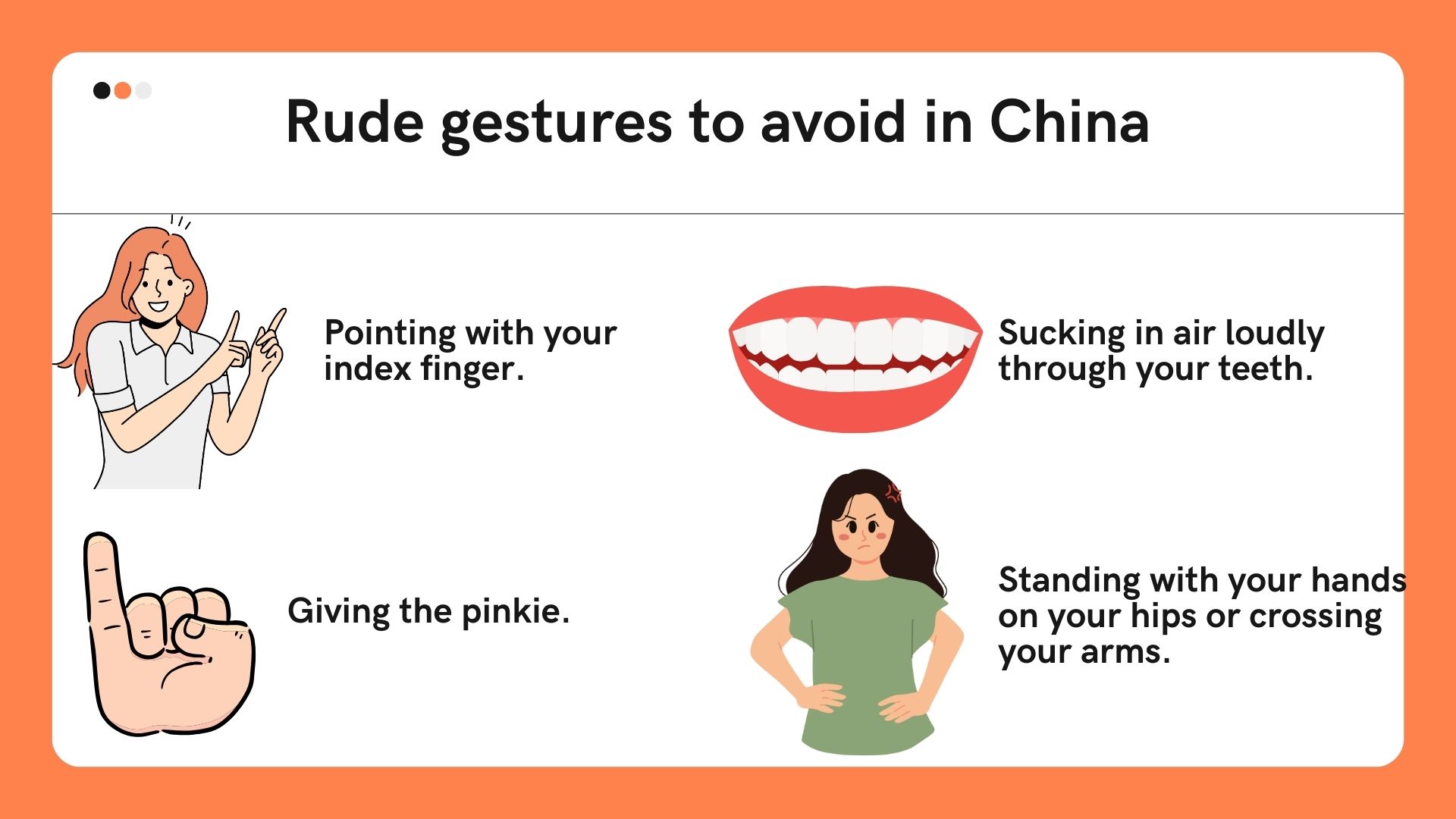
Public Behavior and Etiquette
In China, certain public behaviors are considered impolite and can offend locals. Here are some key points to remember:
- Cutting in line: Queue-jumping is frowned upon and may lead to confrontations.
- Speaking loudly: Excessive noise in public spaces is seen as disruptive.
- Pointing with fingers: It's better to gesture with an open hand instead.
Dining Etiquette
Chinese dining customs are strict, and breaking them can be seen as disrespectful. Important rules include:
- Sticking chopsticks upright in rice: This resembles funeral rituals and is considered bad luck.
- Not serving elders first: It's polite to let the oldest person start eating before others.
- Wasting food: Leaving too much uneaten is seen as inconsiderate.
Gift-Giving Taboos
Certain gifts are considered inappropriate in Chinese culture. Avoid the following:
- Clocks: Symbolize death and are associated with funerals.
- Sharp objects: Knives or scissors suggest cutting ties.
- White or black wrapping: These colors are linked to mourning.
Communication and Body Language
Misunderstandings can arise from improper non-verbal cues. Be mindful of:
- Direct eye contact: Too much can be perceived as aggressive.
- Touching someone's head: Considered invasive and disrespectful.
- Beckoning with a finger: Use the whole hand to call someone over.
Respecting Personal Space
Chinese culture values modesty and restraint in social interactions. Key points include:
- Asking personal questions: Inquiries about salary or age can be intrusive.
- Public displays of affection: Kissing or hugging in public is often frowned upon.
- Invading personal space: Standing too close may make others uncomfortable.
Frequently Asked Questions (FAQ)
What are the most important dining etiquette tips for guests in China?
When dining in China, respect and awareness of local customs are crucial. Always wait for the host to invite you to start eating before you begin. Use chopsticks properly—avoid sticking them upright in a bowl of rice, as this resembles funeral rituals. It's polite to try every dish served, even if only a small portion, to show appreciation. Additionally, serving others before yourself, especially elders, is a sign of courtesy. If offered food or drink, it’s polite to accept at least a little, as refusing may seem disrespectful.
How should I greet my hosts or elders in China?
Greetings in China often involve a slight bow or a nod, though handshakes are also common in formal settings. When addressing elders or those in higher positions, use formal titles like Mr. (先生, Xiānsheng) or Mrs. (女士, Nǚshì) followed by their surname. Avoid overly physical contact, such as hugs or pats on the back, unless the host initiates it. A simple Nǐ hǎo (你好) is a safe greeting, but learning a few polite phrases in Mandarin can leave a positive impression.
Is it acceptable to bring a gift when visiting someone’s home in China?
Yes, bringing a small gift is a thoughtful gesture in China, but there are cultural nuances to consider. Fruit, tea, or high-quality snacks are safe choices, while alcohol (like wine or baijiu) is also appreciated if the host drinks. Avoid giving clocks, scissors, or white flowers, as these symbolize bad luck or death. Present the gift with both hands to show respect, and expect the host to politely refuse once or twice before accepting—this is part of the ritual.
What should I avoid doing as a guest in China to prevent offending my hosts?
Certain actions may unintentionally offend your hosts in China. Never point with your index finger—use an open hand instead. Avoid discussing sensitive topics like politics, Taiwan, or Tibet unless the host brings them up. Leaving food unfinished can imply the meal wasn’t satisfying, so try to pace yourself. Additionally, showing up unannounced is considered rude—always arrange visits in advance. Lastly, excessive tipping isn’t customary and may cause discomfort in non-touristy areas.
Leave a Reply
Related Posts