
Indicating Change: 了in Chinese Grammar

Chinese grammar often relies on particles to convey subtle changes in meaning, and one of the most essential among them is 了 (le). This versatile particle plays a crucial role in indicating completed actions, new situations, or shifts in state, making it indispensable for learners. Whether signaling a past event, a change in circumstances, or an emotional shift, 了 helps clarify temporal and contextual nuances. However, its usage can be tricky, as it appears in different positions within a sentence with varying implications. Understanding 了 is key to mastering Mandarin, as it bridges the gap between basic communication and more natural, fluent expression.
Understanding the Role of 了 in Indicating Change in Chinese Grammar
The particle 了 (le) is a crucial element in Chinese grammar, primarily used to indicate a change of state or completion of an action. Unlike English, which relies heavily on verb tenses, Chinese often uses particles like 了 to convey temporal or situational shifts. Mastering its usage is essential for expressing nuances in past events, new situations, or altered conditions. Below, we explore key aspects of 了 in detail.
1. The Basic Function of 了 as a Change of State Marker
The particle 了 often appears at the end of a sentence to signal a new situation or change in circumstances. For example:
- 天气冷了。 (Tiānqì lěng le.) – The weather has gotten cold.
Here, 了 emphasizes the shift from a previous state (not cold) to the current one (cold).
| Example | Meaning |
|---|---|
| 他高了。 | He has grown taller. |
| 我累了。 | I am tired now. |
2. 了 as an Action Completion Marker
When placed after a verb, 了 indicates that an action is completed. This is known as verb-了. For example:
- 我吃了饭。 (Wǒ chī le fàn.) – I ate (finished eating) the meal.
This usage is common in narrating past events.
See AlsoSingle’s Day: The Biggest Global Shopping Event| Example | Meaning |
|---|---|
| 她买了书。 | She bought the book. |
| 我们看了电影。 | We watched the movie. |
3. Distinguishing Between Sentence-了 and Verb-了
It’s important to differentiate between sentence-final 了 (change of state) and verb-了 (action completion). Compare:
- 他去了北京。 (Tā qù le Běijīng.) – He went to Beijing. (completed action)
- 他去北京了。 (Tā qù Běijīng le.) – He has gone to Beijing. (current situation)
| Structure | Function |
|---|---|
| Verb + 了 | Action completion |
| Sentence + 了 | Change of state |
4. Common Mistakes with 了
Learners often misuse 了 by overapplying it or confusing it with tense markers. Avoid these errors:
- Incorrect: 我昨天看了电视了。 (Redundant 了)
- Correct: 我昨天看了电视。
| Mistake | Correction |
|---|---|
| 我学习中文了三年。 | 我学习中文三年了。 |
| 她去了商店了。 | 她去了商店。 |
5. Using 了 with Time Expressions
When paired with time phrases, 了 emphasizes duration or a change up to the present:
- 我住在这里五年了。 (Wǒ zhù zài zhèlǐ wǔ nián le.) – I have lived here for five years.
| Example | Meaning |
|---|---|
| 他工作了三小时了。 | He has worked for three hours. |
| 我等了十分钟了。 | I have waited for ten minutes. |
When to add le in Chinese?

When to Use le to Indicate a Completed Action
The particle le is often used to mark the completion of an action in Chinese. It emphasizes that something has been done or a change has occurred. Here are key scenarios:
- Past actions: Wǒ chī le fàn (I ate food) – The action of eating is complete.
- Sequenced events: Tā dǎ le diànhuà, ránhòu chūqu le (He made a call, then went out).
- New situations: Xià yǔ le (It started raining) – A change in state.
When le Appears at the End of a Sentence
Sentence-final le often signals a change of state or new information. It doesn’t necessarily indicate completion but highlights relevance to the present.
- Current changes: Tā hěn gāo le (He is tall now) – He wasn’t before.
- Realizations: Nǐ lái le! (You’re here!) – Noticing arrival.
- Future implications: Wǒ è le (I’m hungry now) – Prompting action.
Using le with Time Expressions
Le often pairs with time-related phrases to clarify when an action happened or its duration.
- Specific times: Zuótiān wǒ qù le shāngdiàn (Yesterday, I went to the store).
- Duration markers: Tā zhù le sān nián (He lived there for three years).
- First-time events: Wǒ dì-yī cì chī le zhè ge (I tried this for the first time).
When NOT to Use le
Avoid le in certain contexts to prevent errors:
- Habitual actions: Wǒ měitiān hē kāfēi (I drink coffee daily) – No completion.
- Ongoing actions: Tā zài kàn diànyǐng (She is watching a movie) – No le with 在 (zài).
- General truths: Tā xǐhuān shū (He likes books) – No change involved.
Common Mistakes with le
Learners often misuse le due to its nuanced roles. Key pitfalls:
- Overusing it: Adding le to every past action, even when irrelevant.
- Confusing positions: Misplacing sentence-final le for verb-suffix le.
- Ignoring context: Using it for hypotheticals (e.g., Rúguǒ wǒ qù le is incorrect).
What is ABAB in Chinese grammar?

What Is the ABAB Pattern in Chinese Grammar?
The ABAB pattern is a reduplicative structure in Chinese grammar where a two-syllable word or phrase (AB) is repeated to emphasize a particular meaning or create a rhythmic effect. This pattern is commonly used in verbs, adjectives, and adverbs to convey repetition, intensity, or a casual tone.
- Repetition: The ABAB structure repeats the base word (AB) to reinforce the action or description.
- Usage in Verbs: Often applied to verbs to indicate repeated or ongoing actions (e.g., 学习学习 – study a bit).
- Casual Tone: Frequently appears in informal speech to soften the tone or suggest a relaxed attitude.
How Is the ABAB Pattern Used in Chinese Verbs?
In Chinese verbs, the ABAB pattern is used to express repeated or intermittent actions, often making the statement sound less formal or more conversational.
- Example: 休息休息 (xiūxi xiūxi) – take a break (repeated action).
- Function: Softens the command, making it sound like a suggestion rather than an order.
- Common Verbs: 讨论讨论 (tǎolùn tǎolùn) – discuss a bit, 考虑考虑 (kǎolǜ kǎolǜ) – think it over.
What Role Does ABAB Play in Chinese Adjectives?
The ABAB pattern in adjectives enhances descriptive qualities, often adding a sense of liveliness or vividness to the expression.
- Example: 高兴高兴 (gāoxìng gāoxìng) – be a little happy.
- Effect: Makes the adjective sound more dynamic and less rigid.
- Common Adjectives: 漂亮漂亮 (piàoliang piàoliang) – pretty-pretty, 干净干净 (gānjìng gānjìng) – clean-clean.
Why Is the ABAB Pattern Common in Spoken Chinese?
The ABAB pattern is prevalent in spoken Chinese because it creates a natural, flowing rhythm and adds a conversational tone.
- Informality: Often used in daily speech rather than formal writing.
- Rhythm: The repetition makes phrases easier to remember and more engaging.
- Politeness: Can soften requests or suggestions (e.g., 帮忙帮忙 – help out a bit).
How Does ABAB Differ from AABB in Chinese Grammar?
While both ABAB and AABB are reduplicative patterns, they serve different grammatical and stylistic purposes.
- Structure: ABAB repeats a two-syllable word (AB + AB), while AABB duplicates each syllable (A + A + B + B).
- Usage: ABAB is often for verbs/adjectives, while AABB is more common in adjectives/nouns (e.g., 高高兴兴 – very happy).
- Tone: ABAB feels more casual, whereas AABB can intensify descriptions.
What is the hardest part of Chinese grammar?
Tonal System and Pronunciation
One of the most challenging aspects of Chinese grammar is mastering the tonal system, as Mandarin Chinese relies heavily on tones to distinguish meaning. Mispronouncing a tone can completely change the word's meaning, leading to confusion.
- Four main tones: Each syllable can be pronounced in four different tones, altering the word's meaning.
- Neutral tone: Some words use a lighter, unstressed tone, adding complexity.
- Context dependence: Tones can shift slightly depending on adjacent words.
Measure Words (Classifiers)
Another difficult aspect is the use of measure words, which are required when counting or specifying nouns. Unlike English, where one apple suffices, Chinese requires a classifier (量词 liàngcí) between the number and noun.
- Specific classifiers: Different nouns require different measure words (e.g., 本书 for books, 张纸 for paper).
- Memorization: There are dozens of measure words, and their usage isn't always intuitive.
- Exceptions: Some nouns can use multiple classifiers, changing nuance.
Word Order and Sentence Structure
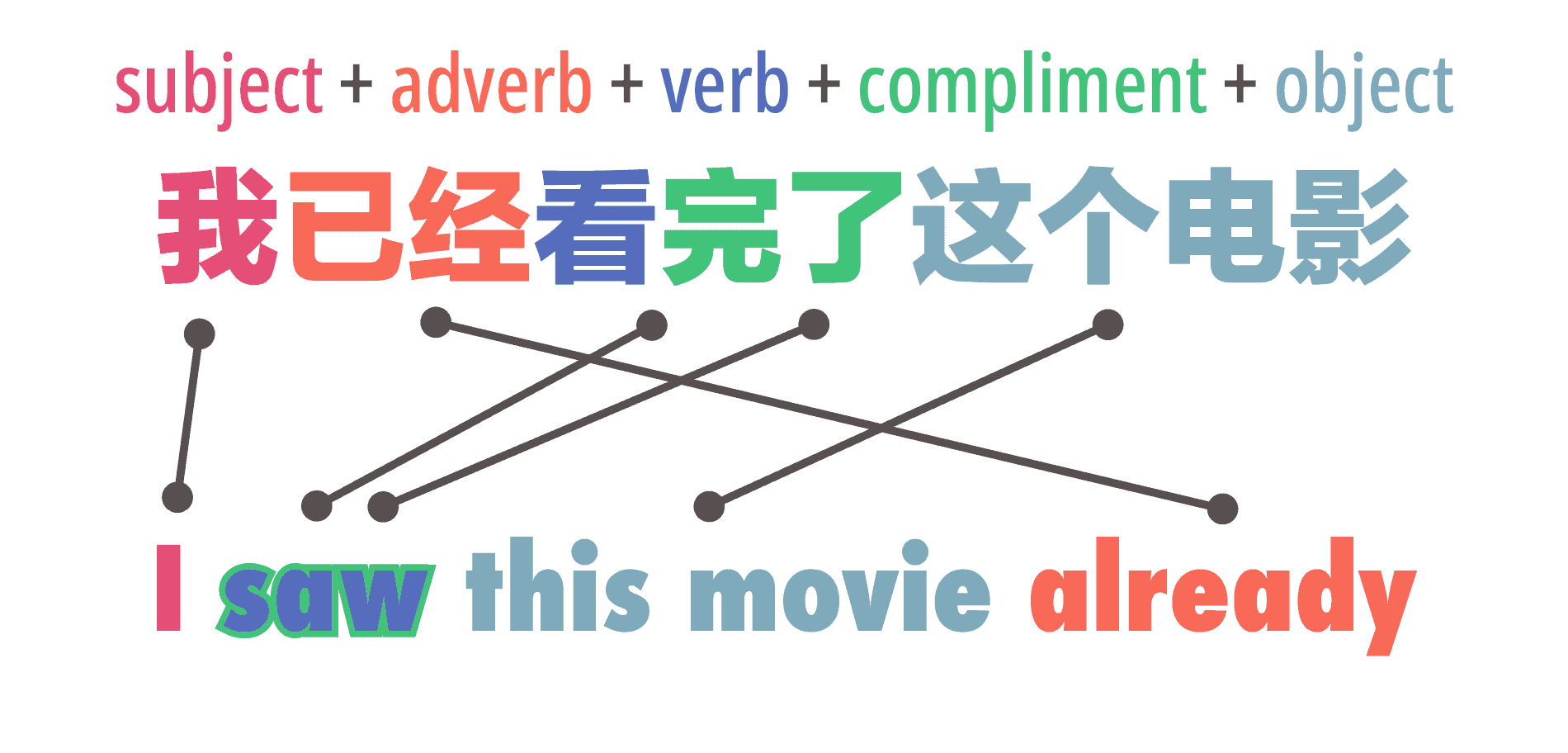
Chinese sentence structure differs significantly from English, particularly in questions, negations, and time expressions, making it hard for learners to construct sentences naturally.
- Time phrases: Time expressions usually come before the verb, unlike English.
- Question formation: Questions often rely on particles like 吗 (ma) rather than word rearrangement.
- Adverb placement: Adverbs typically precede the verb, unlike English's flexible placement.
Lack of Verb Conjugation
The absence of verb conjugation in Chinese can be confusing for learners accustomed to languages with tense changes. Instead, Chinese uses context and particles to indicate time.
- Particles like 了 (le): Indicate completed actions but don't follow strict tense rules.
- Time markers: Words like 昨天 (yesterday) or 明天 (tomorrow) clarify timing.
- Aspect over tense: Focuses on whether an action is ongoing, completed, or habitual.
Characters vs. Spoken Language
The disconnect between written characters and spoken language adds another layer of difficulty, as pronunciation doesn't always correlate with character structure.
- Homophones: Many characters share the same pronunciation but differ in meaning.
- Radicals and components: While helpful, they don't always indicate pronunciation.
- Memorization load: Thousands of characters must be learned to achieve fluency.
How do you indicate past tense in Chinese?

Using the Particle 了 (le) to Indicate Past Tense
In Chinese, the particle 了 (le) is commonly used to indicate completed actions or changes of state, effectively marking past tense. It is placed after the verb or at the end of the sentence, depending on the context. Here are key points:
- 了 after the verb: Indicates the action is completed. Example: 我吃了 (wǒ chī le) – I ate.
- 了 at the end of the sentence: Often shows a change of state. Example: 我吃饭了 (wǒ chīfàn le) – I have eaten.
- Double 了: Sometimes both positions are used for emphasis. Example: 我吃了饭了 (wǒ chī le fàn le) – I have already eaten.
Using Time Adverbs to Clarify Past Tense
Time adverbs help specify when an action occurred, making the past tense clearer. These words often appear at the beginning or before the verb:
- 昨天 (zuótiān) – yesterday: Example: 昨天我去了公园 (zuótiān wǒ qù le gōngyuán) – Yesterday, I went to the park.
- 以前 (yǐqián) – before: Example: 我以前学过中文 (wǒ yǐqián xuéguò zhōngwén) – I studied Chinese before.
- 已经 (yǐjīng) – already: Example: 我已经完成了作业 (wǒ yǐjīng wánchéng le zuòyè) – I have already finished the homework.
The Role of 过 (guò) to Indicate Past Experience
The particle 过 (guò) is used to express past experiences or actions that happened at least once before:
- Structure: Verb + 过. Example: 我去过中国 (wǒ qù guò zhōngguó) – I have been to China.
- Negation: Use 没 (méi) before the verb. Example: 我没去过中国 (wǒ méi qù guò zhōngguó) – I have never been to China.
- Difference from 了: 过 emphasizes experience, while 了 focuses on completion.
Past Tense in Negative Sentences
To negate past actions, 没 (méi) or 没有 (méiyǒu) is used instead of 不 (bù), and 了 is often omitted:
- Structure: 没 + Verb. Example: 我没吃饭 (wǒ méi chīfàn) – I didn’t eat.
- Exception: 了 can be retained with certain verbs like 有. Example: 我没有钱了 (wǒ méiyǒu qián le) – I don’t have money anymore.
- No 过 in negation: Example: 我没去过 (wǒ méi qù guò) – I haven’t been there.
Contextual Past Tense Without Explicit Markers
Sometimes, past tense is implied through context without particles or adverbs:
- Narrative context: Example: 他买一本书 (tā mǎi yī běn shū) – He bought a book (context clarifies past).
- Questions: Example: 你看电影吗?(nǐ kàn diànyǐng ma?) – Did you watch the movie? (implied past).
- Sequential actions: Example: 我回家, 做饭 (wǒ huí jiā, zuò fàn) – I went home and cooked.
Frequently Asked Questions (FAQ)
What is the function of 了 (le) in Chinese grammar?
The particle 了 (le) in Chinese grammar primarily serves to indicate a change of state or mark the completion of an action. When placed at the end of a sentence, it often signals that a new situation has arisen or that something has changed. For example, in the sentence 他来了 (Tā lái le), the 了 indicates that the action of coming has been completed or that the person's arrival represents a change from the previous state. It is crucial to distinguish between the two main uses of 了: the aspectual 了 (indicating completion) and the modal 了 (indicating a change of state).
How do I know when to use 了 (le) in a sentence?
Knowing when to use 了 (le) depends on the context and the intended meaning. If you want to emphasize that an action has been completed, you typically place 了 after the verb, as in 我吃了饭 (Wǒ chī le fàn), meaning I ate (finished eating). On the other hand, if you want to highlight a change in circumstances, 了 often appears at the end of the sentence, like in 下雨了 (Xià yǔ le), meaning It started raining. Pay attention to time expressions, as sentences with words like 已经 (yǐjīng, already) or 昨天 (zuótiān, yesterday) often require 了 to mark completion.
Can 了 (le) be used in negative sentences?
Yes, 了 (le) can be used in negative sentences, but its usage is more restricted. When negating a completed action, 没 (méi) is used instead of 不 (bù), and 了 is often omitted. For example, 我没吃饭 (Wǒ méi chī fàn) means I didn't eat, and adding 了 here would be incorrect. However, in sentences where 了 indicates a change of state, it can still appear in negative constructions, such as 他不来了 (Tā bù lái le), meaning He isn't coming anymore, where 了 emphasizes the change in plans.
What are common mistakes learners make with 了 (le)?
One of the most common mistakes is overusing 了 by adding it to every sentence that describes a past action. Unlike English past tense, Chinese does not always require 了 to talk about the past—context or time markers often suffice. Another error is confusing the two types of 了, leading to sentences like 我吃饭了 (Wǒ chī fàn le) when the speaker means I ate (completed action) instead of I’m eating now (change of state). Additionally, learners sometimes incorrectly place 了 after stative verbs like 喜欢 (xǐhuān, to like), which generally don’t take 了 unless indicating a change (e.g., 我喜欢他了 (Wǒ xǐhuān tā le), meaning I’ve come to like him).
Leave a Reply
Related Posts