
HSK 2 Vocabulary Test (150 Words)

Preparing for the HSK 2 exam requires a solid grasp of its 150-word vocabulary list, which forms the foundation for basic Chinese communication. This test assesses your ability to understand and use essential words in everyday contexts, such as greetings, shopping, and simple descriptions. Mastering these terms is crucial for building confidence in listening, speaking, reading, and writing at a beginner level. Whether you're a student aiming for certification or a language enthusiast, this vocabulary test serves as a practical checkpoint. In this article, we’ll explore key strategies to memorize and practice these words effectively, ensuring you’re well-prepared to ace the HSK 2 exam.
HSK 2 Vocabulary Test: Master the 150 Essential Words
What Is the HSK 2 Vocabulary Test?
The HSK 2 Vocabulary Test assesses your knowledge of 150 essential Mandarin Chinese words required for the HSK Level 2 exam. This test evaluates your ability to recognize, understand, and use these words in basic conversations and written contexts. Passing this level confirms you can handle simple daily interactions in Chinese.
| Key Aspect | Description |
|---|---|
| Total Words | 150 |
| Test Format | Listening & Reading |
| Difficulty | Beginner (A2 CEFR) |
Why Is the HSK 2 Vocabulary Important?
Mastering the HSK 2 vocabulary is crucial because it forms the foundation for basic communication in Mandarin. These words cover everyday topics like greetings, shopping, time, and family, making them essential for real-life interactions. Without this vocabulary, progressing to higher HSK levels becomes difficult.
See AlsoFive Most Bizarre Chinese Dish Names| Reason | Impact |
|---|---|
| Daily Use | Enables simple conversations |
| Exam Requirement | Mandatory for HSK 2 certification |
How to Prepare for the HSK 2 Vocabulary Test?
Effective preparation involves flashcards, spaced repetition, and practice tests. Focus on high-frequency words and use them in sentences to improve retention. Online platforms like Quizlet or Anki offer pre-made HSK 2 vocabulary decks for efficient study.
| Method | Effectiveness |
|---|---|
| Flashcards | High (visual memory) |
| Practice Tests | Critical for exam simulation |
Common Mistakes in HSK 2 Vocabulary Learning
Many learners neglect tones or confuse similar characters, leading to errors. Another mistake is memorizing words without context, making recall harder during conversations. Avoid these pitfalls by practicing listening and speaking alongside writing.
| Mistake | Solution |
|---|---|
| Ignoring Tones | Use tone drills & audio resources |
| Lack of Context | Learn words in sentences |
Where to Find HSK 2 Vocabulary Lists?
Official HSK 2 word lists are available on the Hanban website and textbooks like Standard Course HSK 2. Apps like Pleco and HelloChinese also provide structured vocabulary lessons with audio pronunciations.
See AlsoWhat’s the difference between Chinese pronunciation and Pinyin? Does it matter?| Resource | Type |
|---|---|
| Hanban | Official word list |
| Pleco | Mobile dictionary & flashcards |
How many words are needed for HSK 2 vocabulary?
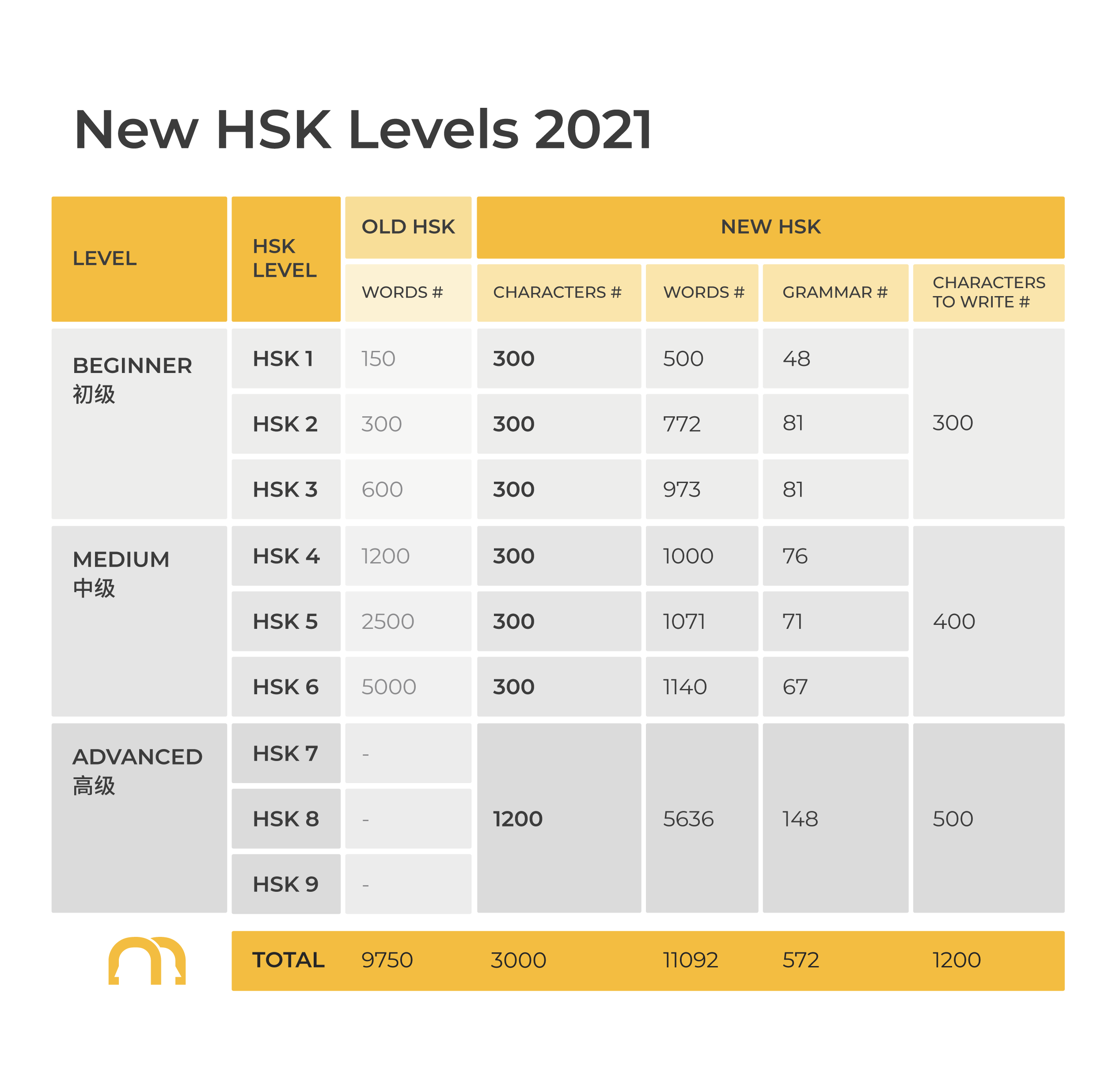
What is the HSK 2 Vocabulary Requirement?
The HSK 2 vocabulary requires learners to know approximately 300 words. This level builds on the foundational 150 words from HSK 1, focusing on everyday communication. The words cover topics like:
- Basic verbs (e.g., eat, drink, go).
- Common nouns (e.g., family, time, place).
- Simple adjectives (e.g., big, small, good).
How Does HSK 2 Compare to HSK 1 in Terms of Vocabulary?
HSK 2 doubles the vocabulary size of HSK 1, which only requires 150 words. The additional 150 words in HSK 2 include:
See AlsoZheng He: Why Is He So Important Today?- More complex sentence structures (e.g., questions, negations).
- Expanded time expressions (e.g., yesterday, tomorrow).
- Basic conjunctions (e.g., and, but).
What Are the Key Themes in HSK 2 Vocabulary?
The HSK 2 vocabulary revolves around practical themes for daily life. Key categories include:
- Personal information (e.g., name, age, nationality).
- Daily activities (e.g., shopping, studying, working).
- Social interactions (e.g., greetings, invitations).
How Long Does It Take to Learn HSK 2 Vocabulary?
Mastering the 300 words for HSK 2 depends on the learner's dedication. Factors influencing the timeline:
- Study frequency (e.g., daily vs. weekly practice).
- Learning methods (e.g., flashcards, apps, classes).
- Prior exposure to Mandarin or similar languages.
Are There Official HSK 2 Vocabulary Lists Available?
Yes, the official HSK 2 vocabulary list is published by Hanban. It includes:
See AlsoHow to do Maths in Chinese for Beginners- All 300 required words with pinyin and translations.
- Example sentences to demonstrate usage.
- Grammar notes for context.
How many words are needed for HSK vocabulary?
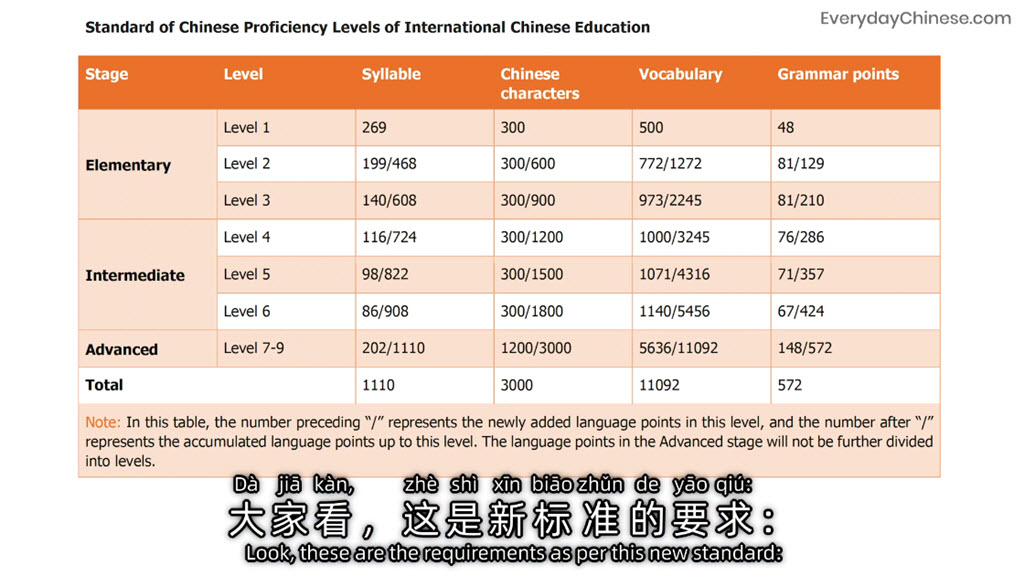
HSK Vocabulary Levels and Word Count Requirements
The HSK (Hanyu Shuiping Kaoshi) exam is divided into six levels, each requiring mastery of a specific number of words. Here’s a breakdown:
- HSK 1: 150 words (basic phrases and expressions).
- HSK 2: 300 words (simple daily communication).
- HSK 3: 600 words (handling routine tasks).
- HSK 4: 1,200 words (discussing broader topics).
- HSK 5: 2,500 words (reading newspapers/writing essays).
- HSK 6: 5,000+ words (fluency near-native level).
Why HSK Vocabulary Size Matters
The number of words directly impacts your ability to comprehend and communicate effectively in Mandarin:
- Survival skills: HSK 1-2 covers essential interactions like shopping or asking directions.
- Academic/work readiness: HSK 4+ enables professional or academic discussions.
- Cultural understanding: Larger vocabularies (HSK 5-6) unlock nuanced cultural contexts.
How to Efficiently Learn HSK Vocabulary
To master the required word counts, consider these strategies:
- Spaced repetition: Use apps like Anki to reinforce memory.
- Contextual learning: Study words in sentences, not isolation.
- Mock tests: Regularly practice with HSK-style questions.
Common Challenges in Reaching HSK Word Goals
Learners often face hurdles when expanding their HSK vocabulary:
- Retention issues: Forgetting words without consistent review.
- Tonal confusion: Mispronouncing words with similar sounds.
- Time constraints: Balancing study with daily commitments.
Resources to Build HSK Vocabulary
Leverage these tools to meet HSK word targets:
- Official textbooks: HSK Standard Course books align with exam syllabi.
- Online platforms: Websites like ChinesePod offer leveled content.
- Flashcards: Physical or digital cards for portable practice.
What is a good HSK 2 score?
What is considered a passing score for HSK 2?
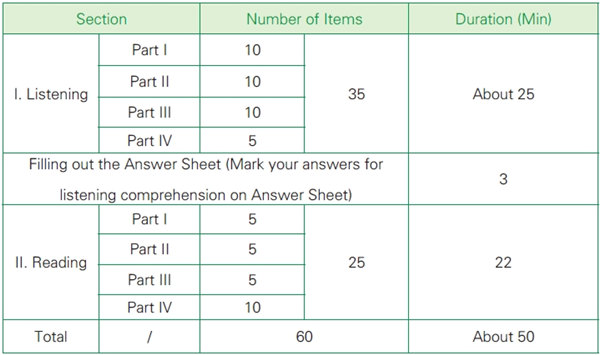
A passing score for HSK 2 is 120 out of 200. The exam consists of listening and reading sections, each worth 100 points. To pass:
- Listening section: Aim for at least 60 points.
- Reading section: Aim for at least 60 points.
- Total score: A minimum of 120 points is required to pass.
What is a good HSK 2 score for university applications?
A good HSK 2 score for university applications is typically 150 or higher. Some institutions may require:
- Listening: 75+ points to demonstrate comprehension.
- Reading: 75+ points to show literacy.
- Overall: 150+ points to meet competitive standards.
How does HSK 2 scoring compare to language proficiency levels?
HSK 2 corresponds to A2 level in the CEFR framework. The scoring reflects:
- Basic communication: 120-149 points indicates elementary proficiency.
- Intermediate readiness: 150+ points suggests readiness for HSK 3.
- Weak areas: Scores below 120 highlight gaps in listening or reading.
What is the average HSK 2 score among test-takers?
The average HSK 2 score ranges between 130 and 140. Factors influencing this include:
- Preparation time: 3-6 months of study typically yields 130+.
- Background: Learners with prior Mandarin exposure score higher.
- Test conditions: Nervousness or time pressure may lower scores.
Can a high HSK 2 score compensate for weak HSK 1 results?
A high HSK 2 score (e.g., 180+) can offset weak HSK 1 results, as it demonstrates:
- Improved skills: Mastery of 300+ vocabulary words.
- Consistent progress: Ability to handle daily conversations.
- Foundation for HSK 3: Readiness for more advanced material.
What is the HSK level 2 equivalent to?
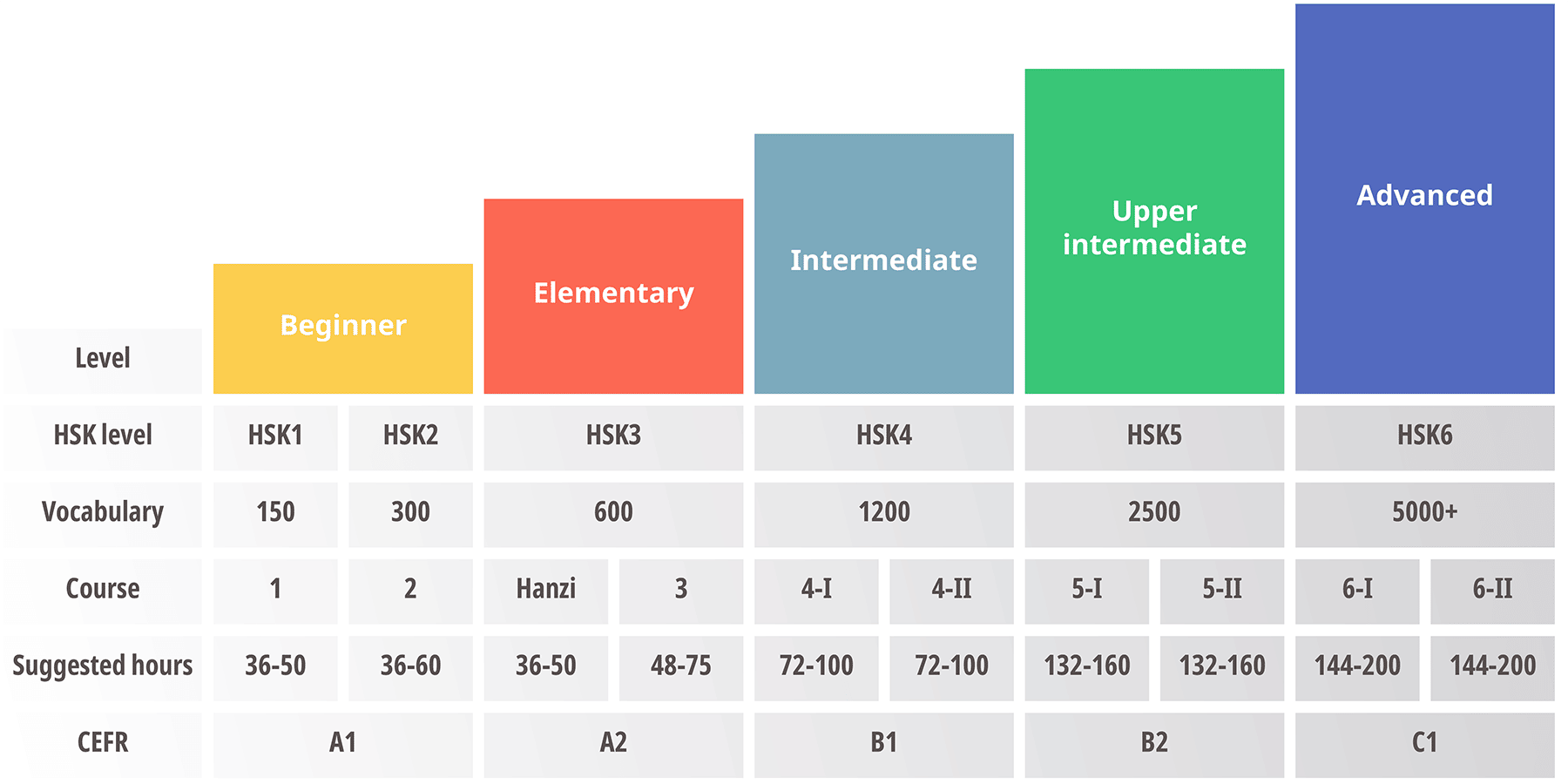
Understanding HSK Level 2 Proficiency
HSK Level 2 is an elementary Chinese proficiency level, designed for learners who can understand and use basic phrases and sentences in everyday situations. It corresponds to the A2 level of the Common European Framework of Reference for Languages (CEFR). At this stage, learners can:
- Comprehend simple questions and statements about daily life.
- Engage in short conversations on familiar topics like shopping or family.
- Write or recognize around 300 Chinese characters and related vocabulary.
Comparing HSK 2 to Other Language Frameworks
HSK Level 2 aligns with international standards for language proficiency. Here’s how it compares:
- CEFR A2: Equivalent to basic communication skills in European languages.
- ACTFL Novice Mid/High: Matches the American Council’s standard for foundational language use.
- IELTS 3.0: Roughly comparable in terms of limited but functional language ability.
Vocabulary and Grammar Expectations for HSK 2
To pass HSK 2, learners must master specific linguistic elements:
- 300+ words: Covering topics like weather, hobbies, and directions.
- Basic grammar structures: Such as simple questions (e.g., 吗) and time expressions.
- Sentence patterns: Like Subject + Verb + Object and negation with 不.
Typical Tasks for HSK 2 Test-Takers
The exam assesses practical language skills through tasks like:
- Listening comprehension: Identifying keywords in short dialogues.
- Reading: Matching sentences to images or filling in simple blanks.
- Writing: Rearranging words to form coherent sentences.
Real-Life Applications of HSK 2 Proficiency
With HSK 2, learners can handle routine scenarios such as:
- Traveling: Asking for directions or ordering food.
- Socializing: Introducing themselves or discussing hobbies.
- Work/School: Understanding simple instructions or schedules.
Frequently Asked Questions (FAQ)
What is the HSK 2 Vocabulary Test (150 Words)?
The HSK 2 Vocabulary Test (150 Words) is a standardized assessment designed to evaluate a learner's mastery of the 150 essential Chinese words required for the HSK Level 2 exam. This test focuses on vocabulary recognition, usage, and comprehension in contexts such as daily conversations, simple sentences, and basic written texts. Passing this test indicates a foundational understanding of Mandarin, enabling learners to communicate in routine scenarios like shopping, travel, or personal introductions.
How can I prepare for the HSK 2 Vocabulary Test?
To prepare effectively for the HSK 2 Vocabulary Test, start by reviewing the official 150-word list provided by Hanban. Use flashcards, spaced repetition apps, or vocabulary workbooks to memorize the words. Practice writing sentences and listening to audio recordings to reinforce retention. Additionally, taking mock tests or quizzes will help you familiarize yourself with the test format and identify areas needing improvement. Consistency and daily practice are key to success.
What is the format of the HSK 2 Vocabulary Test?
The HSK 2 Vocabulary Test typically includes multiple-choice questions, matching exercises, and fill-in-the-blank tasks to assess your knowledge of the 150 words. Questions may require you to identify characters, pinyin, or meanings, as well as use words in simple sentences. The test emphasizes practical application, ensuring you can recognize and use vocabulary in real-life contexts. Time management is important, as the test is usually completed within a set duration.
Why is the HSK 2 Vocabulary Test important for learners?
The HSK 2 Vocabulary Test is a crucial milestone for Mandarin learners as it validates your ability to understand and use basic Chinese in everyday situations. Passing this test demonstrates proficiency in foundational vocabulary, which is essential for advancing to higher HSK levels. Additionally, it boosts confidence in real-world communication and serves as a formal certification for academic or professional purposes, such as university applications or job requirements in Chinese-speaking environments.
Leave a Reply
Related Posts