
Zooming in: The tools you need to break down and understand Chinese

Understanding Chinese, with its intricate characters and tonal nuances, can seem daunting to learners. However, breaking down the language into manageable components makes the journey more accessible. This article explores essential tools—from dictionaries and apps to grammar guides and pronunciation aids—that simplify the process of mastering Chinese. Whether you're tackling hanzi, navigating pinyin, or grasping sentence structures, the right resources can transform complexity into clarity. By zooming in on these practical tools, learners can build a solid foundation and gain confidence in their language skills. Discover how to decode Chinese effectively and unlock its rich linguistic and cultural depth.
- Essential Tools to Analyze and Comprehend Chinese Language
- What tool can help us learn Chinese easier?
- How many commonly used Chinese words do you need to know in order for you to read Chinese newspaper?
- How to learn Chinese easily for beginners?
- What counts as intermediate Chinese?
- Frequently Asked Questions (FAQ)
Essential Tools to Analyze and Comprehend Chinese Language
1. Chinese Dictionaries and Translation Apps
Understanding Chinese requires reliable dictionaries and translation tools. Apps like Pleco and Hanping provide offline access to comprehensive Chinese-English dictionaries, while Google Translate and Baidu Translate assist with quick translations. These tools often include Pinyin and stroke order guides, essential for learners.
| Tool | Key Feature |
|---|---|
| Pleco | Offline dictionary, flashcards, OCR |
| Hanping | Detailed character breakdowns |
| Google Translate | Real-time camera translation |
2. Grammar and Sentence Structure Analyzers
Chinese grammar differs significantly from English. Tools like Chinese Grammar Wiki and Skritter help dissect sentence patterns, particles, and word order. Understanding measure words (量词) and tenses is crucial for fluency.
See AlsoHow important is reading speed on tests like HSK and TOCFL?| Resource | Focus Area |
|---|---|
| Chinese Grammar Wiki | Comprehensive grammar rules |
| Skritter | Writing practice with grammar tips |
3. Listening and Pronunciation Aids
Mastering tones and pronunciation is vital. Platforms like HelloChinese and Yabla offer interactive exercises with native speaker audio. Pinyin charts and tone drills ensure accurate speech.
| Tool | Benefit |
|---|---|
| HelloChinese | Tone recognition exercises |
| Yabla | Subtitled videos for listening practice |
4. Character Decomposition Tools
Breaking down Chinese characters into radicals and components simplifies memorization. Arch Chinese and Zhongwen.com provide stroke animations and etymology insights, making characters less daunting.
| Resource | Feature |
|---|---|
| Arch Chinese | Animated stroke orders |
| Zhongwen.com | Radical-based character search |
5. Immersive Learning Platforms
Engaging with native content accelerates learning. DuChinese and The Chairman’s Bao offer graded readers, while iTalki connects learners with tutors for real-time practice.
See AlsoImproving your Chinese while watching TV shows| Platform | Use Case |
|---|---|
| DuChinese | Stories with audio and translations |
| The Chairman’s Bao | News articles for learners |
| iTalki | 1-on-1 tutoring sessions |
What tool can help us learn Chinese easier?

Best Language Learning Apps for Chinese
Using language learning apps is one of the most effective ways to learn Chinese. These apps provide structured lessons, interactive exercises, and real-time feedback. Here are some top options:
- Duolingo: Gamified lessons for vocabulary and grammar.
- HelloChinese: Focuses on speaking and listening with native audio.
- Pleco: A powerful dictionary with flashcards and OCR translation.
Flashcard Tools for Memorizing Characters
Flashcards are essential for mastering Chinese characters and vocabulary. Digital tools make this process more efficient:
See AlsoHow Long Is Duolingo Chinese Course: Time to Complete- Anki: Customizable flashcards with spaced repetition.
- Quizlet: Pre-made decks for HSK vocabulary.
- Memrise: Uses mnemonics and videos for better retention.
Online Tutors and Language Exchange Platforms
Practicing with native speakers accelerates learning. These platforms connect learners with tutors or language partners:
- iTalki: Offers affordable 1-on-1 lessons with professional tutors.
- Tandem: Language exchange app for conversational practice.
- Preply: Flexible scheduling for personalized tutoring.
Chinese Learning Websites with Free Resources
Several websites provide free lessons, exercises, and cultural insights:
- ChinesePod: Podcast-style lessons for all levels.
- Yabla: Interactive video lessons with subtitles.
- HSK Online: Exam preparation materials and mock tests.
Tools for Improving Pronunciation
Accurate pronunciation is crucial in Chinese. These tools help refine tones and speech:
- Pinyin Trainer: Focuses on Mandarin phonetics.
- Speechling: Provides feedback from native speakers.
- Google Translate: Voice input for instant pronunciation checks.
How many commonly used Chinese words do you need to know in order for you to read Chinese newspaper?

To read a Chinese newspaper comfortably, you typically need to know around 2,500 to 3,000 commonly used Chinese characters (words). However, this number can vary depending on the complexity of the articles and the specific publication. Here’s a breakdown:
- Basic comprehension: Around 1,500-2,000 characters allow you to grasp the general idea of most articles, though you may encounter unfamiliar terms.
- Fluency: For smoother reading with minimal dictionary use, 2,500-3,000 characters are recommended.
- Specialized content: Technical or niche topics may require knowledge of additional 500-1,000 specialized terms.
How Many Characters Are Needed for Basic Newspaper Reading?
To achieve basic comprehension of a Chinese newspaper, you should aim for 1,500-2,000 characters. This covers most high-frequency words used in everyday news.
- High-frequency characters like 的 (de), 是 (shì), and 在 (zài) appear repeatedly.
- Contextual understanding helps infer meanings of unfamiliar words.
- Common phrases such as 中国 (Zhōngguó - China) and 经济 (jīngjì - economy) are essential.
What Is the Ideal Vocabulary Size for Fluency?
For fluent reading with minimal interruptions, 2,500-3,000 characters are ideal.
- Recognizing compound words like 互联网 (hùliánwǎng - internet) becomes easier.
- Idiomatic expressions (成语 chéngyǔ) are more familiar.
- Grammar patterns and sentence structures feel natural.
How Does Newspaper Genre Affect Vocabulary Requirements?
The genre of the newspaper influences the number of words needed.
- General news (politics, society) uses broader but simpler vocabulary.
- Financial or scientific articles require specialized terms.
- Cultural pieces may include classical references or idioms.
What Are the Most Common Words in Chinese Newspapers?
Frequently encountered words in newspapers include:
- 国家 (guójiā - country/nation)
- 政府 (zhèngfǔ - government)
- 发展 (fāzhǎn - development)
How Can You Efficiently Learn These Words?
To learn efficiently, focus on high-yield strategies:
- Flashcards for memorizing common characters.
- Reading practice with graded news articles.
- Contextual learning through sentence examples.
How to learn Chinese easily for beginners?
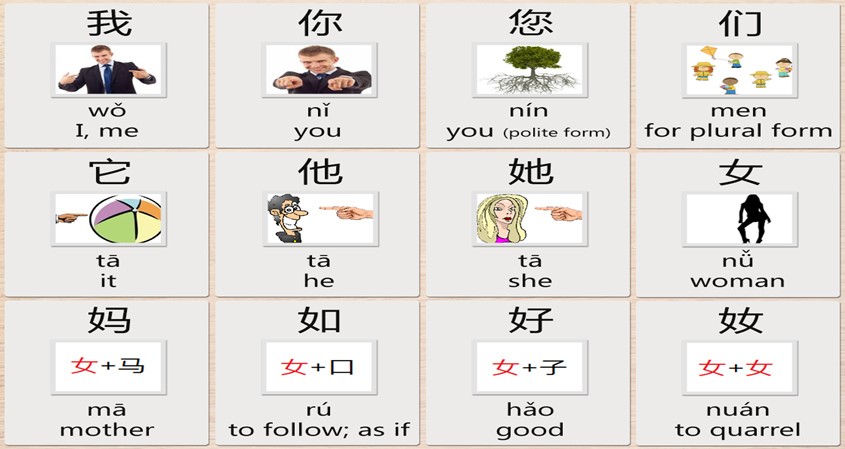
Start with Basic Chinese Pronunciation (Pinyin)
Learning Pinyin (the romanization of Chinese characters) is essential for beginners. It helps you pronounce words correctly and builds a foundation for speaking and listening. Focus on mastering the four tones, as they change the meaning of words. Here’s how to approach it:
- Practice tones daily – Use apps or audio guides to mimic native speakers.
- Learn initials and finals – Break down Pinyin into smaller components for easier memorization.
- Use tone pairs – Practice two-syllable combinations to improve fluency.
Build a Strong Vocabulary with Common Words
Begin with high-frequency words and phrases to quickly start communicating. Prioritize practical vocabulary like greetings, numbers, and daily expressions. Here’s how to expand your word bank:
- Use flashcards – Apps like Anki or Pleco help reinforce memorization.
- Label objects – Stick notes with Chinese names on items around your home.
- Learn in context – Study words within sentences to understand usage.
Master Simple Sentence Structures
Chinese grammar is relatively straightforward compared to many languages. Start with basic subject-verb-object (SVO) patterns and gradually add modifiers. Follow these steps:
- Memorize common sentence patterns – For example, 我是… (I am…) or 我喜欢… (I like…).
- Practice with substitutions – Replace words in a template sentence to create new meanings.
- Use grammar workbooks – Exercises solidify your understanding of rules.
Immerse Yourself in Listening Practice
Listening improves comprehension and accents. Exposure to native speech speeds up learning. Try these methods:
- Watch Chinese shows with subtitles – Start with children’s programs or slow-paced content.
- Listen to podcasts or music – Repetition helps you pick up phrases naturally.
- Use language exchange apps – Platforms like HelloTalk connect you with native speakers.
Practice Speaking from Day One
Speaking early builds confidence and corrects mistakes faster. Don’t fear errors—practice regularly. Here’s how:
- Shadow native speakers – Repeat dialogues immediately after hearing them.
- Join language meetups – Online or in-person groups provide real conversation practice.
- Record yourself – Compare your pronunciation to native audio for improvement.
What counts as intermediate Chinese?

Defining Intermediate Chinese Proficiency
Intermediate Chinese typically refers to a learner's ability to handle everyday conversations, understand moderately complex texts, and express opinions on familiar topics. At this stage, learners move beyond basic vocabulary and grammar, incorporating more nuanced language structures. Key indicators include:
- Vocabulary: Knowledge of 1,500–3,000 words, including common idioms and phrases.
- Grammar: Mastery of intermediate sentence patterns, such as comparisons, conditionals, and narrative tenses.
- Conversation: Ability to discuss topics like hobbies, travel, or work with relative fluency.
Language Skills Required for Intermediate Chinese
To qualify as intermediate, a learner must demonstrate balanced skills across listening, speaking, reading, and writing. Key competencies include:
- Listening: Understanding dialogues in movies or TV shows with subtitles.
- Speaking: Participating in extended conversations without frequent pauses.
- Reading: Comprehending short articles or news summaries.
Common Intermediate Chinese Grammar Topics
At the intermediate level, learners tackle more sophisticated grammar, such as:
- Complement structures (e.g., resultative or directional complements).
- Passive voice using 被 (bèi) or 让 (ràng).
- Complex conjunctions like 不但...而且 (not only...but also).
Vocabulary Themes for Intermediate Learners
Intermediate vocabulary expands into themes like culture, technology, and abstract concepts. Examples include:
- Social issues (e.g., 环保, environmental protection).
- Professional terms (e.g., 简历, résumé).
- Expressions of opinion (e.g., 我认为, I believe).
Assessing Intermediate Chinese Proficiency
Standardized tests like HSK 3–4 or TOCFL Band B measure intermediate skills. Criteria include:
- HSK 3: Can communicate in daily, academic, and professional contexts.
- HSK 4: Can discuss a wider range of topics with native speakers.
- TOCFL Band B: Equivalent to CEFR B1-B2 levels.
Frequently Asked Questions (FAQ)
What tools are essential for breaking down and understanding Chinese effectively?
To effectively break down and understand Chinese, you need a combination of digital tools and traditional resources. Dictionaries like Pleco or Hanping provide instant translations and character breakdowns. Flashcard apps such as Anki or Memrise help with vocabulary retention. Additionally, grammar guides and language exchange platforms like HelloTalk or Tandem allow you to practice with native speakers. For reading practice, bilingual texts or graded readers can be invaluable.
How can I improve my Chinese character recognition skills?
Improving Chinese character recognition requires consistent practice and the right techniques. Start by learning radicals, the building blocks of characters, to identify patterns. Use spaced repetition systems (SRS) to reinforce memory. Tools like Skritter or TOFU Learn focus on handwriting and recognition. Reading simplified texts or watching subtitled videos can also enhance your ability to recognize characters in context.
What are the best strategies for mastering Chinese pronunciation?
Mastering Chinese pronunciation involves focusing on tones, pinyin, and listening practice. Begin by drilling the four tones with tools like Pinyin Trainer or Yabla. Mimic native speakers using shadowing techniques with podcasts or videos. Recording yourself and comparing it to native audio can highlight areas for improvement. Additionally, language partners or tutors can provide real-time feedback to refine your pronunciation.
How can I stay motivated while learning Chinese?
Staying motivated while learning Chinese requires setting clear goals and tracking progress. Break your learning into manageable milestones, such as mastering 100 characters or holding a 5-minute conversation. Engage with Chinese media like dramas, music, or news to make learning enjoyable. Joining online communities or study groups can provide accountability and encouragement. Celebrate small wins to maintain long-term enthusiasm for the language.
Leave a Reply
Related Posts