
How important is reading speed on tests like HSK and TOCFL?

Reading speed plays a crucial role in standardized language proficiency tests like the HSK (Hanyu Shuiping Kaoshi) and TOCFL (Test of Chinese as a Foreign Language). These exams assess not only comprehension and vocabulary but also the ability to process written information efficiently under time constraints. Faster reading allows test-takers to answer more questions accurately, manage time effectively, and reduce stress during the exam. However, balancing speed with understanding is essential, as rushing can lead to mistakes. This article explores the significance of reading speed in these tests, offering insights into how it impacts performance and strategies to improve both pace and accuracy for optimal results.
How Important Is Reading Speed on Tests Like HSK and TOCFL?
Reading speed plays a critical role in standardized language proficiency tests such as the HSK (Hanyu Shuiping Kaoshi) and TOCFL (Test of Chinese as a Foreign Language). These exams assess a candidate's ability to comprehend written Chinese efficiently under time constraints. A slower reading pace can lead to unanswered questions, rushed answers, or misinterpretations, ultimately affecting the overall score. Since both tests include extensive reading sections with dense passages, improving reading speed while maintaining comprehension is essential for success.
The Role of Reading Speed in Test Performance
A faster reading speed allows test-takers to process information quickly, allocate time wisely, and review answers if needed. In timed exams like the HSK and TOCFL, slow readers may struggle to complete all sections, leading to lower scores. Efficient skimming and scanning techniques can help identify key details without getting bogged down by every word.
See AlsoDealing with tricky vocabulary: Killing leeches| Factor | Impact on Test |
|---|---|
| Slow Reading | Risk of incomplete sections, rushed answers |
| Fast Reading | Better time management, higher accuracy |
How HSK and TOCFL Test Reading Speed
Both exams include multiple-choice questions, fill-in-the-blank exercises, and passage-based comprehension tasks. The HSK, for example, increases text complexity across levels (HSK 1-6), while the TOCFL categorizes difficulty into Band A to C. Test-takers must adapt their reading strategies to handle longer texts and tighter time limits at higher levels.
Strategies to Improve Reading Speed for HSK/TOCFL
To enhance reading efficiency, learners should practice timed reading drills, expand vocabulary recognition, and focus on contextual clues. Techniques like chunking (reading groups of words) and avoiding subvocalization (silent pronunciation) can significantly boost speed.
| Strategy | Benefit |
|---|---|
| Timed Practice | Simulates test conditions, builds speed |
| Vocabulary Expansion | Reduces pauses for unfamiliar words |
Common Pitfalls Due to Slow Reading Speed
Test-takers who read too slowly often misinterpret questions, skip passages, or guess answers randomly. This can lead to inconsistent scores, especially in higher-level exams where texts are denser and time pressure is greater.
See AlsoAdvanced listening and reading with Skeptoid ChineseBalancing Speed and Comprehension
While speed is important, comprehension must not be sacrificed. Effective readers skim for main ideas first, then scan for details. Practicing with past exam papers helps strike the right balance between pace and understanding.
| Focus Area | Outcome |
|---|---|
| Skimming | Quickly grasps main themes |
| Scanning | Locates specific details efficiently |
Is TOCFL harder than HSK?

Comparing the Difficulty Levels of TOCFL and HSK
The TOCFL (Test of Chinese as a Foreign Language) and HSK (Hanyu Shuiping Kaoshi) are both standardized tests for Mandarin proficiency, but their difficulty varies based on structure and focus. Here’s a breakdown:
See Also12 songs to learn Chinese and expand your horizons- TOCFL emphasizes real-life communication, including listening and reading tasks with a focus on Taiwanese Mandarin.
- HSK is more academic and mainland China-oriented, with a stronger emphasis on vocabulary and grammar patterns.
- The writing section in HSK (especially HSK 3-6) can be more challenging due to character memorization requirements.
Exam Structure: TOCFL vs. HSK
The formats of TOCFL and HSK differ significantly, affecting perceived difficulty:
- TOCFL has six levels (A1-C2) aligned with CEFR, while HSK has six levels (1-6) with no direct CEFR equivalence.
- TOCFL includes spoken responses in higher levels, unlike HSK, which separates speaking tests (HSKK).
- HSK relies heavily on multiple-choice questions, whereas TOCFL incorporates more open-ended tasks.
Vocabulary and Grammar Differences
The linguistic demands of TOCFL and HSK vary:
- TOCFL uses Traditional Chinese characters (optional Simplified), while HSK uses Simplified characters exclusively.
- HSK vocabulary lists are fixed and published, making memorization easier, whereas TOCFL expects broader contextual understanding.
- Grammar in HSK is more structured, while TOCFL tests natural usage in everyday scenarios.
Scoring and Passing Criteria
Grading systems impact perceived difficulty:
- TOCFL requires a minimum score per section (listening, reading, writing/speaking) to pass, unlike HSK’s cumulative scoring.
- HSK levels have clear cutoffs (e.g., 180/300 for HSK 3), while TOCFL’s CEFR alignment makes scoring more nuanced.
- TOCFL’s speaking/writing sections are graded subjectively, adding complexity compared to HSK’s standardized formats.
Which Test Is Harder for Non-Native Speakers?
Difficulty depends on the learner’s background:
- HSK may be harder for those unfamiliar with mainland Chinese accents or Simplified characters.
- TOCFL challenges learners with spontaneous speaking tasks and Traditional characters.
- Test-takers with academic goals may find HSK easier, while those prioritizing daily communication might prefer TOCFL.
How to pass TOCFL?
Understand the TOCFL Test Structure
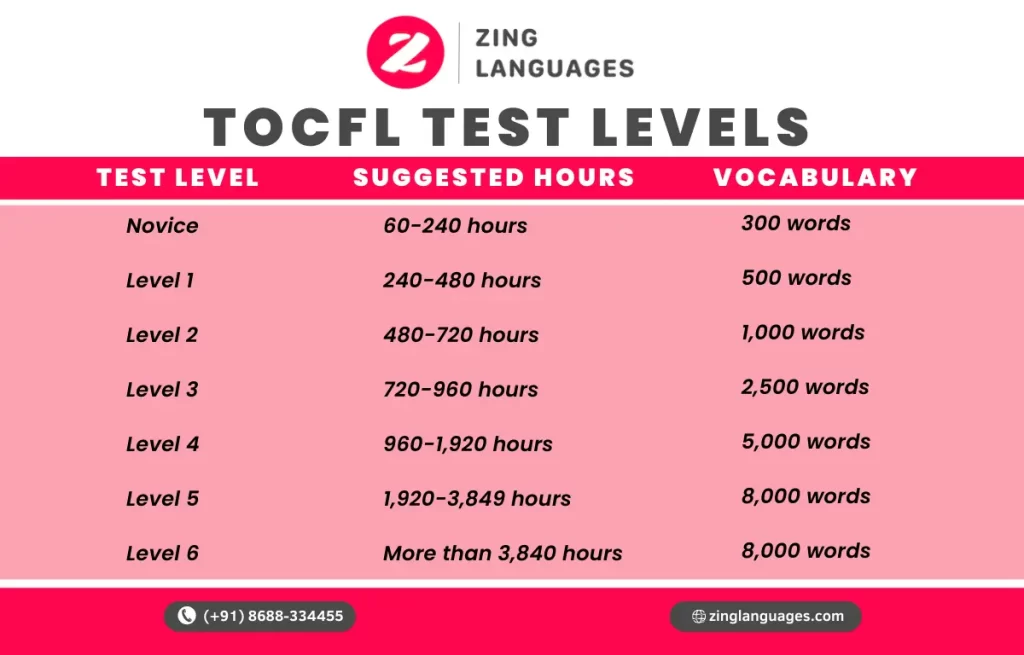
To pass the TOCFL (Test of Chinese as a Foreign Language), you must first understand its structure. The exam assesses listening, reading, speaking, and writing skills, divided into band levels (A1-C2). Each level has specific requirements, so identify your target band and focus on the corresponding skills.
- Listening: Practice with native audio materials like podcasts or news.
- Reading: Study textbooks and articles matching your proficiency level.
- Speaking/Writing: Engage in conversations and write essays on common topics.
Create a Study Plan
A structured study plan is crucial for TOCFL success. Allocate time daily for each skill, balancing practice and review. Consistency is key to improving fluency and accuracy.
- Set goals: Define weekly targets for vocabulary and grammar.
- Use resources: Leverage TOCFL prep books, apps, and online courses.
- Track progress: Take mock tests to identify weaknesses.
Master Key Vocabulary and Grammar
The TOCFL emphasizes vocabulary and grammar relevant to daily life and academic contexts. Focus on high-frequency words and sentence patterns.
- Flashcards: Memorize essential terms using spaced repetition.
- Grammar drills: Practice conjugations, particles, and sentence structures.
- Contextual learning: Learn phrases through dialogues or stories.
Practice with Mock Exams
Simulating the test environment with mock exams helps build stamina and familiarity. Time yourself to improve speed and accuracy.
- Official materials: Use past TOCFL papers for authentic practice.
- Analyze mistakes: Review errors to avoid repetition.
- Adjust strategies: Refine techniques for different question types.
Improve Listening and Speaking Skills
For the listening and speaking sections, immerse yourself in Mandarin through active practice.
- Watch media: Use Chinese TV shows or YouTube channels.
- Language exchange: Partner with native speakers for conversation.
- Shadowing: Repeat audio clips to improve pronunciation.
What level is TOCFL and HSK?
Understanding TOCFL and HSK Proficiency Levels
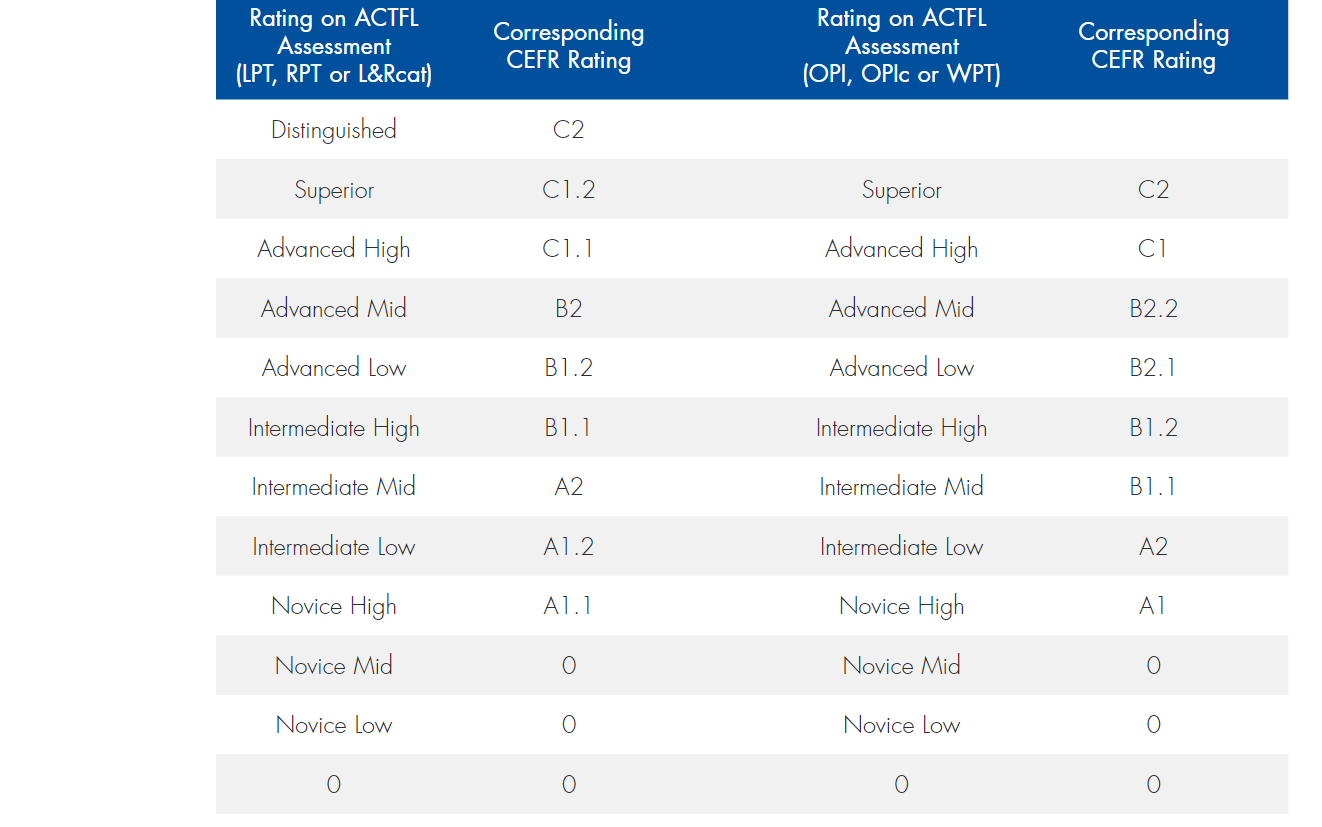
The TOCFL (Test of Chinese as a Foreign Language) and HSK (Hanyu Shuiping Kaoshi) are standardized tests measuring Mandarin proficiency. TOCFL is used primarily in Taiwan, while HSK is the standard in Mainland China. Both tests categorize learners into multiple levels:
- TOCFL: Ranges from Band A (Beginner) to Band C (Advanced), with sub-levels like A1, A2, B1, B2, C1, and C2.
- HSK: Divided into HSK 1-6, where HSK 1-2 are beginner, 3-4 intermediate, and 5-6 advanced.
- Both tests assess listening, reading, writing, and (in higher levels) speaking skills.
Comparing TOCFL and HSK Level Structures
While TOCFL and HSK serve similar purposes, their level structures differ:
- TOCFL follows a 6-band system aligned with CEFR (A1-C2).
- HSK uses a 6-tier system, with HSK 6 being roughly equivalent to CEFR C1.
- TOCFL Band C1/C2 exceeds HSK 6 in difficulty, covering specialized vocabulary.
Recognition of TOCFL vs. HSK Worldwide
The acceptance of TOCFL and HSK varies by region:
- HSK is widely recognized in Mainland China for academic and professional purposes.
- TOCFL is preferred in Taiwan for university admissions and employment.
- Some international institutions accept both, but HSK has broader global recognition.
Exam Content: TOCFL vs. HSK
The test formats differ in structure and focus:
- TOCFL includes listening, reading, writing, and an optional speaking test at higher levels.
- HSK tests listening, reading, and writing (HSK 1-2 lack writing). HSK Advanced includes speaking separately.
- TOCFL emphasizes traditional characters, while HSK uses simplified characters.
Choosing Between TOCFL and HSK
Your choice depends on goals and location:
- For studying/working in Taiwan, prioritize TOCFL.
- For Mainland China opportunities, focus on HSK.
- If aiming for global recognition, HSK is more widely accepted.
What is the difference between HSK 3 and TOCFL?
Exam Purpose and Target Audience
The HSK 3 (Hanyu Shuiping Kaoshi) is a standardized test for non-native Chinese learners, designed to assess proficiency in Mandarin Chinese for academic or professional purposes. The TOCFL (Test of Chinese as a Foreign Language) is primarily used in Taiwan and evaluates proficiency in Traditional Chinese, often for study or immigration purposes.
- HSK 3 targets mainland China's Simplified Chinese system.
- TOCFL focuses on Traditional Chinese used in Taiwan.
- HSK is more globally recognized, while TOCFL is preferred in Taiwan.
Language Script and Vocabulary Differences
The HSK 3 exam uses Simplified Chinese characters, while the TOCFL employs Traditional characters. Vocabulary also differs due to regional variations in terminology and expressions.
- HSK 3 follows mainland China's linguistic standards.
- TOCFL incorporates Taiwanese Mandarin vocabulary.
- Some words may differ in meaning or usage between the two tests.
Exam Structure and Scoring
The HSK 3 consists of listening, reading, and writing sections, with a total score of 300. The TOCFL has multiple levels (Band A, B, C) and includes listening, reading, speaking, and writing in higher bands.
- HSK 3 is a single-level test with a fixed format.
- TOCFL offers tiered levels for different proficiencies.
- TOCFL includes speaking and writing in advanced bands.
Recognition and Use Cases
HSK 3 is widely accepted for university admissions and job applications in mainland China. TOCFL is often required for studying in Taiwan or applying for Taiwanese residency.
- HSK 3 is recognized by Chinese employers and schools.
- TOCFL is mandatory for certain Taiwanese visa applications.
- Some institutions may accept both, depending on location.
Difficulty and Preparation
The HSK 3 corresponds to a lower-intermediate level (600 words), while TOCFL Band B (comparable level) requires knowledge of 1,000-2,500 words, making it slightly more challenging.
- HSK 3 has a smaller vocabulary requirement.
- TOCFL demands broader language skills at equivalent levels.
- Preparation materials differ due to script and regional variations.
Frequently Asked Questions (FAQ)
How does reading speed affect performance on HSK and TOCFL tests?
Reading speed plays a crucial role in standardized tests like the HSK (Hanyu Shuiping Kaoshi) and TOCFL (Test of Chinese as a Foreign Language) because these exams are timed. A faster reading speed allows test-takers to comprehend passages quickly, answer questions accurately, and manage their time effectively. Slow readers may struggle to finish sections, leading to rushed or incomplete answers, which can negatively impact their scores. Developing strong reading fluency through consistent practice is essential for success.
What strategies can improve reading speed for HSK and TOCFL?
To enhance reading speed for these tests, learners should focus on vocabulary expansion and sentence structure familiarity. Techniques like skimming (reading quickly for main ideas) and scanning (searching for specific details) are highly effective. Regular exposure to authentic materials, such as news articles or short stories, helps build speed and comprehension. Additionally, timed practice tests simulate exam conditions, training the brain to process information efficiently under pressure.
Is reading speed more important than comprehension in HSK and TOCFL?
While reading speed is vital, it should not come at the expense of comprehension. These tests assess both the ability to read quickly and understand content accurately. Striking a balance is key—test-takers must avoid rushing to the point of misinterpreting questions. Active reading strategies, such as annotating key points or summarizing paragraphs, can help maintain comprehension while improving speed. Ultimately, speed and understanding must work together for optimal performance.
How can test-takers manage time effectively during the reading sections?
Effective time management involves allocating specific minutes per passage or question set and sticking to those limits. Test-takers should prioritize easier questions first, then revisit more challenging ones if time permits. Using a watch or timer during practice sessions helps build awareness of pacing. Additionally, avoiding over-analysis of single questions prevents wasted time. Developing a consistent reading rhythm through repeated mock tests ensures familiarity with the exam's demands and reduces anxiety.
Leave a Reply
Related Posts