
12 songs to learn Chinese and expand your horizons

Learning Chinese can be both challenging and rewarding, and music offers a fun and engaging way to immerse yourself in the language. Songs provide natural exposure to pronunciation, vocabulary, and cultural nuances, making them an excellent tool for learners at any level. Whether you're a beginner or looking to refine your skills, this curated list of 12 songs will help you practice listening, expand your vocabulary, and connect with Chinese culture. From timeless classics to modern hits, each track is selected for its clarity, meaningful lyrics, and cultural significance. Let these melodies guide your journey as you explore the beauty of the Chinese language through music.
12 Songs to Learn Chinese and Expand Your Horizons
Learning Chinese through music is an engaging and effective way to improve your language skills while immersing yourself in Chinese culture. Songs help with pronunciation, vocabulary, and listening comprehension, making the learning process enjoyable. Below, we explore five key aspects of using music to master Chinese.
1. Why Learn Chinese Through Songs?
Music is a powerful tool for language acquisition because it enhances memory retention and cultural understanding. Chinese songs introduce learners to colloquial expressions, tones, and rhythms of the language. Additionally, lyrics often repeat key phrases, reinforcing vocabulary naturally.
See AlsoLearning Chinese with Cartoons| Benefit | Explanation |
|---|---|
| Improved Pronunciation | Songs help learners mimic native tones and intonation. |
| Vocabulary Expansion | Exposure to new words in a memorable context. |
| Cultural Insight | Understanding themes and emotions in Chinese music. |
2. Best Chinese Songs for Beginners
Beginners should start with slow-paced, clear-lyric songs to build confidence. Popular choices include:
- 月亮代表我的心 (The Moon Represents My Heart) – Simple lyrics and a slow melody.
- 朋友 (Friend) – Easy vocabulary about friendship.
- 童话 (Fairy Tale) – A modern ballad with repetitive phrases.
| Song | Difficulty Level |
|---|---|
| 月亮代表我的心 | Beginner |
| 朋友 | Beginner |
| 童话 | Beginner/Intermediate |
3. Intermediate-Level Chinese Songs to Challenge Yourself
For learners ready to advance, songs with faster tempos and complex lyrics are ideal. Examples:
See AlsoChinese Language Motivation - 6 Powerful Passions- 小幸运 (A Little Happiness) – Emotional and rich in vocabulary.
- 稻香 (Rice Fragrance) – Blends storytelling with cultural references.
- 平凡之路 (Ordinary Road) – Philosophical lyrics for deeper understanding.
| Song | Key Learning Focus |
|---|---|
| 小幸运 | Emotional expressions |
| 稻香 | Cultural context |
| 平凡之路 | Abstract concepts |
4. How to Effectively Study Chinese Songs
To maximize learning, follow these steps:
1. Listen first without lyrics to grasp the melody.
2. Read the lyrics alongside a translation.
3. Sing along to practice pronunciation.
4. Analyze grammar and vocabulary in context.
| Step | Purpose |
|---|---|
| Listen First | Develop listening skills |
| Read Lyrics | Understand meaning |
| Sing Along | Improve speaking |
5. Popular Chinese Artists for Language Learners
Exploring music by these artists provides diverse learning material:
- Jay Chou – Blends modern and traditional Chinese.
- Jolin Tsai – Upbeat pop with clear enunciation.
- Eason Chan – Emotional depth and varied vocabulary.
| Artist | Style |
|---|---|
| Jay Chou | Pop/R&B with cultural themes |
| Jolin Tsai | Dance-pop, clear pronunciation |
| Eason Chan | Ballads, rich vocabulary |
What is the most recognized Chinese song?
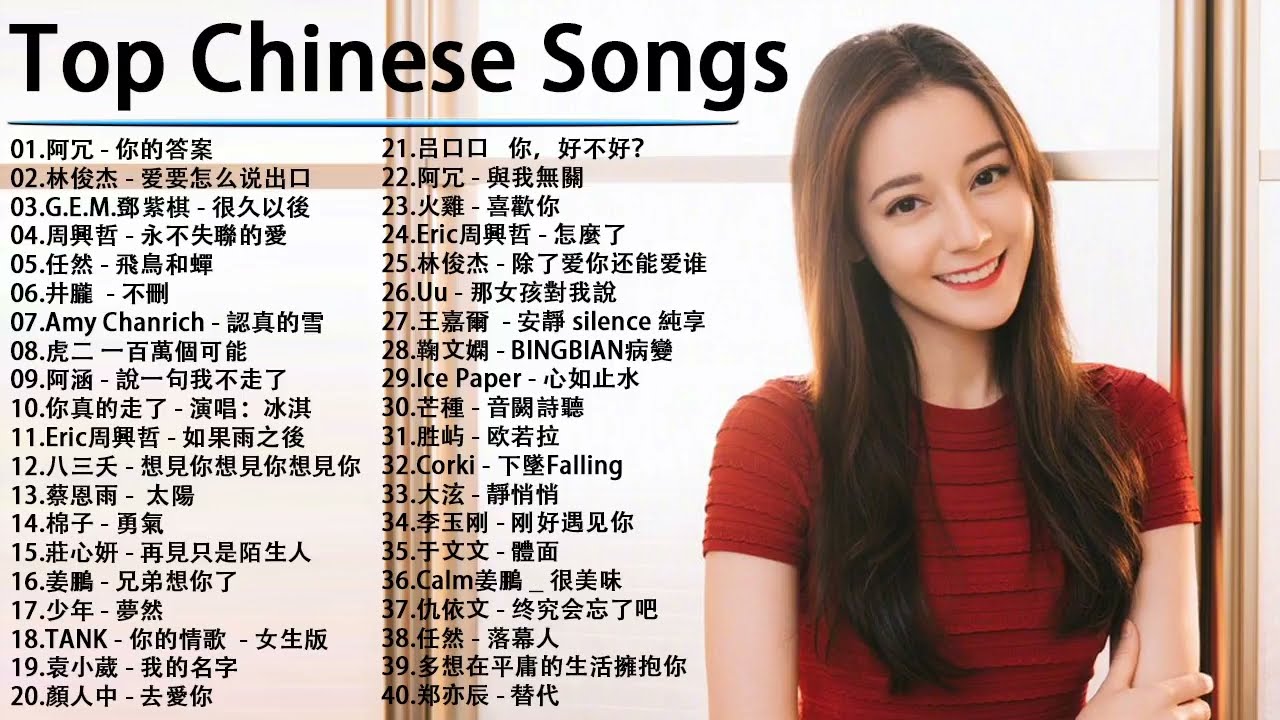
What is the most recognized Chinese song worldwide?
The most globally recognized Chinese song is likely Mo Li Hua (Jasmine Flower). This traditional folk song dates back to the 18th century and is celebrated for its melodic simplicity and cultural significance. Key reasons for its fame include:
- Cultural representation: It symbolizes Chinese heritage and has been performed at international events like the 2008 Beijing Olympics.
- Melodic appeal: Its soothing tune makes it accessible to global audiences.
- Historical longevity: It has endured for centuries, adapting to modern interpretations.
How did Mo Li Hua gain international fame?
Mo Li Hua rose to global prominence through its inclusion in Western classical music and pop culture. Notable milestones include:
- Giacomo Puccini's opera Turandot: The composer incorporated the melody into the opera, introducing it to Western audiences.
- Olympic performances: It was featured in the 2008 Beijing Olympics, showcasing Chinese culture.
- UNESCO recognition: It is often used to represent China in cultural exchanges.
What are the lyrical themes of Mo Li Hua?
The lyrics of Mo Li Hua celebrate the beauty of the jasmine flower, a symbol of purity and elegance in Chinese culture. Key themes include:
- Nature appreciation: The song praises the flower's fragrance and delicate appearance.
- Cultural values: It reflects traditional Chinese ideals of humility and grace.
- Simplicity: The straightforward lyrics make it easy to remember and sing.
How has Mo Li Hua influenced modern music?
Mo Li Hua has inspired countless adaptations across genres, from classical to pop. Examples include:
- Orchestral arrangements: Many symphonies have reinterpreted the melody.
- Pop covers: Artists like Coco Lee and Lang Lang have modernized it.
- Film soundtracks: It appears in movies to evoke Chinese cultural motifs.
Why is Mo Li Hua considered a cultural treasure?
Mo Li Hua is revered as a cultural treasure due to its deep roots and universal appeal. Contributing factors are:
- Historical significance: It reflects centuries of Chinese musical tradition.
- Diplomatic tool: It bridges cultural gaps in international relations.
- Artistic versatility: Its melody adapts to various musical styles while retaining its identity.
What are the 10 traditional Chinese music?
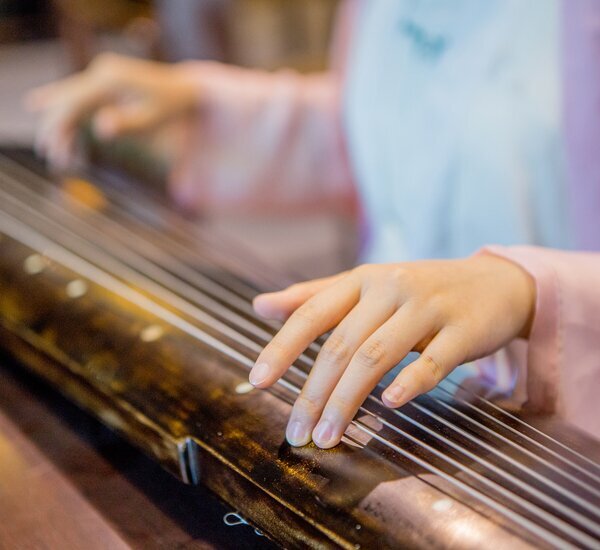
1. Guqin (古琴)
The Guqin is one of the oldest Chinese string instruments, with a history of over 3,000 years. Often associated with scholars and philosophers, it produces a serene and meditative sound. The instrument has seven strings and is played by plucking.
- Historical significance: Linked to Confucius and ancient Chinese literati.
- Playing technique: Uses harmonics and glissando for expressive melodies.
- Cultural status: Recognized by UNESCO as a Masterpiece of the Oral and Intangible Heritage of Humanity.
2. Pipa (琵琶)
The Pipa is a pear-shaped lute with four strings, known for its bright and percussive tones. It has been a prominent instrument since the Tang Dynasty and is often used in solo and ensemble performances.
- Technique: Uses finger-picking and tremolo for rapid melodies.
- Repertoire: Includes classical pieces like Ambushed from Ten Sides.
- Modern influence: Adapted in contemporary Chinese orchestral music.
3. Erhu (二胡)
The Erhu is a two-stringed bowed instrument, sometimes called the Chinese violin. Its melancholic and expressive sound makes it a staple in traditional and modern Chinese music.
- Structure: Features a snakeskin-covered resonator and bamboo bow.
- Notable pieces: Moon Reflected on Second Spring by Abing.
- Versatility: Used in folk, opera, and pop music.
4. Dizi (笛子)
The Dizi is a bamboo flute with a distinctive membrane that creates a buzzing tone. It is widely used in folk music, opera, and modern compositions.
- Variations: Includes the Bangdi (higher pitch) and Qudi (mellow tone).
- Technique: Circular breathing allows continuous play.
- Cultural role: Often heard in pastoral and celebratory music.
5. Guzheng (古筝)
The Guzheng is a zither with 21 or more strings, known for its resonant and flowing sound. It is one of the most popular traditional instruments in China.
- Playing style: Uses finger picks for plucking and bending notes.
- Classical works: Includes High Mountains and Flowing Water.
- Modern adaptations: Frequently used in film scores and fusion music.
6. Suona (唢呐)
The Suona is a double-reed horn with a piercing and vibrant sound, often used in festivals and ceremonies.
- Cultural context: Common in weddings and funerals.
- Regional styles: Northern Suona is louder, Southern is more melodic.
- Notable use: Featured in Chinese opera and folk ensembles.
7. Xiao (箫)
The Xiao is an end-blown flute made of bamboo, producing a soft and ethereal tone. It is often paired with the Guqin in classical music.
- Design: Longer than the Dizi, with no membrane.
- Musical role: Enhances meditative and poetic compositions.
- Historical roots: Dates back to the Han Dynasty.
8. Yangqin (扬琴)
The Yangqin is a hammered dulcimer with origins in Persia, adapted into Chinese music during the Ming Dynasty.
- Playing method: Struck with bamboo mallets.
- Tonal range: Covers both melodic and percussive roles.
- Ensemble use: Integral in Jiangnan Sizhu and Cantonese music.
9. Hulusi (葫芦丝)
The Hulusi is a free-reed wind instrument with a gourd resonator, known for its sweet and mellow sound.
- Ethnic origin: Associated with the Dai people of Yunnan.
- Structure: Three bamboo pipes, one melody pipe, and two drones.
- Popular pieces: Moonlight Under the Bamboo Grove.
10. Sheng (笙)
The Sheng is a mouth-blown free-reed instrument, one of the oldest in Chinese music. It produces rich harmonies and is used in both classical and folk traditions.
- Unique feature: Capable of playing chords.
- Historical influence: Ancestor of Western instruments like the harmonica.
- Modern use: Featured in orchestral and experimental music.
Which Chinese song is easy to sing?

What Makes a Chinese Song Easy to Sing?
An easy-to-sing Chinese song typically has simple lyrics, a slow tempo, and a repetitive melody. These characteristics make it accessible for beginners or non-native speakers. Here are key factors to consider:
- Simple vocabulary: Songs with basic words and phrases are easier to memorize and pronounce.
- Slow rhythm: A steady, unhurried beat helps with pacing and breath control.
- Repetitive chorus: Repeating lines reduce the learning curve and build confidence.
Top 5 Easy Chinese Songs for Beginners
Here are five beginner-friendly Chinese songs known for their simplicity and popularity:
- Tóng Huà (童话) by Michael Wong: Slow tempo and emotional, easy-to-follow lyrics.
- Xiǎo Xīng Xīng (小星星) – Traditional: A children’s song with a very basic melody.
- Yuè Liàng Dài Biǎo Wǒ De Xīn (月亮代表我的心) by Teresa Teng: Classic ballad with repetitive structure.
- Qīng Huá Cí (青花瓷) by Jay Chou: Poetic but slow-paced, ideal for practice.
- Lǎo Shǔ Ài Dà Mǐ (老鼠爱大米) by Yang Chen Gang: Catchy and straightforward lyrics.
How to Practice Singing Chinese Songs Effectively
To master an easy Chinese song, follow these steps for effective practice:
- Listen repeatedly: Familiarize yourself with pronunciation and melody.
- Break down lyrics: Learn line by line, focusing on tones and meaning.
- Sing along slowly: Use karaoke tracks or slowed-down versions.
Common Challenges When Singing Chinese Songs
Beginners often face these difficulties when learning Chinese songs:
- Tonal pronunciation: Mandarin’s four tones can alter word meanings.
- Complex characters: Some lyrics use advanced vocabulary or idioms.
- Fast-paced songs: Avoid tracks with rapid verses until comfortable.
Resources to Find Easy Chinese Songs
Use these resources to discover more beginner-friendly Chinese songs:
- YouTube tutorials: Search for easy Chinese songs for beginners.
- Karaoke apps: Apps like Smule or全民K歌 offer practice tracks.
- Language learning platforms: Websites like FluentU include song-based lessons.
What is the oldest Chinese song?
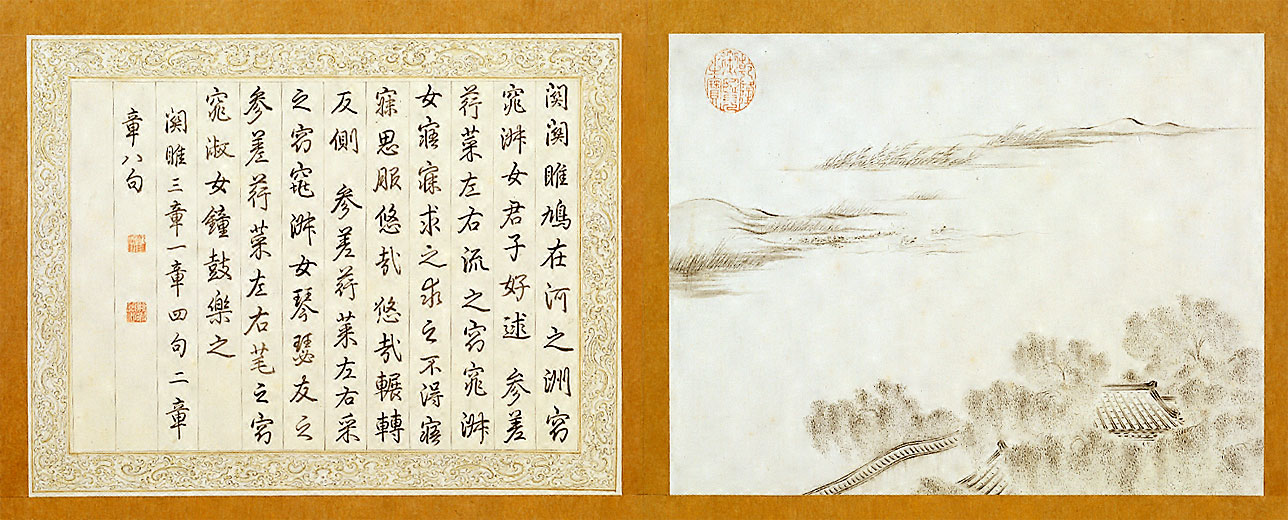
The Origins of the Oldest Chinese Song
The oldest known Chinese song is The Song of the Yue Boatman (《越人歌》), which dates back to the Spring and Autumn Period (around 771–476 BCE). This folk song was recorded in the Garden of Stories (《说苑》) by Liu Xiang during the Han Dynasty. It reflects the cultural exchange between the Yue people and the Chu state.
- Historical Context: The song originated from the Zhejiang region and was sung in the Yue dialect.
- Cultural Significance: It showcases early Chinese folk music and poetic traditions.
- Preservation: The lyrics were later translated into Classical Chinese for documentation.
Lyrics and Translation of The Song of the Yue Boatman
The lyrics of The Song of the Yue Boatman express admiration and friendship. The original text is in the Yue language, but a Classical Chinese version survives. Here’s a breakdown of its content:
- Theme: A boatman’s heartfelt praise for a Chu prince.
- Language: The song uses metaphors and natural imagery common in early Chinese poetry.
- Translation Challenges: The original Yue dialect is largely lost, making interpretations speculative.
Musical Characteristics of Ancient Chinese Songs
While the melody of The Song of the Yue Boatman is unknown, ancient Chinese music relied on pentatonic scales and ritual instruments. Key features include:
- Instruments: Bells, drums, and qin (zither) were commonly used.
- Rhythm: Songs followed natural speech patterns rather than strict meters.
- Purpose: Music served ceremonial, courtly, and folk functions.
Comparison with Other Ancient Chinese Songs
The Song of the Yue Boatman predates other early Chinese songs like those from the Book of Songs (《诗经》). Differences include:
- Regional Influence: The Yue song reflects southern culture, while the Book of Songs focuses on the Central Plains.
- Language: The Yue song uses a non-Sinitic language, unlike the Classical Chinese of later works.
- Survival: Only fragments of the Yue song remain, whereas the Book of Songs is fully preserved.
Legacy and Modern Interpretations
The song’s legacy endures in Chinese literature and musicology. Modern scholars and artists have attempted reconstructions:
- Academic Studies: Researchers analyze its linguistic and cultural roots.
- Performances: Some musicians create hypothetical melodies based on historical clues.
- Cultural Revival: The song symbolizes early multiculturalism in China.
Frequently Asked Questions (FAQ)
What are the benefits of learning Chinese through songs?
Learning Chinese through songs offers a fun and engaging way to improve language skills. Music helps with pronunciation, vocabulary, and listening comprehension by exposing learners to natural speech patterns and tones. Additionally, songs often include cultural references, providing deeper insights into Chinese traditions and modern life. The repetitive nature of lyrics also aids memory retention, making it easier to recall words and phrases in conversations.
How can I effectively use these 12 songs to learn Chinese?
To make the most of these 12 songs, start by listening to each track multiple times to familiarize yourself with the melody and rhythm. Read the lyrics alongside translations to understand the meaning, and highlight key vocabulary or phrases. Practice singing along to improve pronunciation and tone accuracy. For advanced learners, analyzing the grammar and sentence structures in the lyrics can further enhance language proficiency. Consistency is key—revisit the songs regularly to reinforce learning.
Are these songs suitable for beginners in Chinese?
Yes, the selection includes songs with simple lyrics and clear pronunciation, making them ideal for beginners. Some tracks feature repetitive phrases or slow tempos, which are easier to follow. However, even if certain songs seem challenging at first, they provide valuable exposure to authentic language use. Beginners can start by focusing on basic words and gradually build up to more complex sentences as their skills improve.
Can learning Chinese songs help with understanding Chinese culture?
Absolutely! Music is a reflection of culture, and these songs offer glimpses into Chinese history, values, and societal trends. For example, folk songs may highlight traditional stories, while pop songs reveal contemporary lifestyles. By studying the lyrics and context, learners gain a deeper appreciation of cultural nuances, idioms, and even humor. This cultural awareness not only enriches language skills but also fosters a greater connection with native speakers.
Leave a Reply
Related Posts