
How to get past the intermediate Chinese learning plateau

Reaching the intermediate level in Chinese is a significant achievement, but many learners find themselves stuck at this stage, struggling to progress further. Known as the intermediate plateau, this frustrating phase often stems from repetitive study methods, limited vocabulary expansion, or a lack of immersive practice. To break through, learners must adopt targeted strategies, such as engaging with authentic materials, refining grammar nuances, and actively practicing speaking and writing. This article explores practical steps to overcome the plateau, from incorporating advanced resources to embracing consistent, real-world application. By shifting focus and refining techniques, learners can reignite their progress and move closer to fluency in Mandarin Chinese.
- How to Overcome the Intermediate Chinese Learning Plateau
- How to overcome the intermediate plateau?
- How long does it take to learn intermediate Chinese?
- How to get out of a learning plateau?
-
Frequently Asked Questions (FAQ)
- What are the common signs of hitting an intermediate plateau in learning Chinese?
- How can I expand my vocabulary effectively to move past the intermediate plateau?
- Why is improving listening comprehension crucial for overcoming the intermediate plateau?
- What role does consistent speaking practice play in surpassing the intermediate level?
How to Overcome the Intermediate Chinese Learning Plateau
Reaching the intermediate plateau in learning Chinese can be frustrating. At this stage, progress feels slower, and motivation may dip. However, with the right strategies, you can push through and reach advanced proficiency. Below are key approaches to help you move forward.
1. Expand Your Vocabulary Strategically
To move beyond the intermediate plateau, focus on learning high-frequency words and collocations instead of random vocabulary. Use tools like Anki or Pleco flashcards to reinforce retention. Reading news articles, books, or watching Chinese dramas with subtitles can help you encounter new words in context.
See AlsoDebunking 9 Common Myths About Learning Chinese| Method | Benefit |
|---|---|
| Flashcards (Anki/Pleco) | Spaced repetition improves long-term retention |
| Reading (News/Books) | Exposes you to natural sentence structures |
| TV Shows/Dramas | Helps with listening and colloquial phrases |
2. Strengthen Your Listening and Speaking Skills
Many learners struggle with fast-paced conversations and regional accents. To improve, listen to Chinese podcasts, radio, or YouTube channels daily. Shadowing (repeating what native speakers say) can enhance pronunciation and intonation. Additionally, engage in language exchanges or hire a tutor for structured practice.
| Activity | Impact |
|---|---|
| Podcasts/Radio | Trains your ear for natural speech |
| Shadowing Technique | Improves fluency and accent |
| Conversation Practice | Builds confidence in real-life communication |
3. Master Chinese Grammar Patterns
At the intermediate level, refining grammar is crucial. Focus on sentence structures, particles, and conjunctions. Practice writing short essays or journal entries to apply grammar rules. Tools like Chinese Grammar Wiki can clarify complex points.
| Grammar Focus | Example |
|---|---|
| 了 (le) for completed actions | 我吃了饭 (I ate) |
| 把 (bǎ) structure | 把书放在桌子上 (Put the book on the table) |
| 得 (de) for complements | 他说得很快 (He speaks quickly) |
4. Immerse Yourself in Authentic Content
Consuming native-level content accelerates learning. Watch Chinese movies, follow social media influencers, or join online forums. Try to summarize what you read/watch in Chinese to reinforce comprehension.
See AlsoHow to fake sounding like a native Chinese speaker| Resource | Skill Developed |
|---|---|
| Movies/TV Shows | Listening + Cultural Context |
| Weibo/Douyin | Informal Language + Slang |
| Chinese Forums (Zhihu) | Reading + Writing Practice |
5. Set Clear and Measurable Goals
Without specific goals, progress can stagnate. Define short-term objectives (e.g., Learn 20 new words weekly) and long-term milestones (e.g., Pass HSK 5). Track progress using apps or journals.
| Goal Type | Example |
|---|---|
| Daily | Practice speaking for 15 minutes |
| Weekly | Complete 3 grammar exercises |
| Monthly | Finish reading a short story |
How to overcome the intermediate plateau?

Identify and Target Weak Areas
To overcome the intermediate plateau, start by identifying your specific weaknesses. Intermediate learners often struggle with certain aspects of the language, such as grammar nuances, vocabulary gaps, or pronunciation. Focus on these areas deliberately:
See AlsoChinese Emperors and Empresses: Lü Zhi of Han, China’s First Empress- Take a proficiency test to pinpoint weaknesses.
- Keep a journal of recurring mistakes.
- Use targeted exercises (e.g., grammar drills or pronunciation practice).
Immerse Yourself in Authentic Content
Exposure to real-life language use is crucial for breaking through the plateau. Replace textbook materials with authentic resources to improve comprehension and fluency:
- Watch movies or series without subtitles.
- Read books, news, or articles in your target language.
- Listen to podcasts or music to train your ear.
Expand Vocabulary Strategically
A limited vocabulary often holds intermediate learners back. Move beyond basic words and learn contextual phrases and collocations:
- Learn synonyms and idioms to sound more natural.
- Use flashcards or apps like Anki for retention.
- Practice word families (e.g., noun, verb, adjective forms).
Engage in Active Speaking Practice
Passive learning won’t help you advance. To push past the plateau, prioritize active communication:
- Find a language partner or tutor for regular conversations.
- Record yourself speaking and analyze mistakes.
- Join discussion groups or forums in your target language.
Set Clear, Measurable Goals
Without goals, progress feels stagnant. Define specific objectives to track improvement and stay motivated:
- Set weekly targets (e.g., mastering 10 new phrases).
- Track progress with a language app or notebook.
- Challenge yourself with higher-level tasks (e.g., writing essays).
How long does it take to learn intermediate Chinese?
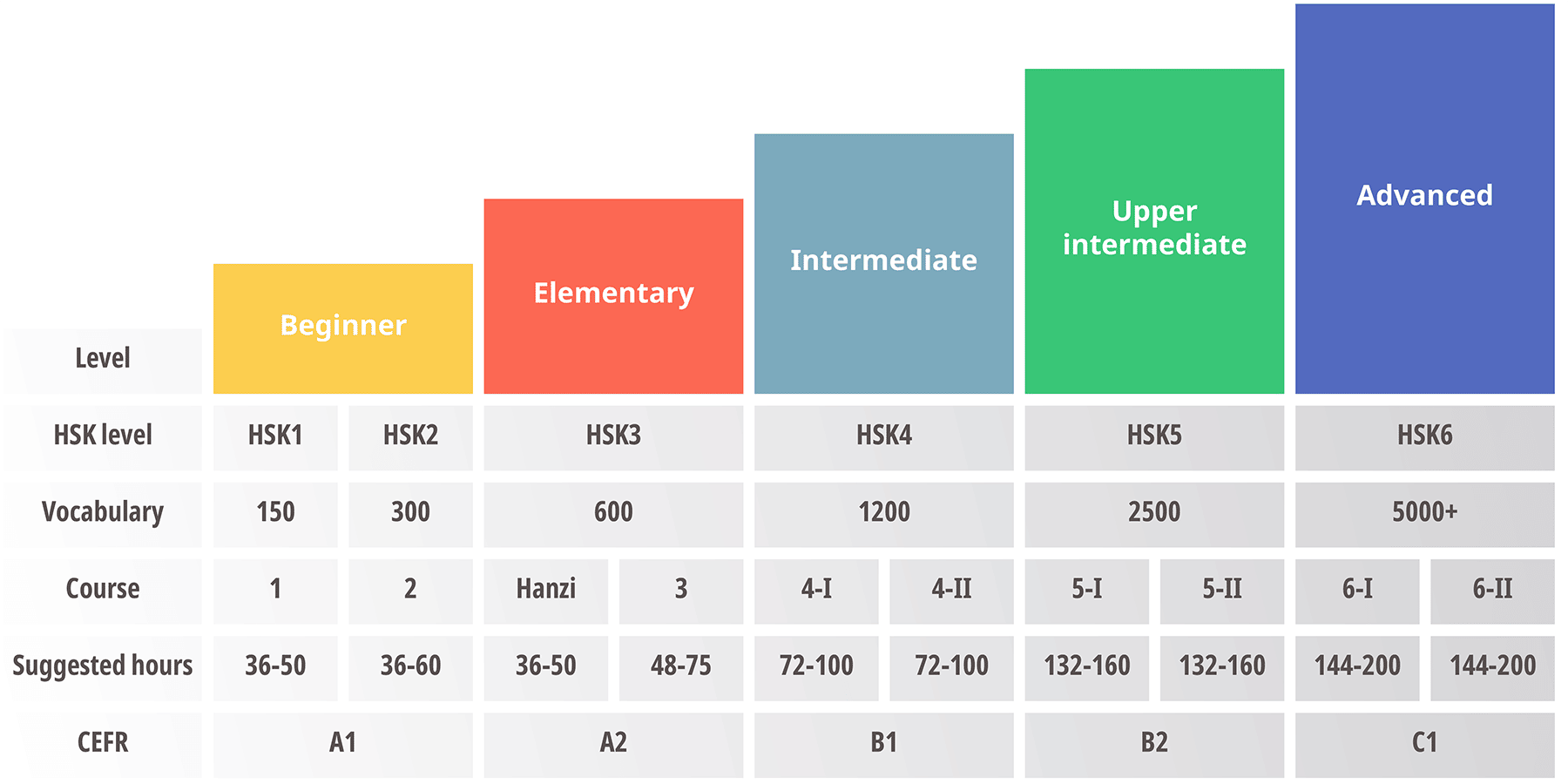
What Defines Intermediate Chinese Proficiency?
Reaching intermediate Chinese typically means mastering around 1,200-2,500 vocabulary words, understanding basic grammar structures, and holding conversations on everyday topics. Key benchmarks include:
- Reading/Writing: Recognizing 800-1,500 characters and composing short paragraphs.
- Listening/Speaking: Following moderately paced dialogues and expressing opinions.
- HSK 3-4: Passing these levels indicates intermediate competence.
Time Investment for Intermediate Chinese
For English speakers, achieving intermediate Chinese usually takes 1-2 years with consistent study. Variables include:
- Study Hours: 15-20 hours per week accelerates progress.
- Immersion: Living in a Chinese-speaking environment reduces time by 30-50%.
- Prior Experience: Knowledge of other tonal languages (e.g., Vietnamese) may help.
Effective Learning Methods
Structured approaches optimize the journey to intermediate Chinese:
- Spaced Repetition: Tools like Anki reinforce vocabulary retention.
- Conversation Practice: Weekly tutoring or language exchanges improve fluency.
- Media Consumption: Watching Chinese TV (e.g., dramas) trains listening skills.
Common Challenges and Solutions
Learners often face these hurdles when reaching for intermediate Chinese:
- Tones: Mispronunciations hinder communication—mimic native speakers.
- Character Memorization: Break characters into radicals for easier recall.
- Grammar Complexity: Focus on patterns (e.g., topic-comment structure).
Resources to Accelerate Progress
Leverage these tools to fast-track intermediate Chinese mastery:
- Textbooks: Integrated Chinese or HSK Standard Course provide frameworks.
- Apps: HelloChinese or Pleco offer interactive drills.
- Online Tutors: Platforms like iTalki connect learners with native teachers.
How to get out of a learning plateau?

Change Your Learning Approach
When you hit a learning plateau, it often means your current methods are no longer challenging your brain. To overcome this, try altering your study techniques. For example:
- Switch mediums: If you’ve been reading, try videos, podcasts, or hands-on practice.
- Reverse learning: Teach the material to someone else to identify gaps in your understanding.
- Use spaced repetition: Tools like flashcards can reinforce long-term retention.
Set Specific and Challenging Goals
Vague goals can contribute to stagnation. Instead, define clear, measurable objectives to reignite progress. Consider:
- Break down skills: Focus on mastering one sub-skill at a time.
- Set deadlines: Create urgency with time-bound targets.
- Track progress: Use journals or apps to monitor improvements.
Seek Feedback and Mentorship
External input can reveal blind spots in your learning. Engage with experts or peers to refine your approach:
- Find a mentor: Learn from someone with more experience.
- Join communities: Participate in forums or study groups.
- Request critiques: Ask for constructive feedback on your work.
Introduce Variety and Novelty
Monotony can stall progress. Injecting new elements into your routine can re-engage your brain:
- Learn cross-disciplinary skills: Explore related fields for fresh perspectives.
- Change your environment: Study in new locations to stimulate creativity.
- Experiment with projects: Apply knowledge in unconventional ways.
Prioritize Rest and Reflection
Sometimes, plateaus signal mental fatigue. Stepping back can lead to breakthroughs:
- Take breaks: Schedule downtime to prevent burnout.
- Reflect on progress: Analyze what’s working and what isn’t.
- Sleep well: Consolidate learning with proper rest.
Frequently Asked Questions (FAQ)
What are the common signs of hitting an intermediate plateau in learning Chinese?
Reaching an intermediate plateau in Chinese often manifests as a stagnation in progress despite consistent study. Learners may notice they can understand basic conversations but struggle with nuanced expressions, native-level content, or spontaneous speech. Another sign is relying heavily on memorized phrases instead of constructing sentences flexibly. Additionally, vocabulary growth may slow down, and mistakes in tones or grammar persist even after repeated corrections. Recognizing these signs is the first step to overcoming the plateau.
How can I expand my vocabulary effectively to move past the intermediate plateau?
To break through the plateau, focus on contextual learning rather than rote memorization. Engage with authentic materials like news articles, podcasts, or TV shows to encounter words in real-life situations. Use spaced repetition tools like Anki, but prioritize active usage by writing sentences or speaking with native speakers. Learning word families (e.g., synonyms, antonyms) and collocations (how words naturally pair together) will also deepen your understanding and make your speech more natural.
Why is improving listening comprehension crucial for overcoming the intermediate plateau?
At the intermediate stage, listening comprehension often lags behind reading or writing skills because spoken Chinese involves fast-paced speech, regional accents, and colloquialisms. To improve, expose yourself to diverse audio sources, such as Chinese dramas, radio, or language exchange partners. Practice shadowing (repeating speech in real-time) to mimic rhythm and intonation. Over time, this trains your brain to process spoken language faster and recognize common patterns, helping you advance beyond the plateau.
What role does consistent speaking practice play in surpassing the intermediate level?
Speaking is often the hardest skill to master but is essential for breaking the plateau. Regular conversation forces you to think on your feet, apply grammar rules, and recall vocabulary under pressure. Seek out language partners or tutors for feedback, and don’t fear mistakes—they’re part of the process. Recording yourself and analyzing your speech can reveal areas for improvement, such as tone accuracy or sentence flow. The more you speak, the more automatic and fluent your responses will become.
Leave a Reply
Related Posts