
A student’s guide to comprehension-based learning

Comprehension-based learning is an effective approach that focuses on understanding and internalizing knowledge rather than just memorizing facts. For students, this method encourages deeper engagement with the material, fostering long-term retention and critical thinking skills. By prioritizing meaning over rote repetition, learners can connect new information to existing knowledge, making it more relevant and easier to recall. This guide explores practical strategies for implementing comprehension-based learning, from active reading techniques to concept mapping and self-questioning. Whether studying languages, sciences, or humanities, mastering these skills can transform the way students absorb and apply information, leading to greater academic success and a more meaningful learning experience.
https://youtube.com/watch?v=RXFZ_FQBnbE
Understanding Comprehension-Based Learning: A Student’s Guide
What Is Comprehension-Based Learning?
Comprehension-based learning focuses on understanding content deeply rather than memorizing facts. This approach encourages students to engage with material critically, ask questions, and apply knowledge in real-world contexts. Unlike rote learning, comprehension-based methods prioritize critical thinking and long-term retention.
See AlsoLearning simplified and traditional Chinese| Key Aspect | Description |
|---|---|
| Deep Understanding | Focuses on grasping concepts rather than memorization. |
| Active Engagement | Encourages questioning and discussion. |
| Application | Emphasizes using knowledge in practical scenarios. |
Benefits of Comprehension-Based Learning
This method enhances retention, improves problem-solving skills, and fosters independent thinking. Students develop the ability to connect ideas across subjects, making learning more meaningful and adaptable to new situations.
| Benefit | Impact |
|---|---|
| Better Retention | Long-term memory improves through understanding. |
| Critical Thinking | Students analyze and evaluate information effectively. |
| Adaptability | Easier to apply knowledge in diverse contexts. |
Strategies for Effective Comprehension-Based Learning
To succeed, students should use techniques like summarization, self-questioning, and concept mapping. These methods help break down complex ideas and reinforce understanding.
| Strategy | How It Helps |
|---|---|
| Summarization | Condenses information to highlight key points. |
| Self-Questioning | Encourages deeper reflection on the material. |
| Concept Mapping | Visualizes relationships between ideas. |
Common Challenges and How to Overcome Them
Students may struggle with time management or overwhelming content. Breaking material into smaller sections and using active recall can mitigate these issues.
See AlsoChinese language question triage: When to ask whom about what| Challenge | Solution |
|---|---|
| Information Overload | Focus on one concept at a time. |
| Passive Learning | Engage with material through discussions or teaching others. |
| Lack of Motivation | Set clear, achievable goals. |
Tools and Resources for Comprehension-Based Learning
Utilize tools like digital flashcards, interactive videos, and discussion forums to enhance understanding. These resources promote active engagement and collaborative learning.
| Tool | Purpose |
|---|---|
| Digital Flashcards | Reinforce key concepts through repetition. |
| Interactive Videos | Provide visual and auditory learning aids. |
| Discussion Forums | Encourage peer interaction and knowledge sharing. |
What is comprehension based learning?
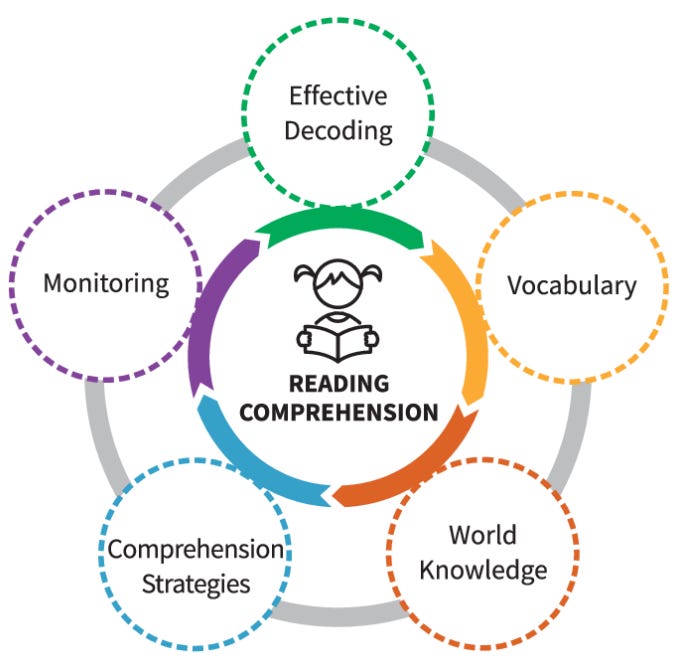
What is Comprehension Based Learning?
Comprehension Based Learning is an educational approach that prioritizes understanding over memorization or rote repetition. It focuses on helping learners grasp the meaning and context of information rather than simply recalling facts. This method is widely used in language acquisition, where learners develop skills by engaging with meaningful content like stories, conversations, or real-world materials.
See AlsoMandarin Matrix and The Chairman’s Bao: A Powerful Combination for Teaching Chinese- Emphasizes contextual understanding over isolated facts.
- Encourages active engagement with material.
- Often incorporates natural language exposure for deeper learning.
Key Principles of Comprehension Based Learning
The foundation of Comprehension Based Learning rests on several core principles that distinguish it from traditional methods. These principles ensure learners develop a deeper, more intuitive grasp of the subject matter.
- Meaningful input is prioritized over grammar drills.
- Learning occurs through comprehensible input slightly above the learner's current level.
- Focuses on listening and reading before speaking and writing.
Benefits of Comprehension Based Learning
This approach offers several advantages, particularly in language learning, where it fosters natural acquisition similar to how children learn their first language.
- Enhances long-term retention by connecting knowledge to context.
- Reduces learner anxiety by minimizing forced output.
- Builds intuitive fluency rather than rigid rule-based knowledge.
Comprehension Based Learning in Language Acquisition
In language learning, this method is often associated with techniques like TPRS (Teaching Proficiency through Reading and Storytelling) or CI (Comprehensible Input) strategies. It mirrors how humans naturally acquire language through exposure and understanding.
See AlsoA language learner’s guide to wuxia novels- Uses stories, dialogues, and visuals to reinforce meaning.
- Encourages repetition in context rather than isolated vocabulary lists.
- Promotes cultural immersion alongside linguistic skills.
How to Implement Comprehension Based Learning
Educators and learners can adopt this approach by structuring activities that prioritize understanding and engagement over mechanical drills.
- Provide comprehensible input tailored to the learner's level.
- Use multisensory materials (audio, video, texts) to reinforce concepts.
- Encourage interactive discussions rather than strict testing.
What are the 5 basic comprehension questions?

What Are the 5 Basic Comprehension Questions?
The 5 basic comprehension questions are foundational tools used to assess understanding of a text. These questions help readers engage with the material by focusing on key elements such as main ideas, details, and inferences. Below is a detailed breakdown of each question type:
- Who – Identifies the characters or people involved.
- What – Focuses on the main events or actions.
- When – Pinpoints the time or setting of the events.
- Where – Determines the location or place of the events.
- Why – Explores the reasons or motivations behind the events.
Why Are the 5 Basic Comprehension Questions Important?
These questions are essential for developing critical reading skills. They encourage readers to analyze texts deeply and extract meaningful information. Here’s why they matter:
- Improves retention by focusing on key details.
- Encourages active reading rather than passive skimming.
- Builds inferential skills by prompting deeper analysis.
- Supports summarization by identifying main ideas.
- Facilitates discussion by providing a structured approach.
How to Use the 5 Basic Comprehension Questions Effectively?
Applying these questions requires a strategic approach to maximize comprehension. Follow these steps for effective use:
- Preview the text to identify potential answers before reading.
- Annotate while reading to mark relevant details.
- Summarize each section using the questions as a guide.
- Discuss answers with peers to reinforce understanding.
- Review responses to ensure accuracy and completeness.
Examples of the 5 Basic Comprehension Questions in Practice
Here are practical examples of how these questions can be applied to a short story or article:
- Who is the protagonist in the story?
- What conflict does the main character face?
- When does the climax of the story occur?
- Where is the story set (e.g., a city, a fantasy world)?
- Why did the antagonist make a specific decision?
Common Mistakes When Using the 5 Basic Comprehension Questions
Avoid these pitfalls to ensure the questions serve their purpose effectively:
- Overlooking implicit details that require inference.
- Focusing only on surface-level answers without deeper analysis.
- Ignoring context that influences the why and how.
- Rushing through questions without reflection.
- Neglecting to connect answers to the broader text.
What 7 strategies can be used to teach text comprehension?
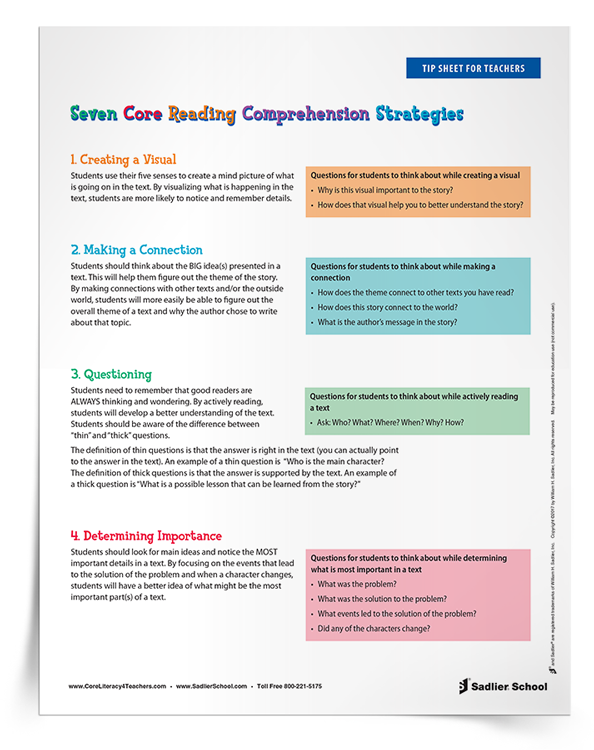
1. Activating Prior Knowledge
Encouraging students to connect what they already know with the new text improves comprehension. This strategy helps them build context and make meaningful associations.
- Ask questions about the topic before reading to stimulate recall.
- Use graphic organizers like KWL charts (What I Know, What I Want to Know, What I Learned).
- Discuss related experiences or prior lessons to bridge gaps in understanding.
2. Predicting and Inferring
Teaching students to predict outcomes or infer meaning from clues enhances engagement and deeper analysis.
- Preview headings, images, or keywords to guess content.
- Pause during reading to revise predictions based on new information.
- Encourage evidence-based reasoning to support inferences.
3. Questioning Techniques
Generating questions before, during, and after reading fosters critical thinking and active engagement.
- Teach students to formulate questions about the text’s purpose or details.
- Use open-ended questions to promote discussion.
- Encourage self-questioning to monitor understanding.
4. Summarizing and Paraphrasing
Condensing information into concise summaries helps students identify main ideas and retain key points.
- Practice highlighting key sentences or phrases.
- Teach the rule of thumb: summaries should be shorter than the original.
- Use graphic organizers to outline main events or arguments.
5. Visualizing the Text
Creating mental images or diagrams aids in comprehension and memory by making abstract concepts tangible.
- Encourage students to draw scenes or timelines from the text.
- Use mind maps to connect ideas visually.
- Describe sensory details to enhance imagination.
6. Monitoring Comprehension
Teaching students to self-assess their understanding helps them identify and address confusion.
- Introduce “fix-up” strategies like rereading or looking up unfamiliar terms.
- Use annotations to mark confusing passages.
- Encourage think-alouds to verbalize thought processes.
7. Collaborative Learning
Group discussions and peer interactions deepen understanding through diverse perspectives.
- Organize small-group discussions to analyze texts together.
- Assign roles (e.g., summarizer, questioner) during group work.
- Use peer teaching to reinforce concepts.
What are the 4 types of comprehension?
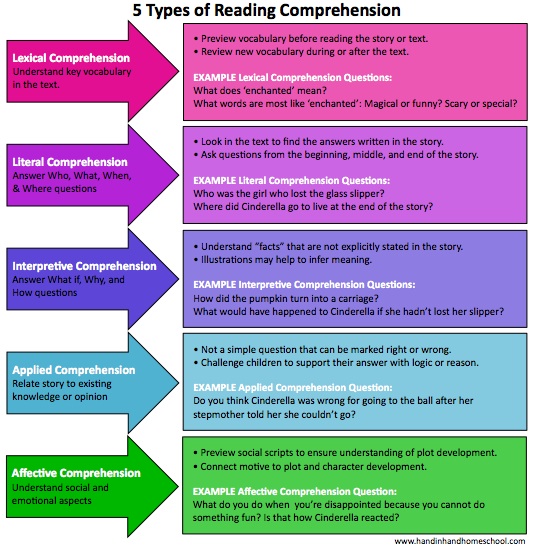
Literal Comprehension
Literal comprehension involves understanding the explicit information directly stated in a text. It focuses on facts, details, and surface-level meaning without interpretation. Key aspects include:
- Identifying main ideas and supporting details.
- Recognizing key vocabulary and definitions.
- Answering straightforward questions about the text.
Inferential Comprehension
Inferential comprehension requires readers to deduce meaning beyond what is explicitly written. It involves analyzing context clues and drawing conclusions. Key elements include:
- Predicting outcomes based on textual evidence.
- Interpreting metaphors, similes, or implied messages.
- Connecting ideas to prior knowledge or experiences.
Evaluative Comprehension
Evaluative comprehension focuses on critically assessing the text's validity, purpose, and effectiveness. Readers judge the content and form opinions. Key components include:
- Assessing the credibility of sources or arguments.
- Forming personal judgments about the text's quality.
- Analyzing the author's intent or bias.
Appreciative Comprehension
Appreciative comprehension involves emotional or aesthetic engagement with the text. It centers on enjoyment and personal connection. Key features include:
- Responding emotionally to themes or characters.
- Enjoying literary devices like humor or imagery.
- Relating the text to personal values or experiences.
How to Improve Each Type of Comprehension
Enhancing comprehension skills requires targeted strategies for each type. Below are actionable steps:
- Practice summarizing texts to strengthen literal understanding.
- Engage in discussions to develop inferential reasoning.
- Critique articles or books to hone evaluative skills.
- Explore diverse genres to foster appreciative reading.
- Use graphic organizers to visualize connections.
Frequently Asked Questions (FAQ)
What is comprehension-based learning?
Comprehension-based learning is an educational approach that prioritizes understanding over rote memorization. Instead of focusing solely on memorizing facts or formulas, students engage with material in a way that allows them to grasp underlying concepts and apply them in various contexts. This method often involves active reading, discussions, and problem-solving exercises that encourage deeper cognitive processing. By emphasizing comprehension, learners develop critical thinking skills and retain knowledge more effectively.
How does comprehension-based learning benefit students?
The primary advantage of comprehension-based learning is that it fosters long-term retention and the ability to apply knowledge in real-world situations. Unlike traditional memorization techniques, this approach helps students build connections between ideas, making learning more meaningful. Additionally, it enhances problem-solving abilities and encourages independent thinking. Students who adopt this method often perform better in complex tasks and exhibit greater academic confidence.
What strategies can students use to improve comprehension-based learning?
To excel in comprehension-based learning, students should practice active engagement with the material. Techniques such as summarizing key points, asking questions, and teaching concepts to others can reinforce understanding. Additionally, using visual aids like diagrams or mind maps helps organize information spatially. Another effective strategy is self-testing, which allows learners to assess their grasp of the subject and identify areas needing further review. Consistent reflection on what has been learned also strengthens comprehension.
Can comprehension-based learning be applied to all subjects?
Yes, comprehension-based learning is a versatile approach that can be adapted to any subject, from mathematics to literature. In STEM fields, it involves understanding principles behind formulas rather than just memorizing them. For humanities, it means analyzing texts critically and connecting themes to broader contexts. Even in language learning, comprehension-based methods focus on meaningful communication rather than isolated vocabulary drills. The key is to tailor the strategies to the subject’s unique demands while maintaining a focus on deep understanding.
Leave a Reply
Related Posts