
Focusing on Chinese tones without being distracted by Pinyin

Mastering Chinese tones is essential for accurate pronunciation and effective communication, yet many learners rely heavily on Pinyin as a crutch. While Pinyin provides a helpful romanization system, over-dependence on it can distract from truly internalizing the tonal nuances of Mandarin. This article explores strategies to focus directly on Chinese tones, training the ear and voice to recognize and produce them naturally. By minimizing reliance on Pinyin, learners can develop a more intuitive grasp of tone distinctions, improving fluency and comprehension. Discover practical techniques to sharpen tonal awareness, ensuring clearer and more confident spoken Chinese without the intermediary of written transliteration.
Mastering Chinese Tones: Avoiding Pinyin Distractions
When learning Mandarin Chinese, one of the biggest challenges is mastering the four tones while avoiding over-reliance on Pinyin. Pinyin, the Romanization system, is helpful for beginners but can become a crutch that hinders proper tone recognition and pronunciation. To truly internalize Chinese tones, learners must shift their focus from visual Pinyin representations to auditory and muscular memory. This means listening carefully to native speakers, mimicking their intonation, and practicing without constantly referring to written Pinyin.
Why Pinyin Can Be a Distraction in Tone Mastery
Pinyin provides a phonetic guide, but it doesn’t accurately convey the pitch contours of Mandarin tones. Many learners subconsciously associate Pinyin spellings with their native language’s pronunciation, leading to incorrect tone production. For example, the word ma can mean mother (妈, first tone), hemp (麻, second tone), horse (马, third tone), or scold (骂, fourth tone), depending solely on tone. Relying on Pinyin alone can blur these critical distinctions.
See AlsoHow to Approach Chinese Grammar| Tone | Pinyin Example | Meaning |
|---|---|---|
| First Tone (高平) | mā | Mother (妈) |
| Second Tone (上升) | má | Hemp (麻) |
| Third Tone (降升) | mǎ | Horse (马) |
| Fourth Tone (下降) | mà | Scold (骂) |
Techniques to Focus Solely on Tones
To minimize Pinyin dependency, try these methods:
- Listen and repeat without looking at Pinyin.
- Use tone drills with native audio.
- Record yourself and compare to native speakers.
- Practice with minimal pairs (words that differ only by tone).
- Learn characters early to associate sounds directly with meaning.
The Role of Muscle Memory in Tone Acquisition
Tones are not just auditory—they require physical articulation. The vocal cords and mouth shape must adapt to produce each tone accurately. Repetition without Pinyin helps train muscle memory, making tone production more natural over time.
Common Mistakes When Relying on Pinyin
Learners often:
- Ignore tone marks and default to a neutral tone.
- Misinterpret Pinyin spelling (e.g., xi as ksi).
- Struggle with tone changes (e.g., third-tone sandhi).
Tools to Practice Tones Without Pinyin
Use resources like:
- Tone-only audio exercises.
- Flashcards with characters and audio.
- Language apps that hide Pinyin.
- Shadowing exercises with native content.
How Native Speakers Perceive Tone Errors
Native Mandarin speakers rely heavily on tones for comprehension. Mispronouncing a tone can lead to confusion or miscommunication, even if the Pinyin is correct. For example, saying mǎ (horse) instead of mā (mother) changes the meaning entirely.
| Incorrect Tone | Intended Word | Misunderstood As |
|---|---|---|
| mà (scold) | mā (mother) | Complete meaning change |
| shǔ (mouse) | shù (tree) | Different object |
How to get better with Chinese tones?
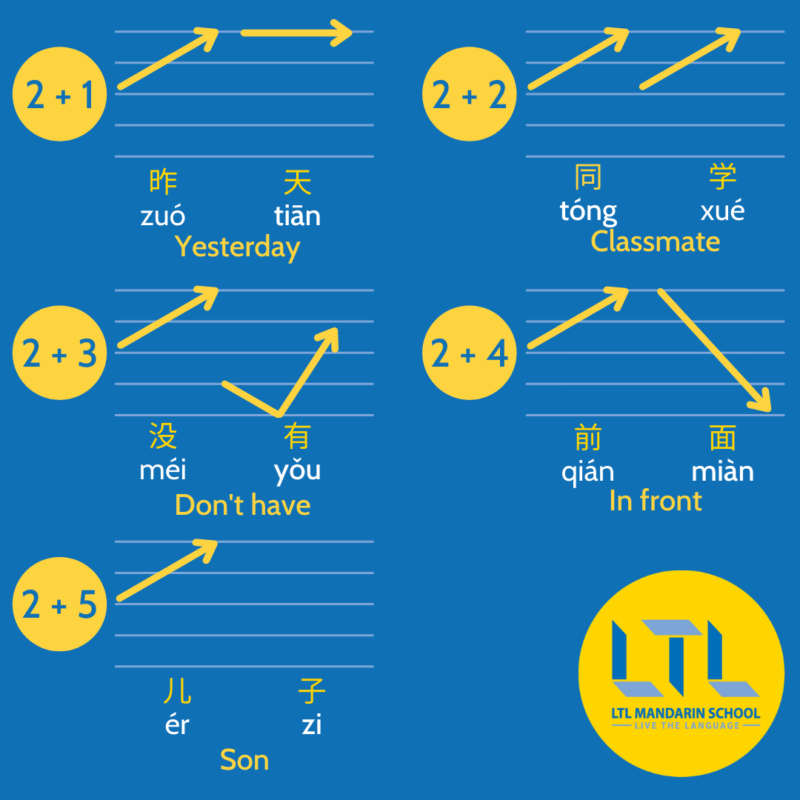
Understand the Four Main Tones in Mandarin
Mastering Chinese tones starts with recognizing the four primary tones in Mandarin: flat (first tone), rising (second tone), falling-rising (third tone), and falling (fourth tone). Each tone changes the meaning of a word, so precision is crucial.
- First tone (高平): Hold a high, steady pitch (e.g., mā 妈 - mother).
- Second tone (阳平): Rise from mid to high pitch (e.g., má 麻 - hemp).
- Third tone (上声): Dip low before rising (e.g., mǎ 马 - horse).
- Fourth tone (去声): Drop sharply from high to low (e.g., mà 骂 - scold).
Practice Tone Pairs for Natural Speech
Tones rarely appear in isolation. Work on tone pairs to mimic real conversations, as consecutive tones influence each other.
- First + Second: mā má (mother + hemp).
- Third + Fourth: nǐ hǎo (hello).
- Neutral tone: Practice words like ma (吗) at the end of sentences.
Use Technology and Apps for Feedback
Leverage language apps like Pleco or HelloChinese, which offer tone-recognition features to correct mistakes in real time.
- Pleco: Flashcard drills with audio examples.
- HelloChinese: Interactive tone exercises.
- Google Pinyin Input: Test tones by typing Pinyin.
Shadow Native Speakers
Imitate native speakers through videos, podcasts, or language exchanges to internalize tonal patterns.
- YouTube channels: Follow Mandarin Corner or ChinesePod.
- Repeat after audio: Pause and mimic dialogues.
- Language partners: Use platforms like Tandem for live practice.
Incorporate Tones into Vocabulary Learning
Never separate tones from vocabulary. Treat them as integral to word meaning from the start.
- Color-code tones: Highlight flashcards by tone colors.
- Associate tones with gestures: Use hand movements to visualize pitch.
- Minimal pairs: Contrast words like shū (book) and shù (tree).
What is the alternative to pinyin?
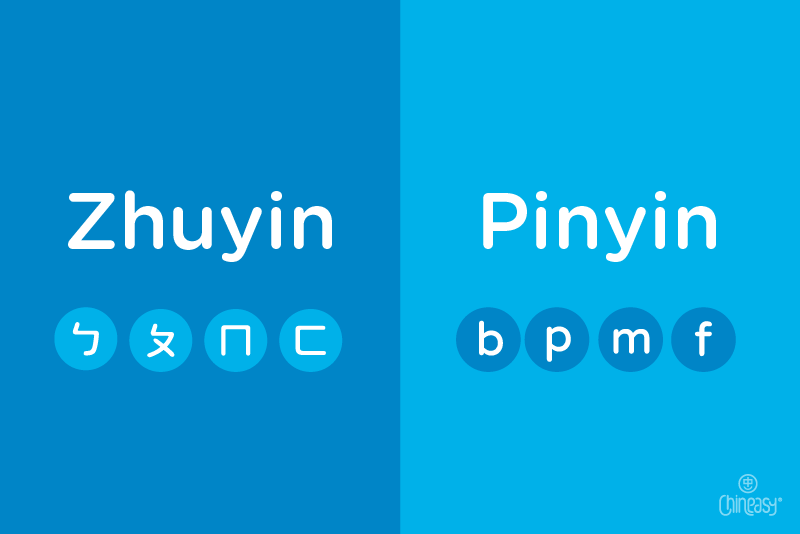
Zhuyin Fuhao (Bopomofo)
Zhuyin Fuhao, commonly known as Bopomofo, is a phonetic system used primarily in Taiwan to teach Mandarin pronunciation. Unlike Pinyin, which uses the Latin alphabet, Zhuyin employs unique symbols derived from Chinese characters. Here are its key features:
- Symbol-based: Uses 37 characters and four tone marks to represent sounds.
- No Latin alphabet: Avoids confusion with English pronunciation rules.
- Common in Taiwan: Widely used in education and typing systems.
Wade-Giles Romanization
The Wade-Giles system is an older Romanization method predating Pinyin. While less common today, it appears in historical texts and some proper nouns. Key aspects include:
- Apostrophes for aspiration: Distinguishes sounds like p’ (aspirated) vs. p (unaspirated).
- Inconsistent tone marking: Relies on numbers or diacritics, unlike Pinyin’s standardized tones.
- Legacy usage: Found in names like Taipei (from Wade-Giles T’ai-pei).
Yale Romanization
Developed for English speakers, Yale Romanization simplifies Mandarin pronunciation. It’s used in language textbooks and linguistic studies. Notable traits:
- Intuitive spelling: Designed to align with English phonetics (e.g., jy for Pinyin zh).
- No diacritics: Uses digraphs (like au for ao) to avoid special characters.
- Limited modern use: Mostly replaced by Pinyin in mainland China.
Gwoyeu Romatzyh (GR)
Gwoyeu Romatzyh (GR) is a tonal spelling system where tones alter the word’s Romanized form. Unique features:
- Tone-integrated spelling: Changes vowels/consonants to indicate tones (e.g., charng for cháng).
- Complexity: Harder to learn due to non-standardized letter changes.
- Historical significance: One of the first systems to encode tones without diacritics.
Cantonese Romanization Systems
For Cantonese learners, alternatives like Jyutping or Yale Cantonese replace Pinyin. Differences include:
- Jyutping: Uses numbers for tones (e.g., hou2 for good).
- Yale Cantonese: Employs diacritics and is common in textbooks.
- Dialect-specific: Designed for Cantonese’s 6–9 tones, unlike Mandarin’s 4.
How do you memorize pinyin tones?
Understanding the Four Pinyin Tones
To memorize Pinyin tones, start by understanding the four main tones in Mandarin Chinese. Each tone has a distinct pitch contour:
- First tone (ˉ): High and flat, like singing a steady note.
- Second tone (ˊ): Rising, similar to the inflection in a question.
- Third tone (ˇ): Starts mid, dips low, then rises slightly.
- Fourth tone (ˋ): Sharp and falling, like a command.
Using Mnemonics for Tone Recall
Mnemonics are a powerful tool for memorizing tones. Associate each tone with a familiar sound or phrase:
- First tone: Imagine a humming sound (mmm).
- Second tone: Think of saying huh? in confusion.
- Third tone: Mimic a hesitant well... in English.
- Fourth tone: Pretend you're scolding someone (no!).
Practicing with Tone Pairs
Mastering tone pairs helps reinforce memory by practicing two-syllable combinations:
- First + first: māma (mom) – both flat and high.
- Second + fourth: xuéxiào (school) – rising then falling.
- Third + third: nǐhǎo (hello) – dips low before rising.
Visualizing Tone Marks
Visual cues like tone marks can aid memorization. Link the shape of the mark to the sound:
- Flat line (ˉ): Matches the steady first tone.
- Rising line (ˊ): Mirrors the upward second tone.
- Checkmark (ˇ): Reflects the dip-and-rise of the third tone.
- Falling line (ˋ): Represents the sharp drop of the fourth tone.
Listening and Repetition Exercises
Active listening and repetition are key to internalizing tones:
- Listen to native speakers: Use podcasts or videos to hear tones in context.
- Repeat aloud: Mimic the tones until they feel natural.
- Record yourself: Compare your pronunciation to native audio.
What is the role of tone awareness and pinyin knowledge in Chinese reading?
The Importance of Tone Awareness in Chinese Reading
Tone awareness is crucial in Chinese reading because Mandarin is a tonal language, where the meaning of a word changes based on its tone. Mispronouncing a tone can lead to misunderstandings or confusion. For example:
- Tonal distinctions differentiate words like mā (mother) and mà (scold).
- Correct tone usage ensures accurate comprehension of written text when read aloud.
- Lack of tone awareness can disrupt fluency and hinder communication.
How Pinyin Knowledge Supports Chinese Reading
Pinyin acts as a phonetic guide for Chinese characters, helping learners associate sounds with written symbols. It bridges the gap between pronunciation and character recognition:
- Pinyin provides a pronunciation framework for unfamiliar characters.
- It aids in vocabulary acquisition by linking sound to meaning.
- Pinyin is essential for typing Chinese on digital devices.
The Connection Between Tones and Character Recognition
Tone accuracy directly impacts character recognition, as many characters share the same pinyin but differ in tones. Key points include:
- Tones help distinguish homophones like shì (是 - to be) and shí (十 - ten).
- Mastery of tones improves reading speed by reducing hesitation.
- Incorrect tones can lead to misinterpretation of context.
Pinyin as a Tool for Early Chinese Learners
For beginners, Pinyin is a foundational tool that simplifies the learning process. Its role includes:
- Enabling self-study by providing pronunciation clues.
- Facilitating listening and speaking practice before mastering characters.
- Helping learners transition to character-based reading gradually.
Challenges of Relying Solely on Pinyin in Advanced Reading
While Pinyin is helpful, over-reliance can hinder progress at advanced levels. Key challenges are:
- Pinyin lacks contextual depth compared to characters.
- Advanced texts often omit Pinyin, requiring character proficiency.
- Dependence on Pinyin may delay memorization of characters.
Frequently Asked Questions (FAQ)
Why is it important to focus on Chinese tones without relying on Pinyin?
Focusing on Chinese tones without Pinyin is crucial because Pinyin can become a crutch that hinders your ability to recognize and produce tones naturally. While Pinyin is helpful for beginners, over-reliance on it may lead to neglecting the auditory and muscle memory required for accurate tone pronunciation. By practicing tones in isolation, you train your ear to distinguish subtle pitch variations and develop a more intuitive grasp of Mandarin's tonal system, which is essential for fluent communication.
How can I practice Chinese tones effectively without Pinyin distractions?
To practice Chinese tones without Pinyin, start by listening to native speakers and mimicking their tone contours. Use minimal pairs (words that differ only in tone) to sharpen your perception. Record yourself and compare your pronunciation to native audio. Additionally, try shadowing exercises—repeat sentences immediately after hearing them—to internalize tones in context. Over time, this method strengthens your ability to produce tones accurately without visual aids like Pinyin.
What are common mistakes learners make when focusing solely on Pinyin for tones?
Many learners mistakenly believe that Pinyin tone marks alone are sufficient for mastering pronunciation. However, this approach often results in flat or exaggerated tones, as Pinyin doesn’t fully capture the natural flow and pitch changes in spoken Mandarin. Another pitfall is neglecting the connection between tones and meaning, leading to misunderstandings. By separating tones from Pinyin early on, you avoid these habits and build a stronger foundation for tonal accuracy.
Can I still use Pinyin occasionally while prioritizing tone practice?
Yes, Pinyin can still be a useful tool when used sparingly and strategically. For instance, you might refer to Pinyin to clarify the tone of an unfamiliar word, but the focus should remain on listening and repetition. The key is to transition away from Pinyin as your primary learning aid and instead rely on auditory input and speaking practice. This balanced approach ensures you internalize tones naturally while still benefiting from Pinyin when absolutely necessary.
Leave a Reply
Related Posts