
How to adjust your Chinese listening to the right level

Mastering Chinese listening skills requires finding the right level of difficulty to ensure steady progress without frustration. Many learners struggle because the material is either too easy, offering no challenge, or too complex, leading to discouragement. Adjusting your listening practice to an appropriate level is key to building comprehension, vocabulary, and confidence. This article will guide you through practical steps to identify and select suitable listening resources, whether you're a beginner or an advanced learner. By tailoring your practice to your current abilities, you can enhance your understanding, improve retention, and make consistent strides toward fluency in Chinese listening.
How to Adjust Your Chinese Listening to the Right Level
Improving your Chinese listening skills requires a structured approach to ensure you're practicing at the right difficulty level. Whether you're a beginner or an advanced learner, adjusting your listening materials to match your proficiency will help you progress faster. Below, we break down key strategies to fine-tune your listening practice.
1. Assess Your Current Listening Level
Before adjusting your listening practice, you need to evaluate your current level. Try listening to different audio materials, such as podcasts, news, or dialogues, and note how much you understand.
See AlsoHelloChinese App Review| Level | Understanding |
|---|---|
| Beginner | Recognizes basic words and phrases |
| Intermediate | Understands main ideas but misses details |
| Advanced | Comprehends most content, including nuances |
2. Choose Appropriate Listening Materials
Selecting the right content is crucial. Beginners should start with slow, clear speech, while advanced learners can challenge themselves with native-speed conversations.
| Level | Recommended Materials |
|---|---|
| Beginner | Children's stories, slow podcasts |
| Intermediate | Language learning apps, TV shows with subtitles |
| Advanced | News broadcasts, movies without subtitles |
3. Use Active Listening Techniques
Active listening involves focusing intently on the audio, taking notes, and repeating phrases. This helps reinforce comprehension and retention.
| Technique | How It Helps |
|---|---|
| Shadowing | Improves pronunciation and rhythm |
| Summarizing | Enhances understanding of main ideas |
4. Adjust Playback Speed
Many apps allow you to modify playback speed. Slowing down audio helps beginners, while increasing speed prepares advanced learners for real-life conversations.
See AlsoMy Top 12 Benefits Of Learning A Second Language| Level | Recommended Speed |
|---|---|
| Beginner | 0.75x - 0.9x |
| Advanced | 1.1x - 1.25x |
5. Track Your Progress Regularly
Monitoring improvement ensures you stay on the right path. Test yourself periodically by listening to new materials and noting any increase in comprehension.
| Method | Frequency |
|---|---|
| Self-assessment | Weekly |
| Formal tests | Monthly |
How can I improve my Chinese level?

1. Build a Strong Vocabulary Foundation
To improve your Chinese level, start by expanding your vocabulary systematically. Focus on high-frequency words and phrases used in daily conversations. Here’s how:
See AlsoTraining and testing your ability to hear Mandarin sounds- Use flashcards (digital or physical) to memorize new words daily.
- Learn words in context by reading short articles or watching videos.
- Practice using new vocabulary in sentences to reinforce retention.
2. Practice Speaking Regularly
Speaking is crucial for fluency. Engage in conversations as often as possible to build confidence and improve pronunciation.
- Find a language partner or tutor for regular practice.
- Repeat dialogues from Chinese TV shows or podcasts to mimic native speakers.
- Record yourself speaking and compare it to native pronunciation.
3. Immerse Yourself in Chinese Media
Exposure to authentic content helps improve listening and comprehension skills.
- Watch Chinese movies, dramas, or YouTube channels with subtitles.
- Listen to Chinese music or podcasts during downtime.
- Follow Chinese news or social media accounts to stay updated.
4. Master Chinese Characters and Writing
Learning characters is essential for reading and writing proficiency.
See AlsoLearn How to Read Chinese Characters Using Apps- Break down characters into radicals to understand their structure.
- Practice writing characters daily using grid paper or apps.
- Use mnemonics to remember complex characters more easily.
5. Join a Language Community or Course
Structured learning and peer support can accelerate your progress.
- Enroll in a Chinese course (online or in-person) for guided learning.
- Participate in language exchange groups or forums.
- Set achievable goals and track your progress regularly.
How to revise for Mandarin listening?
1. Listen to Authentic Mandarin Audio Daily
To improve your Mandarin listening skills, immerse yourself in authentic audio materials daily. This exposure helps you get accustomed to the natural rhythm, tone, and pronunciation of native speakers.
- Podcasts: Choose Mandarin podcasts on topics you enjoy to stay engaged.
- News broadcasts: Listen to Mandarin news channels like CCTV for clear, formal speech.
- Audiobooks: Start with simpler content and gradually increase difficulty.
2. Use Subtitles Strategically
Subtitles can be a powerful tool if used correctly. They help bridge the gap between hearing and understanding unfamiliar words or phrases.
- Mandarin subtitles: Watch shows with Mandarin subtitles to connect sounds with characters.
- English subtitles: Use them sparingly to check comprehension, but avoid relying on them.
- Gradual removal: Phase out subtitles as your listening improves.
3. Practice with Listening Exercises
Structured listening exercises are essential for targeted improvement. They help you focus on specific skills like identifying tones or key vocabulary.
- HSK practice tests: Use past papers to familiarize yourself with exam-style questions.
- Dictation: Write down what you hear to improve accuracy.
- Gap-fill exercises: Listen and fill in missing words to train your ear.
4. Engage in Active Listening
Active listening means fully concentrating on the audio, analyzing it, and responding mentally or verbally.
- Repeat aloud: Mimic the speaker’s pronunciation and intonation.
- Summarize: After listening, summarize the content in your own words.
- Ask questions: Mentally note unclear parts and revisit them later.
5. Expand Vocabulary and Grammar Knowledge
A strong foundation in vocabulary and grammar directly enhances listening comprehension.
- Flashcards: Review common words and phrases regularly.
- Sentence patterns: Study common grammatical structures to predict meaning.
- Context clues: Use surrounding words to infer meanings of unfamiliar terms.
How to fix poor listening skills?
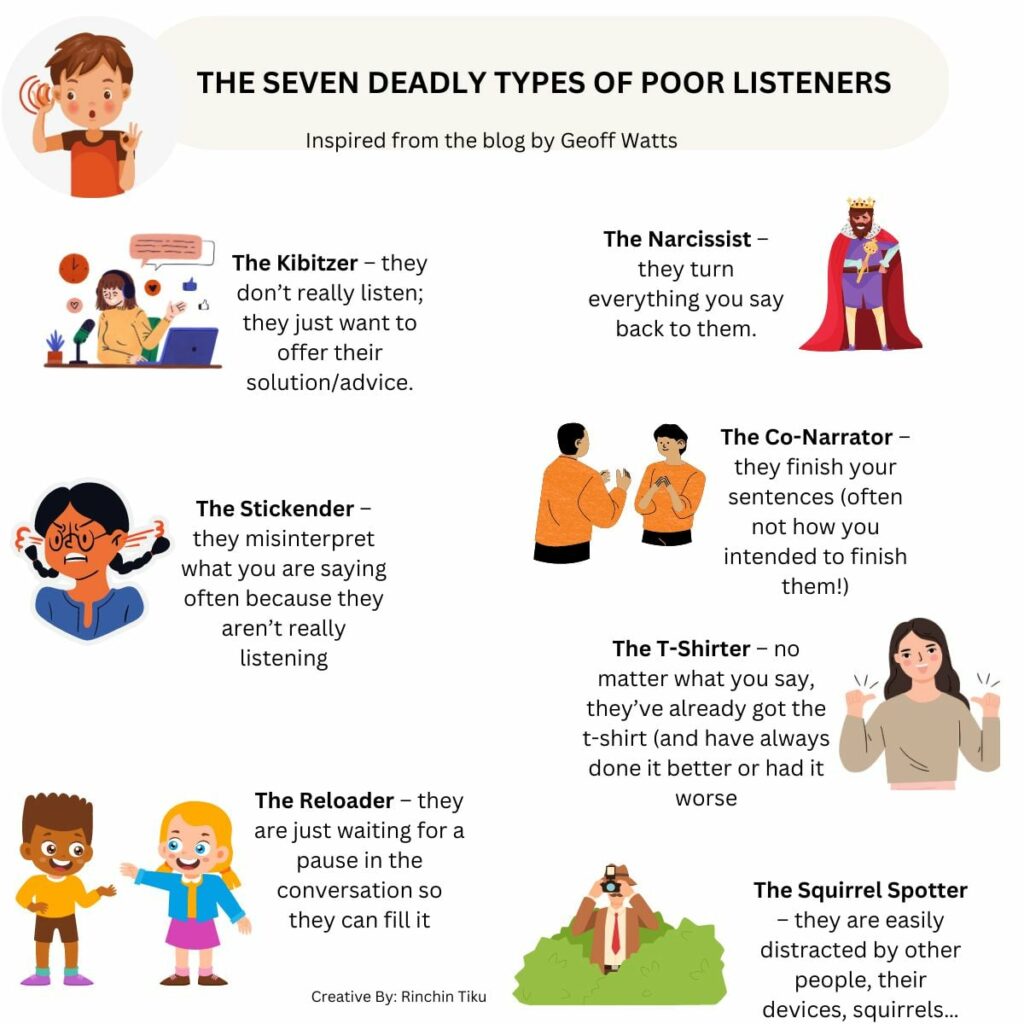
1. Practice Active Listening Techniques
To improve poor listening skills, start by practicing active listening. This means fully engaging with the speaker and avoiding distractions.
- Maintain eye contact to show attentiveness.
- Avoid interrupting the speaker; let them finish before responding.
- Paraphrase what you heard to confirm understanding.
2. Minimize Distractions
Distractions are a major barrier to effective listening. Eliminate them to focus better on conversations.
- Put away electronic devices like phones or laptops.
- Choose a quiet environment for important discussions.
- Focus on the speaker instead of thinking about your response.
3. Improve Your Concentration
Concentration is key to better listening. Train your mind to stay focused during conversations.
- Practice mindfulness to stay present in the moment.
- Take notes if necessary to retain key points.
- Avoid multitasking while listening.
4. Develop Empathy and Patience
Empathy and patience enhance listening by helping you connect with the speaker.
- Put yourself in the speaker’s shoes to understand their perspective.
- Wait for natural pauses before asking questions.
- Show verbal and non-verbal cues (e.g., nodding) to encourage the speaker.
5. Seek Feedback and Practice Regularly
Feedback and consistent practice are essential for long-term improvement.
- Ask others for honest feedback on your listening habits.
- Engage in active listening exercises, such as summarizing conversations.
- Challenge yourself with complex or lengthy discussions to build endurance.
How to improve HSK listening?

Understand the HSK Listening Test Format
To improve your HSK listening skills, it's crucial to familiarize yourself with the test format. The HSK listening section varies by level but generally includes multiple-choice questions based on short dialogues or monologues. Here’s how to approach it:
- Identify question types: Common formats include selecting the correct answer, matching, or filling in blanks.
- Practice with past papers: This helps you recognize patterns and time management.
- Simulate test conditions: Take timed practice tests to build stamina and focus.
Build a Strong Vocabulary Foundation
A robust vocabulary is essential for understanding spoken Chinese. Focus on HSK-level words and phrases to enhance comprehension.
- Learn HSK word lists: Prioritize vocabulary from your target HSK level.
- Use flashcards: Tools like Anki or Pleco can reinforce memorization.
- Listen to vocabulary in context: Practice hearing words in sentences, not just in isolation.
Practice Active Listening Daily
Active listening involves focused engagement with audio materials to improve retention and understanding.
- Listen to HSK-specific audio: Use official HSK listening materials or apps like ChinesePod.
- Repeat and shadow: Mimic speakers to improve pronunciation and intonation.
- Take notes: Jot down key points to reinforce memory.
Expose Yourself to Authentic Chinese Content
Beyond HSK materials, immerse yourself in real-life Chinese audio to adapt to natural speech patterns.
- Watch Chinese TV shows or movies: Use subtitles initially, then gradually remove them.
- Listen to podcasts or radio: Choose topics that interest you to stay motivated.
- Engage with native speakers: Platforms like HelloTalk or Tandem offer conversational practice.
Develop Effective Test-Taking Strategies
Strategic approaches can significantly boost your HSK listening scores during the exam.
- Preview questions first: Skim questions before listening to anticipate content.
- Focus on keywords: Listen for numbers, names, or repeated phrases.
- Eliminate wrong answers: Narrow down choices to increase accuracy.
Frequently Asked Questions (FAQ)
How can I determine the right Chinese listening level for me?
To determine the right Chinese listening level, start by assessing your current comprehension skills. Listen to short audio clips or dialogues and evaluate how much you understand without subtitles or translations. Beginner-level learners should aim to catch basic words and phrases, while intermediate learners should focus on understanding the main ideas of conversations. Advanced learners should challenge themselves with native-level content, such as news broadcasts or podcasts. If you understand less than 60% of the material, consider stepping down a level to avoid frustration.
What resources are best for adjusting my Chinese listening level?
The best resources depend on your current proficiency. For beginners, apps like Duolingo or slow-paced Mandarin podcasts with transcripts are ideal. Intermediate learners can use platforms like ChinesePod or YouTube channels with subtitles. Advanced learners should immerse themselves in authentic materials, such as Chinese TV shows, movies, or radio stations like CRI (China Radio International). Always choose content that matches your level—too easy won’t help you improve, and too difficult can be discouraging.
How often should I practice listening to improve my Chinese comprehension?
Consistency is key when improving Chinese listening skills. Aim for daily practice, even if it’s just 15–30 minutes. Short, frequent sessions are more effective than occasional long ones. Use passive listening techniques, like playing Chinese audio in the background while doing chores, to reinforce learning. Over time, gradually increase the difficulty of the material as your comprehension improves. Tracking your progress weekly can help you stay motivated and adjust your practice routine as needed.
How can I make Chinese listening practice more effective?
To maximize listening practice effectiveness, combine active and passive techniques. Active listening involves focused attention—repeat phrases, shadow speakers, or take notes. Use tools like Anki for vocabulary reinforcement. For passive listening, expose yourself to natural speech through music, dramas, or daily news. Additionally, vary your content—switch between formal and informal speech, different accents, and speeds. Lastly, review and repeat challenging sections to solidify understanding. Balancing these methods will accelerate your progress.
Leave a Reply
Related Posts