
YouGlish: A free service to hear and see Chinese words in context

Learning Chinese can be challenging, especially when it comes to understanding how words are used in real-life contexts. YouGlish offers a free and innovative solution by allowing learners to hear and see Chinese words in authentic situations. Simply type in a word or phrase, and YouGlish instantly provides video clips from YouTube where native speakers use it naturally. This tool bridges the gap between textbook learning and real-world usage, helping users improve pronunciation, comprehension, and cultural understanding. Whether you're a beginner or an advanced learner, YouGlish is an invaluable resource for mastering Chinese in a practical, engaging way.
YouGlish: A Free Tool to Learn Chinese Words in Context
Detailed Explanation:
YouGlish is a free online service that helps learners hear and see Chinese words used in real-world contexts by pulling examples from YouTube videos. This tool is particularly useful for improving pronunciation, listening comprehension, and vocabulary retention by exposing users to authentic spoken language. Instead of relying on textbook phrases, YouGlish provides natural usage from native speakers in various situations, making it an excellent resource for language learners.
---
See AlsoAbout fossilisation and improving your Chinese pronunciationHow Does YouGlish Work for Chinese Learners?
YouGlish operates by searching through YouTube to find clips where the target Chinese word or phrase is spoken. Users simply type in the word they want to learn, and the platform generates a list of video snippets featuring that term. Each clip includes subtitles (in Chinese and English), allowing learners to follow along easily. The playback speed can also be adjusted, making it easier to catch difficult pronunciations.
| Feature | Benefit |
|---|---|
| YouTube Integration | Access to real-life spoken Chinese |
| Subtitles | Helps with reading & comprehension |
| Playback Controls | Adjust speed for better understanding |
---
Why Use YouGlish Instead of Traditional Dictionaries?
Traditional dictionaries provide definitions and example sentences, but they often lack real-world context. YouGlish bridges this gap by showing how words are actually used in conversations, interviews, and media. This exposure helps learners grasp nuances, intonation, and colloquial usage that dictionaries can't convey.
See AlsoLearning to write Chinese characters through communication| Comparison | YouGlish Advantage |
|---|---|
| Contextual Learning | Hear words in natural speech |
| Pronunciation Accuracy | Learn from native speakers |
| Variety of Sources | Different accents & speaking styles |
---
Can YouGlish Help with Mandarin Pronunciation?
Absolutely! Since YouGlish sources content from native speakers, learners can imitate accurate pronunciation, tones, and rhythm. The ability to replay clips and slow down audio makes it easier to practice difficult sounds, such as Mandarin’s four tones. This is especially helpful for learners struggling with pitch accents and word stress.
| Pronunciation Aid | How It Helps |
|---|---|
| Native Speaker Examples | Authentic tone modeling |
| Slow Motion Playback | Break down complex sounds |
| Repetition Feature | Practice until mastered |
---
See AlsoInto the Haze: A new text adventure game for Chinese learnersIs YouGlish Suitable for Beginners in Chinese?
Yes, but with some guidance. Beginners may find fast-paced conversations challenging, but using slower playback and simple search terms can make it manageable. It’s best for reinforcing basic vocabulary and common phrases rather than diving into advanced content right away.
| Beginner Tip | Recommendation |
|---|---|
| Start with Common Words | Search basic vocabulary first |
| Use Subtitles | Read along to improve recognition |
| Adjust Speed | Slow down to catch each word |
---
Does YouGlish Offer Additional Languages Besides Chinese?
Yes! YouGlish supports multiple languages, including English, Spanish, French, German, and more. This makes it a versatile tool for polyglots or learners studying several languages. However, the Chinese database is particularly robust due to the vast amount of Mandarin content available on YouTube.
See AlsoHone your Chinese writing ability by writing summaries| Supported Language | Availability |
|---|---|
| Mandarin Chinese | Extensive video library |
| English | Wide range of accents |
| Spanish/French | Good selection of clips |
How many words do you need to know to be conversational in Chinese?

How Many Words Are Needed for Basic Chinese Conversation?
To achieve basic conversational fluency in Chinese, you typically need to know around 500 to 1,000 words. This vocabulary range allows you to handle everyday topics such as greetings, shopping, and simple questions. Here’s why:
- Core vocabulary: Focus on high-frequency words like 你好 (nǐ hǎo - hello), 谢谢 (xiè xiè - thank you), and 多少钱 (duō shǎo qián - how much).
- Contextual understanding: Many words have multiple meanings, so learning them in phrases helps.
- Grammar simplicity: Chinese grammar is relatively straightforward, so vocabulary is the main hurdle.
Does HSK Vocabulary List Help in Becoming Conversational?
The HSK (Hanyu Shuiping Kaoshi) vocabulary lists are a useful benchmark. For example:
See AlsoDon’t learn Mandarin pronunciation by reading, listen and mimic instead- HSK 1-2 (300 words) covers basics but isn’t enough for full conversations.
- HSK 3-4 (1,200 words) enables more meaningful dialogues.
- HSK 5-6 (2,500+ words) is for advanced fluency, beyond casual conversation.
What Types of Words Should You Prioritize?
Focus on practical vocabulary for daily interactions. Key categories include:
- Greetings and polite phrases (e.g., 再见 - zài jiàn - goodbye).
- Common verbs (e.g., 吃 - chī - to eat, 去 - qù - to go).
- Numbers, time, and directions for navigation and transactions.
How Does Pinyin Aid in Learning Conversational Chinese?
Pinyin (Romanized Chinese) is crucial for beginners because:
- It helps pronounce tones correctly, which is vital in Mandarin.
- It bridges the gap before mastering Chinese characters.
- Many learning resources rely on Pinyin for early-stage practice.
Can You Be Conversational Without Learning Chinese Characters?
Yes, but with limitations:
- Speaking/listening can be achieved through Pinyin and audio practice.
- Reading/writing requires characters, which are essential for deeper fluency.
- Survival Chinese (e.g., travel phrases) often doesn’t need characters.
What English words are hard for Chinese people to say?

Common Pronunciation Challenges for Chinese Speakers
Chinese speakers often struggle with English words that contain sounds not present in their native language. The following are some of the most difficult:
- Th sounds: Words like think or this are tricky because Mandarin lacks the /θ/ and /ð/ sounds.
- R and L distinction: Words like rice and lice can be confused due to the similar pronunciation in some Chinese dialects.
- Ending consonants: Words like cat or bed may be pronounced with an added vowel sound, such as cat-uh.
Words with Complex Vowel Sounds
English vowel sounds can be particularly challenging because they often don’t have direct equivalents in Chinese. Here are some examples:
- Sheep vs. ship: The long /iː/ and short /ɪ/ distinction is difficult for many Chinese learners.
- Bird: The /ɜːr/ sound doesn’t exist in Mandarin, making it hard to pronounce correctly.
- World: The combination of /w/, /ɜːr/, and /ld/ makes this word especially tough.
Words with Silent Letters
English words with silent letters can confuse Chinese speakers, as Mandarin pronunciation is more phonetic. Examples include:
- Knight: The silent k and gh are non-intuitive.
- Debt: The silent b often leads to mispronunciation.
- Island: The silent s can be overlooked.
Words with Consonant Clusters
Chinese syllables rarely have consonant clusters, making English words with multiple consonants difficult. Key examples:
- Strengths: The /str/ and /ŋθs/ clusters are very challenging.
- Sixths: The /ksθs/ ending is hard to articulate.
- Twelfths: The combination of /lfθs/ is uncommon in Chinese.
Words with Unfamiliar Stress Patterns
English stress-timed rhythm contrasts with Mandarin’s syllable-timed nature, causing difficulties in words like:
- Photograph vs. photography: The shifting stress confuses learners.
- Vegetable: The /ˈvɛdʒtəbəl/ pronunciation is often simplified incorrectly.
- Comfortable: Mispronounced as com-for-ta-ble due to stress errors.
How can I practice Chinese vocabulary?
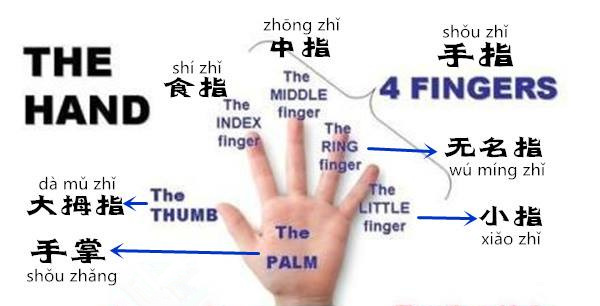
Use Flashcards for Daily Practice
Flashcards are a powerful tool for memorizing Chinese vocabulary. You can create physical cards or use apps like Anki or Pleco to reinforce your learning. Here’s how to maximize their effectiveness:
- Review cards daily to build long-term memory.
- Include pinyin, characters, and example sentences.
- Shuffle cards to avoid memorizing the order.
Engage in Active Writing Exercises
Writing Chinese characters by hand helps solidify your understanding. Focus on stroke order and repetition to improve retention. Follow these steps:
- Practice writing each character 10-20 times.
- Use grid paper to maintain proper proportions.
- Combine characters into meaningful phrases or sentences.
Incorporate Vocabulary into Daily Conversations
Using new words in real-life situations accelerates learning. Even if you’re a beginner, try these methods:
- Label household items with their Chinese names.
- Speak to language partners via platforms like Tandem or HelloTalk.
- Keep a journal in Chinese, even with simple sentences.
Leverage Multimedia Resources
Listening to Chinese podcasts, songs, or watching shows immerses you in the language. Here’s how to make the most of it:
- Watch subtitled Chinese dramas or movies.
- Listen to Mandarin music and shadow the lyrics.
- Use apps like Netflix or YouTube with language-learning extensions.
Play Vocabulary-Building Games
Gamification makes learning fun and engaging. Try these activities to reinforce vocabulary:
- Use apps like Memrise or Quizlet for interactive quizzes.
- Play word-matching or crossword puzzles in Chinese.
- Join language challenges or competitions for motivation.
Frequently Asked Questions (FAQ)
What is YouGlish and how does it work?
YouGlish is a free online service designed to help language learners hear and see Chinese words used in real-world contexts. By leveraging YouTube videos, the platform allows users to search for specific terms and instantly access clips where those words are spoken naturally. The tool highlights the searched term in the subtitles, making it easy to follow along and understand pronunciation, intonation, and usage. This contextual learning approach bridges the gap between textbook knowledge and practical application.
Is YouGlish completely free to use?
Yes, YouGlish is entirely free to use for all users. There are no hidden fees or subscription requirements to access its core features. The platform relies on publicly available YouTube videos to provide examples of Chinese words in context. However, users should note that an internet connection is required, and some features, like advanced filtering, may be limited compared to premium language-learning platforms. Despite this, the service remains a valuable resource for learners at no cost.
Can I use YouGlish to learn other languages besides Chinese?
While YouGlish is particularly useful for Chinese learners, it also supports multiple other languages, including English, Spanish, French, and more. The platform’s versatility makes it a great tool for anyone looking to improve their listening and pronunciation skills in various languages. By simply selecting the target language from the dropdown menu, users can search for words and phrases to hear them spoken in authentic contexts, just like with Chinese.
How accurate are the subtitles and translations on YouGlish?
The subtitles on YouGlish are sourced directly from YouTube, meaning their accuracy depends on the original video’s caption quality. While many videos feature highly accurate subtitles, some may contain errors or lack translations entirely. Users should cross-reference unfamiliar terms with other resources for confirmation. Despite this limitation, the platform remains a powerful tool for contextual learning, as it exposes learners to natural speech patterns and colloquial usage that textbooks often miss.
Leave a Reply
Related Posts