
About fossilisation and improving your Chinese pronunciation

Mastering Chinese pronunciation can be challenging, especially when errors become ingrained over time—a phenomenon known as fossilisation. This occurs when incorrect sounds or tones become habitual, making them difficult to correct. Fossilisation often stems from early learning habits, lack of feedback, or insufficient practice. However, overcoming it is possible with targeted strategies. By focusing on tone drills, mimicking native speakers, and receiving consistent correction, learners can refine their pronunciation. This article explores the causes of fossilisation in Chinese language learning and provides practical tips to improve accuracy, ensuring clearer and more confident communication. Whether you're a beginner or advanced learner, these insights will help you sound more natural.
- Understanding Fossilisation and How to Improve Your Chinese Pronunciation
- How to improve your Chinese pronunciation?
- What do Chinese people struggle to pronounce in English?
- How to get Chinese pronunciation right?
- What is the Chinese pronunciation system?
-
Frequently Asked Questions (FAQ)
- What is fossilisation in Chinese pronunciation, and how does it affect learners?
- How can I identify if my Chinese pronunciation errors are fossilised?
- What strategies can help overcome fossilised pronunciation in Chinese?
- Can improving my Chinese pronunciation as an advanced learner still make a difference?
Understanding Fossilisation and How to Improve Your Chinese Pronunciation
What Is Fossilisation in Language Learning?
Fossilisation refers to the phenomenon where language learners reach a plateau and stop making progress despite continued exposure and practice. In the context of Chinese pronunciation, this often occurs when learners develop ingrained incorrect speech patterns that become difficult to correct over time. Factors such as interference from one’s native language, lack of corrective feedback, and insufficient practice contribute to fossilisation.
| Key Factor | Impact on Pronunciation |
|---|---|
| Native language interference | Leads to mispronunciation of tones and sounds |
| Lack of feedback | Allows errors to persist without correction |
| Inconsistent practice | Hinders muscle memory development |
Why Chinese Pronunciation Is Particularly Challenging
Chinese is a tonal language, meaning that pitch changes can alter word meanings entirely. Many learners struggle with mastering the four main tones and the neutral tone, often substituting them with similar sounds from their native language. Additionally, sounds like zh, ch, sh, and r do not exist in many other languages, making them difficult to produce accurately.
See Also9 answers to questions about Pinyin and pronunciation| Challenge | Common Mistake |
|---|---|
| Tonal confusion | Mixing up the first and second tones |
| Sound substitution | Replacing x with sh |
| Lack of tonal consistency | Inconsistent tone usage in sentences |
How to Identify Fossilised Pronunciation Errors
Recognising fossilised errors is the first step toward improvement. Common signs include consistent mispronunciations that persist despite practice, native speakers frequently asking for clarification, or difficulty being understood in conversations. Recording yourself and comparing your speech to native speakers can help pinpoint areas needing correction.
| Sign of Fossilisation | Solution |
|---|---|
| Repeated tone mistakes | Drill tones with minimal pairs |
| Unintelligible speech | Seek feedback from native speakers |
| Lack of progress | Adjust learning methods |
Effective Strategies to Overcome Fossilisation
To improve Chinese pronunciation, learners must actively relearn and correct ingrained errors. Techniques include shadowing native speakers, using tongue twisters, and receiving immediate corrective feedback from teachers or language partners. Breaking down difficult sounds and practicing them in isolation can also help retrain muscle memory.
| Strategy | Benefit |
|---|---|
| Shadowing | Improves rhythm and tone accuracy |
| Tongue twisters | Enhances articulation of difficult sounds |
| Minimal pair drills | Helps distinguish similar sounds |
The Role of Consistent Practice in Preventing Fossilisation
Consistency is key to avoiding fossilisation. Daily pronunciation drills, listening exercises, and speaking practice with native speakers can reinforce correct habits. Using apps or tools that provide real-time feedback on tones and pronunciation can also accelerate improvement.
See AlsoMandarin Retreat (Our Review) - Why You NEED To Go| Practice Method | Frequency |
|---|---|
| Tone drills | Daily, 10-15 minutes |
| Listening exercises | 3-4 times per week |
| Conversation practice | At least twice weekly |
How to improve your Chinese pronunciation?

Master the Four Tones of Mandarin
Chinese is a tonal language, meaning the pitch contour of a syllable can change its meaning. To improve pronunciation, focus on mastering the four primary tones:
- First tone (high-level): Hold a steady high pitch, like singing a musical note.
- Second tone (rising): Start mid and rise sharply, as if asking a question.
- Third tone (falling-rising): Dip low before rising slightly—often simplified as a low tone in fast speech.
- Fourth tone (falling): Start high and drop sharply, like a command.
Practice with Native Speakers or Audio Resources
Immersing yourself in authentic spoken Chinese accelerates pronunciation improvement. Key strategies include:
See AlsoChinese Influencers: Who are China’s Online Stars?- Shadowing: Repeat sentences immediately after native speakers in podcasts or videos.
- Language exchange: Partner with native speakers for real-time feedback.
- Apps like HelloTalk or Tandem: Connect with learners and tutors for practice.
Use Pinyin as a Pronunciation Guide
Pinyin, the Romanization system for Chinese, helps bridge the gap between sounds and characters. To leverage it effectively:
- Study Pinyin charts: Familiarize yourself with initials (consonants) and finals (vowels).
- Note exceptions: Some letters (e.g., q, x) have no direct English equivalents.
- Practice tone pairs: Drill common two-syllable combinations to improve fluency.
Record and Compare Your Speech
Self-assessment is critical. Follow these steps:
- Record yourself: Use your phone to capture readings of Chinese texts.
- Compare to natives: Identify discrepancies in tones, vowels, or consonants.
- Focus on problem areas: Isolate and repeat challenging sounds until they feel natural.
Learn Mouth and Tongue Positioning
Chinese sounds often require unfamiliar mouth movements. Pay attention to:
See AlsoLearning to write Chinese characters through communication- Aspiration: Distinguish between b/p, d/t, and g/k sounds by air pressure.
- Tongue placement: Retroflex sounds (e.g., zh, ch) need curled tongue tips.
- Lip shape: Vowels like ü require rounded lips, unlike English.
What do Chinese people struggle to pronounce in English?

Common English Sounds Difficult for Chinese Speakers
Chinese speakers often struggle with certain English sounds due to differences in phonetic systems. Key challenges include:
- Th-sounds (as in think or this) – These don’t exist in Mandarin, leading to substitutions like s or f.
- V-sounds – Often replaced with w (e.g., very becomes wery).
- L/R differentiation – Some dialects merge these, causing confusion in words like light and right.
Vowel Pronunciation Challenges
English vowels are particularly tricky because Mandarin has fewer vowel sounds. Common issues include:
See AlsoInto the Haze: A new text adventure game for Chinese learners- Short vs. long vowels (e.g., ship vs. sheep) – Mandarin lacks this distinction.
- Diphthongs (e.g., coin or loud) – Often simplified into single vowel sounds.
- Schwa sound (e.g., about) – Unfamiliar in Chinese, leading to overpronunciation.
Consonant Clusters and Final Consonants
Mandarin syllables rarely end with consonants, making these English features difficult:
- Ending consonants (e.g., cat or hand) – Often dropped or softened.
- Consonant clusters (e.g., strengths) – Simplified by omitting sounds.
- Nasal consonants (e.g., sing) – May be mispronounced as sin.
Stress and Intonation Patterns
English relies on stress and pitch differently than Mandarin, causing confusion:
- Word stress – Mandarin is tonal, so stress patterns are often ignored.
- Sentence rhythm – Chinese speakers may speak English too evenly.
- Question intonation – Rising tones might be overused or misplaced.
Commonly Mispronounced English Words
Specific words frequently trip up Chinese learners due to sound mismatches:
- Rural – Difficult due to consecutive r sounds.
- Worcestershire – Complex spelling and pronunciation.
- Sixth – Challenging consonant cluster.
How to get Chinese pronunciation right?

Mastering Chinese Tones
Chinese is a tonal language, meaning the pitch or intonation of a word can change its meaning. To get the pronunciation right, focus on the four main tones:
- First tone (high and flat): Hold a steady high pitch, like singing a note (e.g., mā 妈 - mother).
- Second tone (rising): Start mid and rise sharply, like asking a question (e.g., má 麻 - hemp).
- Third tone (falling-rising): Dip low before rising, often shortened in speech (e.g., mǎ 马 - horse).
- Fourth tone (falling): Start high and drop sharply, like a command (e.g., mà 骂 - scold).
Practicing Pinyin Accurately
Pinyin is the Romanization system for Chinese characters. To pronounce it correctly:
- Learn initials and finals: Focus on sounds like zh, ch, sh, which don’t exist in English.
- Mind the vowels: ü (as in lǜ 绿 - green) requires rounded lips, unlike u.
- Avoid English pronunciation habits: For example, qi sounds like chee, not key.
Listening and Imitating Native Speakers
Immersion is key to refining pronunciation. Here’s how to improve:
- Use audio resources: Listen to podcasts, songs, or TV shows to absorb natural speech patterns.
- Shadowing technique: Repeat sentences immediately after native speakers, mimicking their tone and rhythm.
- Record yourself: Compare your pronunciation with natives to identify gaps.
Understanding Common Pronunciation Mistakes
Non-native speakers often struggle with these areas:
- Confusing similar sounds: Like x (as in xi 西 - west) vs. sh (as in shī 师 - teacher).
- Neglecting tones: Saying wèn (问 - ask) vs. wén (文 - culture) changes meaning entirely.
- Overlooking neutral tone: Some syllables are unstressed (e.g., ma 吗 in questions).
Using Technology and Tools for Feedback
Leverage modern tools to perfect your pronunciation:
- Apps like Pleco or HelloChinese: Offer tone drills and instant feedback.
- Speech recognition software: Test if your pronunciation is understood by tools like Google Translate.
- Online tutors or language partners: Get real-time corrections from native speakers.
What is the Chinese pronunciation system?
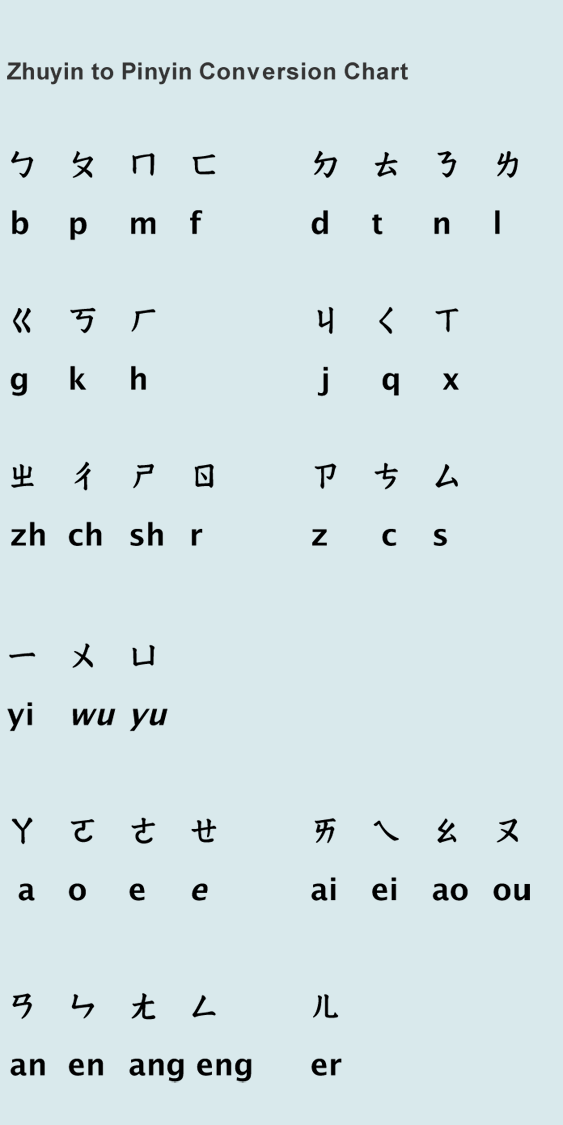
What is Pinyin in the Chinese Pronunciation System?
Pinyin is the official romanization system for Standard Mandarin Chinese, used to represent the pronunciation of characters using the Latin alphabet. It was developed in the 1950s to promote literacy and standardize pronunciation.
- Pinyin includes initials (consonants) and finals (vowels or vowel-consonant combinations).
- It uses tone marks to indicate the four main tones and a neutral tone.
- Pinyin is essential for learners to read and pronounce Chinese correctly.
How Do Tones Work in Chinese Pronunciation?
Mandarin Chinese is a tonal language, meaning the pitch or intonation of a word changes its meaning. There are four primary tones and a neutral tone.
- The first tone is high and level (e.g., mā 妈 - mother).
- The second tone rises (e.g., má 麻 - hemp).
- The third tone dips and rises (e.g., mǎ 马 - horse).
- The fourth tone falls sharply (e.g., mà 骂 - scold).
What Are Initials and Finals in Chinese Pronunciation?
Chinese syllables are divided into initials (beginning sounds) and finals (remaining sounds).
- Initials are consonants, like b, p, m, or f.
- Finals can be simple vowels (e.g., a), compound vowels (e.g., ai), or vowels followed by consonants (e.g., an).
- Some syllables have no initial, starting directly with a final (e.g., ā 啊).
Why is Pinyin Important for Learning Chinese?
Pinyin serves as a bridge for learners to master Chinese pronunciation before recognizing characters.
- It helps beginners read and pronounce words without knowing characters.
- Pinyin is used in dictionaries and language-learning apps.
- It standardizes pronunciation for non-native speakers.
How Does Pinyin Differ from Other Chinese Romanization Systems?
Before Pinyin, systems like Wade-Giles and Zhuyin were used, but Pinyin is now the global standard.
- Wade-Giles uses apostrophes (e.g., ch’ing vs. Pinyin qīng).
- Zhuyin (Bopomofo) uses symbols instead of the Latin alphabet.
- Pinyin is more intuitive for Western learners due to its Latin-based script.
Frequently Asked Questions (FAQ)
What is fossilisation in Chinese pronunciation, and how does it affect learners?
Fossilisation refers to the phenomenon where certain pronunciation errors become permanent in a learner's speech, despite continued exposure to the correct forms. In Chinese pronunciation, this often occurs with tones, initials (like zh or q), or finals (like ü). Once fossilised, these mistakes are difficult to correct because the brain and mouth muscles have adapted to the incorrect patterns. This can hinder communication and make learners sound less fluent, even if their vocabulary and grammar are advanced.
How can I identify if my Chinese pronunciation errors are fossilised?
If you consistently make the same mistakes even after repeated corrections or practice, your errors may be fossilised. For example, if you always pronounce sh as s or mix up the second and third tones, these could be signs. Recording yourself and comparing it to native speakers, or asking a teacher for feedback, can help identify fossilised errors. Another red flag is if you no longer notice the mistakes when speaking, as they’ve become automatic.
What strategies can help overcome fossilised pronunciation in Chinese?
To tackle fossilisation, conscious effort and targeted practice are key. Start by isolating the problematic sounds and practicing them in minimal pairs (e.g., mā vs. má). Use shadowing techniques, where you mimic native speakers in real-time, focusing on accuracy. Working with a tutor who can provide immediate feedback is also crucial. Additionally, slow down your speech to ensure proper articulation before speeding up. Consistency and patience are vital, as breaking fossilised habits takes time.
Can improving my Chinese pronunciation as an advanced learner still make a difference?
Absolutely! While fossilised errors are challenging, they are not irreversible. Advanced learners can still achieve significant improvement by adopting a systematic approach. Focus on re-training your ear to distinguish subtle sound differences and practice with high-quality input, such as podcasts or TV shows. Engaging in conversations with natives who correct you in real-time can also help. Remember, even small adjustments can greatly enhance your clarity and accent, making your Chinese sound more natural.
Leave a Reply
Related Posts