
Hone your Chinese writing ability by writing summaries

Improving your Chinese writing skills requires consistent practice, and writing summaries is an effective way to achieve this. Summarizing texts forces you to process information, select key points, and express them clearly—essential skills for mastering any language. By condensing complex ideas into concise paragraphs, you enhance vocabulary, grammar, and overall coherence. Whether summarizing news articles, stories, or academic papers, this exercise trains you to think critically in Chinese while refining your stylistic choices. Regular practice also builds confidence in structuring sentences and using idiomatic expressions naturally. Start with short texts and gradually tackle more challenging material to see steady progress in your writing proficiency.
Hone Your Chinese Writing Ability by Writing Summaries
Why Summarizing Helps Improve Chinese Writing Skills
Writing summaries in Chinese forces you to process and condense information, enhancing your vocabulary, grammar, and sentence structure. By summarizing texts, you practice selecting key points and expressing them concisely, which is crucial for fluency.
| Benefit | Explanation |
|---|---|
| Vocabulary Expansion | Encounter and reuse new words in context. |
| Grammar Practice | Reinforces correct sentence patterns. |
| Clarity & Conciseness | Trains you to express ideas succinctly. |
How to Choose the Right Texts for Summarizing
Select materials matching your proficiency level, such as short news articles, essays, or dialogues. Gradually increase complexity to challenge your skills without overwhelming yourself.
See AlsoWhat important words are missing from HSK?| Text Type | Suitability |
|---|---|
| Beginner | Children's stories or simple dialogues. |
| Intermediate | News reports or blog posts. |
| Advanced | Academic papers or literature. |
Steps to Write an Effective Chinese Summary
Follow these steps: 1) Read thoroughly, 2) Identify main ideas, 3) Paraphrase in your own words, and 4) Review for accuracy. Avoid copying sentences verbatim.
| Step | Action |
|---|---|
| 1. Read | Understand the original text fully. |
| 2. Highlight | Mark key points and arguments. |
| 3. Rewrite | Use simpler sentences if needed. |
Common Mistakes to Avoid When Summarizing in Chinese
Watch out for omitting key details, adding personal opinions, or misinterpreting the original text. Stick to factual condensation.
| Mistake | Solution |
|---|---|
| Over-summarizing | Retain essential context. |
| Literal Translation | Adapt phrases naturally in Chinese. |
| Ignoring Structure | Use logical connectors (e.g., 首先, 其次). |
Tools and Resources to Practice Chinese Summaries
Leverage online platforms like language forums, apps (e.g., Pleco), or feedback tools (e.g., LangCorrect) to refine your summaries.
See Also9 answers to questions about Pinyin and pronunciation| Tool | Use Case |
|---|---|
| Pleco | Dictionary for word lookup. |
| LangCorrect | Get native speaker feedback. |
| Chinese Forums | Share summaries for peer review. |
How to improve Chinese writing skills?
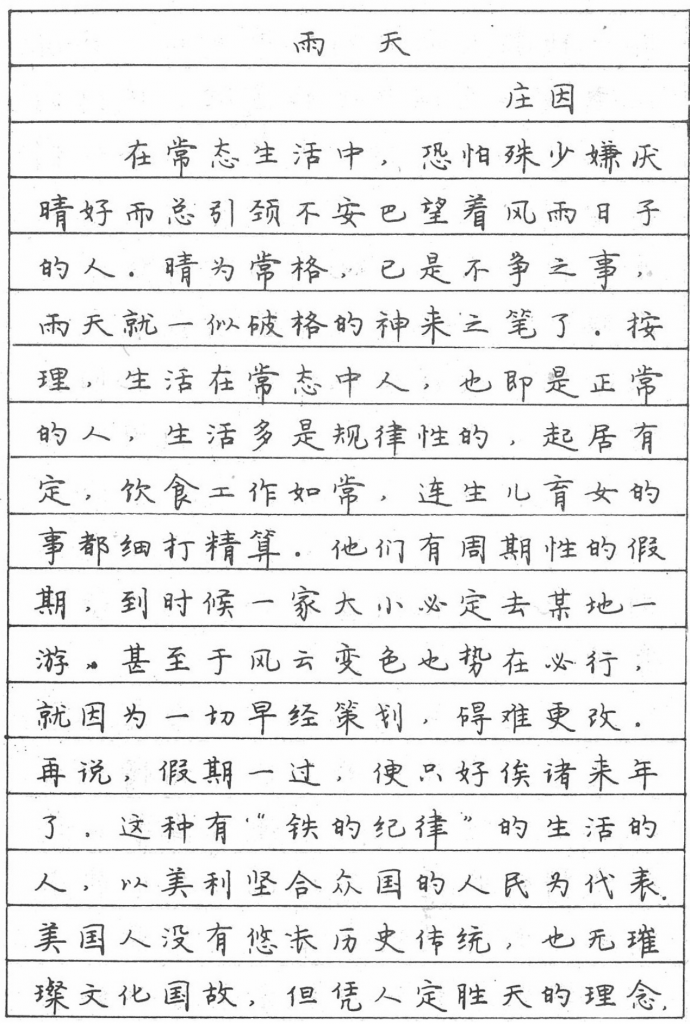
Practice Writing Chinese Characters Daily
To improve Chinese writing skills, consistent practice is essential. Writing characters daily helps reinforce memory and muscle memory. Here are key steps:
- Use grid paper to maintain proper stroke order and proportions.
- Copy model texts from textbooks or native materials to learn correct structure.
- Review and rewrite characters you struggle with to solidify understanding.
Expand Vocabulary Through Reading
A rich vocabulary is crucial for effective Chinese writing. Reading exposes you to new words and contexts. Follow these steps:
See AlsoApproaches to reading in Chinese- Read Chinese books, articles, or news to encounter diverse vocabulary.
- Highlight unfamiliar words and look up their meanings and usage.
- Incorporate new words into your writing to reinforce retention.
Master Grammar and Sentence Structure
Proper grammar ensures clarity in Chinese writing. Focus on these areas:
- Study sentence patterns to understand how words fit together logically.
- Practice writing sentences using different grammatical structures.
- Seek feedback from native speakers or teachers to correct mistakes.
Use Writing Prompts and Exercises
Structured practice enhances writing proficiency. Try these methods:
- Answer essay prompts to develop coherent thought flow.
- Summarize passages in your own words to practice paraphrasing.
- Write daily journals in Chinese to build fluency over time.
Seek Feedback and Revise Your Work
Improvement comes from constructive criticism. Implement these strategies:
- Share your writing with native speakers or language partners.
- Analyze corrections to identify recurring errors.
- Rewrite drafts to apply feedback and refine your skills.
What is the Chinese writing method?
What Are the Basic Principles of Chinese Writing?
The Chinese writing method is based on characters, which are logograms representing words or morphemes. Unlike alphabetic systems, each character corresponds to a syllable and carries meaning. Key principles include:
- Strokes: Characters are formed using a set number of brush or pen strokes in a specific order.
- Radicals: Many characters contain a radical, a component that hints at meaning or pronunciation.
- Structure: Characters follow balanced spatial arrangements, such as left-right or top-bottom layouts.
How Are Chinese Characters Classified?
Chinese characters can be categorized into several types based on their formation and evolution:
- Pictograms: Characters derived from drawings of objects (e.g., 山 for mountain).
- Ideograms: Symbols representing abstract ideas (e.g., 上 for up).
- Phono-semantic compounds: The most common type, combining a radical (meaning) and a phonetic component (sound).
What Are the Key Tools for Chinese Calligraphy?
Traditional Chinese calligraphy relies on four essential tools, known as the Four Treasures of the Study:
- Brush (毛笔): Made from animal hair, used for fluid stroke variations.
- Ink (墨): Solid ink sticks ground with water to produce liquid ink.
- Paper (宣纸): Absorbent rice paper that preserves stroke texture.
- Inkstone (砚台): Used to grind ink and control its consistency.
How Does Stroke Order Affect Chinese Writing?
Proper stroke order is crucial for legibility and aesthetic balance in Chinese characters. Rules include:
- Top to bottom: Vertical strokes are written before horizontal ones in some cases.
- Left to right: Components on the left are written before those on the right.
- Outside before inside: Enclosing strokes are completed first, followed by internal ones.
What Are Simplified vs. Traditional Chinese Characters?
Chinese writing has two main forms:
- Simplified Characters: Introduced in the 1950s to increase literacy, featuring fewer strokes (e.g., 国 vs. 國 for country).
- Traditional Characters: Used in Taiwan, Hong Kong, and historical texts, retaining original complexity.
- Regional Usage: Mainland China uses simplified, while other regions often prefer traditional.
How to have neat Chinese handwriting?
Understand the Basic Strokes and Stroke Order
To achieve neat Chinese handwriting, mastering the basic strokes and stroke order is essential. Each character is composed of strokes written in a specific sequence, which ensures consistency and balance.
- Learn the eight basic strokes, such as the horizontal (一), vertical (丨), and dot (丶).
- Follow standard stroke order rules, like writing from top to bottom and left to right.
- Practice stroke direction to avoid messy or uneven lines.
Use Gridded or Tianzige Paper for Practice
Writing on gridded paper (like Tianzige) helps maintain proper proportions and spacing. Each square is divided to guide the placement of strokes.
- Align characters within the grid to ensure uniformity.
- Respect the center and boundaries of each square for balanced characters.
- Gradually transition to blank paper once muscle memory develops.
Focus on Consistency in Size and Spacing
Consistency is key for neat handwriting. Characters should be the same size, with even spacing between them.
- Keep characters the same height and width to avoid a cluttered look.
- Maintain equal spacing between strokes within a character.
- Leave appropriate gaps between characters and lines.
Practice Writing Slowly and Deliberately
Rushing leads to sloppy handwriting. Start by writing slowly and carefully to build precision.
- Focus on each stroke before moving to the next.
- Use controlled movements to avoid shaky lines.
- Gradually increase speed while maintaining neatness.
Analyze and Imitate Neat Handwriting Examples
Studying well-written characters helps identify what makes them visually appealing.
- Observe professional calligraphy or typed fonts for reference.
- Copy characters from models to understand proportions.
- Compare your writing to identify areas for improvement.
Frequently Asked Questions (FAQ)
How can writing summaries improve my Chinese writing skills?
Writing summaries is an effective way to enhance your Chinese writing ability because it forces you to condense information while retaining key ideas. This practice helps you focus on vocabulary selection, sentence structure, and clarity. By summarizing texts, you learn to express complex thoughts concisely, which is a crucial skill in Chinese writing. Additionally, it reinforces your understanding of grammar and idiomatic expressions.
What types of texts should I summarize to practice Chinese writing?
To hone your Chinese writing, choose a variety of texts, such as news articles, short stories, or essays. Start with simpler materials if you're a beginner and gradually move to more complex content. Summarizing different genres exposes you to diverse vocabulary and writing styles, helping you adapt your tone and structure accordingly. Focus on texts that interest you to maintain motivation.
How often should I practice writing summaries to see improvement?
Consistency is key to improving your Chinese writing skills. Aim to write at least 3-4 summaries per week to see noticeable progress. Regular practice helps reinforce new vocabulary and grammatical patterns. Over time, you'll develop a stronger sense of flow and coherence in your writing. Tracking your progress by comparing older and newer summaries can also boost your confidence.
What should I focus on when reviewing my Chinese summaries?
When reviewing your summaries, pay attention to accuracy, brevity, and clarity. Check if you've captured the main ideas correctly and used appropriate vocabulary. Analyze your sentence structure for errors and ensure your writing sounds natural. Seeking feedback from a native speaker or teacher can provide valuable insights into areas for improvement, such as word choice or cultural nuances.
Leave a Reply
Related Posts