
Don’t learn Mandarin pronunciation by reading, listen and mimic instead

Learning Mandarin pronunciation solely through reading can lead to common pitfalls, as written characters don’t accurately reflect sounds. Unlike alphabetic languages, Pinyin and characters provide limited guidance for tones and subtle phonetics. Instead, listening to native speakers and mimicking their pronunciation is far more effective. This approach trains your ear to recognize tones, rhythms, and nuances that written forms can’t convey. By prioritizing auditory learning, you develop a more natural accent and avoid ingrained mistakes. Whether through conversations, podcasts, or repetition exercises, active listening and imitation should be the foundation of mastering Mandarin pronunciation—not just relying on text.
- Why You Shouldn’t Learn Mandarin Pronunciation by Reading—Listen and Mimic Instead
- How hard is it for an English speaker to learn Mandarin?
- How can I improve my Mandarin pronunciation?
- Why is Mandarin hard to learn?
- Is Chinese easy to pronounce?
-
Frequently Asked Questions (FAQ)
- Why is listening and mimicking better than reading for learning Mandarin pronunciation?
- Can I still use written materials to support my Mandarin pronunciation practice?
- How often should I practice listening and mimicking to improve my Mandarin pronunciation?
- What resources are best for listening and mimicking Mandarin pronunciation?
Why You Shouldn’t Learn Mandarin Pronunciation by Reading—Listen and Mimic Instead
The Problem with Learning Pronunciation Through Reading
Many learners rely on Pinyin or other romanization systems to pronounce Mandarin words. However, reading alone can lead to mispronunciations because English letters don’t perfectly match Mandarin sounds. For example, the Mandarin q sounds nothing like the English q. Without hearing native speakers, learners may develop incorrect habits that are hard to unlearn.
| Issue | Why It Happens |
|---|---|
| Mispronouncing tones | Reading doesn’t convey pitch changes |
| Incorrect vowel sounds | Letters like e or i differ in Mandarin |
| Over-reliance on Pinyin | Creates a crutch instead of auditory learning |
The Importance of Listening for Accurate Pronunciation
Mandarin is a tonal language, meaning pitch changes alter word meanings. Listening helps internalize tones, rhythm, and natural flow—things reading can’t teach. By hearing native speakers, learners absorb correct pronunciation patterns, reducing errors like mixing up mā (mother) and mà (scold).
See Also9 answers to questions about Pinyin and pronunciation| Benefit | Outcome |
|---|---|
| Better tone recognition | Fewer misunderstandings in conversation |
| Natural intonation | Speech sounds less robotic |
| Faster auditory adaptation | Easier to understand spoken Mandarin |
How Mimicking Native Speakers Improves Fluency
Mimicry forces learners to actively reproduce sounds, reinforcing muscle memory for Mandarin’s unique phonetics. Repeating after native speakers—whether in podcasts, songs, or conversations—trains the mouth and ears simultaneously. This method is far more effective than silently reading Pinyin.
| Technique | Advantage |
|---|---|
| Shadowing (repeating instantly) | Improves rhythm and speed |
| Recording and comparing | Highlights pronunciation gaps |
| Using dialogue-based apps | Encourages real-time imitation |
Common Pitfalls of Ignoring Auditory Learning
Learners who skip listening practice often struggle with real-world comprehension. Mandarin speakers may not enunciate as clearly as textbook audio, and regional accents add complexity. Without auditory training, learners face surprises in conversations, like not recognizing contractions (e.g., zhīdào becoming zhīao).
| Pitfall | Solution |
|---|---|
| Slow reaction to spoken words | Daily listening immersion |
| Mishearing similar sounds (e.g., sh vs. x) | Minimal pair exercises |
| Difficulty with fast speech | Gradual exposure to native content |
Practical Ways to Prioritize Listening and Mimicking
Replace passive reading with active listening exercises. Use resources like ChinesePod, watch TV shows without subtitles, or practice with language partners. Apps like HelloTalk let users mimic native speakers and get feedback. Even 10 minutes daily of focused listening yields better results than hours of reading Pinyin.
See AlsoMandarin Retreat (Our Review) - Why You NEED To Go| Resource | How It Helps |
|---|---|
| YouTube channels (e.g., Mandarin Corner) | Real-life pronunciation examples |
| Language exchange partners | Immediate correction and practice |
| Tone drilling apps (e.g., Speechling) | Targets tonal accuracy |
How hard is it for an English speaker to learn Mandarin?

The Complexity of Mandarin for English Speakers
Learning Mandarin as an English speaker presents several challenges due to the vast differences between the two languages. Mandarin is a tonal language, meaning the meaning of a word can change based on its tone, which is unfamiliar to most English speakers. Additionally, the writing system uses characters instead of an alphabet, requiring memorization of thousands of symbols.
- Tonal system: Mandarin has four tones and a neutral tone, making pronunciation critical.
- Character-based writing: Unlike English, Mandarin uses logograms, which are not phonetic.
- Grammar differences: Mandarin grammar lacks verb conjugations and tenses, which can be confusing initially.
Time Investment Required to Learn Mandarin
Becoming proficient in Mandarin typically requires a significant time commitment. The Foreign Service Institute (FSI) categorizes Mandarin as a Category IV language, meaning it takes around 2,200 class hours for an English speaker to reach professional working proficiency.
See AlsoWhat important words are missing from HSK?- Daily practice: Consistent study and immersion are essential for progress.
- Long-term dedication: Fluency often takes several years of focused effort.
- Immersion benefits: Living in a Mandarin-speaking environment accelerates learning.
Common Pronunciation Challenges
English speakers often struggle with Mandarin pronunciation, particularly with sounds that don’t exist in English, such as x, q, and zh. The tonal nature of the language adds another layer of difficulty.
- Tonal mistakes: Mispronouncing tones can lead to misunderstandings.
- Unfamiliar sounds: Mandarin includes retroflex and aspirated consonants not found in English.
- Pinyin system: While helpful, Pinyin can mislead English speakers due to different sound representations.
Writing and Reading Mandarin Characters
Mastering Mandarin characters is one of the most daunting aspects for English speakers. Each character represents a word or morpheme, and there are over 50,000 characters, though about 3,000 are needed for basic literacy.
- Stroke order: Characters must be written in a specific sequence.
- Radicals: Understanding radicals helps in memorizing and recognizing characters.
- Simplified vs. Traditional: Learners must choose between Simplified (used in Mainland China) or Traditional (used in Taiwan and Hong Kong).
Cultural and Contextual Learning
Learning Mandarin isn’t just about language; it involves understanding Chinese culture and context. Idioms, proverbs, and cultural references are deeply embedded in the language.
- Idiomatic expressions: Many phrases don’t translate directly to English.
- Cultural nuances: Politeness and indirect communication are common in Mandarin.
- Historical context: Classical Chinese literature and history influence modern usage.
How can I improve my Mandarin pronunciation?

Master the Four Mandarin Tones
Mandarin is a tonal language, meaning the tone you use can change a word's meaning. To improve, focus on these steps:
- Practice each tone individually—high-level (1st), rising (2nd), falling-rising (3rd), and falling (4th).
- Use audio resources or apps like Pinyin Trainer to compare your pronunciation.
- Record yourself and listen for discrepancies with native speakers.
Imitate Native Speakers
Listening and mimicking native Mandarin speakers is crucial for accurate pronunciation. Follow these steps:
- Watch Chinese TV shows, movies, or YouTube channels with subtitles.
- Repeat phrases aloud, focusing on intonation and rhythm.
- Use language exchange apps like Tandem or HelloTalk to practice with natives.
Practice Pinyin Systematically
Pinyin is the Romanization system for Mandarin. Mastering it helps pronunciation:
- Learn the initials (consonants) and finals (vowels) separately.
- Drill difficult sounds like zh, ch, sh, r, j, q, and x.
- Use flashcards or apps like Skritter for reinforcement.
Use Tongue Twisters and Drills
Tongue twisters (绕口令 ràokǒulìng) sharpen articulation and fluency. Try these tips:
- Start with simple twisters like 四是四,十是十 (sì shì sì, shí shì shí).
- Gradually increase speed while maintaining clarity.
- Practice daily to strengthen mouth muscles for Mandarin sounds.
Get Feedback from a Teacher or App
External feedback ensures progress. Consider these methods:
- Take one-on-one lessons with a tutor on platforms like iTalki.
- Use pronunciation apps like Elsa Speak for AI-driven corrections.
- Join language meetups or online communities for peer reviews.
Why is Mandarin hard to learn?
The Complexity of Mandarin Tones
One of the biggest challenges in learning Mandarin is mastering its tonal system. Unlike many languages, Mandarin uses tones to distinguish meaning, making pronunciation critical. A single syllable can have multiple meanings depending on the tone used.
- Four main tones: Mandarin has four distinct tones (plus a neutral tone), each altering the meaning of a word.
- Tonal mistakes: Mispronouncing a tone can lead to misunderstandings, as words may sound similar but mean entirely different things.
- Listening comprehension: Recognizing tones in fast-paced conversations requires extensive practice.
The Challenge of Chinese Characters
Mandarin relies on Chinese characters, which are logograms rather than an alphabet. This writing system is vastly different from phonetic languages, making literacy a steep learning curve.
- Thousands of characters: Fluency requires knowledge of at least 3,000-5,000 characters.
- Stroke order: Writing characters correctly involves memorizing specific stroke sequences.
- No phonetic clues: Unlike alphabetic systems, characters often don’t indicate pronunciation, requiring rote memorization.
Lack of Cognates with English
Mandarin shares very few linguistic similarities with English, making vocabulary acquisition more difficult.
- Different roots: Mandarin is a Sino-Tibetan language, while English is Indo-European.
- Limited loanwords: Unlike languages such as French or Spanish, Mandarin has few words borrowed from English.
- Unique grammar structures: Sentence construction, word order, and particles differ significantly from English.
Grammar Nuances and Measure Words
Mandarin grammar includes features unfamiliar to English speakers, such as measure words, which add complexity.
- Measure words: Nouns require specific classifiers (e.g., 本 for books, 张 for paper).
- No verb conjugations: While verbs don’t change for tense, context and particles indicate time.
- Topic-comment structure: Sentences often emphasize the topic before the comment, differing from English’s subject-verb-object order.
Listening and Speaking Speed
Native Mandarin speakers often converse at a rapid pace, posing challenges for learners in comprehension and response.
- Fast speech: Mandarin syllables are short, leading to quicker speech patterns.
- Tonal recognition: Identifying tones in real-time conversations demands practice.
- Regional accents: Dialects and accents (e.g., Beijing vs. Taiwanese Mandarin) can further complicate understanding.
Is Chinese easy to pronounce?
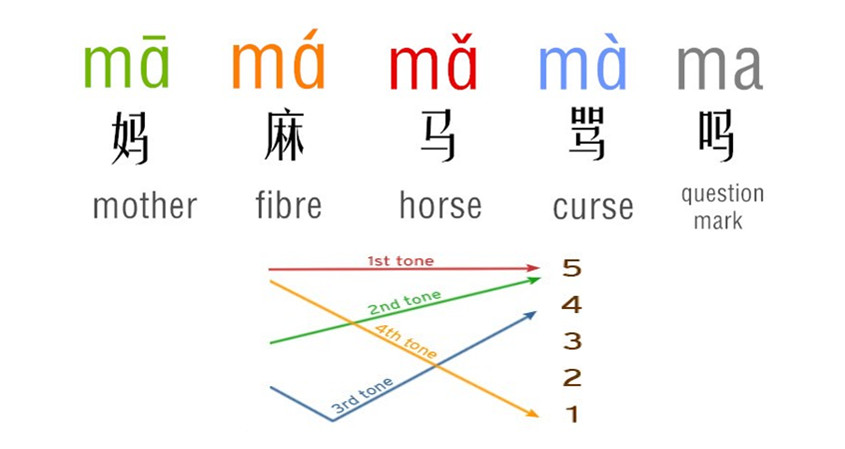
Is Chinese Pronunciation Difficult for Beginners?
Chinese pronunciation can be challenging for beginners due to its tonal nature and unfamiliar sounds. Mandarin Chinese has four main tones and a neutral tone, which change the meaning of words even if the spelling remains the same. For example:
- mā (mother) vs. mà (scold) – same syllable, different tones.
- Sounds like x, q, and zh don’t exist in English.
- Vowel sounds are shorter and sharper compared to many Western languages.
What Makes Chinese Tones Hard to Master?
The tonal system is the biggest hurdle in Chinese pronunciation. Each tone has a distinct pitch contour:
- First tone – High and flat (e.g., mā).
- Second tone – Rising pitch (e.g., má).
- Third tone – Starts mid, dips low, then rises (e.g., mǎ).
- Fourth tone – Sharp and falling (e.g., mà).
Are There Easier Aspects of Chinese Pronunciation?
While challenging, some aspects of Chinese pronunciation are simpler than other languages:
- No conjugation or plural forms – Words don’t change based on tense or number.
- Consistent spelling rules – Pinyin (Romanization) follows clear phonetic patterns.
- Limited syllable count – Mandarin has around 400 syllables (with tones, ~1,200 variations).
How Do Native Speakers Perceive Foreign Accents in Chinese?
Native Chinese speakers are generally forgiving of foreign accents but may struggle to understand mispronounced tones. Key observations:
- Tone errors can lead to confusion (e.g., saying shū (book) instead of shù (tree)).
- Consonant mispronunciations (like mixing sh and x) are noticeable but often decipherable.
- Context helps – Speakers rely on sentence structure to guess meanings.
What Are the Best Strategies to Improve Chinese Pronunciation?
Improving Chinese pronunciation requires focused practice and exposure:
- Listen and mimic native speakers (e.g., through TV shows or language apps).
- Practice tones in isolation before combining them with words.
- Use Pinyin charts to master unfamiliar sounds like c (ts) or ü (like German ü).
Frequently Asked Questions (FAQ)
Why is listening and mimicking better than reading for learning Mandarin pronunciation?
Listening and mimicking are far more effective for mastering Mandarin pronunciation because the language relies heavily on tones and subtle sound distinctions that written text cannot fully capture. While reading pinyin or characters might give you a rough idea of how words should sound, it often leads to mispronunciations since the same letters can represent different sounds in different contexts. By actively listening to native speakers and repeating what you hear, you train your ear and mouth to produce the correct sounds naturally, just as children learn their first language.
Can I still use written materials to support my Mandarin pronunciation practice?
Written materials like pinyin or phonetic guides can be helpful as a supplementary tool, but they should never replace listening and mimicking. The key is to use them in combination with audio resources—for example, reading pinyin while listening to a native speaker say the word. This way, you reinforce the connection between the written symbols and the actual sounds. However, relying solely on text risks ingraining incorrect pronunciation habits, especially with Mandarin’s tonal nature.
How often should I practice listening and mimicking to improve my Mandarin pronunciation?
For the best results, aim for daily practice, even if it’s just for 10–15 minutes. Consistency is crucial because Mandarin tones and sounds require muscle memory and auditory training. Short, frequent sessions are more effective than occasional long ones. Focus on quality over quantity—mimic native speakers as precisely as possible, and gradually increase the difficulty by practicing with longer phrases or faster speech. Over time, your brain and vocal muscles will adapt to the nuances of Mandarin pronunciation.
What resources are best for listening and mimicking Mandarin pronunciation?
Prioritize authentic materials like podcasts, videos, or audio courses featuring native speakers. Language apps with speech recognition (e.g., Pimsleur, HelloChinese) can also provide immediate feedback. For beginners, slow, clear audio is ideal, while advanced learners can challenge themselves with natural conversations or TV shows. Additionally, shadowing—repeating sentences right after hearing them—is a powerful technique. Avoid robotic or synthesized voices, as they often lack the natural flow and tonal variations of real Mandarin speech.
Leave a Reply
Related Posts