
How to find out how good your Chinese pronunciation really is

Determining the accuracy of your Chinese pronunciation is crucial for effective communication and language mastery. Many learners struggle with tones, phonetics, and subtle nuances that native speakers effortlessly recognize. Whether you're a beginner or advanced student, assessing your pronunciation objectively can be challenging without proper guidance. This article explores practical methods to evaluate your Chinese pronunciation, from using speech recognition tools and recording yourself to seeking feedback from native speakers. By identifying strengths and areas for improvement, you can refine your accent and boost confidence in real-life conversations. Discover how to measure your progress and take your Mandarin skills to the next level.
How to Accurately Assess Your Chinese Pronunciation Skills
1. Record Yourself and Compare with Native Speakers
One of the most effective ways to evaluate your Chinese pronunciation is by recording yourself speaking and then comparing it to native speakers. Use apps or online platforms that provide audio samples of native Mandarin speakers. Pay close attention to tones, intonation, and rhythm. This method helps identify discrepancies in your pronunciation.
| Step | Action |
|---|---|
| 1 | Record a short passage in Chinese. |
| 2 | Listen to a native speaker's version. |
| 3 | Compare and note differences. |
2. Use Pronunciation Evaluation Apps
Technology can be a great ally in assessing your pronunciation accuracy. Apps like Pinyin Trainer, HelloChinese, or Speechling provide instant feedback on your tones and articulation. These tools often use speech recognition to score your performance, helping you pinpoint areas for improvement.
See AlsoLearning Chinese through social media| App | Feature |
|---|---|
| Pinyin Trainer | Tone recognition drills. |
| HelloChinese | Interactive pronunciation exercises. |
| Speechling | Feedback from native coaches. |
3. Get Feedback from Native Speakers
Nothing beats real-time feedback from a native Mandarin speaker. Engage in language exchange programs or hire a tutor to evaluate your pronunciation. Platforms like iTalki, Tandem, or HelloTalk connect learners with native speakers who can provide constructive criticism.
| Platform | Benefit |
|---|---|
| iTalki | Professional tutors available. |
| Tandem | Free language exchange. |
| HelloTalk | Community-based corrections. |
4. Test Your Tones with Minimal Pairs
Mandarin is a tonal language, meaning the same syllable can have different meanings based on tone. Practice with minimal pairs (words that differ only in tone) to check your tonal accuracy. For example, distinguish between mā (妈 - mother) and mà (骂 - scold).
| Minimal Pair | Meaning |
|---|---|
| mā (妈) | Mother |
| mà (骂) | Scold |
| shī (诗) | Poem |
5. Take a Standardized Pronunciation Test
For a formal assessment, consider taking a standardized test like the HSK (Hanyu Shuiping Kaoshi) or the OCA (Oral Chinese Assessment). These exams evaluate not just vocabulary and grammar but also pronunciation clarity and tonal accuracy.
See AlsoSpaced repetition is not limited to flashcards| Test | Focus Area |
|---|---|
| HSK | Comprehensive Mandarin proficiency. |
| OCA | Speaking and pronunciation skills. |
How do you know if your pronunciation is correct?

Comparing Your Pronunciation to Native Speakers
One of the most effective ways to check if your pronunciation is correct is by comparing it to native speakers. Listen carefully to how they articulate words, their intonation, and stress patterns.
- Record yourself saying the same words or phrases and play them back side by side with a native speaker’s version.
- Use platforms like YouTube, podcasts, or language learning apps to find authentic examples.
- Pay attention to subtle differences in vowel sounds, consonants, and rhythm.
Using Pronunciation Tools and Apps
Technology can be a valuable ally in verifying your pronunciation accuracy. Many apps and tools provide instant feedback.
See AlsoAll the resources you need to learn and teach Chinese stroke order- Try apps like Elsa Speak, Forvo, or Google Pronunciation to analyze your speech.
- Use speech-to-text features on your phone—if the software transcribes correctly, your pronunciation is likely accurate.
- Look for tools that highlight problem areas and offer corrective exercises.
Getting Feedback from Native Speakers or Teachers
Direct feedback from native speakers or language instructors is invaluable for refining your pronunciation.
- Join language exchange communities like Tandem or HelloTalk to practice with natives.
- Ask a teacher or tutor to correct your mistakes in real time.
- Participate in conversation clubs or online forums where pronunciation can be reviewed.
Checking Phonetic Transcriptions in Dictionaries
Dictionaries with phonetic transcriptions (IPA) help you understand the exact sounds of words.
- Refer to Cambridge or Oxford dictionaries for accurate IPA guides.
- Break down words into individual sounds and practice each one separately.
- Compare your articulation to the IPA symbols to ensure correctness.
Testing Comprehension in Real Conversations
If native speakers understand you effortlessly, your pronunciation is likely on point.
See AlsoChinese TV Shows || 14 Great Shows for Practicing Chinese- Engage in real-life conversations and observe if you’re frequently asked to repeat yourself.
- Notice if listeners respond naturally or seem confused by your speech.
- Adjust based on their reactions—misunderstandings often highlight pronunciation errors.
What are the 5 common pronunciation mistakes Chinese speakers make?

1. Confusing /l/ and /r/ Sounds
Chinese speakers often struggle with distinguishing between the /l/ and /r/ sounds in English, as Mandarin does not have a direct equivalent for the English r. This leads to mispronunciations like saying lice instead of rice.
- Substitution: Replacing r with l (e.g., light for right).
- Over-rolling: Exaggerating the r sound, making it unnatural.
- Omission: Skipping the r sound entirely in words like three.
2. Mispronouncing Final Consonants
Mandarin often omits or softens final consonants, causing Chinese speakers to drop or mispronounce them in English. For example, cat might sound like ca.
- Dropping -ed endings: Saying walk instead of walked.
- Ignoring plurals: Pronouncing dogs as dog.
- Muffling -t or -d: Making hand sound like han.
3. Difficulty with Vowel Length
English vowels have distinct long and short forms, while Mandarin vowels do not. This leads to confusion between words like ship and sheep.
- Shortening long vowels: Saying fit instead of feet.
- Lengthening short vowels: Pronouncing bit like beat.
- Mixing diphthongs: Saying now as no.
4. Struggling with th Sounds
The voiced (/ð/) and unvoiced (/θ/) th sounds are challenging, as they don’t exist in Mandarin. Speakers may substitute them with s, z, or d.
- Replacing /θ/ with s: Think becomes sink.
- Replacing /ð/ with z: This sounds like zis.
- Using d for /ð/: They is pronounced as day.
5. Incorrect Word Stress and Intonation
Mandarin is a tonal language, while English uses stress and rhythm. Chinese speakers may apply Mandarin tones to English words, making speech sound unnatural.
- Flat intonation: Missing rising/falling tones in questions.
- Wrong syllable stress: Saying PHOtograph instead of phoTOgraph.
- Over-emphasizing particles: Stressing small words like to or the.
What is the correct pronunciation of Chinese?
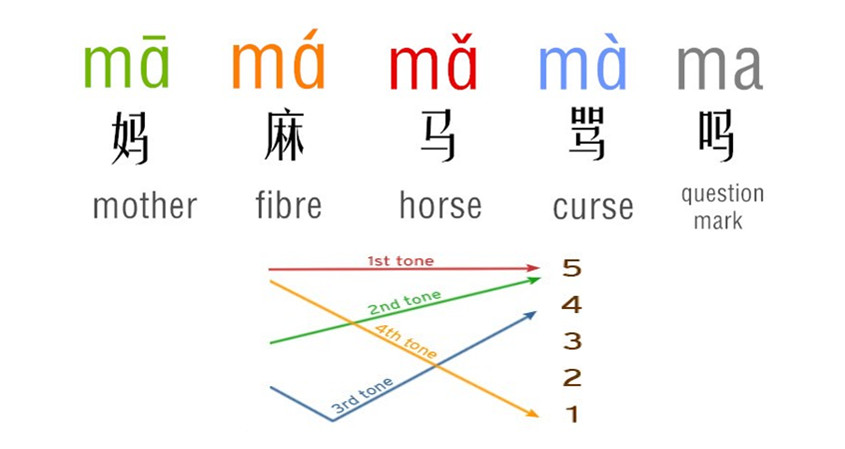
Understanding Chinese Pronunciation Basics
The correct pronunciation of Chinese depends on the dialect being spoken, but Mandarin is the most widely recognized and official language of China. Mandarin pronunciation is based on Pinyin, a Romanization system that uses the Latin alphabet to represent sounds. Key elements include:
- Tones: Mandarin has four main tones and a neutral tone, which change the meaning of words.
- Initials and Finals: Sounds are formed by combining consonant initials and vowel finals.
- Pinyin Rules: Learning Pinyin helps in accurately pronouncing Chinese characters.
The Role of Tones in Chinese Pronunciation
Tones are crucial in Mandarin Chinese because they distinguish words that otherwise sound similar. Mispronouncing a tone can lead to misunderstandings. Here’s a breakdown:
- First Tone (High Flat): A steady high pitch, like singing a note.
- Second Tone (Rising): Starts mid and rises, like asking a question.
- Third Tone (Falling-Rising): Dips low before rising slightly.
- Fourth Tone (Falling): Sharp and quick, like a command.
- Neutral Tone: Light and short, often used in unstressed syllables.
Common Pronunciation Mistakes in Chinese
Non-native speakers often struggle with certain aspects of Chinese pronunciation. Here are frequent errors:
- Ignoring Tones: Treating tones as optional alters word meanings.
- Mispronouncing Q, X, and Zh: These sounds don’t exist in English and require practice.
- Overlooking Retroflex Sounds: Like sh, ch, and r, which are pronounced with the tongue curled back.
How Pinyin Helps with Chinese Pronunciation
Pinyin is an essential tool for learners to master Chinese pronunciation. It provides:
- Phonetic Guidance: Shows how to pronounce characters using the Latin alphabet.
- Tone Marks: Diacritics indicate the correct tone for each syllable.
- Standardization: Ensures consistency in pronunciation across learners and regions.
Tips for Improving Chinese Pronunciation
To refine your Chinese pronunciation, consider these strategies:
- Listen and Repeat: Mimic native speakers through media or language apps.
- Practice Tones Daily: Use tone pairs to master combinations.
- Record Yourself: Compare your pronunciation with native audio.
- Work with a Tutor: Get feedback on tricky sounds.
How to get Chinese pronunciation right?

Master the Four Tones in Mandarin Chinese
The foundation of Chinese pronunciation lies in mastering the four tones, which change the meaning of words even if the spelling remains the same.
- First tone (high and flat): Pronounced with a steady high pitch, like singing a note (e.g., mā 妈 - mother).
- Second tone (rising): Starts mid and rises sharply, similar to asking a question in English (e.g., má 麻 - hemp).
- Third tone (falling-rising): Dips low before rising again (e.g., mǎ 马 - horse).
- Fourth tone (falling): Begins high and drops sharply, like a command (e.g., mà 骂 - scold).
Practice Pinyin System Thoroughly
Pinyin is the Romanization system for Chinese characters and is essential for accurate pronunciation.
- Learn initials and finals: Understand consonant-vowel combinations (e.g., zh, x, iong).
- Focus on tricky sounds: Distinguish between q (like cheese) and ch (like church).
- Use tone marks: Always note the tone above vowels in Pinyin (e.g., nǐ hǎo).
Imitate Native Speakers
Listening and repeating native pronunciation is critical for refining your accent.
- Watch Chinese media: Movies, news, or YouTube channels expose you to natural speech.
- Shadowing technique: Repeat sentences immediately after hearing them to match rhythm and tone.
- Use language apps: Apps like HelloChinese or Pleco offer pronunciation drills with feedback.
Leverage Mouth and Tongue Positioning
Correct articulation relies on precise physical adjustments.
- Retroflex sounds: Curl the tongue for zh, ch, sh, and r.
- Dental vs. alveolar: Place the tongue behind teeth for z, c, s (unlike English).
- Lip rounding: For vowels like ü, purse lips tightly (e.g., lǜ 绿 - green).
Record and Compare Your Pronunciation
Self-assessment helps identify and correct errors.
- Use voice recording tools: Compare your speech with native audio samples.
- Seek feedback: Join language exchange groups or hire a tutor for corrections.
- Track progress: Revisit recordings monthly to measure improvement.
Frequently Asked Questions (FAQ)
How can I assess my Chinese pronunciation accuracy?
To evaluate your Chinese pronunciation accuracy, consider recording yourself speaking and comparing it to native speakers. Use apps like Pinyin Trainer or HelloTalk, which provide feedback on tones and phonetics. Additionally, ask a native speaker or a language tutor to review your recordings and point out errors. Pay special attention to tones, as mispronouncing them can change the meaning of words entirely.
What are common mistakes to look for in Chinese pronunciation?
Common mistakes include mixing up tones, such as saying the third tone as a second tone, or neglecting the retroflex sounds (like zh, ch, and sh). Another frequent error is mispronouncing vowels, such as confusing ü with u. Also, learners often struggle with aspiration in consonants like p, t, and k. Identifying these issues early helps improve your pronunciation significantly.
Are there online tools to test my Chinese pronunciation?
Yes, several online tools can help test your pronunciation. Platforms like Speechling and Forvo allow you to compare your speech with native recordings. Apps such as Pleco (with its pronunciation add-ons) and Google Translate’s voice input can also verify if your pronunciation is recognizable. For a more structured approach, try language learning platforms like Duolingo or Rosetta Stone, which include pronunciation exercises.
How important are tones in Chinese pronunciation?
Tones are critical in Chinese because they differentiate word meanings. Mandarin has four main tones (plus a neutral tone), and misusing them can lead to misunderstandings. For example, mā (妈, mother) and mà (骂, scold) have entirely different meanings. Practicing with tone drills, listening to native speakers, and using tone-pair exercises can help you master this essential aspect of Chinese pronunciation.
Leave a Reply
Related Posts