
How to use mnemonics to learn Mandarin tones and pronunciation

Learning Mandarin can be challenging, especially when mastering its tones and pronunciation. Mnemonics—memory aids that link new information to familiar concepts—offer a powerful solution. By associating Mandarin sounds with vivid images, stories, or rhymes, learners can recall tones and pronunciations more effortlessly. For example, linking the first tone’s high pitch to a musical note or the third tone’s dip to a rollercoaster can make retention intuitive. This article explores practical mnemonic techniques tailored for Mandarin, helping beginners overcome common hurdles. Whether through visual, auditory, or kinesthetic cues, these strategies transform abstract sounds into memorable patterns, accelerating language acquisition with creativity and confidence.
How to Use Mnemonics to Master Mandarin Tones and Pronunciation
Learning Mandarin tones and pronunciation can be challenging, but mnemonics—memory aids that link new information to familiar concepts—can make the process easier. By associating sounds, tones, and characters with vivid mental images or stories, learners can recall Mandarin elements more effectively. Below, we explore practical mnemonic techniques to improve your Mandarin skills.
1. Understanding Mandarin Tones with Mnemonics
Mandarin has four main tones and a neutral tone, each changing a word's meaning. Mnemonics can help differentiate them:
- First tone (high flat): Imagine a straight, steady musical note.
- Second tone (rising): Picture a question mark lifting upward.
- Third tone (falling-rising): Think of a dipping rollercoaster.
- Fourth tone (sharp fall): Visualize a stern command dropping sharply.
| Tone | Mnemonic |
|---|---|
| First Tone | Singing a high, steady note |
| Second Tone | Asking a question (rising inflection) |
| Third Tone | Rollercoaster dip and rise |
| Fourth Tone | Angry command (sharp drop) |
2. Associating Sounds with Familiar Words
Link Mandarin syllables to similar-sounding English words for easier recall. For example:
- Xièxie (Thank you): Think of She yeah! as a cheerful response.
- Nǐ hǎo (Hello): Imagine saying Knee how? to greet someone.
| Mandarin Word | Mnemonic Association |
|---|---|
| Xièxie (谢谢) | She yeah! |
| Nǐ hǎo (你好) | Knee how? |
3. Creating Visual Stories for Characters
Chinese characters (Hanzi) often resemble their meanings. Use visual mnemonics to remember them:
- 人 (rén, person): Looks like a walking figure.
- 山 (shān, mountain): Resembles three mountain peaks.
| Character | Visual Mnemonic |
|---|---|
| 人 (rén) | Stick figure walking |
| 山 (shān) | Three mountain peaks |
4. Using Rhymes and Songs for Tone Practice
Songs and rhymes reinforce tone patterns. For example, set the phrase mā má mǎ mà (mother, hemp, horse, scold) to a simple tune to practice all four tones.
See AlsoChineseClass101 Review - Should I Use It?| Phrase | Tone Sequence |
|---|---|
| mā má mǎ mà | 1st, 2nd, 3rd, 4th |
5. Combining Mnemonics with Spaced Repetition
Pair mnemonics with spaced repetition systems (SRS) like Anki. Review mnemonic-based flashcards at increasing intervals to strengthen long-term memory.
| Technique | Tool |
|---|---|
| Spaced Repetition | Anki, Pleco |
How to memorize Mandarin tones?
Understand the Four Basic Mandarin Tones
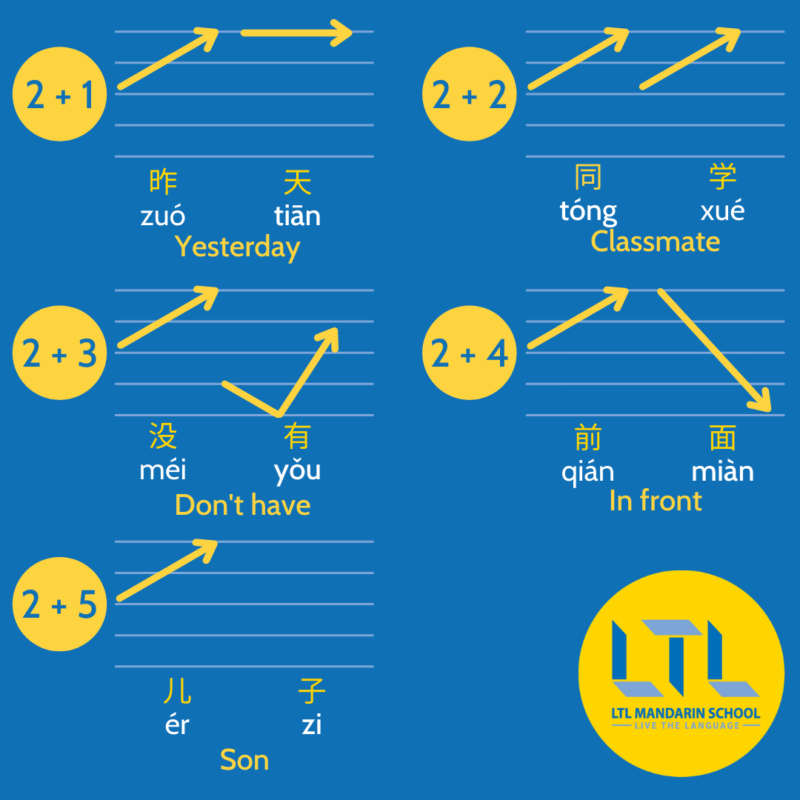
To memorize Mandarin tones, first understand the four basic tones and their pitch contours:
See AlsoHow to find out how good your Chinese pronunciation really is- First tone (高平调): A high, flat pitch (e.g., mā 妈).
- Second tone (阳平): A rising pitch, like asking a question (e.g., má 麻).
- Third tone (上声): A dipping pitch, falling then rising (e.g., mǎ 马).
- Fourth tone (去声): A sharp, falling pitch (e.g., mà 骂).
Practice each tone individually to recognize their distinct sounds.
Use Mnemonics and Visual Associations
Mnemonics and visual aids help reinforce tone memorization:
- Associate tones with hand gestures (e.g., flat hand for first tone, upward swipe for second tone).
- Link tones to familiar sounds (e.g., second tone resembles a question in English).
- Color-code tones in notes (e.g., red for first tone, blue for second tone).
These techniques create mental hooks for easier recall.
See AlsoIs Learning Chinese Hard? The 5 Critical PointsPractice with Tone Pairs and Sentences
Mastering tone pairs and contextual sentences improves fluency:
- Drill common two-syllable combinations (e.g., nǐ hǎo 你好).
- Listen to native speakers and mimic their tone patterns.
- Read aloud sentences, focusing on tone transitions.
This builds muscle memory for natural speech.
Leverage Technology and Apps
Use technology to reinforce tone learning:
See AlsoTop 8 Ways Chinese Teachers Can Use ChatGPT to Create Lesson Plans- Apps like Pleco or HelloChinese offer tone drills.
- Record yourself and compare to native pronunciations.
- Watch videos with pinyin subtitles to see tones in action.
Interactive tools make practice engaging and measurable.
Immerse Yourself in Mandarin Media
Immersion accelerates tone recognition:
- Listen to Mandarin music, focusing on lyrical tones.
- Watch TV shows or movies with subtitles to connect sounds to meanings.
- Engage in conversations with native speakers for real-time feedback.
Regular exposure trains your ear to distinguish tones naturally.
How to memorize Mandarin words?
Use Mnemonics to Associate Characters with Meanings
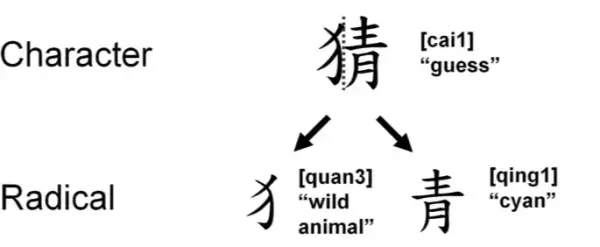
Mnemonics are a powerful tool for memorizing Mandarin words by linking characters to vivid mental images or stories. For example, the character “木” (mù, meaning tree) resembles a tree with branches. To reinforce this:
- Break down characters into recognizable components.
- Create stories connecting the parts to the meaning.
- Visualize the story to strengthen recall.
Practice Writing Characters Repeatedly
Writing characters by hand reinforces muscle memory and improves retention. Focus on stroke order and structure:
- Trace characters first to learn proper strokes.
- Write from memory without references.
- Repeat daily to solidify recognition.
Leverage Spaced Repetition Systems (SRS)
Tools like Anki or Pleco use algorithms to schedule reviews at optimal intervals:
- Create flashcards with characters, pinyin, and meanings.
- Review cards based on SRS schedules.
- Adjust difficulty to focus on challenging words.
Engage with Authentic Mandarin Content
Exposure to real-world materials accelerates learning:
- Watch Mandarin shows with subtitles.
- Read children’s books or simple articles.
- Listen to podcasts to reinforce auditory memory.
Group Words by Themes or Radicals
Organizing vocabulary thematically or by shared radicals simplifies memorization:
- Learn radicals (e.g., 水 for water-related characters).
- Cluster words by topics like food or travel.
- Test yourself on grouped words regularly.
How can I improve my Mandarin pronunciation?

Master the Four Mandarin Tones
Improving your Mandarin pronunciation starts with mastering the four tones. Mandarin is a tonal language, meaning the pitch contour of a syllable can change its meaning entirely. Here’s how to practice:
- Listen and mimic native speakers, focusing on the rising, falling, and neutral tones.
- Use tone pairs to practice combinations, like mā (mother) vs. mà (scold).
- Record yourself and compare to native audio to identify discrepancies.
Practice Pinyin Pronunciation
Pinyin is the Romanization system for Mandarin and is essential for accurate pronunciation. Follow these steps:
- Learn the initials and finals (consonants and vowels) in Pinyin, like zh, ch, and sh.
- Pay attention to retroflex sounds (e.g., r in Mandarin is pronounced differently than in English).
- Use apps or online tools to drill Pinyin syllables until they become natural.
Imitate Native Speakers
Shadowing native speakers is one of the most effective ways to improve. Here’s how:
- Watch Mandarin TV shows or listen to podcasts, repeating lines immediately after hearing them.
- Focus on intonation and rhythm, not just individual words.
- Engage in language exchange with native speakers for real-time feedback.
Use Tongue Twisters and Drills
Tongue twisters (绕口令) help train your mouth for Mandarin’s unique sounds. Try these tips:
- Start with simple ones, like 四是四,十是十 (four is four, ten is ten).
- Gradually increase speed while maintaining clarity and tone accuracy.
- Practice daily to build muscle memory for difficult sounds.
Leverage Technology and Feedback
Modern tools can accelerate your progress. Consider these methods:
- Use speech recognition apps like Google Pinyin or Pleco to test your pronunciation.
- Record yourself and analyze with spectrogram tools to visualize pitch.
- Join online communities or hire a tutor for personalized feedback.
How to tell Chinese tones apart?
Understanding the Four Main Chinese Tones
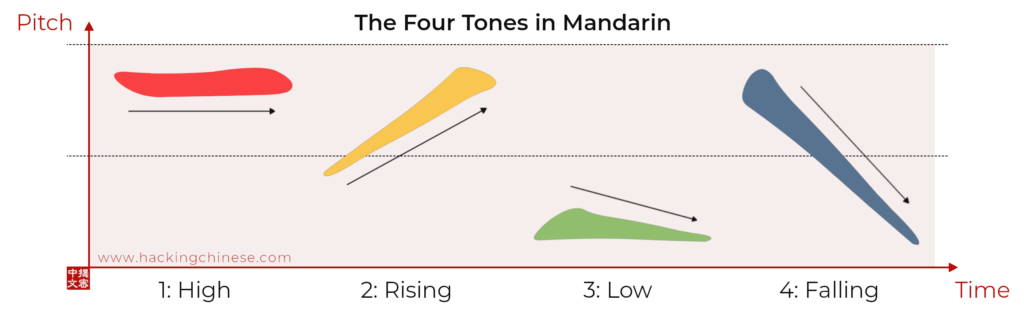
Mandarin Chinese has four primary tones and a neutral tone, each with distinct pitch patterns. Here’s how to recognize them:
- First Tone (High-Level): A steady, high pitch, like singing a musical note (e.g., mā 妈/mother).
- Second Tone (Rising): Starts mid and rises sharply, like asking a question (e.g., má 麻/hemp).
- Third Tone (Low-Dipping): Starts mid, dips low, then rises slightly (e.g., mǎ 马/horse).
- Fourth Tone (Falling): Starts high and drops sharply, like a command (e.g., mà 骂/scold).
Using Visual Aids to Learn Tones
Tone marks and pinyin diagrams help visualize pitch changes. Key tools include:
- Tone Contour Diagrams: Graphs showing pitch movements (e.g., ↗ for the second tone).
- Color-Coded Pinyin: Some apps highlight tones in different colors for easier recall.
- Hand Gestures: Mimicking tone shapes with your hand (e.g., flat → first tone).
Practicing Tones with Minimal Pairs
Minimal pairs are words that differ only by tone, crucial for training your ear. Examples:
- Shī (诗/poem) vs. Shí (十/ten): First vs. second tone contrast.
- Mài (卖/sell) vs. Mǎi (买/buy): Fourth vs. third tone difference.
- Wèn (问/ask) vs. Wén (文/culture): Fourth vs. second tone distinction.
Listening to Native Speakers and Repeating
Imitation is key. Strategies include:
- Shadowing: Repeat sentences immediately after native speakers (e.g., podcasts).
- Tone Drills: Use apps like HelloChinese for tone-specific exercises.
- Recording Yourself: Compare your pronunciation to native audio.
Common Mistakes and How to Avoid Them
Learners often mix up second and third tones or neglect tone changes. Solutions:
- Overemphasize the Third Tone: Practice its full dip (e.g., nǐ 你/you).
- Watch for Tone Sandhi: Third-tone pairs become second tones (e.g., hǎo + ma → háo ma).
- Slow Down: Articulate each tone clearly before speeding up.
Frequently Asked Questions (FAQ)
What are mnemonics and how can they help with Mandarin tones and pronunciation?
Mnemonics are memory aids that use associations, imagery, or patterns to make information easier to recall. For Mandarin tones and pronunciation, mnemonics can link unfamiliar sounds to familiar words, stories, or visuals. For example, the first tone (high and flat) might be visualized as a straight line, like a flying kite, while the third tone (dipping) could be imagined as a valley shape. By creating vivid mental connections, learners can retain tones and sounds more effectively.
How do I create effective mnemonics for Mandarin tones?
To craft effective mnemonics, focus on personal relevance and exaggeration. Associate each tone with a word or image in your native language that mimics its pitch contour. For instance, the second tone (rising) might be linked to the English question Huh? (with an upward inflection). For pronunciation, use sound-alike words—like pairing ma (mother) with mama. The more absurd or emotional the association, the stronger the memory retention.
Can mnemonics work for tricky Mandarin sounds like x, q, or zh?
Absolutely! Mnemonics excel for challenging sounds that don’t exist in English. For x, imagine a hissing snake (sss) combined with a y sound, like she but softer. For q, think of a cheese puff exploding (ch-ee) with a sharp, airy quality. For zh, associate it with the j in jungle but with the tongue curled back. Pairing these sounds with exaggerated visuals or actions reinforces correct articulation.
How often should I practice mnemonics to improve Mandarin tones and pronunciation?
Consistency is key. Practice daily for 10–15 minutes, integrating mnemonics into vocabulary drills. Start by reviewing tone associations (1st = flat, 2nd = rising, etc.) before speaking new words aloud. Over time, the mental shortcuts will fade as your brain internalizes the sounds naturally. Supplement mnemonics with listening exercises (e.g., mimicking native speakers) to refine muscle memory for accurate pronunciation.
Leave a Reply
Related Posts