
Panning: How to keep similar Chinese characters and words separate

Learning Chinese can be both fascinating and challenging, especially when encountering characters and words that look or sound similar. Distinguishing between these near-identical elements is crucial for accurate comprehension and communication. This article explores effective panning techniques to help learners keep similar Chinese characters and words separate. By understanding stroke order, radicals, and contextual clues, you can minimize confusion and enhance your mastery of the language. Whether you're a beginner or an advanced learner, these strategies will sharpen your ability to recognize and recall subtle differences, ensuring clearer and more confident usage in both writing and conversation.
Panning: How to Keep Similar Chinese Characters and Words Separate
1. Understanding the Differences Between Visually Similar Characters
When learning Chinese, many characters look almost identical but have different meanings. For example, 己 (jǐ), 已 (yǐ), and 巳 (sì) differ only by a small stroke but represent distinct concepts. To avoid confusion:
- Study stroke order carefully.
- Use mnemonics to remember subtle differences.
- Practice writing them repeatedly.
| Character | Pinyin | Meaning |
|---|---|---|
| 己 | jǐ | self |
| 已 | yǐ | already |
| 巳 | sì | 6th Earthly Branch |
2. Distinguishing Homophones and Near-Homophones
Chinese has many words that sound alike but differ in meaning and characters. For instance, shì can mean 是 (to be), 事 (matter), or 市 (city). Strategies include:
- Learning tones meticulously.
- Associating words with context (e.g., 市场 shìchǎng means market, while 事情 shìqing means affair).
- Using flashcards with audio.
| Word | Pinyin | Meaning |
|---|---|---|
| 是 | shì | to be |
| 市 | shì | city |
| 事 | shì | matter |
3. Leveraging Radicals to Identify Character Meanings
Radicals (components of characters) hint at meaning or pronunciation. For example:
- 氵 (water radical) appears in 河 (hé, river) and 海 (hǎi, sea).
- 女 (female radical) is in 妈 (mā, mom) and 姐 (jiě, sister).
Focus on grouping characters by radicals to spot patterns.
| Radical | Example Character | Meaning |
|---|---|---|
| 氵 | 河 | river |
| 女 | 姐 | sister |
4. Contextual Clues for Disambiguation
Context helps differentiate similar words. For example:
- 打 (dǎ) can mean hit or play (e.g., 打电话 dǎ diànhuà = make a call).
- 行 (xíng/háng) means okay or bank depending on pronunciation.
Always analyze sentences holistically.
| Word | Context | Meaning |
|---|---|---|
| 打 | 打电话 | make a call |
| 行 | 银行 | bank |
5. Practicing with Minimal Pairs
Minimal pairs are characters/words with one differing element. Examples:
- 人 (rén, person) vs. 入 (rù, enter).
- 午 (wǔ, noon) vs. 牛 (niú, cow).
Drill these pairs via:
- Writing exercises.
- Listening quizzes.
- Spaced repetition.
| Pair | Pinyin | Meaning |
|---|---|---|
| 人 | rén | person |
| 入 | rù | enter |
How to not forget Chinese characters?

Use Spaced Repetition Systems (SRS)
One of the most effective ways to retain Chinese characters is by using spaced repetition systems like Anki or Pleco. These tools schedule reviews based on your memory strength, ensuring you revisit characters just before you forget them.
- Anki: Create flashcards with characters, pinyin, and meanings, and review them daily.
- Pleco: Utilize its built-in SRS feature to practice characters in context.
- Consistency: Dedicate at least 10-15 minutes daily to SRS reviews for long-term retention.
Practice Writing Characters Regularly
Writing Chinese characters by hand reinforces muscle memory and helps you remember their structure. Focus on stroke order and repetition to solidify your understanding.
See AlsoThe benefits of a comprehension-based approach for teaching and learning Chinese- Stroke order: Follow correct stroke sequences to build a natural flow.
- Grid paper: Use practice sheets or grid paper to maintain proportions.
- Daily writing: Write new characters 10-20 times and revisit old ones weekly.
Learn Radicals and Components
Understanding radicals and components breaks characters into manageable parts, making them easier to recall.
- Radicals: Memorize common radicals (e.g., 水 for water-related characters).
- Component analysis: Deconstruct characters into smaller, meaningful parts.
- Mnemonics: Create stories linking components to the character’s meaning.
Read Authentic Materials
Exposure to authentic texts like books, news, or subtitles reinforces character recognition in context.
- Graded readers: Start with texts tailored to your level.
- News apps: Use platforms like The Chairman’s Bao for simplified articles.
- Subtitles: Watch Chinese shows with dual-language subtitles.
Engage in Active Recall
Active recall forces your brain to retrieve characters from memory, strengthening retention.
See AlsoHow is National Day Celebrated in China?- Self-testing: Cover pinyin/meanings and try to recall them.
- Dictation: Listen to words and write the characters.
- Conversation: Use characters in writing or typing during chats.
How do you categorize Chinese characters?
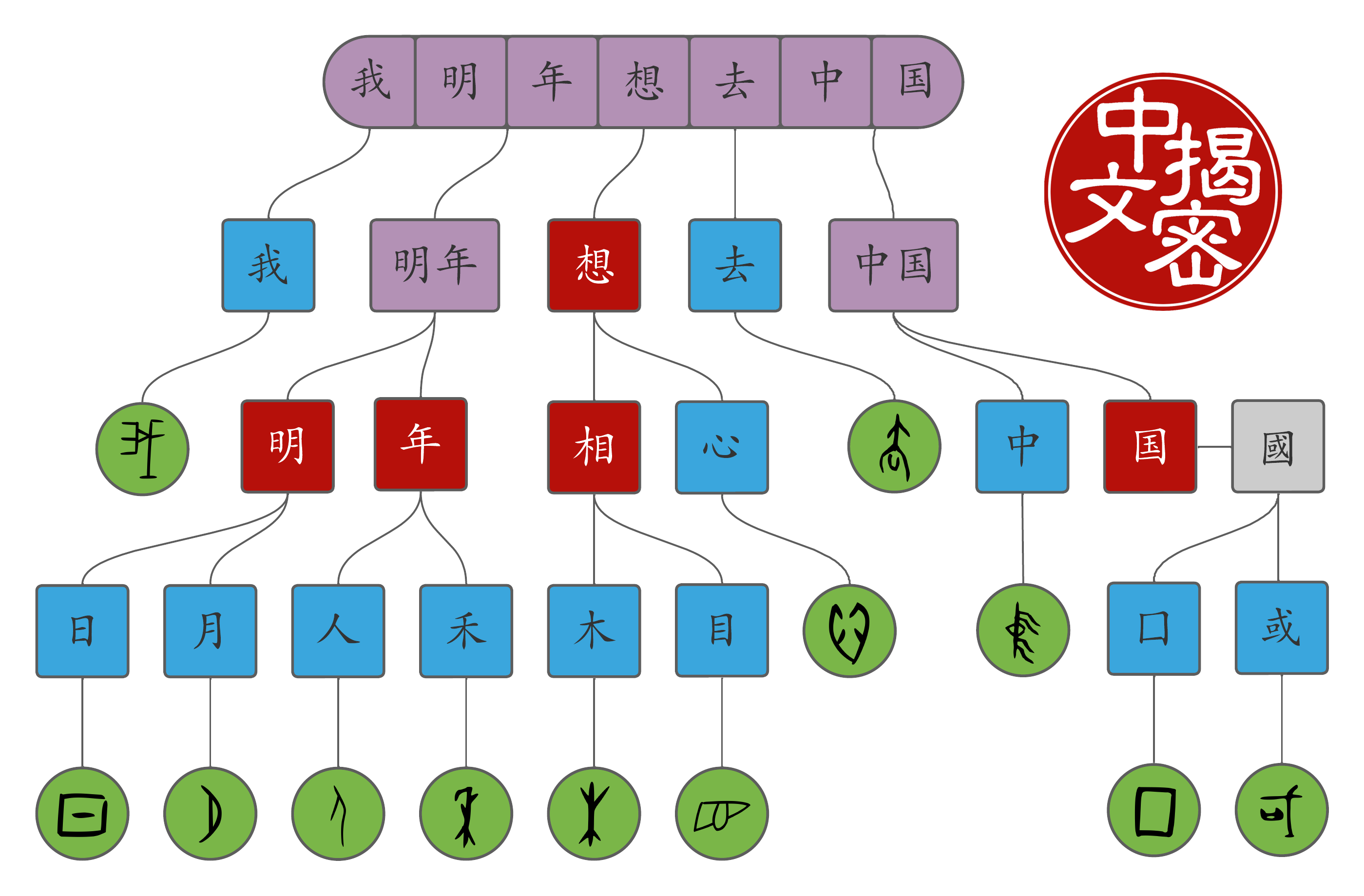
By Structure and Composition
Chinese characters can be categorized based on their structure and composition. The most common classification includes:
- Pictograms: Characters derived from drawings of objects (e.g., 山 mountain resembles peaks).
- Ideograms: Symbols representing abstract ideas (e.g., 上 up or 下 down).
- Compound ideograms: Combinations of pictograms or ideograms to convey meaning (e.g., 明 bright combines 日 sun and 月 moon).
By Phonetic Components
Many characters include phonetic components that hint at pronunciation:
See AlsoTime quality: Studying the right thing at the right time- Phonetic-semantic compounds: A radical indicates meaning, while another part suggests sound (e.g., 妈 mother has 女 female radical and 马 horse for pronunciation).
- Rebus characters: Borrowed for their sound rather than meaning (e.g., 来 come originally depicted wheat but was repurposed).
- Mutually explanatory characters: Pairs sharing phonetic and semantic links (e.g., 考 test and 老 old).
By Radicals
Radicals are key for organizing dictionaries and understanding character meaning:
- 214 Kangxi radicals: The traditional system used in classical dictionaries.
- Simplified radicals: Modern adaptations with fewer strokes (e.g., 讠replaces 言 speech).
- Positional radicals: Appear on the left (e.g., 氵for water-related characters) or top (e.g., 艹for plants).
By Stroke Count
Characters are often sorted by stroke count, crucial for lookup systems:
- Single-stroke characters: Rare (e.g., 一 one).
- Medium complexity: 5–10 strokes (e.g., 好 good).
- High complexity: 15+ strokes (e.g., 龍 dragon).
By Historical Development
Characters evolved through distinct historical stages:
- Oracle bone script: Earliest form (1600–1046 BCE).
- Bronze script: Used in ritual inscriptions.
- Small seal script: Standardized under Qin Dynasty.
Are Chinese characters the same as words?
Are Chinese Characters Equivalent to Words?
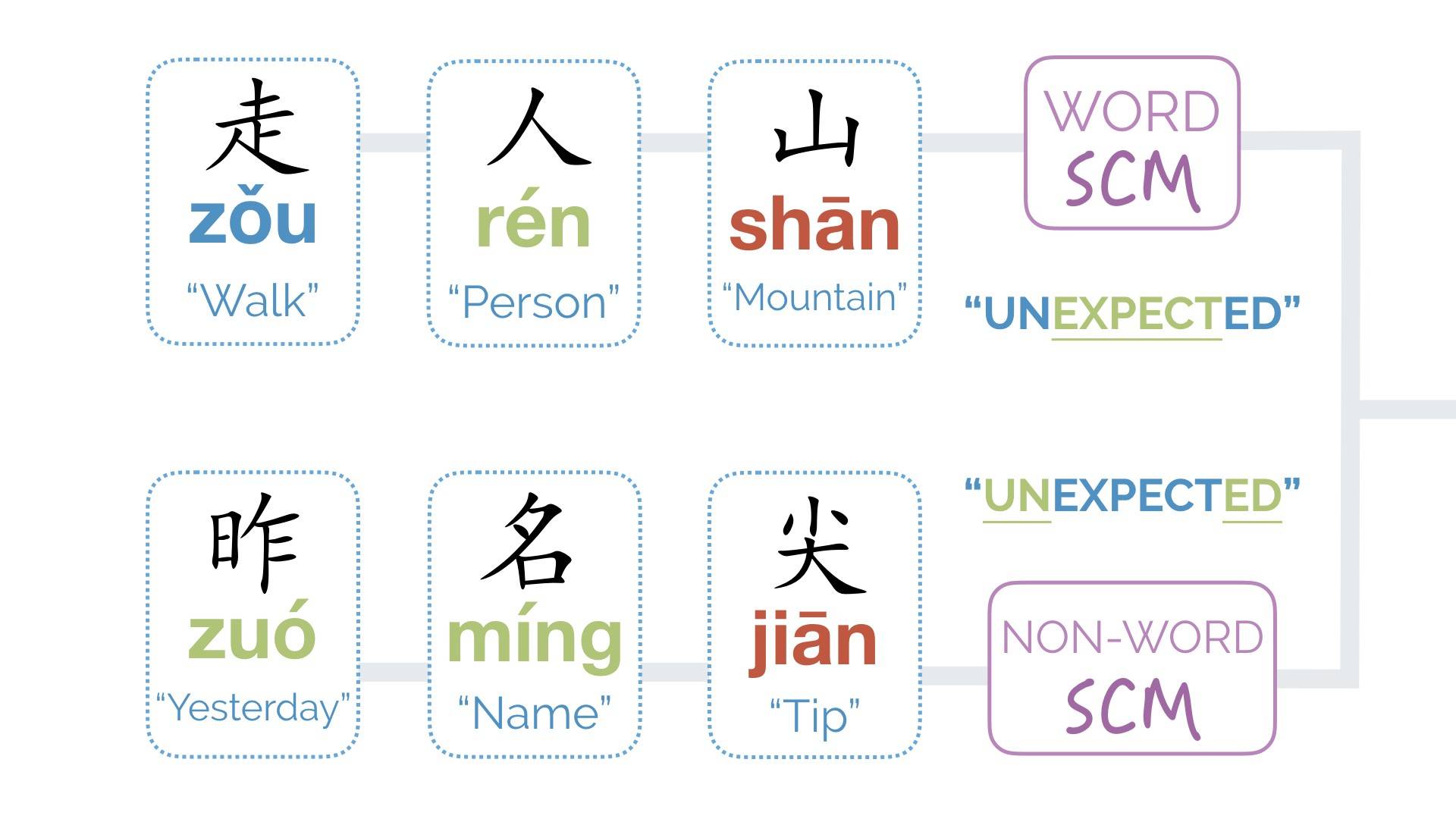
No, Chinese characters are not always equivalent to words. While some characters represent standalone words, others combine with additional characters to form multi-character words. For example:
- Single-character words: 人 (rén) means person.
- Multi-character words: 人民 (rénmín) combines two characters to mean people.
- Context-dependent meaning: The character 行 can mean walk or okay depending on usage.
How Do Chinese Characters Function in Language?
Chinese characters serve as the building blocks of the language, but their role varies:
- Morphemes: Many characters represent meaningful units (morphemes) rather than full words.
- Phonetic and semantic clues: Characters often provide hints about pronunciation or meaning.
- Compound formation: Most modern Chinese words consist of two or more characters.
Can One Chinese Character Be a Word?
Yes, but this is context-dependent:
- Standalone words: 好 (hǎo) means good as a single character.
- Grammatical particles: 的 (de) functions alone as a possessive marker.
- Limited cases: Many single-character words are archaic or poetic in modern usage.
Why Do Many Chinese Words Use Multiple Characters?
Multi-character words dominate modern Chinese due to:
- Precision: More characters reduce ambiguity (e.g., 电脑 for computer vs. 电 for electricity).
- Phonetic clarity: Mandarin has many homophones; extra characters distinguish meanings.
- Historical evolution: Classical Chinese used more single-character words, but modern vocabulary expanded.
How Does Chinese Differ from Alphabetical Languages in This Aspect?
Chinese writing contrasts with alphabetical systems in key ways:
- No spaces between words: Characters flow continuously, requiring context to parse.
- Non-phonetic structure: Characters don’t always directly indicate pronunciation.
- Higher information density: Single characters often convey more meaning than individual letters.
How can I improve my Chinese character recognition?
Practice Writing Characters Regularly
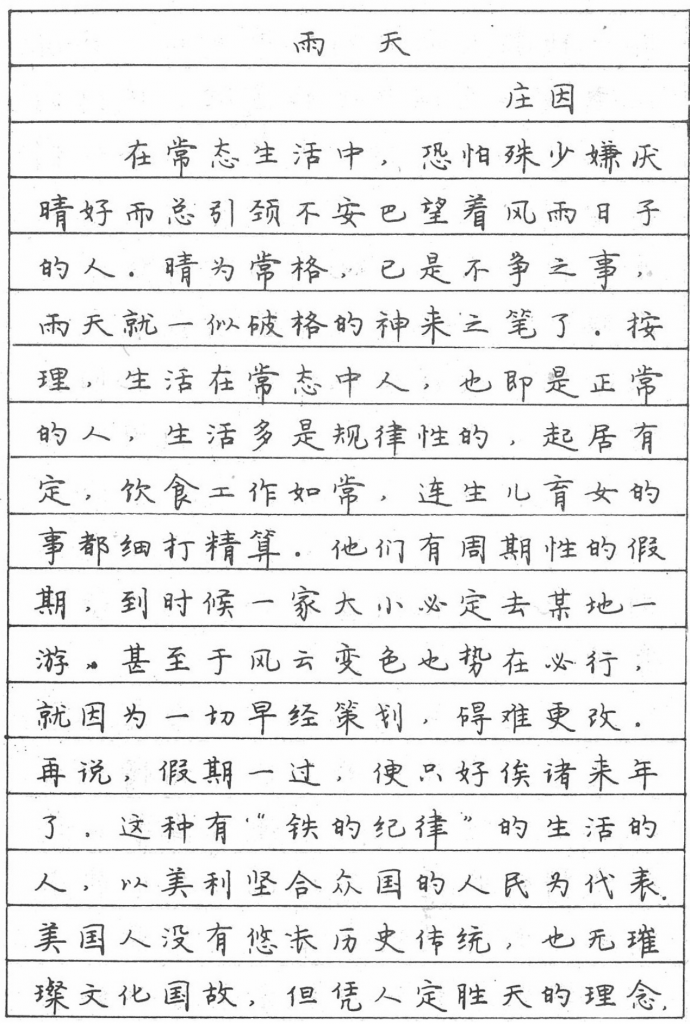
One of the most effective ways to improve Chinese character recognition is by writing them consistently. This helps reinforce memory and understanding of stroke order and structure.
- Write daily: Dedicate at least 15-20 minutes to copying characters by hand.
- Use grid paper: This ensures proper proportions and spacing.
- Focus on radicals: Learn common radicals first, as they form the building blocks of characters.
Use Flashcards and Spaced Repetition
Flashcards are a powerful tool for memorizing characters, especially when combined with spaced repetition systems (SRS) like Anki or Pleco.
- Create custom decks: Focus on characters you struggle with.
- Review consistently: Follow the SRS schedule to optimize retention.
- Include context: Add example sentences or words to understand usage.
Read Authentic Materials
Exposure to real-world texts accelerates character recognition by reinforcing visual memory and context.
- Start simple: Use children's books or graded readers.
- Gradually increase difficulty: Move to news articles or short stories.
- Highlight unknown characters: Note them down and review later.
Leverage Mnemonics and Stories
Associating characters with vivid mental images or stories can make them easier to remember.
- Break down characters: Analyze components and create stories for each part.
- Use apps like Skritter: Many apps include built-in mnemonics.
- Personalize associations: Relate characters to your own experiences for better recall.
Engage in Active Listening and Writing
Combining listening with writing reinforces character recognition through multisensory learning.
- Dictation exercises: Listen to audio and write the characters you hear.
- Watch subtitled content: Follow along with Chinese subtitles to match sounds and characters.
- Use language partners: Practice writing characters based on spoken prompts from a native speaker.
Frequently Asked Questions (FAQ)
What is panning in the context of learning Chinese characters?
Panning is a technique used to differentiate between similar Chinese characters or words by systematically comparing their components, meanings, and usage. This method helps learners avoid confusion by highlighting subtle distinctions, such as stroke order, radicals, or contextual clues. For example, characters like 日 (rì, sun) and 目 (mù, eye) may look alike, but panning involves analyzing their unique features to reinforce memory and accuracy.
Why is panning important for mastering Chinese vocabulary?
Panning is crucial because Chinese has many homophones and visually similar characters, which can lead to misunderstandings. By actively comparing and contrasting these elements, learners develop a deeper understanding of character construction and context. For instance, distinguishing between 买 (mǎi, to buy) and 卖 (mài, to sell) relies on recognizing their radical differences (⺈ vs. 十) and usage in sentences.
How can I effectively practice panning with Chinese characters?
To practice panning, create side-by-side comparisons of confusing characters, noting their radicals, strokes, and meanings. Use flashcards, apps, or writing exercises to reinforce distinctions. For example, group characters like 休 (xiū, rest) and 体 (tǐ, body) and analyze how their components (亻vs. 本) change their meanings. Regular spaced repetition and contextual examples (e.g., sentences) will solidify your recall.
What tools or resources can assist with panning for Chinese learners?
Several tools aid panning, including dictionaries like Pleco, apps such as Skritter, and websites like HanziCraft. These resources break down characters into radicals and strokes, offering mnemonics and comparisons. For example, HanziCraft visually highlights differences between 人 (rén, person) and 入 (rù, enter). Additionally, language exchange partners or tutors can provide real-time feedback to refine your panning skills.
Leave a Reply
Related Posts