
How to best use flashcards to learn Chinese

Learning Chinese can be a rewarding yet challenging endeavor, especially when it comes to mastering characters, tones, and vocabulary. Flashcards have long been a trusted tool for language learners, offering a simple yet effective way to reinforce memory and improve recall. When used strategically, they can significantly enhance your ability to retain Chinese characters, words, and phrases. This article explores the best practices for using flashcards to learn Chinese, from choosing the right format—digital or physical—to incorporating spaced repetition and active recall techniques. Whether you're a beginner or an advanced learner, these tips will help you maximize your study sessions and accelerate your progress.
How to Best Use Flashcards to Learn Chinese Effectively
Flashcards are a powerful tool for learning Chinese, especially for mastering vocabulary, characters, and tones. By using them strategically, you can enhance retention, improve recall, and accelerate your learning process. Below, we explore the best practices for using flashcards to learn Chinese efficiently.
1. Choose the Right Flashcard System
Selecting the right flashcard system is crucial for effective learning. Digital apps like Anki, Pleco, or Quizlet offer spaced repetition, which helps reinforce memory over time. Physical flashcards work well for hands-on learners but lack automation.
See AlsoTop Chinese Brands for Cultural Significance| System | Pros | Cons |
|---|---|---|
| Digital (Anki, Pleco) | Spaced repetition, customizable, portable | Requires device, may have a learning curve |
| Physical Flashcards | Tangible, no tech needed | Manual sorting, less efficient |
2. Focus on High-Frequency Words First
Prioritize learning high-frequency Chinese words to maximize efficiency. Studies show that knowing the top 1,000 words covers about 80% of daily conversations.
| Word Frequency | Coverage |
|---|---|
| Top 500 words | ~70% of spoken Chinese |
| Top 1,000 words | ~80% of spoken Chinese |
3. Include Pinyin, Characters, and Audio
A well-designed flashcard should display the Chinese character, Pinyin, and an audio pronunciation. This reinforces reading, writing, and listening skills simultaneously.
| Component | Importance |
|---|---|
| Character (汉字) | Visual recognition |
| Pinyin (拼音) | Pronunciation guide |
| Audio | Correct tone mastery |
4. Use Mnemonics for Better Retention
Mnemonics help associate Chinese characters with memorable stories or images. For example, the character 休 (xiū, to rest) resembles a person leaning against a tree.
See AlsoChinese Food Made Easy: Stir Fry King Prawn with Broccoli| Character | Mnemonic Example |
|---|---|
| 休 (xiū) | A person (亻) resting under a tree (木) |
| 好 (hǎo) | A woman (女) and child (子) = good |
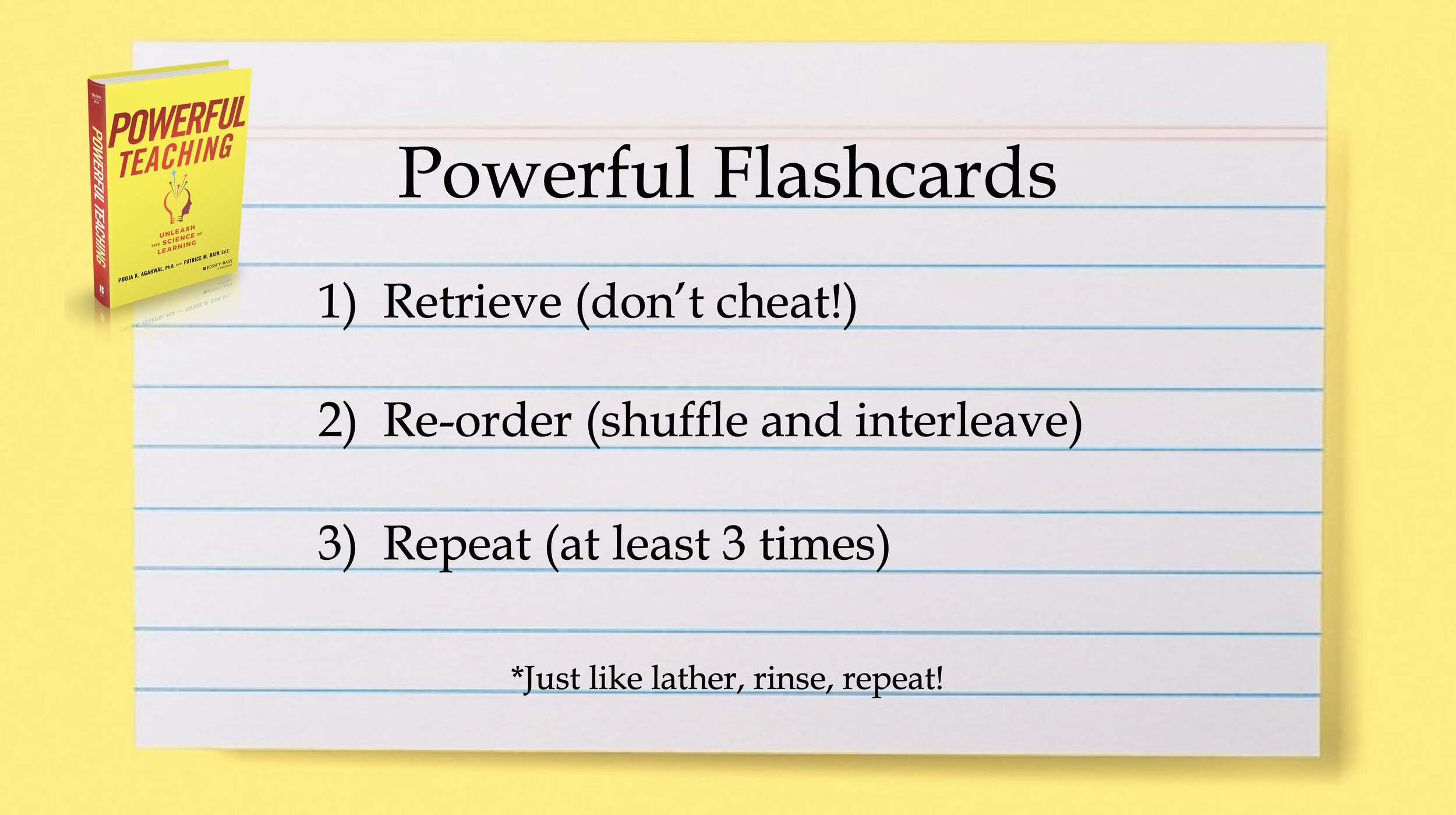
5. Practice Active Recall and Spaced Repetition
Active recall (retrieving information from memory) and spaced repetition (reviewing at increasing intervals) are scientifically proven to improve long-term retention.
| Technique | Benefit |
|---|---|
| Active Recall | Strengthens memory retrieval |
| Spaced Repetition | Reduces forgetting curve |
What is the most efficient way to learn Chinese?
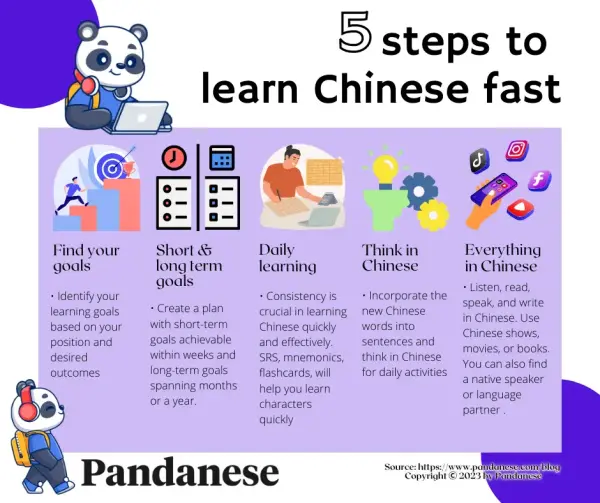
1. Start with the Basics: Pinyin and Tones
The foundation of learning Chinese begins with mastering Pinyin (the romanization system) and the four tones. Without these, pronunciation and comprehension become extremely difficult. Here’s how to approach it:
See AlsoHow to learn Chinese in the long term with intrinsic motivation- Practice Pinyin daily using apps like Pinyin Trainer or YouTube tutorials.
- Focus on tones by listening to native speakers and repeating words aloud.
- Use tone-pair drills to train your ear and mouth for natural speech patterns.
2. Build a Strong Vocabulary with High-Frequency Words
Instead of memorizing random words, prioritize high-frequency vocabulary used in daily conversations. This accelerates practical fluency.
- Learn HSK word lists (the standardized Chinese proficiency test).
- Use flashcards (Anki or Pleco) for spaced repetition.
- Label objects in your environment with their Chinese names.
3. Immerse Yourself in Listening and Speaking
Immersion is key to internalizing the language. Surround yourself with Chinese audio and practice speaking early.
- Watch Chinese dramas, movies, or cartoons with subtitles.
- Listen to podcasts or music and mimic the pronunciation.
- Use language exchange apps (HelloTalk, Tandem) to converse with natives.
4. Master Chinese Characters Step by Step
Characters are challenging but manageable with a systematic approach. Break them into components.
See AlsoChinese Streamer Banned for Eating Too Much at Buffet- Start with radicals (building blocks of characters).
- Learn stroke order to write correctly.
- Use mnemonics or apps like Skritter for retention.
5. Consistent Practice and Real-Life Application
Consistency and real-world use solidify learning. Integrate Chinese into daily routines.
- Set daily goals (e.g., 10 new words, 1 grammar point).
- Join Chinese-speaking communities or forums.
- Keep a journal or diary in Chinese to practice writing.
What is the most efficient way to use flashcards?
How to Organize Flashcards for Maximum Efficiency
To use flashcards efficiently, organization is key. Start by categorizing them into topics or difficulty levels. This ensures you focus on specific areas without feeling overwhelmed. Additionally, use a spaced repetition system (SRS) to schedule reviews at optimal intervals. Here’s how:
See Also7 mistakes I made when writing Chinese characters and what I learnt from them- Group related concepts together to reinforce connections.
- Label categories clearly for quick access.
- Prioritize difficult cards by reviewing them more frequently.
What Is the Best Spaced Repetition Schedule?
Spaced repetition maximizes retention by reviewing material just before you forget it. The Leitner system or digital apps like Anki automate this process. Follow these steps:
- Review new cards daily to establish initial memory.
- Increase intervals gradually (e.g., 1 day, 3 days, 1 week).
- Adjust based on performance—move mastered cards to longer intervals.
How to Write Effective Flashcard Questions?
Well-crafted questions are essential for active recall. Use clear, concise language and avoid overly complex prompts. Here’s how:
- Focus on one concept per card to prevent confusion.
- Use cloze deletions (fill-in-the-blank) for definitions.
- Incorporate images or mnemonics for visual learners.
Should You Use Digital or Physical Flashcards?
Both formats have advantages, but digital flashcards often offer more efficiency. Consider these factors:
- Accessibility: Digital decks sync across devices.
- Automation: Apps handle spaced repetition for you.
- Customization: Physical cards allow tactile learning.
How to Avoid Common Flashcard Mistakes?
Ineffective habits can undermine flashcard use. Avoid these pitfalls:
- Overloading cards with too much information.
- Passive review—always test recall actively.
- Neglecting to update or retire mastered cards.
How effective are flashcards for language learning?

The Science Behind Flashcards and Memory Retention
Flashcards leverage active recall and spaced repetition, two scientifically proven methods for enhancing memory retention. By repeatedly testing your brain to retrieve information, flashcards strengthen neural pathways, making vocabulary and grammar rules stick better.
- Active recall forces the brain to retrieve information, improving long-term retention.
- Spaced repetition schedules reviews at optimal intervals to combat forgetting.
- Visual and textual cues on flashcards engage multiple senses, aiding memorization.
Flashcards for Vocabulary Acquisition
Flashcards are particularly effective for learning new vocabulary. Their simplicity allows learners to focus on word-meaning associations, which is crucial for language proficiency.
- Single-word or phrase flashcards help build a core vocabulary quickly.
- Including example sentences provides contextual learning.
- Images or mnemonics on flashcards can enhance visual memory.
Customization and Personalization of Flashcards
One major advantage of flashcards is their adaptability. Learners can tailor them to their specific needs, making them a versatile tool.
- Digital flashcard apps allow personalized decks based on difficulty.
- Adding audio clips improves pronunciation and listening skills.
- Self-created flashcards ensure relevance to individual learning goals.
Limitations of Flashcards in Language Learning
While effective, flashcards have drawbacks when used in isolation. They may not cover all aspects of language acquisition.
- Flashcards often lack conversational practice, critical for fluency.
- Over-reliance on memorization can neglect grammar rules and syntax.
- Without context, words may be learned in isolation, hindering practical usage.
Integrating Flashcards with Other Learning Methods
To maximize effectiveness, flashcards should be combined with other language-learning strategies.
- Pair flashcards with immersion techniques like watching films or reading books.
- Use them alongside speaking practice to reinforce active usage.
- Supplement with grammar exercises to ensure a balanced approach.
How do you make effective flashcards for language learning?

Choose the Right Flashcard Tool
Selecting the right tool is crucial for creating effective flashcards. Digital options like Anki or Quizlet offer spaced repetition, while physical cards provide tactile learning. Consider these factors:
- Spaced repetition software (SRS): Apps like Anki automate review timing for optimal retention.
- Customizability: Ensure the tool allows adding images, audio, or example sentences.
- Accessibility: Pick a platform you can use across devices for consistent practice.
Focus on High-Frequency Vocabulary
Prioritize words and phrases you’ll encounter often to maximize efficiency. Here’s how:
- Use frequency lists: Start with the most common words in your target language.
- Contextual learning: Group related terms (e.g., food, travel) for better recall.
- Practical phrases: Include full sentences to understand usage, not just isolated words.
Incorporate Multimedia Elements
Enhance memorability by adding visual and auditory cues:
- Images: Attach relevant pictures to create mental associations.
- Audio clips: Record native pronunciations to improve speaking/listening skills.
- Example sentences: Show the word in context to grasp nuances.
Apply Active Recall and Spaced Repetition
These techniques solidify long-term retention:
- Test yourself: Cover the answer and recall it before flipping the card.
- Schedule reviews: Use SRS to revisit cards at increasing intervals.
- Mix old and new cards: Balance reviews with new material to avoid overload.
Keep Cards Simple and Clear
Avoid clutter to ensure quick comprehension:
- One concept per card: Focus on a single word, phrase, or rule.
- Minimal text: Use concise definitions or keywords.
- Clear formatting: Highlight critical parts (e.g., gender markers, verb conjugations).
Frequently Asked Questions (FAQ)
What is the most effective way to organize flashcards for learning Chinese?
To maximize retention, organize your flashcards into thematic categories such as vocabulary, grammar, or characters. For vocabulary, separate words by topics like food, travel, or business. For characters, group them by radicals or stroke order. Spaced repetition systems (SRS) like Anki or Pleco can automate this process, ensuring you review cards at optimal intervals. Additionally, color-coding or tagging cards by difficulty level can help you prioritize challenging material.
How often should I review my flashcards to learn Chinese efficiently?
Consistency is key when using flashcards. Aim to review them daily, even if only for 10-15 minutes. Spaced repetition algorithms will schedule reviews based on your performance, but a general rule is to revisit new cards within 24 hours, then gradually increase the interval. For long-term retention, balance new cards with older reviews to reinforce memory without overwhelming yourself.
Should I include pinyin, characters, or both on my Chinese flashcards?
Including both characters and pinyin is highly recommended, especially for beginners. The character helps with visual recognition, while pinyin aids pronunciation. However, as you advance, consider creating separate cards—one with just the character (testing your recall of meaning and pronunciation) and another with the English translation (testing your ability to write or recognize the character). This dual approach strengthens both reading and writing skills.
How can I make my Chinese flashcards more engaging and memorable?
To enhance engagement, incorporate multimedia elements like audio clips for pronunciation, example sentences, or even images related to the word. Use mnemonics or stories to link characters to their meanings—for example, visualizing the character 木 (tree) as an actual tree. Another technique is to write personalized sentences using the word, as context aids memory. Lastly, gamify your learning by setting daily goals or competing with a study partner.
Leave a Reply
Related Posts