
How many Chinese characters do I need to know to be fluent?

Determining how many Chinese characters are needed to achieve fluency is a common question among learners. While there are over 50,000 characters in existence, fluency doesn’t require mastering them all. For basic literacy, around 1,000 to 2,000 characters are sufficient to understand everyday communication. To read newspapers or novels comfortably, knowledge of 3,000 to 4,000 characters is typically necessary. True fluency, including specialized or classical texts, may demand familiarity with 5,000 or more. However, fluency also depends on context, comprehension, and usage—not just character count. This article explores the benchmarks for proficiency and practical strategies to build your character knowledge effectively.
- How Many Chinese Characters Do You Need to Know to Be Fluent?
- How to write 1, 2, 3, 4, 5, 6, 7, 8, 9, 10 in Chinese?
- Is 500 Chinese characters enough?
-
How many Chinese characters are needed to be considered literate?
- What is the Minimum Number of Chinese Characters for Basic Literacy?
- How Many Characters Are Required for Advanced Chinese Literacy?
- What is the Role of Character Frequency in Chinese Literacy?
- How Does Literacy in Chinese Compare to Other Languages?
- What Are the Official Standards for Chinese Literacy in China?
- How many characters do Chinese people need to know?
- Frequently Asked Questions (FAQ)
How Many Chinese Characters Do You Need to Know to Be Fluent?
1. Understanding the Basics of Chinese Characters
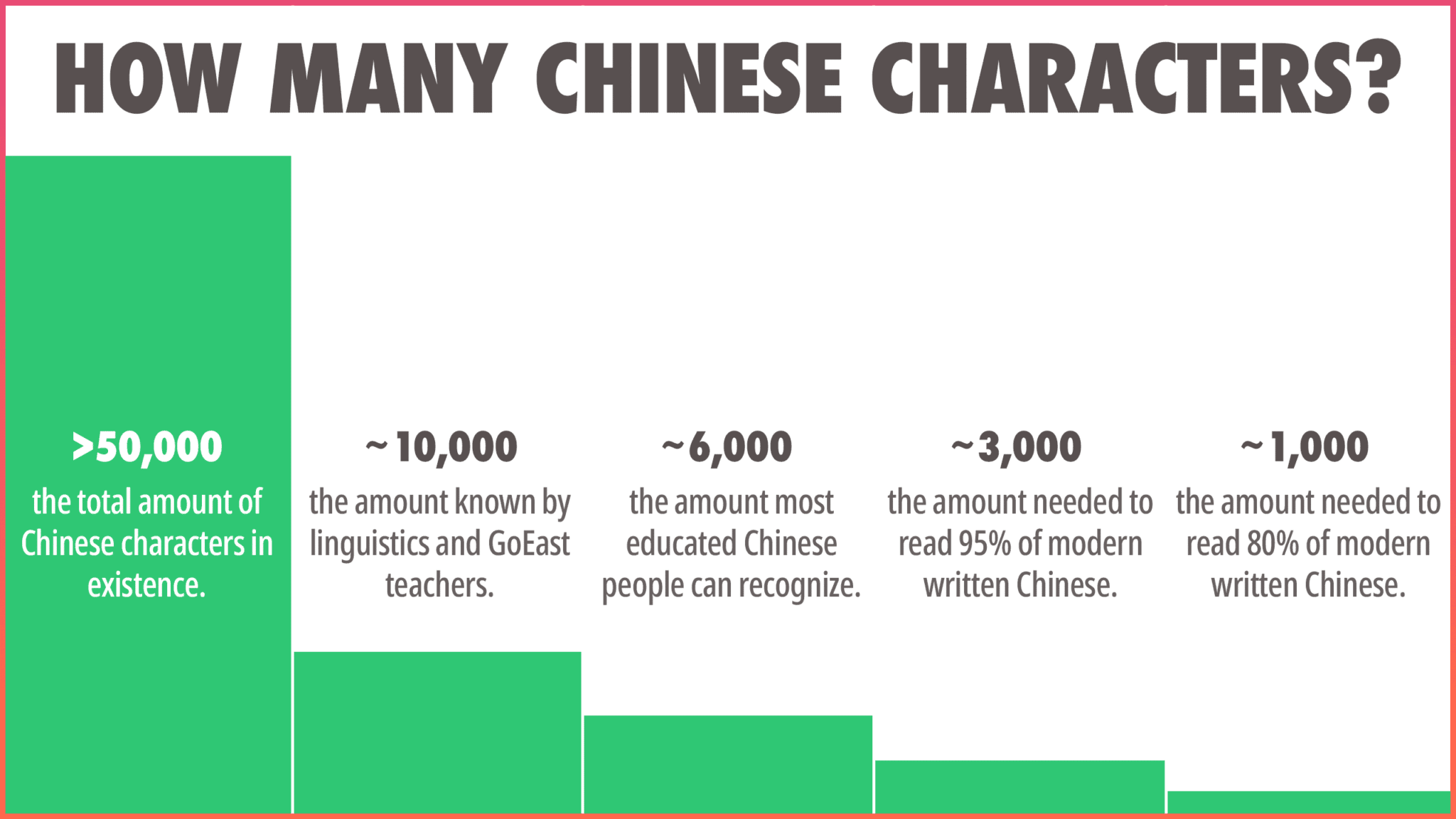
To achieve fluency in Chinese, it's essential to grasp the structure of Chinese characters. Unlike alphabetic languages, Chinese uses logograms, where each character represents a word or a meaningful part of a word. There are over 50,000 characters in existence, but most are rarely used. For basic literacy, knowing around 2,500-3,000 characters is sufficient to understand 95-98% of everyday written content.
| Character Count | Coverage of Written Chinese |
|---|---|
| 1,000 | ~90% |
| 2,500 | ~95-98% |
| 3,500 | ~99% |
2. The Role of HSK Levels in Character Mastery
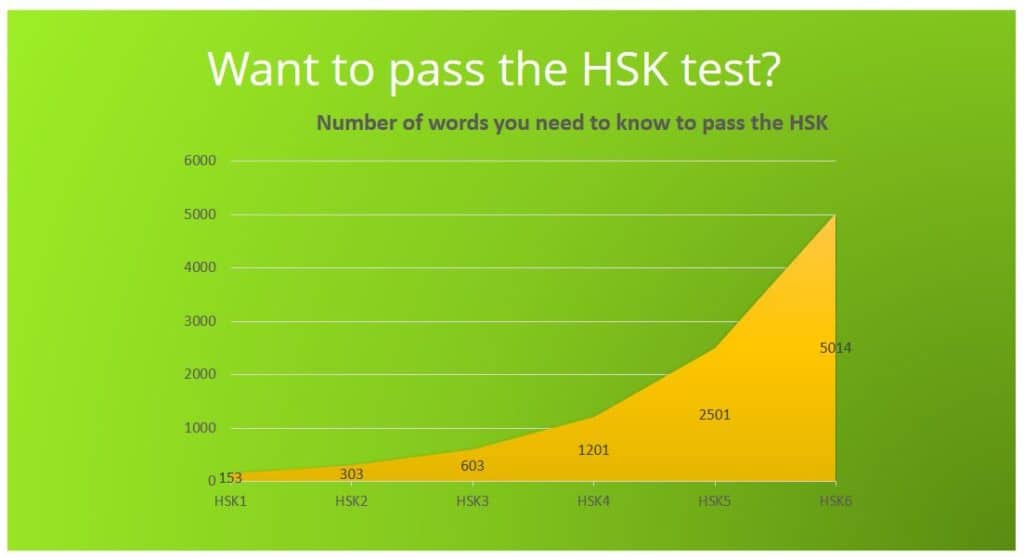
The HSK (Hanyu Shuiping Kaoshi), China's standardized Mandarin proficiency test, provides a guideline for character learning. HSK Level 6, the highest level, requires knowledge of 2,600 characters and 5,000 words. While passing HSK 6 indicates advanced proficiency, true fluency often requires additional exposure to specialized vocabulary and context.
See AlsoChinese Cheng Yu for HSK: The Complete List| HSK Level | Characters Required |
|---|---|
| HSK 1 | 150 |
| HSK 4 | 1,200 |
| HSK 6 | 2,600 |
3. Differences Between Reading and Speaking Fluency
Speaking fluency in Chinese doesn't always correlate with character recognition. Many learners can converse fluently but struggle with reading. To read a newspaper comfortably, you need around 3,000 characters, while spoken fluency may require fewer characters but a strong grasp of pronunciation (Pinyin) and grammar.
| Skill | Characters Needed |
|---|---|
| Basic Conversation | 500-1,000 |
| Newspaper Reading | 3,000+ |
4. Common vs. Rare Characters in Daily Use
Not all characters are equally important. The most frequently used characters appear in 90% of written material. For example, the top 1,000 characters cover about 90% of general texts, while the next 1,500 add another 5-8%. Rare characters are mostly found in literature, historical texts, or technical fields.
| Character Frequency Rank | Coverage |
|---|---|
| Top 1,000 | ~90% |
| Top 2,500 | ~95-98% |
| Top 5,000 | ~99% |
5. Strategies to Learn Characters Efficiently
To master Chinese characters effectively, focus on high-frequency characters first. Use spaced repetition tools like Anki, practice writing to reinforce memory, and engage with authentic materials (news, TV shows, books). Breaking characters into radicals and components can also accelerate learning.
See AlsoHow to improve fluency in Chinese by playing word games| Method | Effectiveness |
|---|---|
| Spaced Repetition | High |
| Writing Practice | Medium-High |
| Contextual Learning | High |
How to write 1, 2, 3, 4, 5, 6, 7, 8, 9, 10 in Chinese?

How to Write Numbers 1-10 in Chinese Characters
Here are the Chinese characters and Pinyin pronunciations for numbers 1 to 10:
- 1: 一 (yī)
- 2: 二 (èr)
- 3: 三 (sān)
- 4: 四 (sì)
- 5: 五 (wǔ)
- 6: 六 (liù)
- 7: 七 (qī)
- 8: 八 (bā)
- 9: 九 (jiǔ)
- 10: 十 (shí)
Understanding Stroke Order for Chinese Numbers
Writing Chinese characters correctly requires following specific stroke orders. Here’s how to write numbers 1-10:
See AlsoShould you throw away your Chinese textbook?- 一 (yī): A single horizontal stroke from left to right.
- 二 (èr): Two horizontal strokes, top first, then bottom.
- 三 (sān): Three horizontal strokes, written from top to bottom.
- 四 (sì): Starts with a vertical stroke, followed by enclosed strokes.
- 五 (wǔ): Begins with a horizontal stroke, then a vertical and diagonal.
Common Uses of Numbers 1-10 in Chinese
Numbers in Chinese are used in various contexts, such as counting, telling time, and prices:
- Counting objects: 一个苹果 (yī gè píngguǒ) – one apple.
- Telling time: 三点 (sān diǎn) – 3 o’clock.
- Shopping: 五块钱 (wǔ kuài qián) – five yuan.
- Phone numbers: Digits are read individually (e.g., 一, 二, 三).
- Age: 我八岁 (wǒ bā suì) – I am eight years old.
Pronouncing Chinese Numbers 1-10 Correctly
Proper pronunciation is key to being understood in Chinese. Here’s a breakdown:
- 一 (yī): Pronounced like ee with a high flat tone.
- 二 (èr): Sounds like are with a falling tone.
- 三 (sān): Similar to sahn with a high flat tone.
- 四 (sì): Like suh with a sharp falling tone.
- 五 (wǔ): Pronounced woo with a dipping tone.
Cultural Significance of Numbers in Chinese
Numbers in Chinese culture often carry symbolic meanings and superstitions:
- 8 (八 – bā): Considered lucky, symbolizing prosperity.
- 4 (四 – sì): Avoided as it sounds like death (死 – sǐ).
- 6 (六 – liù): Represents smoothness and good fortune.
- 9 (九 – jiǔ): Associated with longevity and eternity.
- 10 (十 – shí): Symbolizes completeness and perfection.
Is 500 Chinese characters enough?

Is 500 Chinese Characters Enough for Basic Communication?
While 500 Chinese characters may seem limited, they can cover a significant portion of everyday communication. Here’s why:
- High-frequency characters: Many common words and phrases rely on a core set of characters, making 500 sufficient for basic interactions.
- Contextual understanding: Even with fewer characters, context helps convey meaning, especially in spoken conversations.
- Limited writing: For short messages or notes, 500 characters may suffice, but longer texts will require more.
Can You Read Simple Texts with 500 Chinese Characters?
Reading simple texts like children’s books or basic articles is possible with 500 characters, but challenges remain:
- Common vocabulary: Many beginner materials use repetitive, high-frequency characters within this range.
- Guessing meaning: Combining known characters can help infer unfamiliar words, but accuracy varies.
- Limited comprehension: Complex sentences or specialized topics will likely require additional characters.
How Does 500 Chinese Characters Compare to HSK Levels?
The HSK (Hanyu Shuiping Kaoshi) framework provides a useful benchmark for character knowledge:
- HSK 1-2: Covers ~300 characters, making 500 characters slightly above beginner level.
- Intermediate gaps: HSK 3-4 require ~600-1,200 characters, indicating 500 is still foundational.
- Functional limitations: While useful, 500 characters alone won’t meet higher HSK standards.
Is 500 Chinese Characters Sufficient for Travel in China?
For travel purposes, 500 characters can be practical but may fall short in certain situations:
- Essential phrases: Directions, greetings, and basic requests often use fewer than 100 characters.
- Signs and menus: Recognizing key characters aids navigation, but varied regional terms may cause confusion.
- Unexpected scenarios: Medical emergencies or complex transactions may require broader vocabulary.
What Are the Limitations of Knowing Only 500 Chinese Characters?
Relying solely on 500 characters has notable drawbacks:
- Restricted expression: Nuanced opinions or detailed descriptions become difficult.
- Reading barriers: Newspapers, literature, and formal documents typically use 2,000+ characters.
- Learning plateau: Progress may stall without expanding character knowledge beyond this threshold.
How many Chinese characters are needed to be considered literate?
What is the Minimum Number of Chinese Characters for Basic Literacy?
To achieve basic literacy in Chinese, a learner typically needs to know around 1,000 to 1,500 characters. This range allows comprehension of approximately 90% of everyday written material, such as newspapers, simple books, and online content. Here’s why:
- 1,000 characters: Covers about 90% of characters used in daily communication.
- 1,500 characters: Enhances understanding of more complex texts and specialized vocabulary.
- HSK 4 level: Requires 1,200 characters, aligning with intermediate proficiency.
How Many Characters Are Required for Advanced Chinese Literacy?
Advanced literacy in Chinese demands knowledge of 3,000 to 5,000 characters. This level enables reading literary works, academic papers, and professional documents with ease. Key points include:
- 3,000 characters: Covers 99% of modern written Chinese, including most newspapers and novels.
- 5,000 characters: Essential for classical Chinese or highly specialized fields.
- HSK 6 level: Requires 2,600 characters, but advanced learners often exceed this.
What is the Role of Character Frequency in Chinese Literacy?
Understanding character frequency is crucial for efficient learning. The most common 2,500 characters account for 98% of written content. Here’s how frequency impacts literacy:
- Top 500 characters: Used in 75% of daily texts.
- Top 1,000 characters: Cover 90% of general usage.
- Low-frequency characters: Rarely encountered outside specialized contexts.
How Does Literacy in Chinese Compare to Other Languages?
Chinese literacy differs significantly from alphabetic languages due to its logographic writing system. Key comparisons include:
- Memorization: Chinese requires learning thousands of unique characters, unlike phonetic systems.
- Contextual learning: Characters often derive meaning from combinations, adding complexity.
- Time investment: Achieving fluency takes longer compared to languages with smaller alphabets.
What Are the Official Standards for Chinese Literacy in China?
The Chinese government sets official standards for literacy, which vary by education level and purpose. Key benchmarks include:
- Elementary school: Students learn 2,500 characters by graduation.
- High school: Expands to 3,500 characters for broader comprehension.
- Adult literacy: Defined as knowing 2,000 characters for rural areas and 3,000 for urban regions.
How many characters do Chinese people need to know?
How Many Chinese Characters Are Essential for Daily Use?
For daily communication, a Chinese person typically needs to know around 2,500 to 3,000 characters. This covers about 99% of written material in newspapers, books, and online content. Here’s a breakdown:
- Basic literacy: 1,500 characters allow reading simple texts.
- Intermediate level: 2,500 characters cover most everyday needs.
- Advanced fluency: 3,000+ characters are needed for specialized or literary content.
What Is the Official Chinese Character Standard for Literacy?
The Chinese government defines literacy as knowing 2,000 characters for rural areas and 3,000 characters for urban residents. Key points:
- HSK exams: Level 6 (highest) tests 2,600 characters.
- Education system: Students learn 3,500+ characters by high school.
- Professional needs: Fields like law or medicine may require 4,000+.
How Many Characters Do Native Chinese Speakers Recognize?
Native speakers often recognize 5,000 to 6,000 characters, though they actively use fewer. Details:
- Passive knowledge: Many characters are understood but rarely written.
- Regional variations: Cantonese or Classical Chinese may add extra characters.
- Age factor: Older generations may know more traditional characters.
How Many Characters Are in the Chinese Dictionary?
Modern dictionaries list 50,000+ characters, but most are archaic or obscure. Highlights:
- Common use: Only 8,000-10,000 appear in modern texts.
- Historical texts: Scholars may study 20,000+ for research.
- Computer encoding: Unicode includes 80,000+ for compatibility.
Can You Function in China Knowing Only 1,000 Characters?
Knowing 1,000 characters allows basic survival but limits comprehension. Key considerations:
- Everyday tasks: Menus, signs, and simple messages are manageable.
- Gaps in understanding: News or formal documents will be challenging.
- Learning curve: Adding 500-1,000 more significantly improves fluency.
Frequently Asked Questions (FAQ)
How many Chinese characters are needed to achieve fluency?
Fluency in Chinese is a complex goal that depends on more than just the number of characters you know. However, a general benchmark is around 3,000 to 5,000 characters, which covers approximately 95-99% of written material in modern Chinese. This range allows you to read newspapers, books, and most everyday texts comfortably. Keep in mind that fluency also requires a strong grasp of grammar, vocabulary, and cultural context, not just character recognition.
Can I be fluent if I only know the most common 1,000 Chinese characters?
Knowing 1,000 characters is a solid foundation, but it may not be enough for full fluency. While this number covers about 90% of basic written content, you’ll likely struggle with more specialized or formal texts. For conversational fluency, listening and speaking skills are equally important, so focusing solely on characters won’t guarantee proficiency. To achieve true fluency, aim for at least 2,500-3,000 characters combined with practical language use.
How long does it take to learn enough Chinese characters for fluency?
The time required varies based on learning methods, consistency, and prior experience. On average, mastering 3,000-5,000 characters can take 3-5 years of dedicated study. Using techniques like spaced repetition systems (SRS) and immersive practice can accelerate progress. However, fluency isn’t just about memorization—regular reading, writing, and conversation are essential to retain and apply what you learn effectively.
Is it possible to focus only on spoken Chinese and skip learning characters?
Yes, you can achieve spoken fluency without mastering characters, especially if your goal is conversational communication. However, this approach limits your ability to engage with written materials, formal documents, or cultural texts. For full fluency, learning characters is highly recommended, as they provide deeper insights into the language’s structure and history. If time is limited, prioritize pinyin and listening skills first, then gradually incorporate characters.
Leave a Reply
Related Posts