
When spaced repetition fails, and what to do about it

Spaced repetition is a powerful learning technique, but it isn’t foolproof. Despite its effectiveness for memorization, there are situations where it falls short—whether due to poor implementation, lack of engagement, or the complexity of the material. When spaced repetition fails, learners may feel frustrated or stuck, wondering why their efforts aren’t yielding results. Understanding these limitations is crucial to adapting the method or supplementing it with other strategies. This article explores common reasons why spaced repetition might not work as expected and offers practical solutions to overcome these challenges, ensuring your study sessions remain productive and effective.
When Spaced Repetition Fails and How to Address It
Common Reasons Why Spaced Repetition Fails
Spaced repetition is a powerful learning technique, but it doesn't always work as expected. Some common reasons for failure include inconsistent review schedules, poorly formulated flashcards, or lack of engagement with the material. If reviews are skipped or delayed, the algorithm can't reinforce memory effectively. Additionally, vague or overly complex flashcards make retention harder. Lastly, passive learning without active recall reduces effectiveness.
| Issue | Solution |
|---|---|
| Inconsistent reviews | Set reminders and stick to a schedule |
| Bad flashcard design | Use clear, concise questions and answers |
| Lack of engagement | Actively test understanding, not just recognition |
How to Adjust Spaced Repetition Intervals
If spaced repetition isn't working, adjusting the intervals may help. Most apps use algorithms like SM-2 or Anki's FSRS, but these can be customized. If forgetting happens too often, shorten intervals. If reviews feel too easy, extend them. Some learners benefit from a gradual increase in spacing, while others need more frequent reinforcement early on.
See AlsoIs Chinese difficult to learn?| Problem | Adjustment |
|---|---|
| Forgetting too quickly | Decrease interval multiplier |
| Too many easy reviews | Increase interval modifier |
| Uneven retention | Manually adjust difficult cards |
Alternative Techniques When Spaced Repetition Isn't Enough
Sometimes, spaced repetition alone isn't sufficient. Combining it with other methods can improve results. Active recall through self-testing, interleaving different topics, and elaborative encoding (linking new info to existing knowledge) can strengthen memory. Additionally, teaching the material to someone else or using mnemonics may help.
| Technique | How It Helps |
|---|---|
| Active Recall | Forces deeper retrieval practice |
| Interleaving | Prevents topic overfitting |
| Elaborative Encoding | Creates stronger neural connections |
Identifying and Fixing Poor-Quality Flashcards
One major reason spaced repetition fails is due to bad flashcards. A good flashcard should be simple, specific, and meaningful. Avoid long paragraphs, ambiguous questions, or unrelated facts. Instead, use cloze deletions, image occlusion, or question-answer pairs that test understanding, not just rote memorization.
| Flashcard Mistake | Improvement |
|---|---|
| Overly complex | Break into simpler cards |
| Vague questions | Make questions precise |
| Passive recognition | Require active recall |
When to Take a Break or Change Learning Strategies
If spaced repetition consistently fails despite adjustments, it may be time to reassess learning methods. Fatigue, burnout, or mismatched material can hinder progress. Taking short breaks, switching to project-based learning, or using different memorization techniques (like mind mapping) might be more effective in some cases.
See AlsoHow many Chinese characters do I need to know to be fluent?| Symptom | Possible Solution |
|---|---|
| Frequent frustration | Take a short break |
| Plateau in progress | Try a different study method |
| Lack of motivation | Apply learning to real-world tasks |
What is an alternative to spaced repetition?
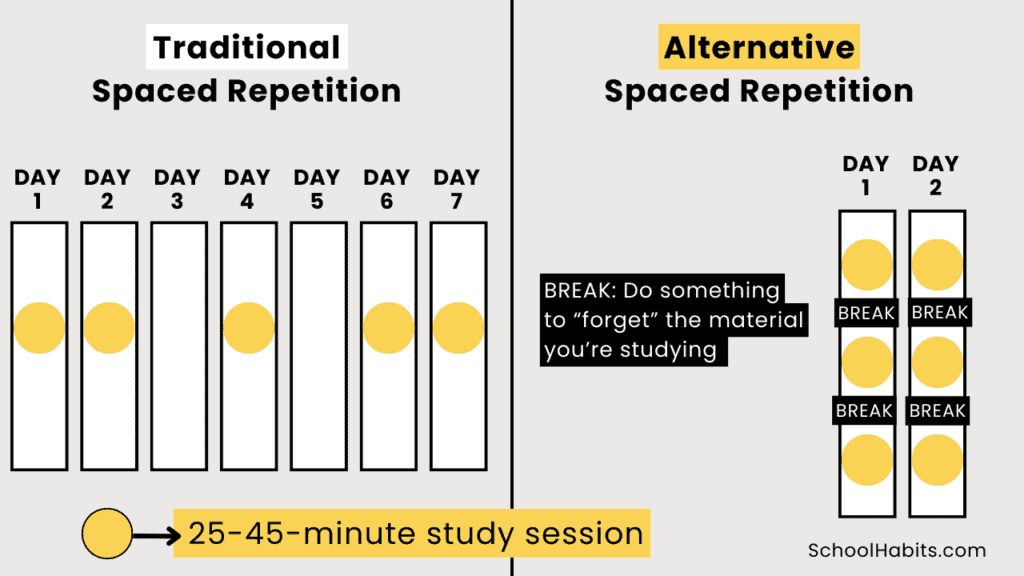
Active Recall Techniques
Active recall is a powerful alternative to spaced repetition, where learners actively retrieve information from memory rather than passively reviewing it. This method strengthens long-term retention by forcing the brain to reconstruct knowledge. Key approaches include:
- Self-testing: Use flashcards or quizzes to challenge memory without hints.
- Closed-book summarization: Write down everything you remember about a topic without references.
- Teach-back method: Explain concepts aloud as if teaching someone else.
Interleaved Practice
Interleaving mixes different topics or skills during study sessions, contrasting with spaced repetition’s focus on one subject. This enhances problem-solving and adaptability. Examples include:
See Also10 Most Useful Chinese Internet Slang Words- Alternating subjects: Switch between math, history, and science in a single session.
- Varied problem types: Practice related but distinct problems (e.g., algebra and geometry).
- Randomized order: Avoid predictable sequences to keep the brain engaged.
Elaborative Interrogation
This method involves asking why questions to deepen understanding. It’s more explanatory than spaced repetition’s rote review. Strategies include:
- Linking to prior knowledge: Connect new facts to existing mental models.
- Creating cause-effect chains: Break down processes step-by-step.
- Questioning assumptions: Challenge how or why something works.
Dual Coding
Dual coding combines verbal and visual information to enhance memory, differing from spaced repetition’s text-heavy approach. Effective tactics are:
- Diagrams and charts: Represent concepts visually alongside notes.
- Symbolic imagery: Use icons or metaphors to symbolize ideas.
- Narrated sketches: Draw while verbally explaining the material.
Chunking and Mnemonics
Breaking information into chunks or using mnemonic devices can bypass the need for repetitive review. Practical applications:
- Acronyms: Create memorable abbreviations (e.g., HOMES for the Great Lakes).
- Rhymes or songs: Turn data into rhythmic patterns.
- Pattern recognition: Group similar items (e.g., dates, formulas) into categories.
What are the disadvantages of spaced repetition?
Time-Consuming Initial Setup
One of the main disadvantages of spaced repetition is the time-consuming initial setup. Creating high-quality flashcards or study materials requires significant effort before the actual learning begins.
- Customization takes time, especially for complex subjects.
- Inputting large volumes of information can be tedious.
- Poorly designed flashcards may lead to ineffective learning.
Over-Reliance on Algorithmic Scheduling
Spaced repetition systems rely heavily on algorithms to schedule reviews, which may not always align with individual learning needs.
- The algorithm may over-prioritize easy cards while neglecting harder ones.
- Learners might ignore contextual learning in favor of rote memorization.
- Some topics require flexibility, which rigid scheduling lacks.
Potential for Passive Learning
Spaced repetition can encourage passive learning if not used correctly, reducing deeper understanding.
- Memorizing facts without comprehension limits critical thinking.
- Learners may focus on recall rather than application.
- Lack of engagement with the material can lead to superficial knowledge.
Risk of Burnout or Boredom
Repeating the same material frequently can lead to mental fatigue or disengagement.
- Monotonous review sessions may cause loss of motivation.
- Seeing the same cards repeatedly can feel repetitive and dull.
- Without variety, learners may abandon the method altogether.
Not Suitable for All Subjects
Spaced repetition works best for fact-based learning but struggles with abstract or skill-based topics.
- Ineffective for subjects requiring practical application, like music or sports.
- Less useful for conceptual understanding beyond memorization.
- May not support creative or open-ended learning tasks.
How can I improve my spaced repetition?
Optimize Your Spaced Repetition Schedule
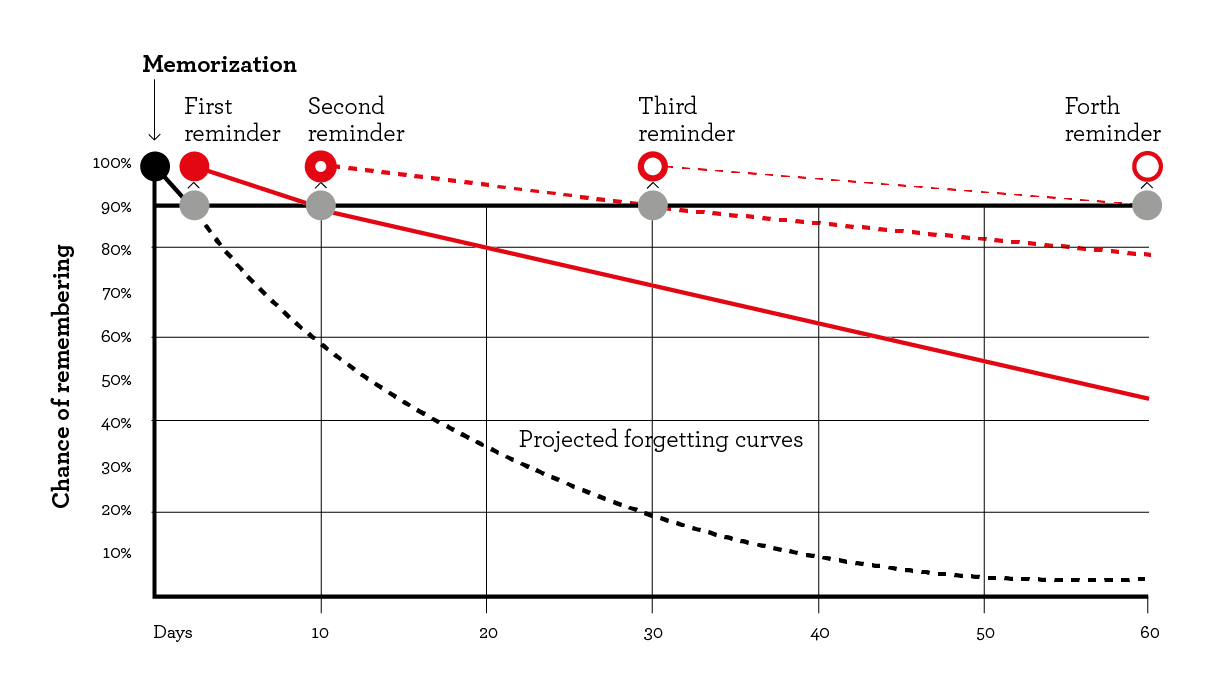
To improve your spaced repetition, focus on optimizing the timing of your review sessions. The key is to review material just before you're about to forget it. Here’s how:
- Use algorithms: Apps like Anki or SuperMemo adjust intervals based on your performance.
- Start with shorter intervals: Review new material within 24 hours, then gradually increase gaps.
- Adjust manually: If you struggle with certain items, reduce the interval; if too easy, extend it.
Prioritize High-Value Information
Not all material deserves equal attention. Focus on high-yield content to maximize efficiency:
- Tag difficult cards: Identify and review challenging concepts more frequently.
- Eliminate low-priority items: Remove or deprioritize information you’ve mastered or rarely need.
- Group related topics: Cluster similar ideas to reinforce connections during reviews.
Active Recall Techniques
Combine spaced repetition with active recall for deeper retention:
- Ask questions: Frame flashcards as questions to force retrieval.
- Close-book testing: Attempt to recall material without hints before checking answers.
- Explain aloud: Verbalizing concepts strengthens memory pathways.
Leverage Multimedia and Context
Enhance retention by diversifying how you engage with material:
- Add images or audio: Multisensory input improves recall.
- Use real-world examples: Link abstract ideas to concrete scenarios.
- Change environments: Study in different locations to create varied memory cues.
Track and Analyze Performance
Regularly assess your progress to refine your spaced repetition strategy:
- Monitor success rates: Track how often you recall items correctly.
- Identify weak spots: Focus on areas with consistent errors.
- Experiment with intervals: Test shorter or longer gaps to find the optimal cadence.
What is the law of spaced repetition?

The Science Behind Spaced Repetition
The law of spaced repetition is a learning technique rooted in cognitive psychology, which suggests that information is better retained when reviewed at increasing intervals over time. This method leverages the spacing effect, a phenomenon where the brain encodes knowledge more effectively when exposure is spread out rather than crammed. Key principles include:
- Optimal timing: Reviews are scheduled based on forgetting curves to reinforce memory before decay.
- Active recall: Engaging the brain to retrieve information strengthens neural pathways.
- Adaptability: Intervals adjust based on individual performance and material difficulty.
How Spaced Repetition Enhances Memory Retention
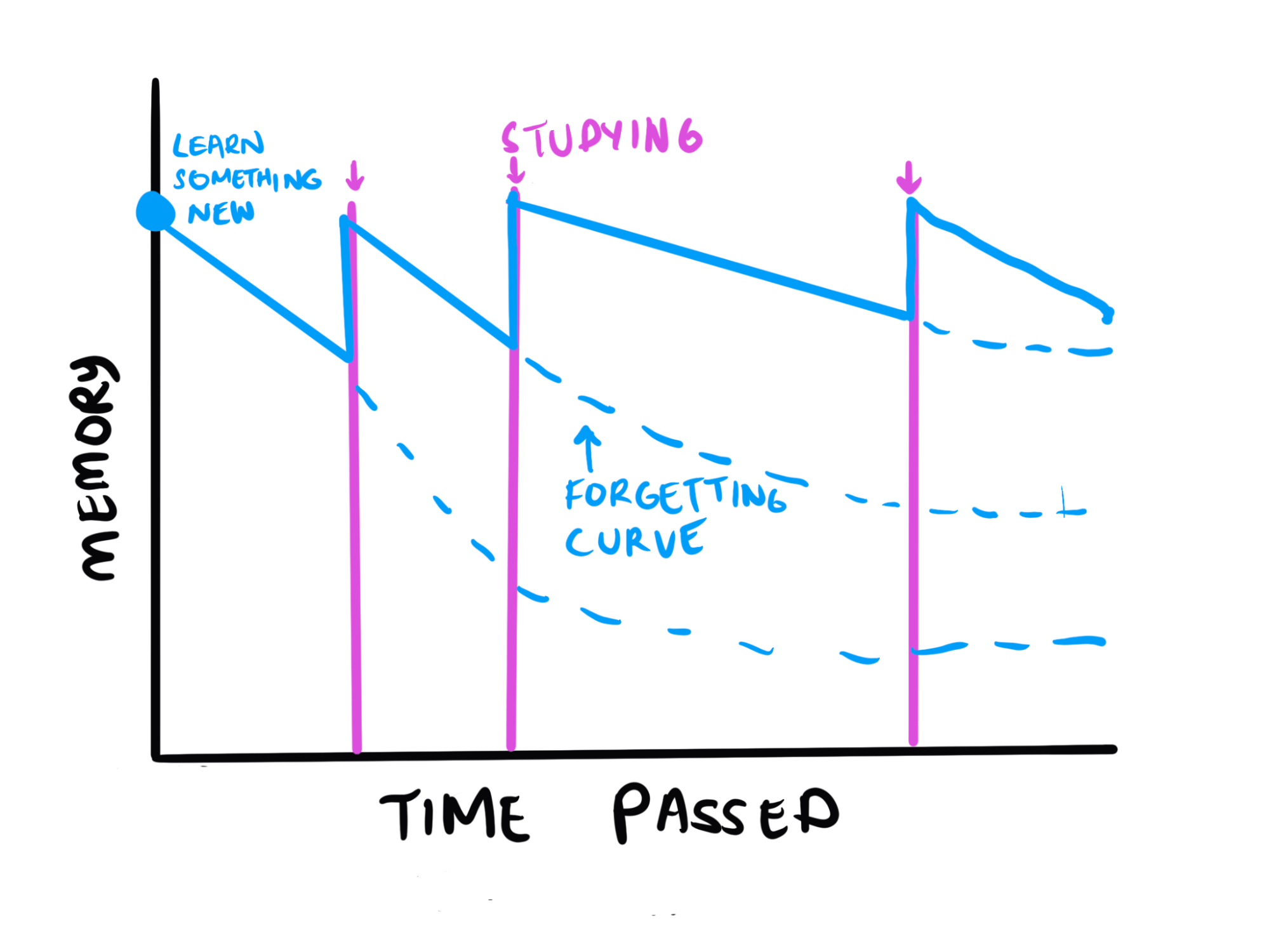
Spaced repetition combats the Ebbinghaus forgetting curve, which shows how memories fade without reinforcement. By strategically timing reviews, it ensures long-term retention. Benefits include:
- Reduced study time: Focuses effort on material likely to be forgotten.
- Higher accuracy: Repeated retrieval solidifies correct information.
- Scalability: Works for languages, medical studies, and technical subjects.
Tools and Techniques for Implementing Spaced Repetition
Modern tools like Anki, SuperMemo, and Quizlet automate interval scheduling. Effective techniques involve:
- Flashcards: Digital or physical cards with question-answer pairs.
- Leitner system: Cards move between boxes based on recall success.
- Custom algorithms: Apps adjust intervals using user performance data.
Common Misconceptions About Spaced Repetition
Despite its efficacy, myths persist. Clarifications include:
- Not just for rote memorization: Applies to conceptual learning when paired with understanding.
- No one-size-fits-all intervals: Personalization is key.
- Requires consistency: Sporadic use undermines benefits.
Research and Evidence Supporting Spaced Repetition
Studies validate its superiority over massed practice. Highlights:
- Meta-analyses: Show significant improvements in retention rates.
- Neuroscientific findings: Links spaced practice to synaptic strengthening.
- Real-world applications: Used by medical students and language learners globally.
Frequently Asked Questions (FAQ)
Why does spaced repetition sometimes fail to work effectively?
Spaced repetition is a powerful learning technique, but it can fail for several reasons. One common issue is inconsistent review schedules, where learners skip sessions or delay reviews, disrupting the algorithm's effectiveness. Another factor is poorly designed flashcards—if the content is too complex, vague, or lacks context, retention suffers. Additionally, lack of engagement during reviews, such as passive reading instead of active recall, can undermine the method. Lastly, cognitive overload from too many cards at once may overwhelm the brain, reducing long-term retention.
What are the signs that spaced repetition isn't working for me?
If you notice frequent forgetting of material you've reviewed multiple times, it’s a red flag. Other signs include dreading review sessions or feeling mentally exhausted after them, which may indicate ineffective card design or excessive workload. Plateaus in progress, where you stop seeing improvement despite regular reviews, also suggest the method isn’t optimizing your learning. Finally, if you’re guessing answers instead of recalling them, your flashcards may need refinement.
How can I fix my spaced repetition routine when it’s not working?
First, audit your flashcards—simplify complex cards, add visuals, or break them into smaller chunks. Ensure each card tests one clear concept. Next, adjust the intervals; if reviews feel too easy or too hard, tweak the spacing settings in your app. Incorporate active recall techniques like writing answers before flipping cards. Also, balance your workload by limiting new cards per day and prioritizing difficult material. Finally, combine spaced repetition with other methods, like elaboration or teaching the material, to reinforce learning.
Are there alternatives if spaced repetition consistently fails for me?
Yes! If spaced repetition isn’t yielding results, try interleaved practice, mixing different topics to strengthen connections. Elaborative interrogation, where you explain why something works, can deepen understanding. Retrieval practice through quizzes or summarizing without notes is another effective option. For hands-on learners, applying knowledge in real-world scenarios may work better than flashcards. Experiment to find what aligns with your learning style, and remember that combining methods often works best.
Leave a Reply
Related Posts