
Chinese Cheng Yu for HSK: The Complete List

Mastering Chinese idioms, or cheng yu, is essential for anyone preparing for the HSK exams. These four-character expressions carry deep cultural meaning and are frequently tested in advanced levels. Cheng yu not only enrich your vocabulary but also enhance your understanding of Chinese history and philosophy. This comprehensive guide provides a complete list of cheng yu relevant to the HSK, along with clear explanations, usage examples, and pronunciation tips. Whether you're aiming for HSK 4, 5, or 6, mastering these idioms will boost your fluency and confidence. Dive in to discover the key cheng yu that will help you excel in your Chinese language journey.
Chinese Cheng Yu for HSK: The Complete List
What Are Cheng Yu and Why Are They Important for HSK?
Cheng Yu (成语) are traditional Chinese idioms, usually composed of four characters, that convey profound meanings, historical stories, or moral lessons. They are essential for HSK (Hanyu Shuiping Kaoshi) because they appear frequently in advanced levels (HSK 4-6) and reflect cultural depth and linguistic richness. Mastering them improves reading comprehension, writing skills, and spoken fluency in Mandarin.
| Key Aspect | Importance for HSK |
|---|---|
| Cultural Context | Helps understand Chinese history and values |
| Vocabulary Expansion | Enhances word retention and usage |
| Exam Relevance | Tested in reading and writing sections |
Top 10 Most Common Cheng Yu in HSK Exams
Certain Cheng Yu appear more frequently in HSK exams due to their practicality and cultural significance. Here are 10 essential idioms to prioritize:
See Also7 Major Differences Between Mandarin and Cantonese1. 一举两得 (yī jǔ liǎng dé) – Kill two birds with one stone
2. 画蛇添足 (huà shé tiān zú) – To overdo something
3. 守株待兔 (shǒu zhū dài tù) – Wait for windfalls
4. 对牛弹琴 (duì niú tán qín) – Cast pearls before swine
5. 亡羊补牢 (wáng yáng bǔ láo) – Better late than never
| Cheng Yu | Pinyin | Meaning |
|---|---|---|
| 一举两得 | yī jǔ liǎng dé | Efficiency in achieving dual goals |
| 画蛇添足 | huà shé tiān zú | Unnecessary additions |
How to Memorize Cheng Yu Effectively for HSK
Memorizing Cheng Yu requires contextual learning and mnemonic techniques:
- Story Association: Link idioms to their historical origins.
- Flashcards: Use apps like Anki for spaced repetition.
- Practice Sentences: Write examples to reinforce usage.
| Method | Effectiveness |
|---|---|
| Story-Based Learning | High retention rate |
| Visual Aids | Helps visual learners |
Cheng Yu Breakdown: Structure and Grammar Rules
Most Cheng Yu follow a fixed four-character structure with specific grammatical patterns:
- Subject-Verb-Object (SVO): E.g., 望尘莫及 (wàng chén mò jí) – Unable to catch up
- Parallel Phrases: E.g., 东张西望 (dōng zhāng xī wàng) – Look around aimlessly
| Structure Type | Example |
|---|---|
| SVO Format | 打草惊蛇 (dǎ cǎo jīng shé) |
| Paired Characters | 七上八下 (qī shàng bā xià) |
Common Mistakes to Avoid When Using Cheng Yu
Learners often misuse Cheng Yu due to literal translations or incorrect contexts. Avoid:
- Overusing idioms in informal speech.
- Mispronouncing tones (e.g., 马马虎虎 vs. 妈妈呼呼).
- Ignoring cultural nuances (e.g., 狐假虎威 implies deceit).
| Mistake | Correction |
|---|---|
| Literal Translation | Understand figurative meanings |
| Wrong Context | Use idioms situationally |
How many Chinese Chengyu are there?
What is the estimated number of Chinese Chengyu?
The exact number of Chinese Chengyu is difficult to determine, but estimates suggest there are between 5,000 to 20,000 in existence. These four-character idioms are deeply rooted in Chinese history, literature, and philosophy.
See AlsoSingle’s Day: The Biggest Global Shopping Event- Classical texts like Confucian and Taoist works contain many Chengyu.
- Modern dictionaries, such as Xinhua Chengyu Dictionary, catalog thousands of entries.
- New Chengyu continue to emerge, though many are rarely used in daily conversation.
How are Chinese Chengyu categorized?
Chengyu can be grouped by origin, meaning, or usage. Some derive from ancient myths, while others come from historical events or classical poetry.
- Historical Chengyu: Often tied to famous battles or dynasties (e.g., 破釜沉舟).
- Literary Chengyu: Sourced from poems or philosophical texts (e.g., 守株待兔).
- Modern Chengyu: Occasionally coined for contemporary contexts.
Which sources compile Chinese Chengyu?
Several authoritative dictionaries and collections document Chengyu, preserving their meanings and origins.
- Xinhua Chengyu Dictionary: A standard reference with over 5,000 entries.
- Guoyu Cidian: Focuses on idioms used in classical literature.
- Online databases: Websites and apps provide searchable Chengyu libraries.
How many Chengyu are commonly used today?
While thousands exist, only about 500 to 1,000 Chengyu are frequently used in modern spoken and written Chinese.
See AlsoThe new paperless revolution in Chinese reading- Education: Schools teach core Chengyu for literacy and exams.
- Media: Newspapers and TV often reuse familiar idioms.
- Business: Professionals use Chengyu for persuasive communication.
Why is counting Chengyu challenging?
The fluid nature of language and regional variations make it hard to pin down an exact number.
- Dialect differences: Some Chengyu are unique to Cantonese or other dialects.
- Obsolete terms: Ancient idioms fade from usage but remain documented.
- Evolving meanings: New interpretations can blur classification lines.
What is the 4 letter Chengyu?
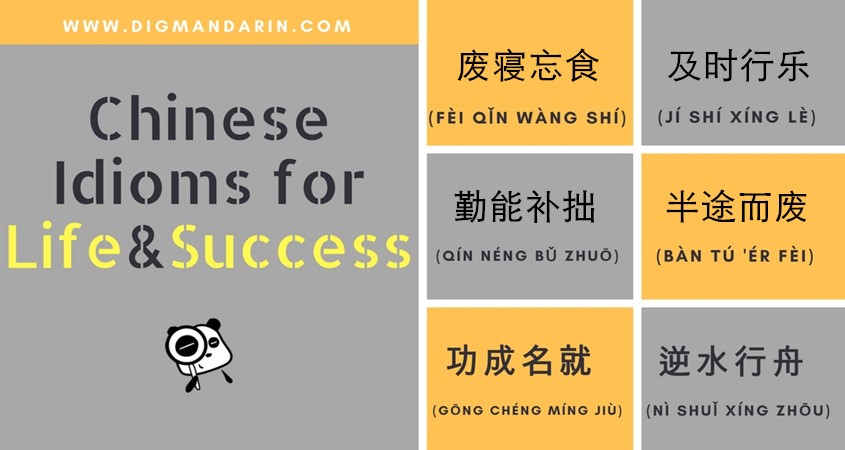
What is a 4-letter Chengyu in Chinese?
A 4-letter Chengyu is a traditional Chinese idiom consisting of exactly four characters. These idioms are deeply rooted in Chinese culture, history, and literature, often conveying profound meanings, morals, or historical allusions in a concise form. They are widely used in both written and spoken language.
See AlsoHow To Get 500 Gems In Duolingo In One Day: complete guide- Structure: Each Chengyu follows a fixed four-character pattern.
- Meaning: They often express complex ideas or stories succinctly.
- Usage: Commonly found in literature, speeches, and daily conversations.
Why are 4-letter Chengyu important in Chinese culture?
4-letter Chengyu hold significant cultural value as they encapsulate wisdom, historical events, or philosophical concepts. Their brevity and depth make them essential for effective communication and literary expression.
- Historical Roots: Many originate from ancient texts like Confucian classics or historical records.
- Educational Role: Taught early in schools to instill cultural knowledge.
- Linguistic Efficiency: Enable concise expression of complex ideas.
How are 4-letter Chengyu used in modern Chinese?
In contemporary usage, 4-letter Chengyu remain prevalent in formal writing, media, and everyday speech. They add elegance and authority to communication.
- Media: Frequently appear in news headlines or advertisements.
- Business: Used in presentations to convey professionalism.
- Daily Life: Spoken casually to emphasize points or share wisdom.
What are some examples of 4-letter Chengyu?
Here are a few well-known 4-letter Chengyu and their meanings:
- 画龙点睛 (huà lóng diǎn jīng): Add the finishing touch – to perfect something.
- 守株待兔 (shǒu zhū dài tù): Wait by a tree for a hare – foolish reliance on luck.
- 一箭双雕 (yī jiàn shuāng diāo): One arrow, two eagles – killing two birds with one stone.
How to learn and memorize 4-letter Chengyu effectively?
Mastering 4-letter Chengyu requires understanding their context and practicing their usage. Here are some strategies:
- Contextual Learning: Study the stories or origins behind each idiom.
- Repetition: Use flashcards or apps to reinforce memory.
- Application: Incorporate them into writing or conversations regularly.
What is Cheng Yu in English?
What is the Definition of Cheng Yu in English?
A Cheng Yu is a type of traditional Chinese idiomatic expression, usually consisting of four characters. These phrases are deeply rooted in Chinese culture, history, and classical literature. They convey profound meanings, moral lessons, or historical anecdotes concisely. In English, Cheng Yu is often translated as Chinese idiom or four-character idiom.
- Structure: Typically composed of four Chinese characters.
- Meaning: Often metaphorical, requiring cultural or historical context to fully understand.
- Usage: Commonly used in formal writing, speeches, and daily conversation.
How Are Cheng Yu Used in Chinese Language?
Cheng Yu are essential in both written and spoken Chinese, adding depth and elegance to communication. They are frequently employed in literature, proverbs, and even modern media to emphasize a point succinctly. Many Cheng Yu originate from ancient texts like The Analects of Confucius or historical events.
- Literary Use: Enhances classical and modern Chinese texts.
- Conversational Use: Adds wisdom or humor in daily dialogue.
- Educational Use: Taught in schools to improve language proficiency.
What Are Some Common Examples of Cheng Yu?
Several well-known Cheng Yu are widely recognized, even by non-native speakers. Examples include 破釜沉舟 (pò fǔ chén zhōu), meaning to burn one's boats, symbolizing determination, and 画蛇添足 (huà shé tiān zú), meaning to draw legs on a snake, implying unnecessary actions.
- 守株待兔 (shǒu zhū dài tù): Waiting for a hare by a tree stump – relying on luck.
- 亡羊补牢 (wáng yáng bǔ láo): Mending the pen after losing sheep – better late than never.
- 对牛弹琴 (duì niú tán qín): Playing the lute to a cow – wasting effort.
Why Are Cheng Yu Important in Chinese Culture?
Cheng Yu reflect Chinese philosophy, history, and values, making them a vital part of cultural heritage. They preserve ancient wisdom and are often used to teach moral lessons. Understanding them provides insight into Chinese thought processes and societal norms.
- Historical Preservation: Many originate from dynastic stories.
- Moral Teaching: Used to impart virtues like perseverance and humility.
- Linguistic Richness: Enhances the expressiveness of the Chinese language.
How Do You Learn and Remember Cheng Yu?
Mastering Cheng Yu requires practice and contextual understanding. Techniques include memorization, studying their origins, and applying them in sentences. Flashcards, storytelling, and repetition are effective learning methods.
- Contextual Learning: Study the stories behind each idiom.
- Repetition: Regular usage reinforces memory.
- Visual Aids: Associating idioms with images or scenarios helps retention.
What is the Chinese idiom for unique?
The Chinese idiom for unique is 独一无二 (dú yī wú èr), which translates to one of a kind or unmatched. It emphasizes something being singularly exceptional without equal.
Meaning of 独一无二 (dú yī wú èr)
This idiom conveys the idea of absolute uniqueness, highlighting that something or someone stands alone without comparison.
- Literal Translation: One, no two – implying singularity.
- Cultural Significance: Often used to praise rare talents, objects, or achievements.
- Common Usage: Applied in contexts like art, innovation, or personal traits.
Origins of the Idiom 独一无二
The phrase traces back to classical Chinese literature, reflecting values of distinctiveness and exclusivity.
- Historical Texts: Found in ancient philosophical and poetic works.
- Confucian Influence: Aligns with ideals of moral or intellectual exceptionalism.
- Modern Adaptation: Still widely used in formal and casual speech today.
Examples of 独一无二 in Sentences
Here’s how the idiom functions in everyday language:
- Descriptive Use: Her artistic style is 独一无二—no one else paints like her.
- Comparative Context: This antique vase is 独一无二; no replica exists.
- Metaphorical Application: His leadership is 独一无二, blending wisdom and charisma.
Other Chinese phrases express similar ideas of uniqueness:
- 绝无仅有 (jué wú jǐn yǒu): Unparalleled, extremely rare.
- 举世无双 (jǔ shì wú shuāng): Unmatched in the world.
- 独树一帜 (dú shù yī zhì): To forge a unique path.
Cultural Importance of Uniqueness in Chinese Language
Chinese idioms like 独一无二 reflect deep cultural appreciation for individuality within harmony.
- Philosophical Roots: Balance between collective values and personal distinction.
- Art and Craftsmanship: Celebrated for unique techniques or styles.
- Modern Branding: Used in marketing to emphasize exclusivity.
Frequently Asked Questions (FAQ)
What is 'Chinese Cheng Yu for HSK: The Complete List'?
Chinese Cheng Yu for HSK: The Complete List is a comprehensive resource designed to help learners master Chinese idioms (Cheng Yu) that are essential for the HSK (Hanyu Shuiping Kaoshi) proficiency exams. This list includes commonly tested idioms, their meanings, usage examples, and cultural context, making it an invaluable tool for students aiming to improve their fluency and understanding of advanced Chinese language concepts.
How can this list help me prepare for the HSK exam?
The Complete List of Cheng Yu is tailored to cover idioms frequently appearing in HSK Level 5 and 6 exams. By studying these idioms, learners can enhance their reading comprehension, writing skills, and spoken fluency. Each entry provides clear explanations and contextual examples, helping students grasp not only the literal meaning but also the cultural nuances behind these expressions, which are often tested in higher-level HSK sections.
Are the Cheng Yu in this list organized by difficulty level?
Yes, the idioms in Chinese Cheng Yu for HSK: The Complete List are categorized based on their complexity and frequency in HSK exams. This structured approach allows learners to prioritize their study, starting with easier idioms before progressing to more challenging ones. The organization ensures a gradual learning curve, making it easier for students to build confidence and retain the material effectively.
Does this resource include practice exercises or quizzes?
While the primary focus of Chinese Cheng Yu for HSK: The Complete List is to provide a thorough reference of essential idioms, many editions or supplementary materials may include practice exercises, quizzes, or flashcards. These additional tools are designed to reinforce learning by testing the student's ability to recognize, understand, and use Cheng Yu in context, which is critical for success in the HSK exam's writing and speaking sections.
Leave a Reply
Related Posts