
The forking path: A human approach to learning Chinese

Learning Chinese often feels like standing at the edge of a vast, intricate maze—each path promising mastery but leading to unexpected challenges. Unlike linear learning methods, The Forking Path embraces the natural twists and turns of acquiring Mandarin, recognizing that every learner’s journey is unique. This approach prioritizes curiosity, adaptability, and real-world engagement over rigid memorization, allowing students to explore the language through culture, conversation, and personal interests. By celebrating mistakes as progress and encouraging diverse learning styles, The Forking Path transforms the daunting task of mastering Chinese into an enriching, human-centered adventure—one where the process is as meaningful as the destination.
The Forking Path: A Human Approach to Learning Chinese
This subtitle introduces the concept of The Forking Path as a metaphor for the diverse and personalized journey of learning Chinese. Unlike rigid, one-size-fits-all methods, this approach emphasizes adaptability, intuition, and human-centric strategies tailored to individual needs. Chinese, with its complex characters, tones, and cultural nuances, requires a flexible learning framework that allows learners to explore multiple pathways—whether through conversation, characters, or grammar—based on their strengths and goals.
1. Understanding the Forking Path Methodology
The Forking Path Methodology is about embracing non-linear learning. Instead of following a strict curriculum, learners branch out based on their interests and progress. For example, one might focus on pinyin first, while another dives into character recognition. This method acknowledges that motivation and context are key drivers in language acquisition.
See AlsoHorizontal vocabulary learning in Chinese| Key Aspect | Description |
|---|---|
| Non-linear Progression | Learners choose their own path, skipping or revisiting topics as needed. |
| Personalized Focus | Emphasis on individual strengths, such as auditory learning for tones. |
| Contextual Learning | Real-world usage (e.g., movies, conversations) over rote memorization. |
2. The Role of Characters in the Forking Path
Chinese characters are often seen as a barrier, but the Forking Path approach treats them as a modular system. Learners break down characters into radicals and components, building meaning step-by-step. For instance, the character 好 (hǎo, good) combines 女 (woman) and 子 (child), illustrating how radicals convey meaning.
| Character Component | Function |
|---|---|
| Radicals | Provide clues to meaning (e.g., 水 for water-related characters). |
| Phonetics | Suggest pronunciation (e.g., 马 mǎ in 妈 mā). |
| Strokes | Basic building blocks for writing characters. |
Mastering tones is critical in Chinese. The Forking Path encourages learners to immerse themselves in listening—through music, podcasts, or dialogues—before perfecting pronunciation. Tools like shadowing (repeating after native speakers) help internalize tonal patterns.
| Tone Type | Example (Pinyin) |
|---|---|
| First Tone (Flat) | mā (妈, mother) |
| Second Tone (Rising) | má (麻, hemp) |
| Third Tone (Dip-Rise) | mǎ (马, horse) |
4. Grammar: The Flexible Backbone of Chinese
Chinese grammar is simpler in some ways (no conjugations) but requires contextual understanding. The Forking Path suggests learning grammar through patterns (e.g., Subject + Verb + Object) and sentence mining (studying real-life examples).
See AlsoHow to Pass HSK 5 (In Under a Year)| Grammar Feature | Example |
|---|---|
| Measure Words | 一本书 (yī běn shū, one book) |
| Word Order | 我吃饭 (Wǒ chī fàn, I eat rice) |
Language and culture are intertwined. The Forking Path integrates cultural insights—like idioms (成语) or etiquette—to deepen understanding. For example, 加油 (jiāyóu, add oil) means keep going, reflecting encouragement in Chinese culture.
| Cultural Element | Significance |
|---|---|
| Idioms (成语) | Historical stories condensed into phrases. |
| Politeness | Using 您 (nín) for formal you. |
What are the approaches to learning Chinese?

1. Structured Classroom Learning
Structured classroom learning is one of the most traditional and effective ways to study Chinese. This approach involves enrolling in a language course, either online or in-person, where a curriculum is followed systematically. Benefits include:
See AlsoCover Letter in Chinese How To Write (The Winning) One?- Professional guidance: Teachers provide corrections and personalized feedback.
- Peer interaction: Practicing with classmates enhances speaking and listening skills.
- Structured progression: Courses are designed to build knowledge step-by-step.
2. Self-Study with Online Resources
Self-study using online resources is a flexible and cost-effective approach. Many learners use apps, videos, and websites to study at their own pace. Key advantages include:
- Flexibility: Learn anytime, anywhere without a fixed schedule.
- Variety of materials: Access to videos, podcasts, flashcards, and interactive exercises.
- Personalized focus: Choose specific areas like vocabulary, grammar, or pronunciation.
3. Immersion Programs
Immersion programs involve living in a Chinese-speaking environment to accelerate learning. This method forces constant practice and adaptation. Notable benefits are:
- Real-life practice: Daily interactions improve fluency naturally.
- Cultural understanding: Exposure to traditions and social norms enhances comprehension.
- Fast progress: Constant use of the language speeds up retention.
4. Language Exchange Partners
Language exchange pairs learners with native speakers for mutual practice. This informal method strengthens conversational skills. Key points include:
See AlsoJianbing: How to Order Your Favourite Breakfast in China- Mutual benefit: Teach your native language while learning Chinese.
- Informal setting: Relaxed conversations reduce anxiety.
- Cultural exchange: Gain insights into colloquial speech and slang.
5. Flashcards and Spaced Repetition
Flashcards and spaced repetition systems (SRS) are powerful tools for memorizing Chinese characters and vocabulary. This method is ideal for retention. Highlights include:
- Efficient memorization: SRS optimizes review timing for long-term retention.
- Portability: Study on-the-go with mobile apps like Anki or Pleco.
- Customization: Create decks tailored to personal learning goals.
How long does it realistically take to learn Chinese?
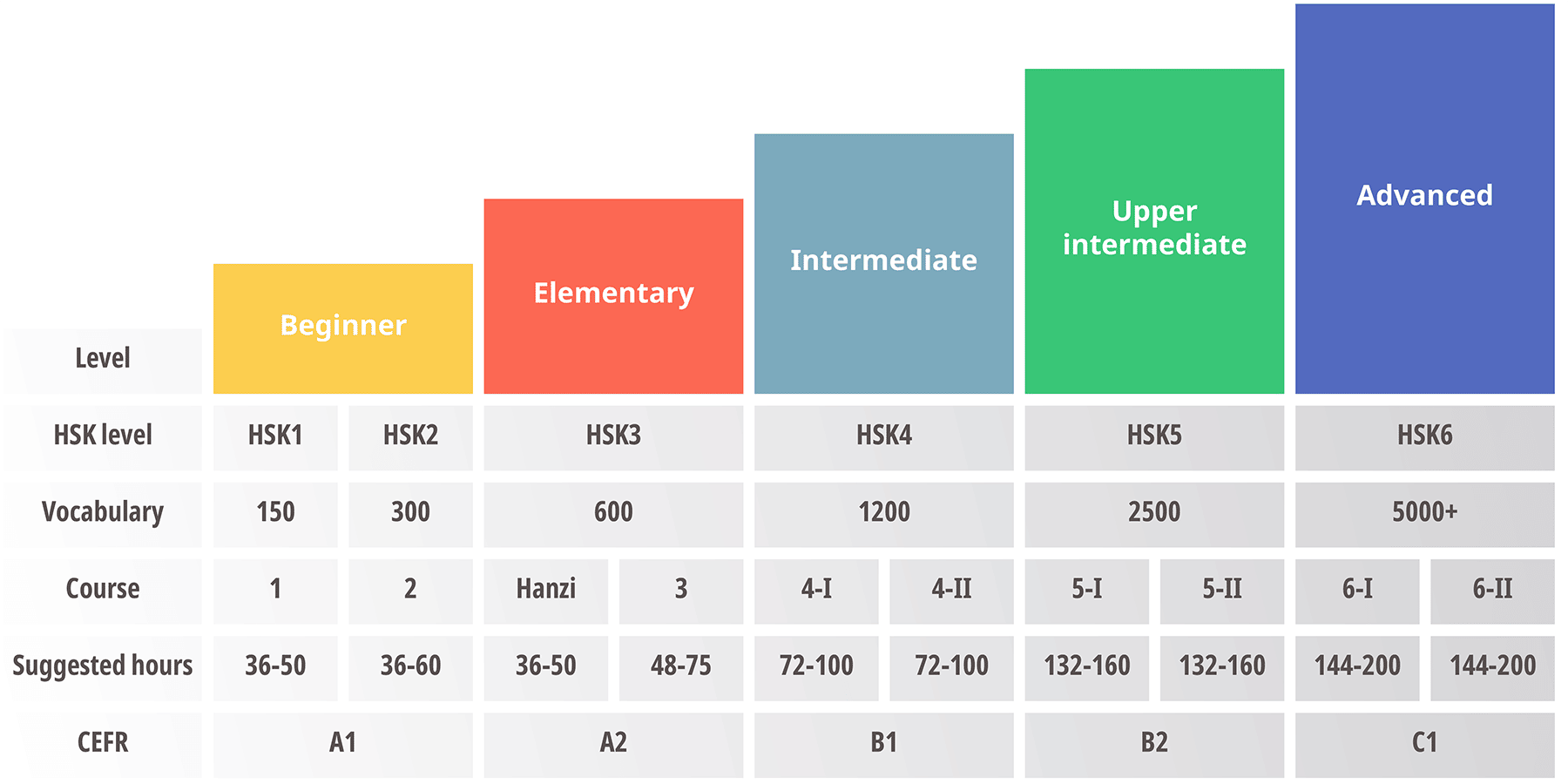
Factors That Influence Learning Chinese
The time it takes to learn Chinese depends on several factors, including:
- Prior language experience: Knowing another tonal language like Vietnamese or Thai can speed up the process.
- Study intensity: Dedication matters—studying 20 hours a week yields faster results than 5 hours.
- Learning environment: Immersion in a Chinese-speaking country accelerates proficiency.
Basic Conversational Fluency Timeline
Achieving basic conversational skills in Chinese typically requires:
- 6–12 months of consistent study for simple daily interactions.
- 300–500 characters to understand and respond to common phrases.
- Regular practice with native speakers to refine pronunciation.
Intermediate Proficiency Expectations
Reaching an intermediate level usually involves:
- 2–3 years of structured learning and vocabulary expansion.
- 1,500–2,000 characters to read newspapers or basic literature.
- Grammar mastery to form complex sentences and express opinions.
Advanced Fluency and Mastery
Attaining advanced fluency often demands:
- 4–5+ years of immersion and academic study.
- 3,000+ characters for professional or academic contexts.
- Cultural nuance understanding to grasp idioms and humor.
Accelerated Learning Techniques
To speed up the learning process, consider:
- Spaced repetition tools like Anki for character retention.
- Language partners or tutors for real-time feedback.
- Media consumption (TV, podcasts) to train listening skills.
What is the Chinese method of learning?
The Emphasis on Memorization and Repetition
The Chinese method of learning heavily relies on memorization and repetition to reinforce knowledge. This approach is deeply rooted in Confucian traditions, where mastery comes from continuous practice.
- Rote learning: Students repeatedly write or recite material until it is ingrained.
- Drill exercises: Frequent practice tests and problem-solving sessions solidify understanding.
- Character writing: In language learning, writing Chinese characters multiple times ensures retention.
Teacher-Centered Classroom Structure
In the Chinese education system, the teacher holds a central role, delivering knowledge while students listen and absorb.
- Lecture-based instruction: Teachers explain concepts in detail with minimal student interruption.
- High respect for authority: Students are expected to follow instructions without questioning.
- One-way knowledge transfer: Focus is on absorbing information rather than interactive discussions.
High-Stakes Examinations
Standardized tests, like the Gaokao, play a crucial role in shaping the Chinese learning method.
- Gaokao pressure: This college entrance exam determines future opportunities, driving intense study habits.
- Exam-focused curriculum: Schools prioritize subjects and skills tested in major exams.
- Competitive environment: Students compete for top scores, fostering a rigorous study culture.
Parental Involvement and Expectations
Chinese parents often take an active role in their children's education, setting high academic expectations.
- After-school tutoring: Many parents invest in additional classes to boost performance.
- Strict discipline: Children are encouraged to prioritize studies over leisure activities.
- Long-term academic planning: Parents guide career choices based on educational success.
Mastery Through Deliberate Practice
The Chinese method emphasizes deliberate practice to achieve expertise in subjects.
- Incremental learning: Breaking down complex topics into smaller, manageable parts.
- Error correction: Teachers provide immediate feedback to correct mistakes.
- Persistent effort: Success is seen as a result of hard work rather than innate talent.
What is the fastest way to learn Chinese?
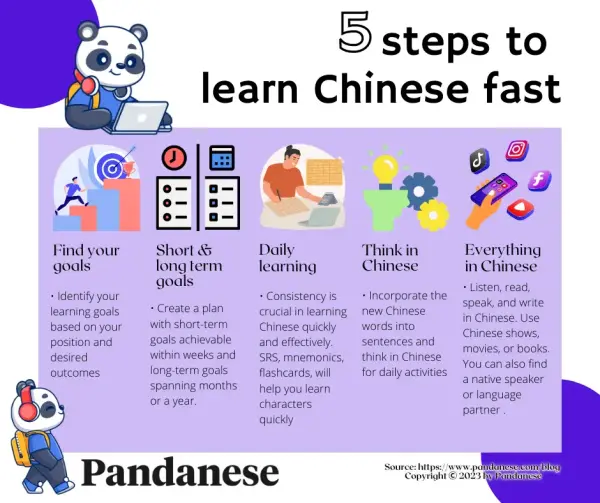
Immerse Yourself in a Chinese-Speaking Environment
The fastest way to learn Chinese is to immerse yourself in a Chinese-speaking environment. This forces you to think and respond in the language daily. Here’s how:
- Live in a Chinese-speaking country: Surround yourself with native speakers to practice constantly.
- Watch Chinese media: Movies, TV shows, and news help with listening and cultural context.
- Join language exchanges: Partner with native speakers to practice speaking and receive feedback.
Focus on High-Frequency Vocabulary First
Prioritizing high-frequency words accelerates practical communication. Instead of memorizing obscure terms, learn words used daily:
- Use frequency lists: Start with the 500-1000 most common words for basic conversations.
- Learn radicals and characters: Understanding character components makes memorization easier.
- Practice with flashcards: Apps like Anki or Pleco reinforce retention through spaced repetition.
Leverage Technology and Language Apps
Technology offers efficient tools to learn Chinese quickly. Here are the best methods:
- Use apps like Duolingo or HelloChinese: Gamified lessons make learning engaging.
- Try speech recognition tools: Apps like Pinyin Trainer improve pronunciation accuracy.
- Join online communities: Platforms like Discord or WeChat groups provide real-time practice.
Practice Speaking from Day One
Many learners delay speaking, but early practice is crucial for fluency. Follow these steps:
- Shadow native speakers: Repeat phrases aloud to mimic tone and rhythm.
- Record yourself: Compare your pronunciation with native audio to identify gaps.
- Find a tutor: Platforms like iTalki offer affordable 1-on-1 sessions with native teachers.
Master Tones and Pronunciation Early
Mandarin tones are non-negotiable for clarity. Avoid bad habits by focusing on them early:
- Drill tones daily: Use tone pairs (e.g., mā, má, mǎ, mà) to train your ear.
- Listen and repeat: Mimic native speakers in slow-motion audio to grasp nuances.
- Get feedback: Use apps like Speechling or a tutor to correct tone mistakes.
Frequently Asked Questions (FAQ)
What is The Forking Path: A Human Approach to Learning Chinese about?
The Forking Path: A Human Approach to Learning Chinese is a unique guide designed to help learners navigate the complexities of mastering Mandarin. Unlike traditional textbooks, it emphasizes a human-centered methodology, focusing on practical communication, cultural context, and personalized learning strategies. The book encourages learners to embrace the non-linear nature of language acquisition, allowing them to explore different paths based on their interests and goals. It combines linguistic insights with real-world applications, making the process of learning Chinese more engaging and effective.
How does this book differ from other Chinese learning resources?
Most Chinese learning resources follow a rigid, grammar-first approach, which can feel overwhelming or disconnected from real-life usage. In contrast, The Forking Path prioritizes contextual learning, teaching vocabulary and grammar through meaningful scenarios and cultural nuances. The book also integrates storytelling, mnemonics, and adaptive techniques to cater to diverse learning styles. By treating language as a living, evolving skill, it helps learners build confidence and fluency organically rather than through rote memorization.
Who is the ideal reader for this book?
The ideal reader is someone who wants to learn Chinese in a flexible, intuitive way, whether they're a beginner or an intermediate learner. It’s perfect for those frustrated with conventional methods or seeking a more holistic understanding of Mandarin, including its cultural and social dimensions. Self-directed learners, travelers, professionals, or anyone interested in authentic communication will find this book valuable. It’s especially suited for those who prefer creative, adaptive strategies over one-size-fits-all curricula.
Can The Forking Path be used alongside other learning tools?
Absolutely! The book is designed to complement other resources like language apps, tutors, or immersion programs. Its modular structure allows learners to integrate its techniques with existing study routines. For example, you might use it to deepen your understanding of cultural context while practicing grammar elsewhere or apply its storytelling methods to reinforce vocabulary from flashcards. The key is its adaptability—it enhances rather than replaces other tools, making it a versatile addition to any learner’s toolkit.
Leave a Reply
Related Posts