
Horizontal vocabulary learning in Chinese

Horizontal vocabulary learning in Chinese refers to the process of acquiring words that share a common theme or category, enhancing language proficiency through contextual connections. Unlike vertical learning, which focuses on depth within a single word, horizontal learning expands a learner's lexical range by grouping related terms. This method is particularly effective in Chinese, where characters often contain semantic clues. By studying words thematically—such as family terms, weather-related vocabulary, or business terminology—learners can improve retention and practical application. This article explores the benefits, strategies, and challenges of horizontal vocabulary learning, offering insights for students aiming to master Chinese efficiently.
https://youtube.com/watch?v=HWQiAqKOs5E
Horizontal Vocabulary Learning in Chinese: Expanding Your Lexicon Efficiently
What Is Horizontal Vocabulary Learning in Chinese?
Horizontal vocabulary learning refers to the process of acquiring words that belong to the same topic, category, or context in Chinese. Unlike vertical learning (which focuses on deepening knowledge of a single word’s multiple meanings), horizontal learning emphasizes breadth—expanding the number of related words you know. For example, learning all the vocabulary related to food, travel, or business at once.
See AlsoWill Starbucks Survive Competition from Luckin Coffee?| Key Aspect | Description |
|---|---|
| Topic-Based | Focuses on groups of words within the same theme. |
| Contextual | Words are learned in real-life scenarios (e.g., ordering food). |
| Efficiency | Speeds up conversational fluency in specific areas. |
Benefits of Horizontal Vocabulary Learning
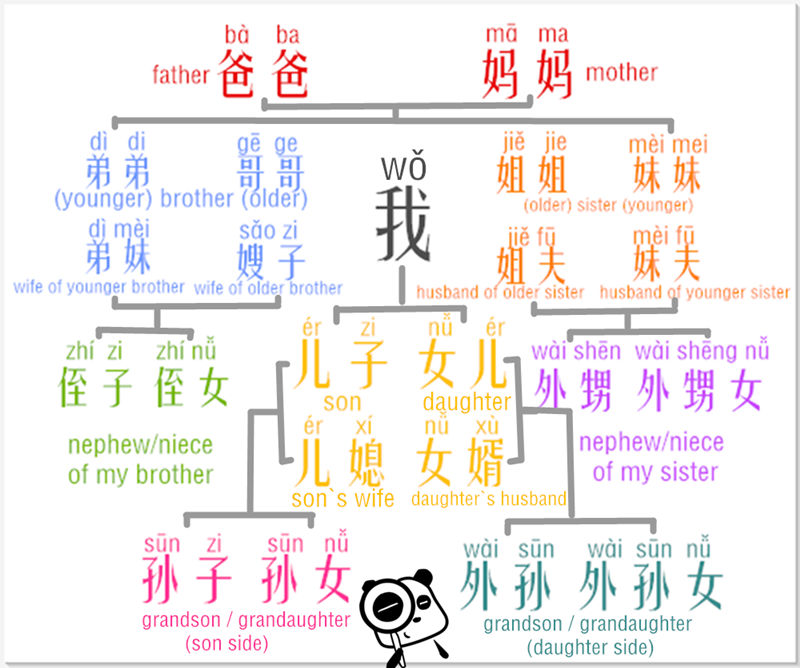
This approach helps learners quickly communicate effectively in targeted situations. By mastering related terms, you reduce the need for constant dictionary checks and improve recall speed. For instance, learning all family-related terms (e.g., 妈妈, 爸爸, 哥哥) at once builds a strong associative network in your memory.
| Benefit | Impact |
|---|---|
| Faster Fluency | Enables quicker comprehension in specific contexts. |
| Improved Retention | Words reinforce each other through thematic links. |
| Practical Application | Directly usable in conversations or professional settings. |
Strategies for Effective Horizontal Learning
To maximize this method, use thematic flashcards, labeled diagrams, or role-playing exercises. For example, if studying weather-related terms, practice describing forecasts or seasons. Grouping synonyms (e.g., 热 vs. 暖和 for hot) also deepens understanding.
| Strategy | Example |
|---|---|
| Thematic Lists | Compile all shopping vocabulary (价格, 打折, 付款). |
| Visual Aids | Use infographics for body parts (头, 手, 脚). |
| Contextual Practice | Simulate a restaurant dialogue using food terms. |
Common Challenges and Solutions
Learners often overload themselves with too many words at once. To avoid this, limit groups to 10-15 words per session and use spaced repetition. Another issue is mixing up similar terms (e.g., 银行 vs. 银 for bank vs. silver). Address this with mnemonics or contrastive examples.
See AlsoHow to Get Duolingo Max: Unlocking the Next Level of Language Learning| Challenge | Solution |
|---|---|
| Overwhelm | Break topics into smaller subtopics (e.g., fruit before food). |
| Confusion | Highlight differences with color-coding or stories. |
| Forgetting | Review with apps like Anki or Quizlet. |
Tools and Resources for Horizontal Learning
Leverage apps (Pleco, HelloChinese), books (HSK thematic guides), or language exchange partners to practice. YouTube channels like ChinesePod offer topic-based lessons. For visual learners, Pinterest boards with labeled images work well.
| Tool | Use Case |
|---|---|
| Pleco | Flashcards with custom categories (e.g., medical terms). |
| HSK Word Lists | Pre-grouped vocabulary by proficiency level. |
| Language Meetups | Practice themed vocabulary in live conversations. |
How to learn Chinese vocabulary faster?
Use Spaced Repetition Systems (SRS)
Spaced Repetition Systems (SRS) like Anki or Pleco help reinforce memory by reviewing words at optimal intervals. Here’s how to maximize SRS:
See AlsoHow to Learn Chinese by Watching Chinese TV Dramas- Create flashcards with Chinese characters, pinyin, and English meanings.
- Review daily to ensure consistent exposure and retention.
- Adjust intervals based on difficulty—harder words appear more frequently.
Learn Characters Through Radicals
Chinese characters are built from radicals, which provide clues to meaning and pronunciation. Break down vocabulary efficiently:
- Study common radicals first (e.g., 水 for water-related characters).
- Associate radicals with character meanings to guess new words.
- Practice writing characters to reinforce radical recognition.
Immerse Yourself in Context
Learning words in isolation is less effective than seeing them in real-world contexts. Try these methods:
- Watch Chinese media (TV shows, movies) with subtitles.
- Read graded readers or news articles tailored to your level.
- Use vocabulary in sentences to understand usage patterns.
Group Words by Themes or Categories
Organizing vocabulary into thematic groups (e.g., food, travel) accelerates learning. Here’s how:
See AlsoChristmas Greetings in Chinese- Focus on one category per week (e.g., family terms).
- Use mind maps to visualize connections between words.
- Practice with themed dialogues to reinforce related terms.
Leverage Mnemonics and Associations
Mnemonics turn abstract characters into memorable stories. Apply these techniques:
- Create vivid imagery (e.g., 猫 māo for cat—picture a cat’s whiskers).
- Link sounds to familiar words (e.g., 咖啡 kāfēi sounds like coffee).
- Combine mnemonics with writing to deepen recall.
What is the easiest word to write in Chinese?

What is the simplest Chinese character to write?
The simplest Chinese character to write is 一 (yī), meaning one. It consists of a single horizontal stroke, making it the most straightforward character in terms of structure and execution.
See AlsoHow Chinese Language Can Help AI- Stroke count: Only one stroke, no complex curves or angles.
- Meaning: Represents the number one, a fundamental concept.
- Usage: Frequently used in daily conversation and writing.
Why is 一 considered the easiest Chinese character?
一 is universally recognized as the easiest due to its minimalistic design and lack of complexity.
- Minimal strokes: No need for multiple strokes or intricate patterns.
- Clear shape: A straight line, easy to remember and replicate.
- Foundational: Often the first character taught to beginners.
Are there other simple Chinese characters similar to 一?
Yes, characters like 二 (èr, two) and 三 (sān, three) follow a similar pattern, using repeated horizontal strokes.
- 二: Two horizontal lines, slightly longer than 一.
- 三: Three horizontal lines, maintaining simplicity.
- 十 (shí, ten): A cross shape, still very basic.
How does 一 help beginners learn Chinese writing?
一 serves as an ideal starting point for mastering stroke order and building confidence.
- Stroke practice: Teaches the basic horizontal stroke technique.
- Memory aid: Easy to recall, reducing early frustration.
- Foundation: Prepares learners for slightly more complex characters.
What cultural significance does 一 hold in Chinese?
Beyond its simplicity, 一 carries philosophical and cultural weight in Chinese traditions.
- Unity: Symbolizes wholeness and the beginning of all things.
- Daoist philosophy: Represents the concept of oneness in Taoism.
- Idioms: Appears in phrases like 一心一意 (yīxīn yīyì, wholeheartedly).
Frequently Asked Questions (FAQ)
What is horizontal vocabulary learning in Chinese?
Horizontal vocabulary learning in Chinese refers to the process of expanding one's lexicon by learning words that share a similar level of difficulty or belong to the same thematic category. Unlike vertical learning, which focuses on deepening understanding of a single word (e.g., its characters, tones, and multiple meanings), horizontal learning emphasizes breadth—acquiring many related or commonly used words quickly. This method is particularly useful for beginners and intermediate learners who need to build a functional vocabulary for daily conversations or specific contexts, such as business or travel.
Why is horizontal vocabulary learning effective for Chinese beginners?
For beginners, horizontal vocabulary learning is effective because it prioritizes practical communication over intricate details. By focusing on groups of words tied to everyday scenarios—like greetings, food, or directions—learners can quickly engage in basic conversations. This approach also reduces frustration, as it avoids the complexity of character strokes or advanced grammar early on. Additionally, seeing related words in context (e.g., apple, banana, orange) reinforces memory through associative learning, making retention easier.
How can I practice horizontal vocabulary learning in Chinese?
To practice horizontal vocabulary learning, start by grouping words into thematic clusters (e.g., family terms, weather, or hobbies). Use tools like flashcards, apps (e.g., Pleco or Anki), or labeled images to visualize connections. Engage in contextual exercises, such as writing sentences or dialogues using the new words. Watching Chinese TV shows or listening to podcasts on a specific topic can also reinforce horizontal learning by exposing you to related terminology in natural settings. Consistency and repetition are key to solidifying these word groups.
What are the challenges of horizontal vocabulary learning in Chinese?
One challenge of horizontal vocabulary learning is the risk of superficial understanding. While learners may recognize many words, they might struggle with nuances like tones, character writing, or cultural connotations. Another issue is overload—memorizing too many words at once without proper context can lead to confusion. To mitigate this, balance horizontal learning with vertical techniques, such as studying character components or practicing pronunciation. Additionally, revisiting and applying the words in real-life situations ensures deeper retention.
Leave a Reply
Related Posts