
New Reading and Listening Quizzes to Study Chinese

Learning Chinese can be challenging, but incorporating engaging tools like reading and listening quizzes can make the process more effective and enjoyable. Our new collection of quizzes is designed to help learners at all levels improve their comprehension, vocabulary, and pronunciation. Each quiz combines authentic texts and audio materials, covering everyday conversations, news articles, and cultural insights. By practicing regularly, students can enhance their ability to understand spoken and written Chinese in real-life contexts. Whether you're a beginner or an advanced learner, these quizzes offer a structured way to track progress and identify areas for improvement. Dive in and take your Chinese skills to the next level!
New Reading and Listening Quizzes to Enhance Your Chinese Learning
1. How Do the New Quizzes Improve Chinese Reading Skills?
The new reading quizzes are designed to help learners expand their vocabulary and improve comprehension through contextual learning. Each quiz presents short passages with level-appropriate vocabulary, followed by multiple-choice questions to test understanding. The immediate feedback allows learners to identify gaps and reinforce their knowledge.
| Feature | Benefit |
|---|---|
| Graded difficulty | Adapts to different proficiency levels |
| Vocabulary highlights | Focuses on key terms for retention |
| Timed exercises | Encourages faster reading comprehension |
2. What Makes the Listening Quizzes Effective for Learning Chinese?
The listening quizzes feature native speaker audio with clear pronunciation, helping learners refine their listening skills. The quizzes include dialogues, monologues, and situational conversations to mimic real-life scenarios. Questions assess detail recognition, main idea comprehension, and inference skills.
See AlsoThe Input Pyramid: Chinese Listening for Any Situation| Feature | Benefit |
|---|---|
| Adjustable playback speed | Helps beginners catch every word |
| Transcript availability | Allows cross-referencing after listening |
| Cultural notes | Provides context for better understanding |
3. Are the Quizzes Suitable for Different Proficiency Levels?
Yes, the quizzes are categorized by difficulty—beginner, intermediate, and advanced—ensuring learners at any stage can benefit. Beginner quizzes focus on basic vocabulary and sentence structures, while advanced quizzes include idiomatic expressions and complex texts.
| Level | Focus Area |
|---|---|
| Beginner | Simple sentences, everyday vocabulary |
| Intermediate | Longer passages, common phrases |
| Advanced | Authentic materials, nuanced meanings |
4. How Often Are New Quiz Materials Added?
New content is updated weekly, ensuring learners always have fresh material to practice with. Updates include new themes, vocabulary sets, and audio recordings to keep the learning experience dynamic and engaging.
| Update Frequency | Content Type |
|---|---|
| Weekly | New reading passages |
| Bi-weekly | Additional listening exercises |
| Monthly | Thematic quizzes (e.g., business, travel) |
5. Can Learners Track Their Progress with These Quizzes?
Absolutely! The platform includes a progress tracker that records quiz scores, time spent, and weak areas. Learners can view their improvement over time and receive personalized recommendations for further study.
See AlsoHSK 1 Vocabulary Test - Long & Short Versions| Tracking Feature | Advantage |
|---|---|
| Score history | Monitors performance trends |
| Time analytics | Helps improve speed and efficiency |
| Weakness highlights | Focuses revision on problem areas |
How do I study for a Chinese listening exam?

Understand the Exam Format
Before diving into preparation, familiarize yourself with the structure of the Chinese listening exam. Knowing the question types, duration, and scoring system will help you strategize effectively.
- Identify the sections: dialogues, monologues, or fill-in-the-blank exercises.
- Note the time allocated for each part to practice pacing.
- Review past papers or sample tests to recognize recurring patterns.
Build Vocabulary and Grammar Foundations
A strong grasp of vocabulary and grammar is essential for comprehending spoken Chinese. Focus on high-frequency words and sentence structures.
See AlsoStandard pronunciation in Chinese and why you want it- Learn common phrases and idioms used in daily conversations.
- Practice recognizing grammatical patterns like measure words or verb tenses.
- Use flashcards or apps to reinforce retention of key terms.
Immerse Yourself in Authentic Listening Materials
Expose yourself to native Chinese audio sources to train your ear and improve comprehension speed.
- Listen to Chinese podcasts, news broadcasts, or radio shows.
- Watch TV shows or movies with subtitles, then gradually remove them.
- Repeat dialogues aloud to mimic pronunciation and intonation.
Practice Active Listening Techniques
Passive listening isn’t enough—engage actively with the material to enhance retention and understanding.
- Summarize what you hear in your own words after each session.
- Predict upcoming content based on context clues.
- Take notes on key points or unfamiliar words for later review.
Simulate Exam Conditions
Recreate the test environment to build confidence and reduce anxiety on exam day.
See AlsoHSK 4 Vocabulary Test - Find Out Your HSK Level- Time yourself while completing practice tests to match exam constraints.
- Eliminate distractions to mimic the quiet setting of an exam hall.
- Review mistakes thoroughly to avoid repeating them.
Can you learn Chinese just by listening?

The Role of Listening in Learning Chinese
Listening is a fundamental part of acquiring any language, including Chinese. While it helps with pronunciation, intonation, and comprehension, relying solely on listening has limitations. Here’s why:
- Passive learning: Listening alone doesn’t engage active skills like speaking or writing.
- Limited vocabulary retention: Without context or repetition, words may not stick.
- No grammar reinforcement: Chinese grammar rules aren’t always obvious through listening.
Can You Achieve Fluency Just by Listening?
Achieving fluency in Chinese through listening alone is unlikely. Fluency requires:
See AlsoCover Letter in Chinese How To Write (The Winning) One?- Active practice: Speaking and writing solidify understanding.
- Cultural context: Gestures, idioms, and social cues often aren’t audible.
- Structured learning: Textbooks or classes provide systematic progress.
The Importance of Tones in Chinese Listening
Chinese is a tonal language, making listening critical but insufficient. Key points:
- Four main tones: Mishearing one can change a word’s meaning entirely.
- Practice required: Mimicking tones demands active participation.
- Audio resources: Use podcasts or videos with clear enunciation.
Supplementing Listening with Other Methods
To maximize learning, combine listening with:
- Flashcards: Reinforce vocabulary visually.
- Conversation partners: Apply heard phrases in real dialogue.
- Writing exercises: Learn characters and sentence structure.
Best Listening Resources for Learning Chinese
Effective listening materials include:
- Podcasts: Slow-paced learner-friendly content.
- Movies/TV shows: Exposure to natural speech and slang.
- Language apps: Interactive exercises with audio.
How to study for Chinese reading comprehension?
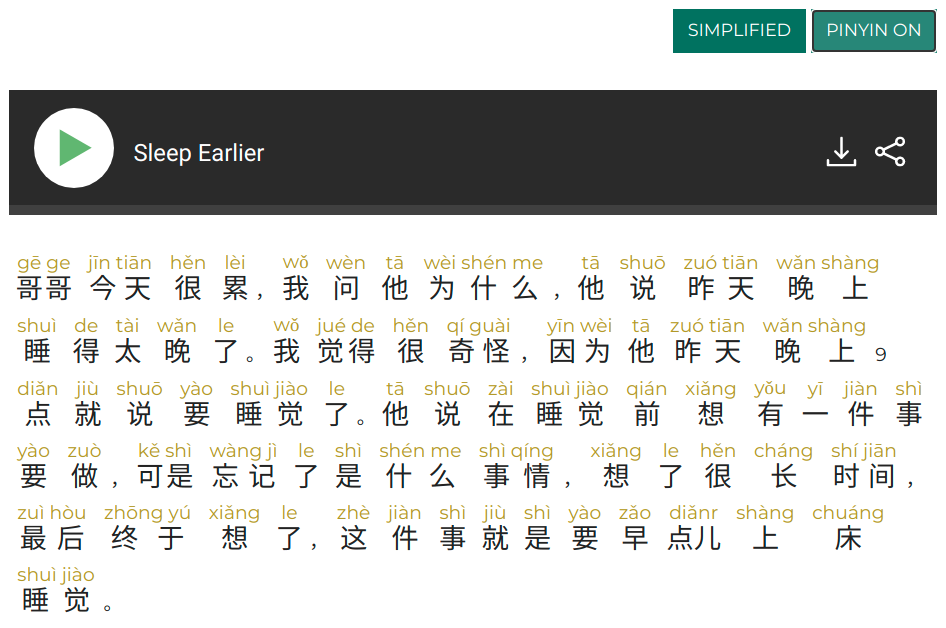
Build a Strong Vocabulary Foundation
To excel in Chinese reading comprehension, you must first develop a robust vocabulary. Focus on learning high-frequency words and characters commonly found in texts. Use flashcards, apps like Pleco or Anki, and practice writing characters to reinforce memory. Additionally, read simple articles or stories to encounter these words in context.
- Prioritize learning characters with multiple meanings or common radicals.
- Review vocabulary daily using spaced repetition techniques.
- Label objects in your environment with their Chinese names for immersion.
Practice with Graded Readers
Graded readers are tailored to different proficiency levels, making them ideal for improving reading skills. Start with beginner-level books and gradually progress to more complex texts. Pay attention to sentence structures and how words are used in context.
- Choose readers with pinyin and English translations for clarity.
- Highlight unfamiliar words and review them after reading.
- Summarize each chapter in your own words to test comprehension.
Analyze Sentence Structure and Grammar
Understanding Chinese grammar and sentence patterns is crucial for comprehension. Break down complex sentences into smaller parts and identify subjects, verbs, and objects. Study common grammatical structures like measure words, conjunctions, and passive voice.
- Practice rearranging jumbled sentences to grasp word order rules.
- Compare Chinese sentence structures with your native language.
- Use grammar workbooks or online resources for targeted exercises.
Read Authentic Materials Regularly
Expose yourself to authentic Chinese materials such as news articles, blogs, or social media posts. These sources reflect real-life language usage and cultural nuances. Start with shorter texts and gradually tackle longer, more complex content.
- Follow Chinese news platforms like BBC Chinese or Xinhua.
- Join online forums or groups where Chinese is the primary language.
- Keep a journal to note down idioms or phrases you encounter.
Take Mock Tests and Review Mistakes
Simulate exam conditions by taking mock reading comprehension tests. Time yourself to improve speed and accuracy. After completing a test, thoroughly review incorrect answers to identify weak areas.
- Use past exam papers or online practice tests for realism.
- Focus on question types like main idea, inference, or detail-based questions.
- Create a mistake log to track recurring errors and address them systematically.
How to improve Chinese listening?

Listen to Authentic Chinese Content Daily
To improve Chinese listening, expose yourself to authentic materials like podcasts, news, or TV shows. Regular exposure helps you adapt to natural speech patterns, accents, and vocabulary.
- Choose level-appropriate content (beginner, intermediate, advanced).
- Use subtitles initially, then gradually remove them.
- Repeat listening to the same material to catch missed details.
Practice Active Listening with Transcripts
Active listening involves focusing intently on spoken Chinese while following a transcript. This method reinforces word recognition and pronunciation.
- Find audio with transcripts (language apps, YouTube channels).
- Listen first without reading, then compare with the text.
- Shadow the speaker by repeating phrases aloud.
Expand Vocabulary and Grammar Knowledge
A strong foundation in vocabulary and grammar directly enhances listening comprehension by helping you recognize words in context.
- Learn common phrases and sentence structures.
- Review new words with flashcards or apps like Anki.
- Study grammar patterns to predict meaning in conversations.
Engage in Conversations with Native Speakers
Practicing with native speakers forces you to process spoken Chinese in real time, improving reaction speed and understanding.
- Use language exchange platforms (Tandem, HelloTalk).
- Ask speakers to correct your misunderstandings.
- Focus on colloquial speech and slang.
Use Technology and Language Apps
Technology offers interactive tools like apps and software to train your ears systematically.
- Try apps like Pleco or Duolingo for listening exercises.
- Adjust playback speed to break down fast speech.
- Enable Chinese subtitles on streaming platforms.
Frequently Asked Questions (FAQ)
What are the new reading and listening quizzes for studying Chinese?
The new reading and listening quizzes are interactive tools designed to help learners improve their Chinese language skills through engaging exercises. These quizzes focus on comprehension, vocabulary, and pronunciation by presenting authentic texts and audio clips. They are tailored for different proficiency levels, from beginners to advanced learners, ensuring gradual progress. By regularly practicing with these quizzes, students can enhance their ability to understand written and spoken Chinese in real-life contexts.
How do these quizzes help improve my Chinese listening skills?
The listening quizzes feature native speakers delivering content at natural speeds, which helps learners train their ears to recognize tones, rhythms, and common phrases. Each quiz includes comprehension questions to test understanding, along with transcripts for review. By repeatedly exposing yourself to diverse accents and speech patterns, you can develop better auditory processing and become more confident in conversations. Additionally, the quizzes often include cultural notes, providing context that makes the language more relatable.
Are the reading quizzes suitable for beginners?
Yes, the reading quizzes are designed to accommodate beginners with simplified texts and basic vocabulary. Each passage is carefully selected to match the learner's level, and difficult words are often accompanied by pinyin or translations. Beginners can start with short, straightforward sentences and gradually progress to more complex texts. The quizzes also include multiple-choice questions and fill-in-the-blank exercises to reinforce comprehension and retention.
Can I track my progress with these quizzes?
Absolutely! The platform includes a progress tracking feature that records your quiz scores, completion rates, and areas needing improvement. This allows you to monitor your development over time and identify weaknesses in your reading or listening skills. Some quizzes also provide personalized feedback, suggesting resources to strengthen specific language aspects. By reviewing your progress, you can adjust your study plan to focus on the most challenging areas and achieve consistent improvement.
Leave a Reply
Related Posts