
HSK 4 Vocabulary Test - Find Out Your HSK Level

Are you curious about your Chinese proficiency level? The HSK 4 Vocabulary Test is a great way to assess your skills and determine if you’re ready for the official HSK 4 exam. This test focuses on essential vocabulary, helping you gauge your understanding of intermediate Mandarin. Whether you're studying for personal growth or academic purposes, knowing your HSK level can guide your learning journey. By taking this test, you’ll identify strengths and areas for improvement, ensuring you’re on the right track. Ready to challenge yourself? Discover your HSK 4 level and take the next step toward mastering Chinese.
HSK 4 Vocabulary Test: Assess Your Chinese Proficiency Level
What Is the HSK 4 Vocabulary Test?
The HSK 4 Vocabulary Test evaluates your knowledge of 1,200 Mandarin Chinese words required for the HSK 4 exam, the fourth level of the Hanyu Shuiping Kaoshi (HSK). This test measures your ability to understand and use intermediate Chinese in daily, academic, and professional contexts.
| Key Aspect | Description |
|---|---|
| Word Count | 1,200 words |
| Level | Intermediate (B2 CEFR) |
| Test Format | Multiple-choice, fill-in-the-blank |
---
See Also8 Mandarin Dialogues to Improve Chinese Conversation Skills to Visit ChinaWhy Take the HSK 4 Vocabulary Test?
Taking this test helps you determine if you’re ready for the official HSK 4 exam or identify gaps in your vocabulary. It’s essential for university applications, job requirements, or tracking your progress in learning Chinese.
| Purpose | Benefit |
|---|---|
| Self-Assessment | Identify strengths/weaknesses |
| Academic Goals | Meet university language requirements |
| Career Advancement | Enhance job opportunities in China |
---
How to Prepare for the HSK 4 Vocabulary Test
Effective preparation involves studying HSK 4 word lists, practicing with mock tests, and using flashcards or language apps. Consistent review of grammar patterns and sentence structures is also crucial.
See AlsoDuolingo Custom Lessons Guide: Create Your Perfect Language Path| Method | Tool/Resource |
|---|---|
| Word Lists | Official HSK 4 vocabulary guides |
| Practice Tests | Online HSK 4 simulators |
| Spaced Repetition | Anki, Pleco flashcards |
---
What to Expect in the HSK 4 Vocabulary Test
The test includes listening, reading, and writing sections focused on HSK 4-level words. Questions may involve matching words to definitions, completing sentences, or answering comprehension questions.
| Section | Task Type |
|---|---|
| Listening | Select correct word/meaning |
| Reading | Fill-in-the-blank, synonyms |
| Writing | Construct sentences |
---
See AlsoHow To Learn Maths In Duolingo: Fast Track to Number Skills in 2025Where to Find Reliable HSK 4 Vocabulary Tests
Official mock tests from Hanban/Confucius Institute and reputed language platforms like HSK Online or ChineseTest.cn offer accurate practice materials. Avoid outdated or unofficial sources.
| Source | Features |
|---|---|
| Hanban | Official HSK 4 sample papers |
| HSK Online | Interactive practice tests |
| ChineseTest.cn | Free downloadable resources |
How to know which HSK level?
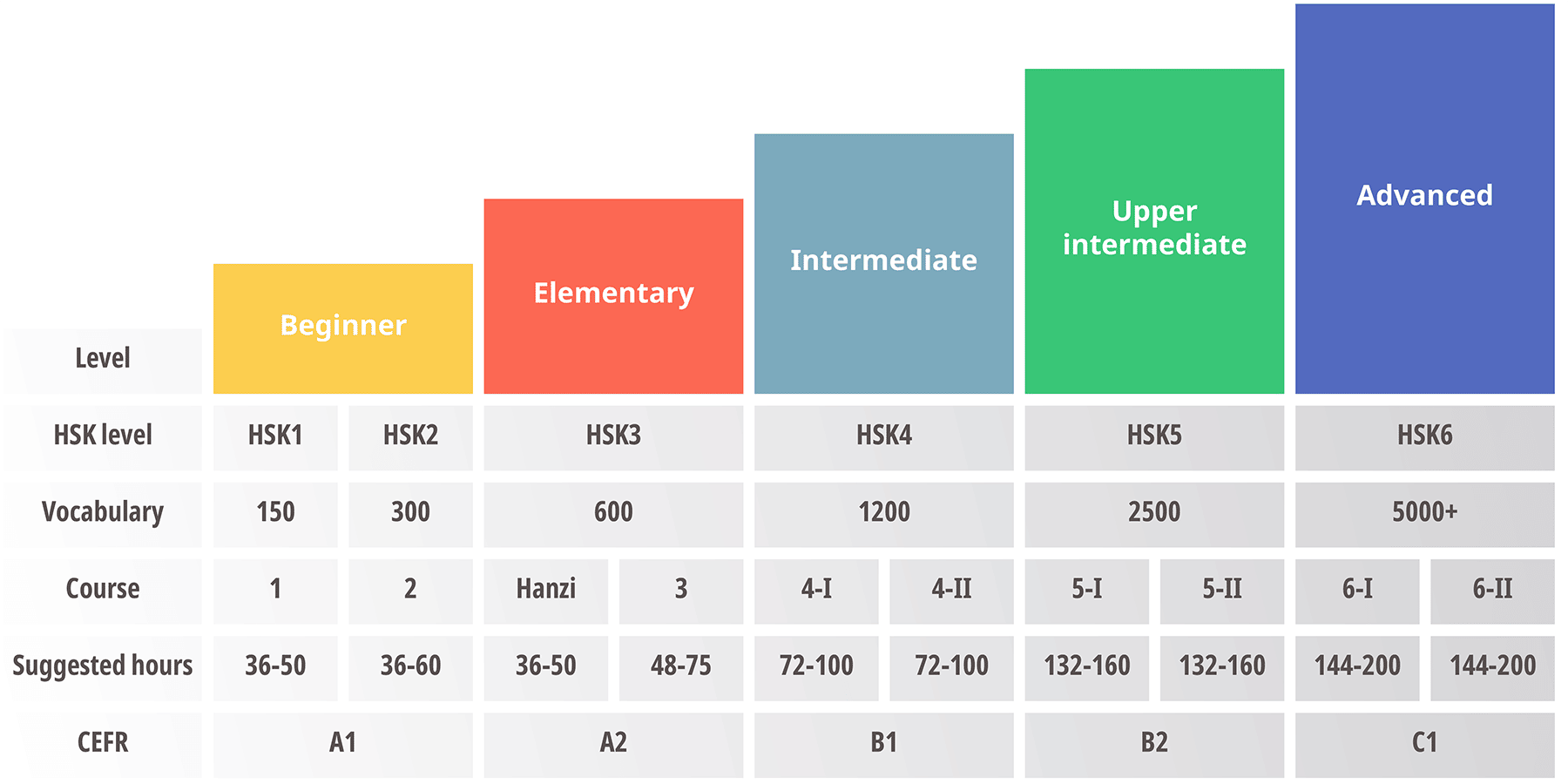
Understanding the HSK Exam Structure
The HSK exam is divided into six levels, from HSK 1 (beginner) to HSK 6 (advanced). Each level assesses different language skills, including vocabulary, grammar, listening, and reading comprehension. Here’s how the structure breaks down:
See AlsoLearning Chinese is easier than you think- HSK 1-2: Basic vocabulary (150-300 words) and simple sentence structures.
- HSK 3-4: Intermediate skills (600-1,200 words) and ability to discuss daily topics.
- HSK 5-6: Advanced proficiency (2,500-5,000+ words) for complex communication.
Assessing Your Current Chinese Proficiency
To determine your HSK level, evaluate your familiarity with vocabulary, grammar, and practical usage. Consider the following steps:
- Vocabulary count: Compare your known words to the HSK level requirements.
- Grammar knowledge: Check if you understand the grammatical structures for each level.
- Practice tests: Take mock exams to gauge your listening, reading, and writing skills.
Taking Official HSK Practice Tests
Official HSK mock exams are the most reliable way to identify your level. These tests mirror the actual exam format and difficulty. Follow these steps:
- Download tests: Use resources from the Hanban or Confucius Institute websites.
- Simulate exam conditions: Time yourself to assess speed and accuracy.
- Review results: Analyze mistakes to pinpoint weaknesses.
Consulting HSK Level Descriptors
The HSK level descriptors outline the competencies required for each level. Key indicators include:
See AlsoWhat Is A Friends Clash On Duolingo: A complete guide- Listening: Ability to understand conversations or monologues.
- Reading: Comprehension of texts with increasing complexity.
- Writing: Capability to construct sentences or essays (HSK 3+).
Seeking Feedback from Teachers or Tutors
A qualified Chinese teacher can provide an accurate assessment of your HSK level. Here’s how they help:
- Diagnostic tests: They administer tailored quizzes to evaluate skills.
- Error analysis: They identify recurring mistakes and suggest improvements.
- Personalized guidance: They recommend the appropriate HSK level based on performance.
How do I check my HSK score?

How to Check Your HSK Score Online
To check your HSK score online, follow these steps:
- Visit the official Chinese Testing International (CTI) website or the HSK registration portal.
- Log in using your test registration number and password.
- Navigate to the score inquiry section and enter the required details.
- Your HSK results will be displayed, including listening, reading, and writing scores.
How Long Does It Take to Receive HSK Scores?
The processing time for HSK scores varies:
- Paper-based tests: Scores are typically available within 4 weeks after the exam date.
- Internet-based tests: Results are usually released within 2-3 weeks.
- You will receive an email notification once scores are published.
Can I Check My HSK Score Without a Registration Number?
If you lost your registration number, try these steps:
- Contact the test center where you took the exam.
- Provide your full name, passport number, and test date for verification.
- Request assistance to retrieve your registration details.
How to Download Your HSK Score Report
After checking your HSK score, you can download the official report:
- Log in to the HSK score portal.
- Click on the download button next to your results.
- Save the PDF file or print it for your records.
What to Do If Your HSK Score Is Missing or Incorrect
If there’s an issue with your HSK score, take these actions:
- Double-check the score release date to ensure results are available.
- Contact the HSK support team or your test center immediately.
- Provide evidence, such as your test admission ticket, for investigation.
Is HSK 4 a B2 level?
Understanding HSK 4 and CEFR Levels
The HSK 4 exam is part of the Chinese proficiency testing system, while B2 is a level in the Common European Framework of Reference for Languages (CEFR). While they measure language ability, they are not directly equivalent. HSK 4 assesses intermediate Chinese skills, whereas B2 represents an upper-intermediate level in European languages. Here are key differences:
- HSK 4 requires knowledge of ~1,200 Chinese words, while B2 typically demands ~2,500-3,000 words in European languages.
- HSK 4 focuses on everyday communication, while B2 includes more complex topics like abstract ideas.
- The CEFR emphasizes broader language use, including cultural nuances, whereas HSK is more exam-oriented.
Comparing HSK 4 and B2 Language Competencies
When comparing HSK 4 and B2, the competencies differ significantly. HSK 4 learners can discuss routine topics, while B2 users handle debates and detailed texts. Key distinctions include:
- Listening: HSK 4 understands clear speech, while B2 comprehends native discussions.
- Writing: HSK 4 produces simple essays, whereas B2 writes detailed reports.
- Speaking: HSK 4 manages daily conversations, but B2 engages in fluent debates.
Official Equivalency Between HSK 4 and B2
There is no official equivalency between HSK 4 and B2, as they belong to different frameworks. However, some institutions approximate HSK 4 to B1-B2 due to overlapping skills. Important notes:
- The Chinese government does not formally align HSK with CEFR.
- Some universities treat HSK 4 as proof of intermediate proficiency, similar to B1.
- Independent studies suggest HSK 4 leans closer to B1 than B2.
Can HSK 4 Qualify as B2 for Academic or Professional Purposes?
Whether HSK 4 qualifies as B2 depends on context. For academic or professional settings, the expectations vary:
- Universities: Some accept HSK 4 for admission, but competitive programs may require higher levels.
- Employers: HSK 4 may suffice for basic roles, but B2-equivalent jobs demand advanced fluency.
- Certifications: Always verify specific requirements, as equivalencies are not standardized.
Preparing for HSK 4 vs. B2: Key Differences in Study Approach
Studying for HSK 4 differs from preparing for a B2 exam due to distinct structures and goals. Consider these factors:
- Vocabulary: HSK 4 has a fixed word list, while B2 requires adaptive learning.
- Grammar: HSK 4 tests basic structures, whereas B2 includes complex syntax.
- Cultural Context: B2 emphasizes cultural fluency, while HSK 4 prioritizes functional communication.
How to calculate HSK score?
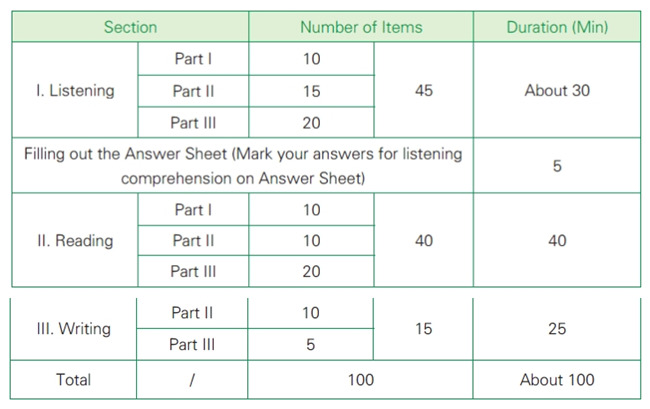
Understanding the HSK Exam Structure
The HSK exam is divided into six levels, from HSK 1 (beginner) to HSK 6 (advanced). Each level assesses different language skills, including listening, reading, and writing (from HSK 3 onwards). The scoring system varies by level, but all sections contribute to the final score.
- HSK 1-2: Only listening and reading sections.
- HSK 3-6: Includes listening, reading, and writing sections.
- Each section is scored out of 100 points, totaling 200 points for HSK 1-2 and 300 points for HSK 3-6.
How HSK Listening Scores Are Calculated
The listening section consists of multiple-choice questions. Your score depends on the number of correct answers, with each question carrying equal weight.
- HSK 1-2: 20 questions, each worth 5 points (total: 100).
- HSK 3-4: 30 questions, each worth 3.33 points (total: 100).
- HSK 5-6: 30-40 questions, scaled to a 100-point maximum.
How HSK Reading Scores Are Calculated
The reading section evaluates comprehension through multiple-choice and fill-in-the-blank tasks. Scoring follows a similar structure to listening.
- HSK 1-2: 20 questions, each worth 5 points (total: 100).
- HSK 3-4: 30 questions, each worth 3.33 points (total: 100).
- HSK 5-6: 40-50 questions, scaled to 100 points.
How HSK Writing Scores Are Calculated (HSK 3-6)
The writing section tests sentence formation, paragraph writing, and essay skills (HSK 5-6). Scores are assigned based on accuracy and coherence.
- HSK 3: Sentence rearrangement and short answers (10 questions, 100 points).
- HSK 4: Sentence construction and paragraph writing (2 tasks, 100 points).
- HSK 5-6: Essay writing and summarization (2-3 tasks, 100 points).
Total HSK Score Calculation
Your final HSK score is the sum of all section scores. Passing requires meeting the minimum threshold for each section and the total.
- HSK 1-2: Passing score is 120/200 (60%).
- HSK 3-4: Passing score is 180/300 (60%).
- HSK 5-6: Passing score is 180/300 (60%).
Frequently Asked Questions (FAQ)
What is the HSK 4 Vocabulary Test?
The HSK 4 Vocabulary Test is an assessment designed to evaluate your knowledge of Mandarin Chinese vocabulary at the HSK 4 level, which is part of the standardized Hanyu Shuiping Kaoshi (HSK) exam. This test focuses on approximately 1,200 words required for HSK 4 proficiency, covering everyday topics, academic contexts, and more complex expressions. By taking this test, you can determine if your vocabulary aligns with the intermediate-upper level of Mandarin proficiency.
How can the HSK 4 Vocabulary Test help me?
Taking the HSK 4 Vocabulary Test helps you identify gaps in your Mandarin vocabulary and assess whether you're ready for the official HSK 4 exam. It provides a clear benchmark of your current level, allowing you to focus on weak areas. Additionally, regular practice with this test can improve your retention and recall of essential words, boosting your confidence in reading, writing, listening, and speaking tasks at the HSK 4 standard.
What topics does the HSK 4 Vocabulary Test cover?
The HSK 4 Vocabulary Test includes words from a wide range of topics, such as daily life (e.g., shopping, travel), work and education (e.g., office terms, academic subjects), and abstract concepts (e.g., emotions, opinions). The vocabulary is carefully selected to reflect real-world usage, ensuring you learn practical and relevant terms. Mastery of these words is crucial for understanding longer texts, participating in discussions, and expressing nuanced ideas in Mandarin.
How should I prepare for the HSK 4 Vocabulary Test?
To prepare effectively for the HSK 4 Vocabulary Test, start by reviewing the official HSK 4 word list and categorizing words by theme or difficulty. Use flashcards, spaced repetition apps, or practice tests to reinforce memorization. Incorporate the words into daily conversations, writing exercises, and listening practice to ensure active usage. Consistency is key—dedicate regular study sessions and track your progress to stay motivated and identify areas needing improvement.
Leave a Reply
Related Posts