
7 ways of learning to write Chinese characters

Learning to write Chinese characters can seem daunting, but with the right methods, it becomes an engaging and rewarding process. Whether you're a beginner or looking to refine your skills, understanding effective techniques is key to mastering this intricate writing system. From stroke order drills to mnemonic devices, various approaches cater to different learning styles. This article explores seven practical ways to practice and memorize Chinese characters, helping you build confidence and accuracy. By incorporating these strategies into your routine, you’ll develop a deeper appreciation for the artistry and logic behind each character. Discover which methods work best for you and start your journey toward fluency today.
7 Effective Ways to Learn How to Write Chinese Characters
1. Start with Basic Strokes and Radicals
Learning Chinese characters begins with understanding their foundational elements: strokes and radicals. Strokes are the individual lines that form a character, while radicals are the building blocks that often hint at meaning or pronunciation. Mastering these basics helps in recognizing and writing more complex characters later.
| Key Strokes | Common Radicals |
|---|---|
| Horizontal (一) | 亻 (person) |
| Vertical (丨) | 氵 (water) |
| Dot (丶) | 口 (mouth) |
2. Use Grid Paper for Proper Structure
Writing Chinese characters requires precision in spacing and proportion. Grid paper, like 米字格 (rice grid), helps learners maintain balance by dividing each character into sections. Practicing within these grids ensures uniformity and correct stroke placement.
See AlsoLearning Chinese characters through pictures| Grid Type | Purpose |
|---|---|
| Rice Grid (米字格) | Guides stroke angles |
| Square Grid (方格) | Maintains proportions |
3. Practice with Repetition and Muscle Memory
Repetition is crucial for memorization. Writing characters repeatedly ingrains their shapes into muscle memory. Start with a few characters daily, gradually increasing complexity. Consistency is key to long-term retention.
| Technique | Benefit |
|---|---|
| Daily Drills | Reinforces memory |
| Slow Writing | Improves accuracy |
4. Learn Characters in Context
Studying characters within words or sentences enhances understanding. For example, learning 学校 (school) as a whole is more practical than memorizing 学 and 校 separately. Contextual learning aids in grasping usage and meaning.
| Character | Contextual Example |
|---|---|
| 爱 (love) | 我爱你 (I love you) |
| 吃 (eat) | 吃饭 (eat a meal) |
5. Incorporate Technology and Apps
Digital tools like Skritter or Pleco offer interactive ways to practice writing. These apps provide instant feedback on stroke order and correctness, making learning more engaging and efficient.
See AlsoCan English learning materials help you learn Chinese?| App | Feature |
|---|---|
| Skritter | Stroke-order practice |
| Pleco | Flashcards + dictionary |
How to learn Chinese characters easily?
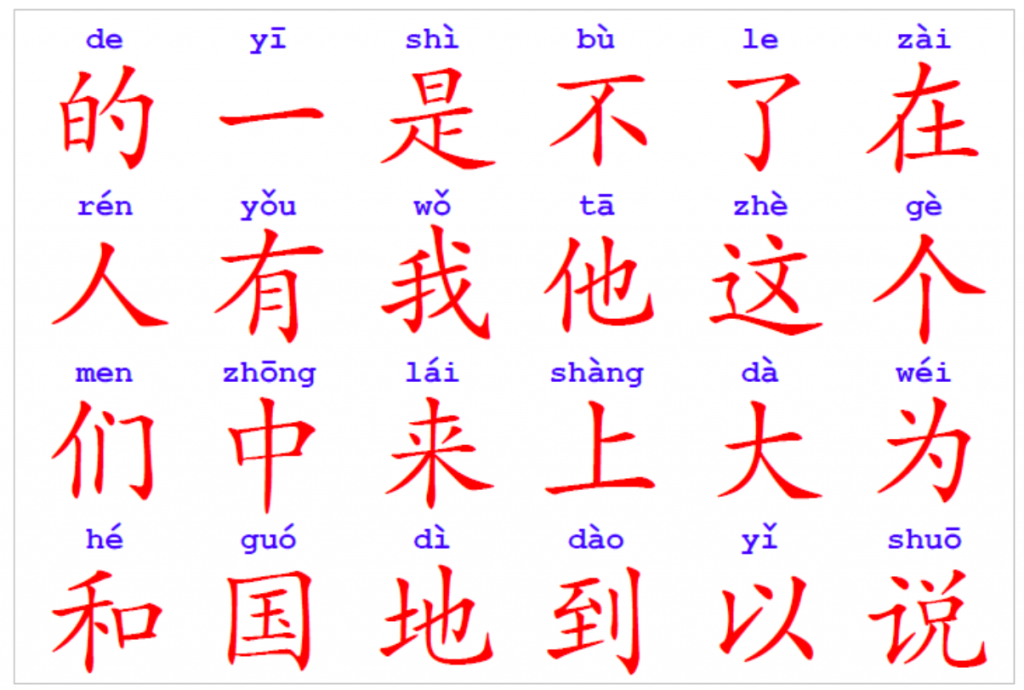
Understand the Structure of Chinese Characters
Chinese characters are built using radicals and components, which often hint at meaning or pronunciation. Breaking them down simplifies memorization. For example:
- Radicals: Learn common ones like 水 (water) or 火 (fire) to guess meanings.
- Phonetic components: Some parts indicate pronunciation, like 妈 (mā), where 马 (mǎ) gives a sound clue.
- Stroke order: Practice writing characters correctly to build muscle memory.
Use Mnemonics and Visual Associations
Creating stories or images linked to characters makes them memorable. For instance:
See AlsoBest AI-Powered Chatbot Apps to Help You Learn Chinese- Visualize: The character 休 (rest) shows a person (亻) leaning against a tree (木).
- Wordplay: Link sounds to familiar words (e.g., 茶 (chá) sounds like cha in chai).
- Apps like Skritter use mnemonics to reinforce learning.
Practice with Flashcards and Spaced Repetition
Repetition is key, but spaced repetition systems (SRS) optimize timing:
- Anki or Pleco: Digital flashcards adapt to your memory curve.
- Physical cards: Write characters on one side, meaning/pinyin on the other.
- Daily reviews: Focus on challenging characters more frequently.
Read and Write Characters in Context
Isolated learning is less effective than contextual exposure:
- Children’s books: Start with simple texts like 《轻松学中文》.
- Label objects: Stick characters on household items (e.g., 门 for door).
- Journaling: Write short sentences using new characters daily.
Leverage Technology and Language Apps
Digital tools offer interactive ways to master characters:
- HelloChinese: Gamifies learning with quizzes.
- TOFU Learn: Focuses on handwriting recognition.
- YouTube channels: Watch tutorials like Chinese Zero to Hero for explanations.
What are the six methods of forming Chinese characters?
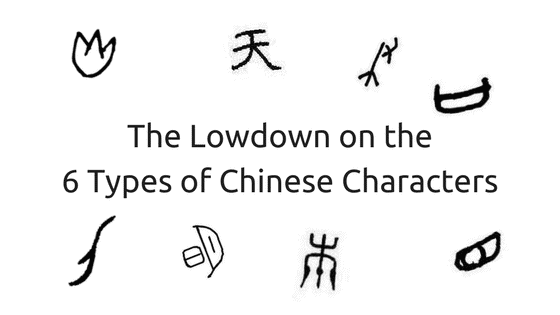
The Six Methods of Forming Chinese Characters
The Chinese writing system is based on six traditional methods of character formation, known as Liùshū (六书). These methods explain how characters were originally created and categorized in ancient times. Below is a detailed breakdown of each method:
- Pictograms (象形, Xiàngxíng) - Characters that resemble physical objects.
- Simple Indicatives (指事, Zhǐshì) - Symbols representing abstract concepts.
- Compound Indicatives (会意, Huìyì) - Combining two or more characters to convey meaning.
- Phonetic Loan Characters (假借, Jiǎjiè) - Borrowing existing characters for new meanings.
- Phono-Semantic Compounds (形声, Xíngshēng) - Combining a semantic and phonetic component.
- Derivative Cognates (转注, Zhuǎnzhù) - Characters that evolved from shared roots.
Pictograms (象形, Xiàngxíng)
Pictograms are the earliest form of Chinese characters, directly depicting objects in a stylized manner. Examples include:
- 山 (shān) - Represents a mountain with three peaks.
- 水 (shuǐ) - Depicts flowing water with wavy lines.
- 日 (rì) - A square with a dot, symbolizing the sun.
Simple Indicatives (指事, Zhǐshì)
These characters represent abstract ideas through simple marks or additions to existing symbols. Key examples:
- 上 (shàng) - A horizontal line with a mark above, meaning above.
- 下 (xià) - A horizontal line with a mark below, meaning below.
- 本 (běn) - A tree (木) with a stroke at the base, meaning root.
Compound Indicatives (会意, Huìyì)
These characters combine multiple elements to create new meanings. Notable cases:
- 休 (xiū) - Combines 人 (person) and 木 (tree) to mean rest.
- 明 (míng) - Merges 日 (sun) and 月 (moon) for bright.
- 好 (hǎo) - Joins 女 (woman) and 子 (child) to mean good.
Phono-Semantic Compounds (形声, Xíngshēng)
The most common method, combining a semantic radical (meaning) and a phonetic component (sound). Examples:
- 河 (hé) - Uses 氵(water) for meaning and 可 (kě) for sound.
- 妈 (mā) - Combines 女 (woman) and 马 (mǎ) for mother.
- 清 (qīng) - Pairs 氵(water) with 青 (qīng) for clear.
Phonetic Loan Characters (假借, Jiǎjiè) and Derivative Cognates (转注, Zhuǎnzhù)
Phonetic loans repurpose characters for new meanings, while derivative cognates show shared origins. Examples:
- 来 (lái) - Originally meant wheat but now means come.
- 老 (lǎo) and 考 (kǎo) - Both derive from the same root meaning old and test.
What is the Chinese character writing method?
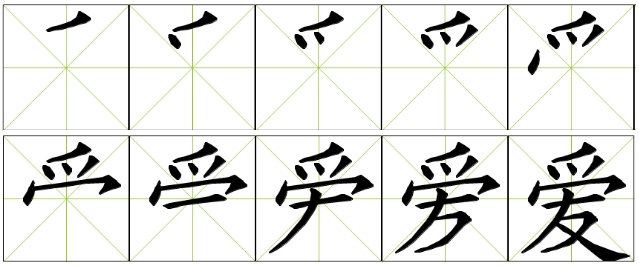
What Are the Basic Strokes in Chinese Character Writing?
The foundation of Chinese character writing lies in mastering the basic strokes. These strokes are the building blocks used to form all characters. Here are the key strokes:
- Horizontal stroke (一): Written from left to right.
- Vertical stroke (丨): Written from top to bottom.
- Dot stroke (丶): A small downward or rightward tap.
- Hook stroke (亅): Added to other strokes, like a small upward flick.
- Slant stroke (丿): A diagonal line from top-right to bottom-left.
What Is the Stroke Order Rule in Chinese Characters?
Writing Chinese characters follows a specific stroke order to ensure clarity and efficiency. The general rules include:
- Top to bottom: Start with the highest stroke first.
- Left to right: Complete left-side components before moving right.
- Horizontal before vertical: Write horizontal lines first, then vertical ones.
- Outside before inside: Outline the frame before filling inner details.
- Closing stroke last: Finalize enclosed characters with the bottom stroke.
How Are Radicals Used in Chinese Character Writing?
Radicals are essential components that provide meaning or pronunciation clues. They help organize characters in dictionaries and aid memorization. Key points:
- Semantic radicals: Indicate the character’s general meaning (e.g., 水 for water-related words).
- Phonetic radicals: Suggest the character’s pronunciation (e.g., 青 in 清).
- Positioning: Radicals can appear on the left, right, top, bottom, or surrounding the character.
What Are the Different Chinese Character Scripts?
Chinese writing has evolved into several scripts, each with distinct styles:
- Seal Script (篆书): Ancient, intricate style used in inscriptions.
- Clerical Script (隶书): Simplified form developed for bureaucratic use.
- Regular Script (楷书): Standardized, modern printing style.
- Running Script (行书): Semi-cursive for faster writing.
- Cursive Script (草书): Highly abstract and fluid.
What Tools Are Used for Chinese Calligraphy?
Traditional calligraphy tools are vital for proper character writing:
- Brush (毛笔): Made from animal hair for flexible strokes.
- Ink (墨): Solid ink sticks ground with water.
- Paper (宣纸): Absorbent rice paper for smooth ink flow.
- Inkstone (砚台): Used to grind and hold ink.
- Seal (印章): Stamped to sign finished works.
Frequently Asked Questions (FAQ)
What are the 7 most effective ways to learn to write Chinese characters?
Repetition is one of the most fundamental methods for mastering Chinese characters. By writing characters multiple times, you reinforce muscle memory. Another approach is breaking down characters into radicals and components, which helps in understanding their structure. Using flashcards with characters on one side and meanings or pronunciations on the other can also enhance recall. Additionally, contextual learning by writing sentences or short paragraphs ensures practical application. Tracing characters in workbooks or apps can improve stroke order accuracy. Mnemonic techniques, such as associating characters with images or stories, make memorization more engaging. Lastly, digital tools like handwriting input on smartphones provide interactive practice.
How important is stroke order when learning to write Chinese characters?
Stroke order is crucial for writing Chinese characters correctly and efficiently. Following the standard sequence ensures that characters look balanced and legible. It also aids in memorization, as the logical progression of strokes helps learners internalize the structure. Incorrect stroke order can lead to illegible handwriting and difficulties when writing quickly. Many learning resources, such as textbooks and apps, emphasize stroke order to build a strong foundation. Over time, adhering to proper stroke order becomes second nature, enabling smoother and faster writing.
Can mnemonics really help in memorizing Chinese characters?
Yes, mnemonics are highly effective for memorizing Chinese characters, especially for beginners. By associating characters with vivid images, stories, or wordplay, learners create mental hooks that make recall easier. For example, the character 休 (xiū, meaning rest) can be remembered as a person (亻) leaning against a tree (木). This technique transforms abstract symbols into relatable concepts. While mnemonics may not replace repetition and practice, they significantly speed up the learning process and make it more enjoyable. Over time, frequent exposure reduces reliance on mnemonics as characters become familiar.
Are digital tools better than traditional methods for learning Chinese characters?
Both digital tools and traditional methods have unique advantages. Digital tools, such as apps and online courses, offer interactive features like instant feedback, gamification, and spaced repetition, which can enhance engagement and retention. However, traditional methods like writing by hand with pen and paper deepen muscle memory and reinforce stroke order. A balanced approach combining both is often most effective. For instance, using apps for practice and flashcards for review, while also dedicating time to handwritten exercises, ensures a well-rounded learning experience.
Leave a Reply
Related Posts