
How to Use ChatGPT to Learn Chinese

Learning Chinese can be a challenging yet rewarding journey, and with the rise of AI tools like ChatGPT, mastering the language has become more accessible than ever. ChatGPT offers personalized practice, instant feedback, and engaging conversations to enhance your Mandarin skills. Whether you're a beginner tackling pinyin or an advanced learner refining your fluency, this AI-powered assistant adapts to your needs. From vocabulary drills to cultural insights, ChatGPT provides a versatile platform to practice listening, speaking, reading, and writing—all at your own pace. Discover how to leverage this innovative tool effectively and make your Chinese learning experience more interactive, efficient, and enjoyable.
How to Use ChatGPT to Learn Chinese Effectively
Learning Chinese can be challenging, but with the help of ChatGPT, you can enhance your language skills efficiently. Below, we explore different ways to leverage this AI tool for mastering Chinese.
1. Practicing Basic Conversations
One of the best ways to learn Chinese is by engaging in conversational practice. ChatGPT can simulate real-life dialogues, helping you improve your speaking and comprehension skills. You can start with simple greetings and gradually move to more complex topics.
See AlsoWhy your Chinese isn’t as good as you think it ought to be| Scenario | Example Phrase | ChatGPT Response |
|---|---|---|
| Greetings | 你好 (Nǐ hǎo) | 你好!你今天怎么样?(Hello! How are you today?) |
| Ordering Food | 我要一碗面条 (Wǒ yào yī wǎn miàntiáo) | 好的,一碗面条。还要别的吗?(Sure, one bowl of noodles. Anything else?) |
2. Expanding Vocabulary
Building a strong vocabulary is essential for fluency. Ask ChatGPT to generate word lists, explain meanings, and provide example sentences. You can also request translations and synonyms to deepen your understanding.
| Category | Word | Pinyin & Meaning |
|---|---|---|
| Food | 苹果 (Píngguǒ) | Apple |
| Travel | 飞机 (Fēijī) | Airplane |
3. Understanding Grammar Rules
Chinese grammar can be tricky, but ChatGPT can simplify it by providing clear explanations and examples. You can ask about sentence structures, particles like 了 (le) or 的 (de), and verb tenses.
| Grammar Point | Example | Explanation |
|---|---|---|
| 了 (le) | 我吃了 (Wǒ chī le) | Indicates completed action (I ate.) |
| 的 (de) | 我的书 (Wǒ de shū) | Shows possession (My book) |
4. Improving Pronunciation with Pinyin
Correct pronunciation is crucial in Chinese. ChatGPT can generate Pinyin (phonetic spelling) for any word or sentence, helping you practice tones and sounds accurately.
See AlsoChinese Business Etiquette: How to Do Business in China| Chinese Character | Pinyin | English Meaning |
|---|---|---|
| 谢谢 | Xièxiè | Thank you |
| 你好吗 | Nǐ hǎo ma | How are you? |
5. Simulating Real-Life Scenarios
To prepare for real-world interactions, use ChatGPT to role-play situations like shopping, traveling, or job interviews. This builds confidence and practical language skills.
| Scenario | Key Phrases | ChatGPT Prompt |
|---|---|---|
| Shopping | 多少钱?(Duōshǎo qián?) | Act as a shopkeeper; I want to buy a shirt. |
| Travel | 厕所在哪里?(Cèsuǒ zài nǎlǐ?) | Pretend I'm lost; help me find the restroom. |
Can you learn Chinese from ChatGPT?
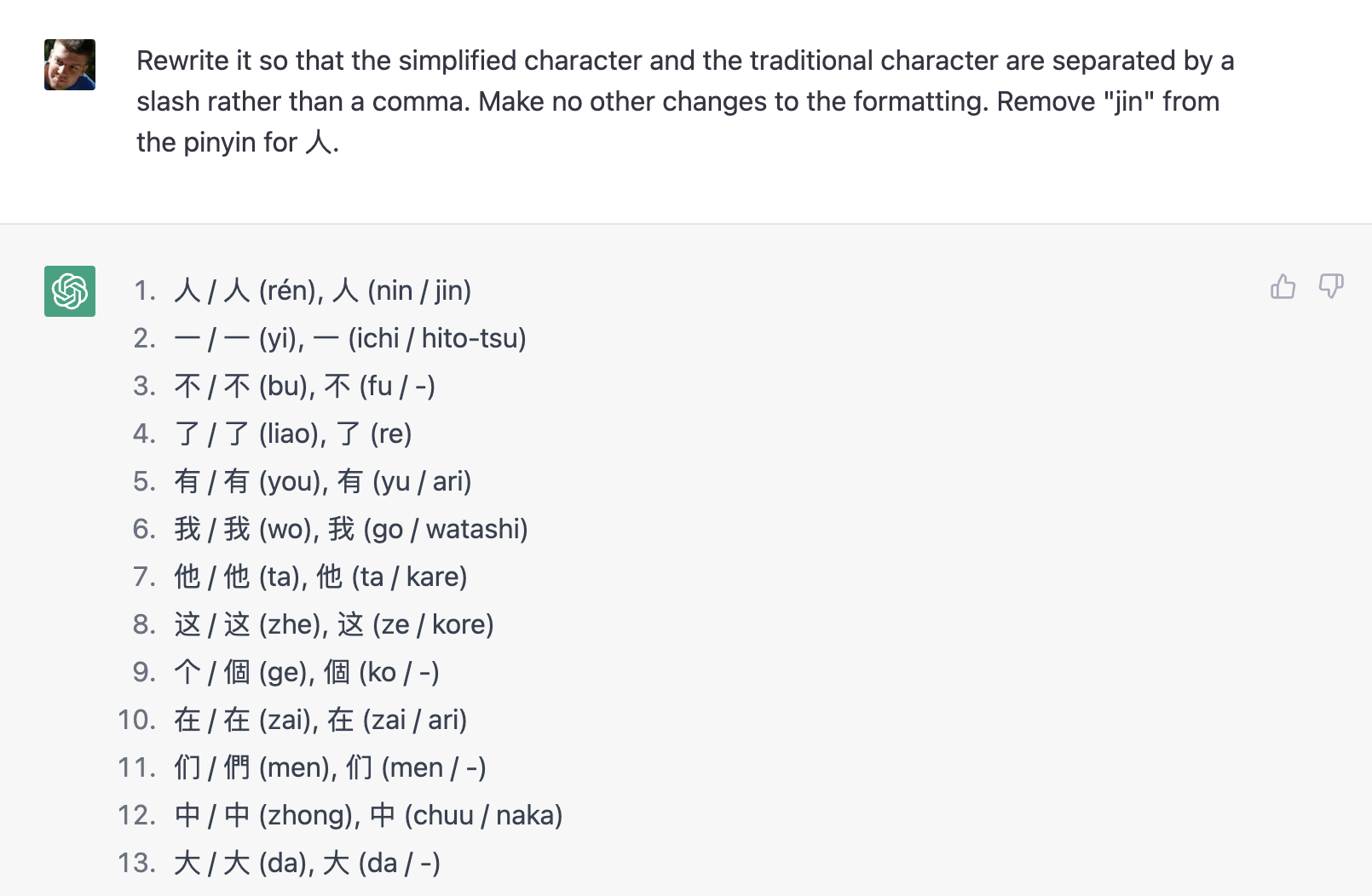
Can ChatGPT Help You Learn Chinese Vocabulary?
Yes, ChatGPT can assist in learning Chinese vocabulary by providing word definitions, example sentences, and pronunciation guidance. Here’s how:
See AlsoCramming vs. spaced repetition: When to use which method to learn Chinese- Word explanations: It can define Chinese words in English or provide synonyms.
- Example sentences: ChatGPT generates contextual sentences to demonstrate usage.
- Pinyin support: It offers romanization (Pinyin) for pronunciation help.
Does ChatGPT Teach Chinese Grammar Effectively?
ChatGPT can explain Chinese grammar rules, but it lacks structured lessons. Key points include:
- Grammar breakdowns: It clarifies sentence structures like subject-verb-object patterns.
- Error correction: Users can submit sentences for grammar fixes.
- Comparisons: It contrasts Chinese grammar with English to highlight differences.
Can ChatGPT Improve Your Chinese Pronunciation?
While ChatGPT can’t audibly pronounce words, it aids pronunciation indirectly:
- Pinyin transcription: Provides phonetic spellings for characters.
- Tone marks: Indicates Mandarin tones (e.g., mā, má, mǎ, mà).
- Pronunciation tips: Explains tongue placement or airflow for tricky sounds.
Is ChatGPT Useful for Practicing Chinese Conversation?
ChatGPT simulates basic conversations but has limitations:
- Dialogue simulation: Generates Q&A exchanges in Chinese.
- Formal vs. informal: Differentiates between colloquial and formal speech.
- No real-time feedback: Lacks voice recognition for speaking practice.
What Are the Limitations of Learning Chinese with ChatGPT?
ChatGPT isn’t a comprehensive learning tool for Chinese due to:
- No visuals: Can’t display character stroke order or writing.
- Passive learning: Lacks interactive exercises or quizzes.
- Cultural context: May oversimplify idioms or slang without nuance.
What is the best AI for learning Chinese?

Top AI Tools for Learning Chinese Effectively
When it comes to learning Chinese, several AI-powered tools stand out for their effectiveness. These platforms leverage natural language processing (NLP) and adaptive learning to tailor lessons to your proficiency level. Below are the top choices:
- Duolingo: Uses gamification to teach vocabulary and grammar, with a focus on Mandarin.
- HelloChinese: Designed specifically for Mandarin learners, offering speech recognition and interactive exercises.
- LingQ: Focuses on immersion by analyzing real-world texts and audio with AI-driven translations.
Features to Look for in an AI Chinese Learning App
Choosing the right AI tool depends on key features that enhance learning. Here’s what to prioritize:
- Speech Recognition: Essential for mastering tones and pronunciation in Mandarin.
- Spaced Repetition: AI algorithms that optimize review schedules for long-term retention.
- Contextual Learning: Tools that teach phrases and idioms in real-life scenarios.
How AI Personalizes Chinese Language Learning
Artificial intelligence adapts to individual learning styles, making it ideal for mastering Chinese. Key personalization aspects include:
- Adaptive Difficulty: Adjusts lessons based on your progress and weak areas.
- Feedback Systems: Instant corrections for pronunciation, grammar, and writing.
- Goal-Oriented Plans: AI creates customized study plans for HSK prep or conversational fluency.
Free vs. Paid AI Tools for Learning Chinese
While many AI-powered apps offer free tiers, paid versions often unlock advanced features. Compare the options:
- Free Tools: Basic vocabulary drills and limited speech practice (e.g., Duolingo’s free version).
- Paid Tools: In-depth courses, HSK test prep, and 1-on-1 tutoring (e.g., HelloChinese Pro).
- Hybrid Models: Some apps like LingQ offer freemium plans with premium content upgrades.
Integrating AI with Traditional Chinese Learning Methods
Combining AI tools with traditional methods maximizes learning efficiency. Here’s how to blend them:
- Textbook Supplements: Use AI for interactive exercises to reinforce textbook concepts.
- Flashcard Apps: Pair Anki with AI-generated decks for vocabulary building.
- Tutor Partnerships: AI can identify weak spots for human tutors to address in sessions.
Can ChatGPT generate Chinese text?
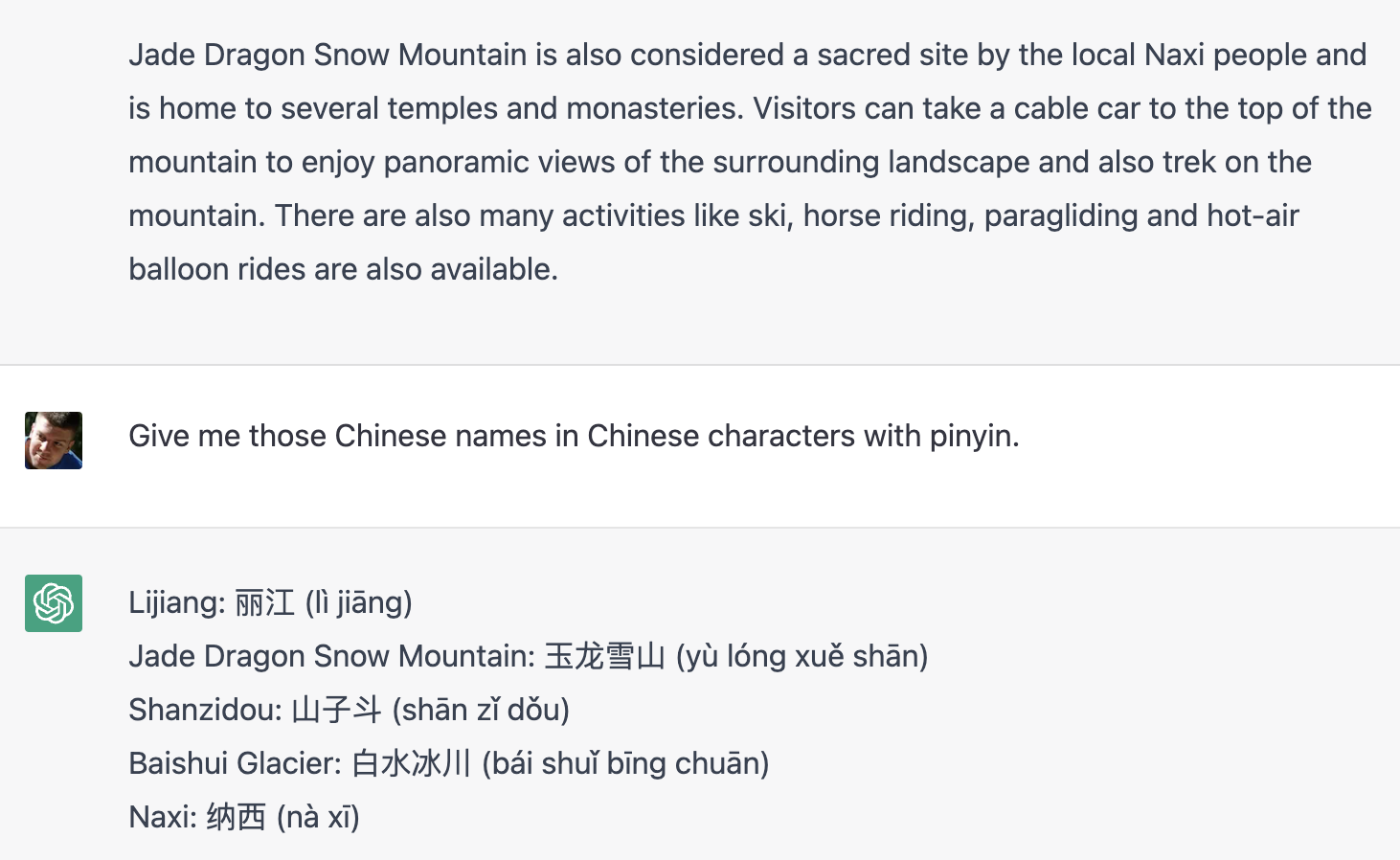
Yes, ChatGPT can generate Chinese text. It is trained on a diverse dataset that includes multiple languages, allowing it to produce coherent and contextually appropriate responses in Chinese, whether simplified or traditional characters.
How Accurate Is ChatGPT's Chinese Text Generation?
ChatGPT's accuracy in generating Chinese depends on several factors:
- Training data: It has been trained on vast amounts of Chinese text, improving fluency.
- Context understanding: It can handle both formal and informal Chinese, though nuances may vary.
- Grammar and syntax: Generally correct, but occasional errors may occur in complex sentences.
Does ChatGPT Support Both Simplified and Traditional Chinese?
Yes, ChatGPT can generate text in both Simplified Chinese (used in mainland China) and Traditional Chinese (used in Taiwan, Hong Kong, and Macau).
- Simplified Chinese: Optimized for mainland audiences with fewer strokes per character.
- Traditional Chinese: Maintains historical character forms, often preferred in cultural contexts.
- Automatic detection: It can switch based on user input or explicit requests.
Can ChatGPT Write Formal Chinese for Business or Academic Use?
ChatGPT can produce formal Chinese text, but quality may vary depending on complexity.
- Business correspondence: Suitable for emails, reports, and proposals with proper structure.
- Academic writing: Can draft essays but may require fact-checking for specialized topics.
- Technical jargon: Handles industry-specific terms but may need refinement.
What Are the Limitations of ChatGPT in Chinese Text Generation?
Despite its capabilities, ChatGPT has some limitations in Chinese text generation.
- Idiomatic expressions: May misinterpret or misuse certain phrases.
- Cultural context: Sometimes lacks deep cultural nuance compared to native speakers.
- Real-time updates: May not reflect the latest slang or trends in Chinese.
How Can Users Improve ChatGPT's Chinese Output?
Users can enhance ChatGPT's Chinese responses with these strategies:
- Provide clear context: Specify tone, audience, and purpose for better results.
- Use prompts in Chinese: Helps maintain linguistic consistency.
- Review and refine: Edit outputs for precision, especially in professional settings.
Frequently Asked Questions (FAQ)
How can ChatGPT help me learn Chinese vocabulary effectively?
ChatGPT can be a powerful tool for expanding your Chinese vocabulary by providing instant translations, example sentences, and contextual usage. You can ask it to generate word lists based on themes like food, travel, or business, or request explanations for synonyms and antonyms. Additionally, ChatGPT can create flashcards or quizzes to test your retention, making it an interactive way to reinforce new words. For best results, practice regularly and ask ChatGPT to use the words in real-life scenarios to deepen your understanding.
Can ChatGPT correct my Chinese grammar and sentence structure?
Yes, ChatGPT can help identify and correct grammatical errors in your Chinese sentences. Simply type your sentence and ask, Is this correct? or How can I improve this? The AI will provide corrections and explanations, such as proper word order, particle usage, or verb tenses. For advanced learners, you can even request alternative phrasing to sound more natural. However, always cross-check with native speakers or additional resources, as ChatGPT may occasionally miss nuances in regional dialects or highly idiomatic expressions.
Is ChatGPT useful for practicing Chinese conversation?
Absolutely! ChatGPT can simulate conversational practice by role-playing scenarios like ordering food, booking a hotel, or casual chats. You can set the context (e.g., Let’s practice a beginner-level dialogue about shopping), and ChatGPT will respond in Chinese. To enhance learning, ask it to switch between formal and informal tones or include common slang. While it’s no substitute for speaking with native speakers, it’s a great way to build confidence and improve response speed in a low-pressure environment.
How do I use ChatGPT to learn Chinese characters and writing?
ChatGPT can assist with learning Chinese characters (汉字) by breaking them down into radicals and strokes, explaining their origins, or even generating practice sheets. Ask it to provide mnemonics for tricky characters or to quiz you on their meanings and pronunciations. For writing practice, you can compose short essays or paragraphs and request feedback on clarity, coherence, and cultural appropriateness. Pair this with handwriting apps or worksheets for a well-rounded approach to mastering written Chinese.
Leave a Reply
Related Posts