
Review: Mandarin Companion: Easy to read novels in Chinese

Learning Chinese can be a daunting task, but Mandarin Companion makes it more accessible with their easy-to-read novels designed for language learners. These graded readers simplify Chinese literature by using limited vocabulary and straightforward sentence structures, allowing beginners to build confidence while immersing themselves in engaging stories. Whether you're just starting or looking to reinforce your skills, Mandarin Companion offers a practical way to improve reading comprehension and expand your vocabulary. This review explores the series' strengths, its suitability for different proficiency levels, and how it compares to other learning resources. Discover how these novels can make your Chinese learning journey both enjoyable and effective.
- Review: Mandarin Companion – Easy-to-Read Chinese Novels for Learners
- What is the best app to read Chinese novels for free?
- What are the top 4 Chinese novels?
- How many Chinese characters do you need to know to read a novel?
- What is the most influential Chinese novel?
- Frequently Asked Questions (FAQ)
Review: Mandarin Companion – Easy-to-Read Chinese Novels for Learners
Mandarin Companion is a series of graded readers designed to help Chinese language learners improve their reading skills through engaging stories written with a limited vocabulary. These books are tailored for different proficiency levels, making them accessible for beginners and intermediate learners. The stories are adaptations of well-known Western classics, rewritten in simplified Chinese characters with pinyin and English definitions for key words. This approach allows learners to build confidence while expanding their vocabulary and comprehension skills.
What Makes Mandarin Companion Unique?
Mandarin Companion stands out because it uses controlled vocabulary and sentence structures to ensure learners can read without feeling overwhelmed. Each book is carefully crafted to include only the most essential Chinese words, reinforcing them naturally through repetition. The inclusion of cultural notes and comprehension questions further enhances the learning experience.
See AlsoWhich words you should learn and where to find them| Feature | Benefit |
|---|---|
| Graded Levels | Books for beginner and intermediate learners |
| Controlled Vocabulary | Helps learners focus on key words |
| Pinyin & Definitions | Supports pronunciation and understanding |
Who Should Use Mandarin Companion Books?
These books are ideal for self-learners, classroom students, and even heritage speakers who want to strengthen their reading skills. Beginners will appreciate the simplified language, while intermediate learners can challenge themselves with longer sentences and more complex plots.
| Learner Type | Suitable Level |
|---|---|
| Beginner | Breakthrough Level (150-300 words) |
| Intermediate | Level 1 (300-500 words) |
How Effective Are These Books for Learning Chinese?
Mandarin Companion books are highly effective because they use natural repetition of words and phrases, helping learners retain vocabulary effortlessly. The stories are engaging, which motivates readers to continue practicing. Many users report noticeable improvements in their reading speed and recognition of characters after completing a few books.
| Aspect | Impact |
|---|---|
| Vocabulary Retention | High due to repetition |
| Reading Confidence | Builds gradually with comprehensible input |
What Are the Best Titles to Start With?
For beginners, The Secret Garden (Breakthrough Level) is a great introduction. Intermediate learners may enjoy Sherlock Holmes and the Case of the Curly Haired Company (Level 1). Each book is designed to be enjoyable while reinforcing language skills.
See AlsoThe best Chinese reading practice for beginners| Title | Level |
|---|---|
| The Secret Garden | Breakthrough |
| Sherlock Holmes | Level 1 |
Are There Any Drawbacks to Mandarin Companion Books?
While highly beneficial, some learners may find the limited vocabulary restrictive if they seek more advanced content. Additionally, the Western adaptations might lack some authentic Chinese cultural elements. However, these aspects are minor compared to the learning advantages they provide.
| Potential Drawback | Consideration |
|---|---|
| Limited Advanced Content | Best for beginners/intermediate |
| Western-Centric Stories | Less focus on Chinese culture |
What is the best app to read Chinese novels for free?

Top Free Apps for Reading Chinese Novels
If you're looking for free apps to read Chinese novels, here are some of the best options available:
See AlsoBenchmarking progress in Chinese to stay motivated- Webnovel: Offers a vast library of translated Chinese novels, including popular genres like xianxia and wuxia.
- Babel Novel: Focuses on fan-translated works and community-driven content, with frequent updates.
- Novel Updates: A platform that aggregates translations from various sources, helping you track ongoing series.
Features to Look for in a Chinese Novel App
When choosing an app, consider these key features for the best experience:
- Offline Reading: Allows downloading novels to read without an internet connection.
- Customizable Fonts: Adjust text size and style for comfortable reading.
- Bookmarking: Save your progress and easily return to your favorite chapters.
Popular Genres in Chinese Novel Apps
Chinese novels cover diverse genres, and these are the most popular among readers:
- Xianxia: Fantasy stories about immortals and cultivation.
- Wuxia: Martial arts adventures set in ancient China.
- Romance: Modern or historical love stories with rich cultural elements.
How to Find High-Quality Translations
To avoid poorly translated novels, follow these tips:
See Also6 things in Chinese that are harder to learn than they seem- Check Reviews: Look for user feedback on translation accuracy and readability.
- Verified Translators: Prefer apps that credit professional or well-known translators.
- Community Recommendations: Join forums or groups to discover trusted sources.
Legal and Safe Alternatives for Free Reading
Ensure you use legal platforms to avoid piracy risks:
- Official Publisher Apps: Many authors release free chapters on platforms like Qidian International.
- Ad-Supported Models: Some apps offer free access in exchange for watching ads.
- Limited Free Trials: Certain apps provide free previews before requiring payment.
What are the top 4 Chinese novels?
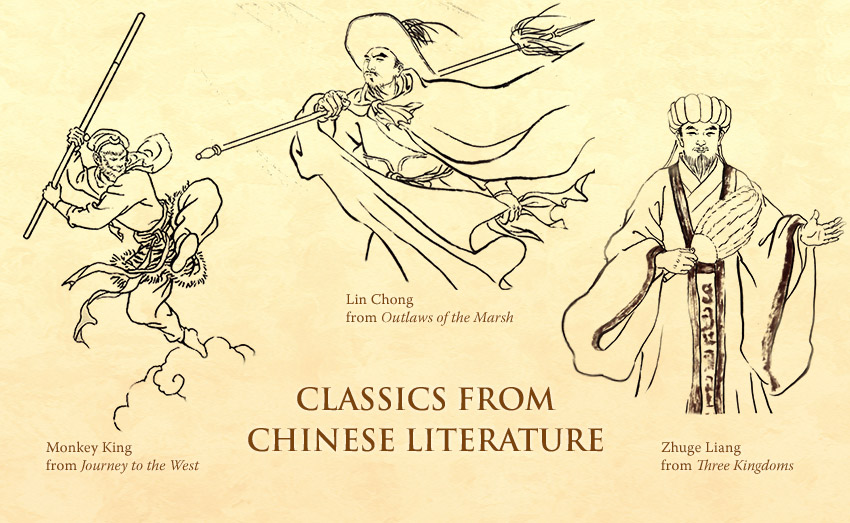
1. Romance of the Three Kingdoms by Luo Guanzhong
Considered one of China's Four Great Classical Novels, this epic historical work depicts the turbulent years of the late Eastern Han dynasty and the Three Kingdoms period. Key features include:
- Complex characters like Liu Bei, Cao Cao, and Guan Yu, who embody loyalty, ambition, and brotherhood.
- Military strategy and political intrigue, making it a masterpiece of historical fiction.
- Influence on East Asian culture, inspiring adaptations in opera, film, and video games.
2. Journey to the West by Wu Cheng'en
A legendary mythological adventure, this novel follows the monk Xuanzang and his disciples, including the rebellious Monkey King, Sun Wukong. Highlights include:
- Fantastical elements like demons, magic, and divine intervention.
- Buddhist themes of redemption, perseverance, and enlightenment.
- Enduring popularity, with countless adaptations in TV, comics, and theater.
3. Water Margin by Shi Nai'an
Also known as Outlaws of the Marsh, this novel revolves around 108 bandits who rebel against corrupt officials. Notable aspects:
- Moral ambiguity, portraying flawed heroes fighting injustice.
- Action-packed narratives of camaraderie and rebellion.
- Criticism of feudal society, making it controversial in some eras.
4. Dream of the Red Chamber by Cao Xueqin
Regarded as China's greatest literary masterpiece, this novel explores the decline of the aristocratic Jia family. Key points:
- Rich character development, especially the tragic love story of Baoyu and Daiyu.
- Social commentary on Confucian values and Qing dynasty decadence.
- Unfinished nature, with multiple interpretations of its cryptic ending.
5. Influence of the Four Great Classical Novels
These works have shaped Chinese literature and beyond. Their impact includes:
- Cultural legacy, inspiring art, theater, and modern media.
- Linguistic contributions, with idioms and phrases entering everyday speech.
- Global recognition, as they are studied and translated worldwide.
6. Modern Adaptations of Classic Chinese Novels
Contemporary retellings keep these stories alive. Examples:
- TV series like The Three Kingdoms (2010) and Journey to the West (1986).
- Video games such as Dynasty Warriors and Monkey King: Hero Is Back.
- Graphic novels and animations reinterpreting the classics for new audiences.
How many Chinese characters do you need to know to read a novel?

How Many Chinese Characters Are Needed for Basic Novel Comprehension?
To understand basic content in a Chinese novel, you need to know around 2,000 to 3,000 characters. This covers approximately 95-98% of the characters used in most modern fiction. However, deeper comprehension may require additional knowledge due to context-specific terms or literary styles.
- 2,000 characters allow reading common words and simple narratives.
- 3,000 characters improve fluency and reduce reliance on dictionaries.
- Specialized genres (e.g., historical or fantasy) may demand additional characters.
What Percentage of Chinese Characters Appear Frequently in Novels?
Around 1,000 characters account for roughly 90% of written material, while 2,500 characters cover 97-99%. Rare or domain-specific terms make up the remaining percentage, varying by genre.
- High-frequency characters (e.g., 的, 是) appear repeatedly.
- Mid-frequency characters (e.g., 解, 释) are common but less frequent.
- Low-frequency characters (e.g., 鏖, 龘) appear sporadically.
How Does Vocabulary Size Affect Reading Speed?
A larger vocabulary significantly increases reading speed and comprehension. Knowing 3,500+ characters allows smoother reading with minimal pauses, while 2,000 characters may require frequent dictionary checks.
- 1,000-2,000 characters: Slow, laborious reading.
- 2,500-3,500 characters: Moderate fluency.
- 4,000+ characters: Near-native reading speed.
Are There Differences Between Genres in Character Requirements?
Yes, genre heavily influences the number of characters needed. Modern romance or slice-of-life novels use simpler language, while historical or wuxia novels demand classical or archaic characters.
- Modern fiction: ~2,500 characters suffice.
- Historical fiction: ~3,500+ characters.
- Technical/scientific novels: Require domain-specific terms.
Can You Read a Novel with Just HSK Vocabulary?
HSK 6 (2,600 characters) provides a foundation, but novels often include non-HSK characters and colloquial expressions. Supplemental learning is necessary for full comprehension.
- HSK 4-5 (~1,200 characters): Limited to simple texts.
- HSK 6: Handles intermediate novels with effort.
- Beyond HSK: Essential for advanced literature.
What is the most influential Chinese novel?

What is considered the most influential Chinese novel?
The most influential Chinese novel is widely regarded as Dream of the Red Chamber (红楼梦, Hónglóu Mèng), also known as The Story of the Stone. Written by Cao Xueqin in the mid-18th century during the Qing Dynasty, it is a masterpiece of Chinese literature. The novel explores themes of love, family, and societal decline through the intricate lives of the aristocratic Jia family. Its influence extends beyond literature into art, philosophy, and even modern media.
- Cultural Impact: Shaped Chinese cultural identity and inspired countless adaptations.
- Literary Depth: Features complex characters and poetic language.
- Historical Significance: Reflects the decline of feudal society in China.
Why is Dream of the Red Chamber so influential?
Dream of the Red Chamber stands out due to its unparalleled narrative complexity and emotional depth. It blends realism with allegory, offering a critique of Confucian values while celebrating human emotions. The novel's detailed portrayal of 18th-century Chinese aristocracy provides historical insights, making it a cornerstone of world literature.
- Character Development: Over 400 vividly depicted characters.
- Themes: Love, fate, and societal decay resonate universally.
- Legacy: Continues to be studied in academia and adapted in films/TV.
How does Dream of the Red Chamber compare to other Chinese classics?
Compared to other Four Great Classical Novels of Chinese literature—Romance of the Three Kingdoms, Water Margin, and Journey to the West—Dream of the Red Chamber is more introspective and less action-driven. It focuses on domestic life and psychological realism, setting it apart from the epic and heroic narratives of its counterparts.
- Style: Poetic and philosophical vs. martial or adventurous.
- Audience: Appeals to scholars and general readers alike.
- Influence: More modern in its exploration of individual emotions.
What are the key themes in Dream of the Red Chamber?
The novel delves into universal themes such as love, loss, and impermanence, framed within the decline of the Jia family. It critiques materialism and social hierarchies while exploring Buddhist and Taoist philosophies. The tragic romance between Baoyu and Daiyu symbolizes the fleeting nature of happiness.
- Love and Fate: Star-crossed relationships and destiny.
- Social Critique: Exposes corruption in feudal systems.
- Spiritualism: Emphasizes detachment and enlightenment.
How has Dream of the Red Chamber influenced modern culture?
The novel's enduring relevance is evident in its adaptations across opera, theater, film, and television. Modern interpretations often reimagine its themes to address contemporary issues like gender roles and class struggle. Its symbolism and narrative techniques have inspired global authors and filmmakers.
- Adaptations: Over 20 film/TV versions, including a 1987 series.
- Academic Studies: A cornerstone in Sinology and comparative literature.
- Global Reach: Translated into dozens of languages.
Frequently Asked Questions (FAQ)
What makes Mandarin Companion novels suitable for beginners?
Mandarin Companion novels are specifically designed for beginner and intermediate learners of Chinese. The books use a limited vocabulary and simple sentence structures, making them accessible to those still building their language skills. Each story is crafted to reinforce common words and phrases, helping readers naturally absorb the language without feeling overwhelmed. Additionally, the engaging plots keep learners motivated, turning the challenge of reading into an enjoyable experience.
How does Mandarin Companion compare to graded readers from other publishers?
Unlike many graded readers, which often feel overly simplified or lack compelling narratives, Mandarin Companion focuses on authentic storytelling. The books adapt well-known stories (like Sherlock Holmes or Journey to the West) while maintaining linguistic simplicity. This approach sets them apart by offering cultural familiarity alongside language learning. Furthermore, the careful balance of repetition and progression ensures that learners steadily improve without hitting frustrating plateaus, a common issue with other graded materials.
Are there any supplemental resources available with Mandarin Companion books?
Yes, Mandarin Companion provides supplemental resources to enhance the learning experience. Many titles include audio versions, allowing learners to practice listening comprehension and pronunciation. Some books also feature glossaries and discussion questions to reinforce understanding. These resources make the novels versatile tools for both self-study and classroom use, catering to different learning styles and needs.
Can advanced learners benefit from Mandarin Companion books?
While Mandarin Companion primarily targets beginners, advanced learners can still find value in these books. The stories serve as excellent review material for reinforcing foundational vocabulary and grammar. Additionally, the natural flow of the language helps learners internalize sentence patterns and idiomatic expressions in context. For those transitioning to native-level content, these novels can act as a confidence-building bridge before tackling more complex texts.
Leave a Reply
Related Posts