
Top 15 Mandarin Chinese Travel Phrases

Traveling to China can be an unforgettable experience, but navigating daily interactions becomes much easier with a few essential Mandarin phrases. Whether you're ordering food, asking for directions, or simply greeting locals, knowing key expressions can bridge cultural gaps and enhance your journey. Mandarin Chinese, spoken by over a billion people, may seem daunting at first, but mastering these practical phrases will boost your confidence and help you connect with people more authentically. In this article, we’ve compiled the top 15 travel phrases every visitor should know—simple yet powerful tools to make your trip smoother and more enjoyable. Let’s dive in!
- Top 15 Mandarin Chinese Travel Phrases You Need to Know
- How do you say travel in Mandarin?
- How do you say basic Chinese phrases?
- What are Mandarin language words?
-
Frequently Asked Questions (FAQ)
- What are the most essential Mandarin Chinese travel phrases to learn before a trip?
- How can I pronounce Mandarin Chinese travel phrases correctly?
- Why is it important to learn Mandarin phrases for travel even if English is widely spoken?
- Where can I practice Mandarin Chinese travel phrases before my trip?
Top 15 Mandarin Chinese Travel Phrases You Need to Know
1. Basic Greetings and Polite Expressions
When traveling in Mandarin-speaking regions, knowing basic greetings can make a big difference. Start with Nǐ hǎo (Hello) and Xièxiè (Thank you). Politeness goes a long way, so phrases like Qǐng wèn (Excuse me) and Duìbuqǐ (Sorry) are essential.
| Phrase | Pinyin | Meaning |
|---|---|---|
| Nǐ hǎo | Nee how | Hello |
| Xièxiè | Shieh-shieh | Thank you |
| Qǐng wèn | Ching wen | Excuse me |
| Duìbuqǐ | Dway-boo-chee | Sorry |
2. Asking for Directions
Navigating a new place is easier when you can ask for directions. Key phrases include Zài nǎlǐ? (Where is...?) and Zěnme zǒu? (How do I get there?).
See AlsoTake responsibility for your Chinese learning now| Phrase | Pinyin | Meaning |
|---|---|---|
| Zài nǎlǐ? | Zai nah-lee? | Where is...? |
| Zěnme zǒu? | Zen-may dzoh? | How do I get there? |
| Zuǒ / Yòu | Dzwoh / Yo | Left / Right |
3. Ordering Food and Drinks
Food is a big part of travel. Use Wǒ yào... (I want...) and Zhège (This one) when ordering. Don’t forget Máfan nǐ (Please) to be polite.
| Phrase | Pinyin | Meaning |
|---|---|---|
| Wǒ yào... | Wuh yow... | I want... |
| Zhège | Juh-guh | This one |
| Máfan nǐ | Mah-fahn nee | Please |
4. Shopping and Bargaining
Bargaining is common in markets. Learn Duōshǎo qián? (How much?) and Tài guì le (Too expensive) to negotiate better prices.
| Phrase | Pinyin | Meaning |
|---|---|---|
| Duōshǎo qián? | Dwuh-shao chyen? | How much? |
| Tài guì le | Tie gway luh | Too expensive |
| Piányi yīdiǎn | Pyehn-ee ee-dyen | Cheaper please |
5. Emergency and Helpful Phrases
In case of emergencies, phrases like Bāng zhù! (Help!) and Yīshēng (Doctor) are crucial.
See AlsoFastest Way to Learn Chinese - 8 Critical Ideas| Phrase | Pinyin | Meaning |
|---|---|---|
| Bāng zhù! | Bahng joo! | Help! |
| Yīshēng | Ee-shung | Doctor |
| Jǐngchá | Jing-chah | Police |
How do you say travel in Mandarin?

The word for travel in Mandarin is 旅行 (lǚxíng).
How to Pronounce 旅行 (lǚxíng) Correctly
Pronouncing 旅行 (lǚxíng) correctly involves mastering the tones and sounds:
See AlsoIntroducing TCB’s New Chinese Reading App: Now Live!- Lǚ – The first syllable has a third tone, which dips down and then rises.
- Xíng – The second syllable has a second tone, which rises in pitch.
- Practice both syllables together smoothly: lǚ-xíng.
Common Phrases Using 旅行 (lǚxíng)
Here are some useful Mandarin phrases with 旅行 (lǚxíng):
- 我喜欢旅行 (Wǒ xǐhuān lǚxíng) – I like to travel.
- 旅行计划 (Lǚxíng jìhuà) – Travel plans.
- 商务旅行 (Shāngwù lǚxíng) – Business travel.
Alternative Words for Travel in Mandarin
Besides 旅行 (lǚxíng), other Mandarin words relate to travel:
- 旅游 (lǚyóu) – Often used for tourism or leisure travel.
- 出差 (chūchāi) – Specifically means business trip.
- 观光 (guānguāng) – Refers to sightseeing.
How to Write 旅行 (lǚxíng) in Chinese Characters
The characters for 旅行 (lǚxíng) are:
See AlsoYou can’t learn Chinese characters by rote- 旅 (lǚ) – Represents travel or trip.
- 行 (xíng) – Means to go or to walk.
- Together, they form the concept of traveling.
Cultural Context of Travel in Mandarin
Understanding travel in Mandarin involves cultural insights:
- Travel is highly valued in Chinese culture for education and leisure.
- Domestic travel (国内旅行, guónèi lǚxíng) is very popular.
- International travel (国际旅行, guójì lǚxíng) is growing rapidly.
How do you say basic Chinese phrases?
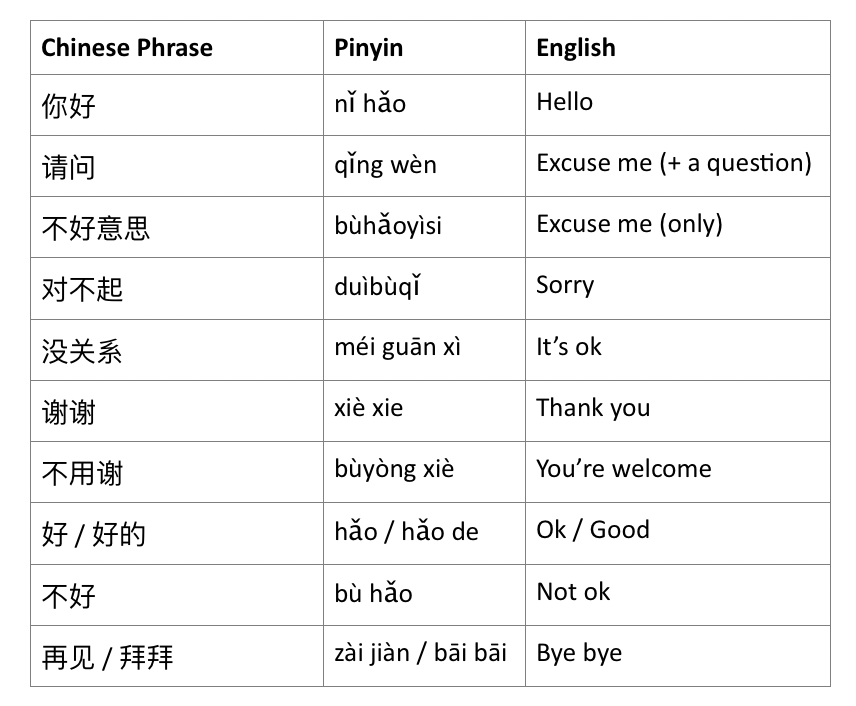
How to Say Hello and Greetings in Chinese
Learning basic greetings is essential for any beginner in Chinese. Here are some common phrases:
- Nǐ hǎo (你好) - Means Hello or Hi.
- Zǎo shang hǎo (早上好) - Translates to Good morning.
- Wǎn shàng hǎo (晚上好) - Means Good evening.
How to Say Thank You and Polite Expressions
Politeness is highly valued in Chinese culture. Here are key phrases:
- Xiè xiè (谢谢) - Means Thank you.
- Bù kè qì (不客气) - Translates to You're welcome.
- Duì bu qǐ (对不起) - Means Sorry or Excuse me.
How to Ask for Directions in Chinese
Navigating in a Chinese-speaking area becomes easier with these phrases:
- Qǐng wèn... (请问...) - Means Excuse me, may I ask...?
- Zài nǎ lǐ? (在哪里?) - Translates to Where is...?
- Zěn me zǒu? (怎么走?) - Means How do I get there?
How to Order Food in Chinese
Dining out is a great way to practice Chinese. Useful phrases include:
- Wǒ yào... (我要...) - Means I want...
- Méi yǒu (没有) - Translates to Don't have or Out of stock.
- Mǎi dān (买单) - Means Check, please.
How to Introduce Yourself in Chinese
Making a good first impression starts with these phrases:
- Wǒ jiào... (我叫...) - Means My name is...
- Wǒ lái zì... (我来自...) - Translates to I am from...
- Hěn gāo xìng rèn shí nǐ (很高兴认识你) - Means Nice to meet you.
What are Mandarin language words?

Definition of Mandarin Language Words
Mandarin language words are the vocabulary used in Mandarin Chinese, the most widely spoken dialect of Chinese and the official language of China. These words are based on Chinese characters (汉字 - Hànzì) and follow specific pronunciation rules using Pinyin, the Romanization system for Mandarin. Mandarin words can be:
- Monosyllabic (single-character words like 人 - rén meaning person).
- Polysyllabic (multi-character compounds like 电脑 - diànnǎo meaning computer).
- Tonal, where pitch changes alter meaning (e.g., mā (妈 - mother) vs. mà (骂 - scold)).
Characteristics of Mandarin Words
Mandarin words have distinct linguistic features that set them apart from other languages. Key traits include:
- Tonal nature: Four main tones (plus a neutral tone) dictate meaning.
- Logographic writing: Characters represent meanings, not just sounds.
- Minimal inflection: Words rarely change form for tense or number.
Common Mandarin Word Structures
Mandarin words often follow predictable patterns, making them easier to learn. Common structures include:
- Subject-Verb-Object (SVO) order, similar to English (e.g., 我吃饭 - Wǒ chīfàn = I eat food).
- Compound words formed by combining characters (e.g., 手机 - shǒujī = hand + machine = mobile phone).
- Measure words (量词 - liàngcí) required when counting nouns (e.g., 一本书 - yī běn shū = one book).
Examples of Basic Mandarin Words
Here are foundational Mandarin words for beginners:
- 你好 - nǐ hǎo (hello).
- 谢谢 - xièxie (thank you).
- 再见 - zàijiàn (goodbye).
Importance of Mandarin Words in Global Communication
Mandarin words are increasingly vital due to China's global influence. Reasons include:
- Economic relevance: Mandarin is key for trade and business in Asia.
- Cultural reach: Chinese media and tourism spread Mandarin vocabulary.
- Educational demand: Schools worldwide now teach Mandarin as a second language.
Frequently Asked Questions (FAQ)
What are the most essential Mandarin Chinese travel phrases to learn before a trip?
When traveling to a Mandarin-speaking region, mastering a few key phrases can greatly enhance your experience. The top phrases include greetings like Nǐ hǎo (Hello), polite expressions such as Xièxiè (Thank you), and practical questions like Zhè ge duōshǎo qián? (How much is this?). Additionally, phrases like Wǒ yào zhège (I want this) and Qǐngwèn, cèsuǒ zài nǎlǐ? (Where is the bathroom?) are indispensable for daily interactions. Learning these will help you navigate transportation, dining, and shopping with ease.
How can I pronounce Mandarin Chinese travel phrases correctly?
Proper pronunciation in Mandarin relies heavily on tones, as the same syllable can have different meanings based on intonation. For example, mā (mother) uses a high, flat tone, while mà (scold) has a falling tone. To practice, listen to native speakers or use language apps like Pinyin (the romanization system for Mandarin). Start with simple words like Nǐ hǎo (Hello) and Zàijiàn (Goodbye), paying close attention to tone marks. Repetition and mimicking audio resources will improve your accuracy and confidence.
Why is it important to learn Mandarin phrases for travel even if English is widely spoken?
While English may be understood in tourist areas, venturing beyond these zones often requires basic Mandarin for effective communication. Locals appreciate the effort, which can lead to warmer interactions and better service. Phrases like Wǒ bù dǒng (I don’t understand) or Nǐ huì shuō Yīngyǔ ma? (Do you speak English?) can bridge gaps when English fails. Moreover, knowing emergency phrases such as Bāngzhù! (Help!) ensures safety in unexpected situations. Even minimal Mandarin can transform your travel experience from frustrating to rewarding.
Where can I practice Mandarin Chinese travel phrases before my trip?
Several resources can help you practice Mandarin before traveling. Language apps like Duolingo, HelloChinese, or Memrise offer interactive lessons focused on travel phrases. Watching YouTube tutorials or listening to podcasts can improve listening skills. For speaking practice, try language exchange platforms like Tandem or iTalki to converse with native speakers. Additionally, writing down phrases like Qǐngwèn, zhège zěnme zǒu? (Excuse me, how do I get to this place?) and rehearsing them aloud daily will solidify your recall and fluency.
Leave a Reply
Related Posts