
Learning Chinese words: When quantity beats quality

Learning Chinese words often feels like an overwhelming task, given the language’s vast vocabulary and intricate characters. Many learners focus on mastering each word perfectly before moving forward, prioritizing quality over quantity. However, research suggests that building a broad foundation of familiar words—even if imperfectly understood—can accelerate language acquisition. By encountering words repeatedly in different contexts, learners naturally refine their comprehension over time. This approach mirrors how children absorb language: through exposure rather than rigid memorization. Embracing quantity early on can boost confidence, improve reading fluency, and create a stronger framework for deeper learning later. Sometimes, more really is more.
- Learning Chinese Words: Why Quantity Often Outweighs Quality
- How can I memorize Chinese words easily?
- What is the most difficult thing in learning Chinese?
- How many words is considered fluent in Chinese?
- How to improve Chinese fluency?
-
Frequently Asked Questions (FAQ)
- Why is focusing on quantity more effective than quality when learning Chinese words?
- How can I efficiently learn a large number of Chinese words without feeling overwhelmed?
- Does learning more words mean I’ll neglect proper pronunciation and tones?
- Will this approach work for advanced learners or just beginners?
Learning Chinese Words: Why Quantity Often Outweighs Quality
When learning Chinese, many students focus on memorizing words perfectly before moving forward. However, research and experience suggest that prioritizing quantity—learning more words even if retention isn’t flawless—can lead to faster progress in comprehension and communication. This approach leverages contextual learning, where repeated exposure in different settings solidifies understanding naturally. Below, we explore why quantity matters and how to implement this strategy effectively.
---
See Also11 Best Resources for Chinese Listening Practice On-The-Go1. The Power of Repetition in Context
Instead of obsessing over mastering each word, learning more words exposes you to varied contexts, reinforcing memory through natural repetition. For example, seeing the word 朋友 (friend) in 10 different sentences is more effective than drilling it 50 times in isolation.
| Approach | Benefit |
|---|---|
| Focus on quantity | Encourages contextual learning |
| Focus on quality | Slows progress; limited exposure |
---
2. Building a Functional Vocabulary Faster
A broader vocabulary lets you engage with real-life materials (e.g., news, conversations) sooner. Even if you only recall 60-70% of words, this passive knowledge becomes active with practice.
See AlsoStandard pronunciation in Chinese and why you want it| Vocabulary Size | Usefulness |
|---|---|
| 500 words | Basic conversations |
| 1,000+ words | Understand simple articles |
---
3. How the Brain Retains New Words
The brain retains information better through spaced repetition and varied input. Learning 20 words a week with imperfect recall is more effective than mastering 5 words perfectly but rarely encountering them again.
| Method | Retention Rate |
|---|---|
| Massive exposure | Higher long-term retention |
| Perfect memorization | Short-term focus |
---
See AlsoThe Input Pyramid: Chinese Listening for Any Situation4. Overcoming the Fear of Forgetting
Many learners avoid new words fearing they’ll forget them. However, forgetting is part of learning. Tools like flashcards or apps (e.g., Anki) help reinforce words over time.
| Strategy | Outcome |
|---|---|
| Embrace forgetting | Reduces learning anxiety |
| Use SRS tools | Improves long-term recall |
---
5. Practical Tips for Learning More Words
- Read extensively: Graded readers, subtitles, or social media.
- Listen actively: Podcasts, songs, or TV shows.
- Set daily goals: 10-15 new words, even if not fully memorized.
| Activity | Words Learned/Month |
|---|---|
| Reading 30 mins/day | 100-200 words |
| Watching shows | 50-100 words |
How can I memorize Chinese words easily?
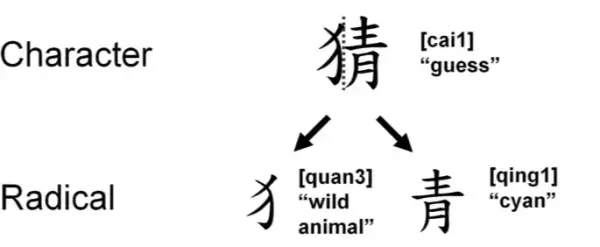
Use Mnemonics to Create Associations
Mnemonics are memory aids that help you associate new Chinese words with familiar concepts. By linking characters to images, stories, or sounds, you can recall them more easily.
- Visualize the character’s shape as an object (e.g., 木 tree resembles a tree).
- Create a story using the character’s components (e.g., 好 good combines 女 woman and 子 child).
- Use sound-based mnemonics (e.g., 咖啡 kāfēi sounds like coffee).
Practice Writing Characters Regularly
Writing reinforces memory by engaging motor skills and visual recognition. Repetition helps solidify the structure of Chinese characters.
- Use grid paper to maintain proper stroke order and proportions.
- Write each character 10–20 times while saying its meaning aloud.
- Review old characters while learning new ones to prevent forgetting.
Leverage Spaced Repetition Systems (SRS)
SRS tools like Anki or Pleco optimize review timing to enhance long-term retention of Chinese vocabulary.
- Create flashcards with characters, pinyin, and meanings.
- Adjust settings to prioritize difficult words.
- Review cards daily to strengthen memory.
Immerse Yourself in the Language
Exposure to Chinese media and daily usage accelerates memorization by providing context.
- Watch Chinese shows or listen to podcasts with subtitles.
- Label objects at home with Chinese words.
- Practice with native speakers through language apps or meetups.
Group Words by Themes or Radicals
Organizing vocabulary into categories or by shared radicals simplifies learning patterns.
- Study thematic sets (e.g., food, travel) for contextual recall.
- Focus on common radicals (e.g., 氵 for water-related characters).
- Use color-coding to highlight groups in notes or flashcards.
What is the most difficult thing in learning Chinese?

The Complexity of Chinese Characters
One of the most challenging aspects of learning Chinese is mastering its writing system. Unlike alphabetic languages, Chinese uses logograms, where each character represents a word or a morpheme. This requires memorizing thousands of characters, each with unique strokes and meanings.
- Stroke order must be learned precisely to write characters correctly.
- Many characters look similar but have completely different meanings (homophones).
- Characters often combine radicals and phonetic components, adding layers of complexity.
Tonal Pronunciation
Another major difficulty is the tonal nature of Mandarin Chinese. A single syllable can have multiple meanings depending on its tone, making pronunciation critical for comprehension.
- Mandarin has four main tones and a neutral tone, each altering word meaning.
- Mispronouncing a tone can lead to miscommunication (e.g., mā vs. mà).
- Non-native speakers often struggle to distinguish and reproduce tones accurately.
Lack of Cognates with English
Chinese has very few linguistic similarities to English, making vocabulary acquisition more challenging.
- Unlike European languages, Chinese lacks shared roots or cognates with English.
- Words must be memorized from scratch without familiar reference points.
- Idiomatic expressions often don’t translate directly, requiring cultural understanding.
Grammar Structure Differences
While Chinese grammar is simpler in some ways (e.g., no verb conjugations), its sentence structure and syntax can be confusing for English speakers.
- Word order follows a subject-verb-object pattern but with flexibility in context.
- There are no articles (a, an, the) or plural forms, changing how ideas are expressed.
- Particles like le (了) indicate tense subtly, requiring nuanced understanding.
Cultural Context and Idioms
Understanding Chinese requires familiarity with its cultural context, as many phrases and idioms are deeply rooted in history.
- Chengyu (four-character idioms) often reference ancient stories or legends.
- Politeness and indirect speech are common, affecting conversational flow.
- Social hierarchy influences language use (e.g., formal vs. informal address).
How many words is considered fluent in Chinese?

What is the Definition of Fluency in Chinese?
Fluency in Chinese is not solely determined by the number of words known but rather by the ability to communicate effectively in various contexts. However, a general benchmark is:
- 3,000 to 5,000 words are typically needed for basic conversational fluency.
- For advanced fluency, around 8,000 to 10,000 words are often required.
- Native-level proficiency may involve knowing 20,000+ words, including specialized vocabulary.
How Does HSK Vocabulary Relate to Fluency?
The HSK (Hanyu Shuiping Kaoshi) exam provides a structured way to measure Chinese proficiency:
- HSK 4 (1,200 words) indicates intermediate fluency for daily communication.
- HSK 5 (2,500 words) suggests upper-intermediate proficiency.
- HSK 6 (5,000+ words) is considered near-native but may still lack depth in specialized topics.
Does Character Knowledge Equal Fluency?
Knowing characters alone doesn’t guarantee fluency, but it’s a critical component:
- 2,000-3,000 characters cover about 98% of written modern Chinese.
- Recognizing characters improves reading speed and comprehension.
- Fluency requires contextual understanding, not just memorization.
How Important is Grammar and Usage in Fluency?
Vocabulary must be paired with proper grammar and usage:
- Chinese grammar is simpler than many languages but has unique structures (e.g., measure words).
- Mastering colloquial phrases and idioms (成语) enhances fluency.
- Misusing tones or word order can hinder effective communication.
Can You Be Fluent Without Knowing All Dialects?
Mandarin is the standard, but dialects add complexity:
- Mandarin (普通话) is sufficient for fluency in most regions.
- Dialects like Cantonese or Shanghainese require separate study.
- Understanding regional slang can improve cultural fluency but isn’t mandatory.
How to improve Chinese fluency?

1. Immerse Yourself in the Language
To improve your Chinese fluency, immerse yourself in the language as much as possible. Surrounding yourself with native content helps your brain adapt to the sounds, tones, and structures of Chinese.
- Watch Chinese TV shows and movies with subtitles to familiarize yourself with pronunciation and colloquial expressions.
- Listen to Chinese podcasts or music to train your ear for different accents and speaking speeds.
- Change your device language to Chinese to force yourself to interact with the language daily.
2. Practice Speaking Regularly
Speaking is crucial for fluency. Regular practice helps you gain confidence and improve pronunciation.
- Find a language partner or tutor to converse with in Chinese, even if it’s just for 15 minutes a day.
- Repeat after native speakers in videos or audio clips to mimic tones and intonation.
- Record yourself speaking and compare it to native speakers to identify areas for improvement.
3. Expand Your Vocabulary Systematically
A strong vocabulary is essential for fluent communication. Focus on learning words in context rather than memorizing lists.
- Use flashcards (like Anki) to review new words daily and reinforce retention.
- Learn phrases instead of single words to understand how words function in sentences.
- Read Chinese books or articles to encounter new vocabulary in real-world contexts.
4. Master Chinese Characters and Grammar
Understanding characters and grammar is key to forming correct sentences and improving comprehension.
- Study radicals and components to break down complex characters into manageable parts.
- Practice writing characters by hand to reinforce memory and recognition.
- Review grammar patterns through exercises or apps like Duolingo or HelloChinese.
5. Engage with Native Content and Culture
Connecting with Chinese culture deepens your understanding of the language and makes learning more enjoyable.
- Follow Chinese social media accounts or forums to see how natives communicate informally.
- Attend cultural events or language meetups to practice in a real-world setting.
- Cook Chinese recipes while following instructions in Chinese to combine language and culture.
Frequently Asked Questions (FAQ)
Why is focusing on quantity more effective than quality when learning Chinese words?
When learning Chinese words, prioritizing quantity over quality helps build a broader foundation faster. Unlike languages with similar roots to English, Chinese relies heavily on character recognition and contextual understanding. By exposing yourself to a larger number of words, even if retention isn't perfect, you train your brain to recognize patterns and adapt to the language's structure. Over time, repeated exposure naturally improves recall and usage without the need for deep memorization of each word initially.
How can I efficiently learn a large number of Chinese words without feeling overwhelmed?
The key is to use spaced repetition systems (SRS) like Anki or Pleco, which optimize learning by reviewing words at increasing intervals. Additionally, focus on high-frequency words first, as they appear more often in daily conversations. Pairing words with visual aids, mnemonics, or real-life contexts (e.g., watching Chinese shows) reinforces memory without exhaustive study. Remember, the goal isn't perfection but familiarity, which develops naturally through consistent exposure.
Does learning more words mean I’ll neglect proper pronunciation and tones?
Not necessarily. While quantity-focused learning emphasizes volume, integrating listening practice and shadowing techniques ensures you don’t overlook pronunciation or tones. Tools like Pinyin charts, language apps with audio, and speaking with native speakers can help maintain balance. The brain gradually internalizes correct sounds as you encounter words repeatedly, making it easier to refine accuracy over time.
Will this approach work for advanced learners or just beginners?
This method benefits all proficiency levels. Beginners gain a functional vocabulary quickly, while advanced learners fill gaps and reinforce passive knowledge. For higher levels, focusing on word families, collocations, and nuanced meanings becomes easier once a solid lexical foundation exists. The principle remains the same: more exposure leads to deeper assimilation, whether you're learning basic nouns or advanced idioms.
Leave a Reply
Related Posts