
The best Chinese reading practice for beginners

Learning Chinese can be a rewarding yet challenging journey, especially for beginners. One of the most effective ways to build fluency is through consistent reading practice. Starting with the right materials is key—simple texts, graded readers, and familiar stories help build confidence while expanding vocabulary and grammar skills. This article explores the best Chinese reading resources for beginners, from children’s books to short articles and apps designed for language learners. Whether you prefer traditional characters or simplified, these tools will enhance your comprehension and make learning enjoyable. Discover how to integrate reading into your daily routine for steady progress in Mandarin.
- The Best Chinese Reading Practice for Beginners
- How can I learn Chinese easily for beginners?
- What is the most commonly used method for beginning language learners to read Chinese?
- How many hours to learn to read Chinese?
- How to study for Chinese reading comprehension?
- Frequently Asked Questions (FAQ)
The Best Chinese Reading Practice for Beginners
1. Start with Simple, Graded Readers
For beginners, graded readers are an excellent way to build confidence. These books are specifically designed for language learners, using limited vocabulary and basic sentence structures. Look for titles labeled HSK 1 or HSK 2, as they align with beginner proficiency levels. Reading these helps reinforce common words and grammar naturally.
| Resource | Level | Features |
|---|---|---|
| Mandarin Companion | HSK 1-2 | Simplified stories, audio support |
| Chinese Breeze | Beginner | Pinyin included, glossary |
2. Use Children’s Books and Bilingual Texts
Children’s books are ideal because they use repetitive phrases and visual context. Bilingual books with English translations side-by-side help beginners cross-check meanings. Focus on books with pinyin (phonetic spelling) to improve pronunciation while learning characters.
See AlsoChinese Measure Words Quiz How Many Do You Know?| Type | Example | Benefit |
|---|---|---|
| Picture Books | The Very Hungry Caterpillar (Chinese edition) | Visual learning, simple sentences |
| Bilingual Stories | Chinese Stories for Language Learners | Dual-language support |
3. Practice with Short Articles and News in Easy Chinese
Websites like The Chairman’s Bao or Du Chinese offer simplified news articles tailored for learners. These platforms provide audio recordings, vocabulary lists, and interactive exercises. Start with HSK 1-2 level articles to avoid overwhelm.
| Platform | Level | Tools |
|---|---|---|
| The Chairman’s Bao | HSK 1-6 | Audio, flashcards, quizzes |
| Du Chinese | Beginner-Advanced | Pinyin toggle, word lookup |
4. Incorporate Flashcards and Vocabulary Lists
Anki or Pleco are great tools to memorize characters and words encountered while reading. Create flashcards with example sentences from your readings to reinforce context. Focus on high-frequency words first, like 你好 (nǐ hǎo) or 谢谢 (xiè xie).
| Tool | Use | Advantage |
|---|---|---|
| Anki | Spaced repetition | Customizable decks |
| Pleco | Dictionary + Flashcards | OCR for text lookup |
5. Join Online Reading Clubs or Language Exchange Groups
Platforms like HelloTalk or Tandem connect learners with native speakers for reading practice. Participate in beginner-friendly book clubs or language exchanges where you can read aloud and discuss simple texts. This builds confidence and real-world understanding.
See AlsoThe Most Difficult Sounds in Chinese to Master| Platform | Activity | Perk |
|---|---|---|
| HelloTalk | Text correction | Chat with natives |
| Tandem | Reading exchanges | Voice messages |
How can I learn Chinese easily for beginners?

Start with Pinyin and Basic Pronunciation
Learning Chinese begins with mastering Pinyin, the romanization system for Mandarin. Focus on correct pronunciation early to avoid bad habits. Here’s how:
- Practice tones: Mandarin has four tones—use apps like Pinyin Trainer to drill them.
- Listen and repeat: Mimic native speakers via YouTube or language apps like HelloChinese.
- Use flashcards: Tools like Anki help memorize Pinyin and tone pairs.
Build a Core Vocabulary with Common Words
Begin with high-frequency words to form simple sentences quickly. Prioritize practical terms:
See AlsoWhat Are Duolingos Next Languages: Learning Guide 2025- Greetings: Learn 你好 (nǐ hǎo) and 谢谢 (xièxie) first.
- Numbers and time: Essential for daily interactions.
- Survival phrases: Focus on questions like “Where is…?” or “How much?”
Use Immersive Learning Tools
Surround yourself with Chinese through media and apps:
- Watch shows: Start with children’s programs or slow-paced dramas.
- Language apps: Duolingo or Memrise gamify learning.
- Label objects: Stick notes with Chinese names in your home.
Practice Speaking Early and Often
Overcome shyness by speaking from day one:
- Language exchange: Use platforms like Tandem to chat with natives.
- Shadowing: Repeat dialogues from podcasts or videos aloud.
- Record yourself: Compare your pronunciation to natives.
Study Characters Gradually with Mnemonics
Tackle Chinese characters systematically:
See Also7 Major Differences Between Mandarin and Cantonese- Learn radicals first: These building blocks simplify memorization.
- Use stories: Apps like Skritter turn characters into visual tales.
- Write daily: Even 5-10 characters a day builds retention.
What is the most commonly used method for beginning language learners to read Chinese?

Pinyin: The Foundation for Reading Chinese
The most commonly used method for beginning language learners to read Chinese is Pinyin, a romanization system that uses the Latin alphabet to represent Mandarin pronunciation. This helps learners associate sounds with characters before mastering the complex writing system.
- Pinyin breaks down characters into phonetic components, making pronunciation accessible.
- It serves as a bridge to recognizing and memorizing Chinese characters (Hanzi).
- Many textbooks and apps use Pinyin alongside characters to aid comprehension.
Graded Readers for Progressive Learning
Graded readers are tailored for beginners, presenting simplified texts with increasing difficulty. These books often include Pinyin annotations and vocabulary lists.
See AlsoDrills and exercises aren’t only for beginners- They introduce high-frequency characters first, building a practical foundation.
- Contextual learning helps reinforce vocabulary and grammar.
- Some graded readers include audio support for pronunciation practice.
Flashcards for Character Recognition
Flashcards are a popular tool for memorizing Chinese characters, often paired with visuals or mnemonics. Apps like Anki or Pleco utilize spaced repetition systems (SRS).
- Focus on radicals (character components) to decode meaning and pronunciation.
- Repetition reinforces memory retention of complex characters.
- Digital flashcards often include audio and example sentences.
Mobile Apps for Interactive Learning
Apps like Duolingo, HelloChinese, and Skritter combine Pinyin, character writing, and quizzes for immersive practice.
- Gamification keeps learners engaged with rewards and progress tracking.
- Interactive exercises cover reading, writing, and listening skills.
- Many apps offer offline modes for flexible study.
Language Exchange and Reading Practice
Pairing with native speakers or joining language exchange platforms helps beginners apply reading skills in real conversations.
- Platforms like Tandem or HelloTalk provide text corrections.
- Reading aloud improves fluency and tonal accuracy.
- Exposure to authentic materials (e.g., menus, signs) enhances practical skills.
How many hours to learn to read Chinese?

How Many Hours Does It Take to Learn to Read Chinese?
The time required to learn to read Chinese varies based on factors like prior language experience, study methods, and consistency. Estimates suggest:
- Basic literacy (1,000-1,500 characters) may take 600–1,200 hours of study.
- Intermediate fluency (2,500–3,000 characters) could require 1,500–3,000 hours.
- Advanced proficiency (4,000+ characters) often demands 3,000–5,000+ hours.
Factors Affecting the Time to Learn Chinese Characters
Several elements influence how quickly you can read Chinese:
- Prior knowledge of logographic languages (e.g., Japanese Kanji) accelerates learning.
- Study intensity: Daily practice reduces total time compared to sporadic sessions.
- Learning tools like flashcards, apps, or immersion impact efficiency.
Recommended Study Methods for Reading Chinese
To optimize your learning speed, consider these approaches:
- Spaced repetition systems (SRS) like Anki reinforce character retention.
- Graded readers build comprehension progressively.
- Contextual learning (e.g., reading news or stories) enhances recognition.
Common Challenges When Learning to Read Chinese
Learners often face these hurdles:
- Character complexity: Stroke order and radicals require memorization.
- Homophones: Many characters share pronunciations but differ in meaning.
- Dialect variations: Simplified vs. Traditional characters add complexity.
Milestones in Learning to Read Chinese
Track progress with these benchmarks:
- First 500 characters: Enables basic signage and simple texts.
- 1,500–2,000 characters: Covers ~80% of everyday written content.
- 3,000+ characters: Allows reading newspapers and literature.
How to study for Chinese reading comprehension?
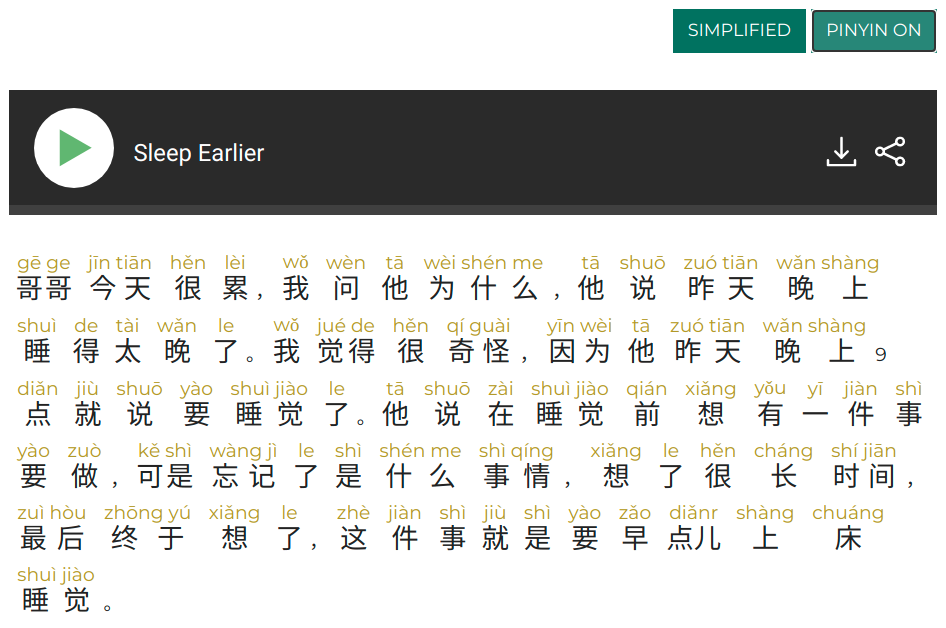
Build a Strong Vocabulary Foundation
To excel in Chinese reading comprehension, you must first develop a robust vocabulary. Start by learning high-frequency words and characters commonly used in texts. Use flashcards or apps like Pleco or Anki to reinforce memorization. Additionally, practice reading simple articles or children’s books to gradually expand your word bank.
- Learn radicals – Understanding character components helps decipher unfamiliar words.
- Use context clues – Guess meanings from surrounding sentences.
- Review daily – Consistency is key to retention.
Practice with Graded Readers
Graded readers are excellent tools for improving reading skills. These books are tailored to different proficiency levels, ensuring gradual difficulty progression. Begin with beginner-level texts and slowly advance to more complex materials. Highlight and note down new vocabulary for later review.
- Choose appropriate levels – Avoid overly difficult texts to prevent frustration.
- Read aloud – Improves pronunciation and comprehension.
- Summarize passages – Reinforces understanding of the content.
Analyze Sentence Structures
Chinese grammar differs significantly from English, so familiarizing yourself with sentence patterns is crucial. Break down sentences to identify subjects, verbs, and objects. Pay attention to particles like 了 (le), 的 (de), and 得 (de), as they alter meaning.
- Study common grammar rules – Focus on word order and modifiers.
- Practice parsing sentences – Isolate clauses to understand relationships.
- Use grammar workbooks – Reinforce learning with exercises.
Engage with Authentic Materials
Once comfortable with basics, transition to authentic materials like news articles, blogs, or short stories. These expose you to natural language usage and cultural context. Start with topics of interest to maintain motivation.
- Read Chinese news – Sites like BBC Chinese offer simplified content.
- Follow social media – Observe informal language and slang.
- Use pop culture – Watch subtitled shows or read comics.
Take Mock Tests and Review Mistakes
Simulate exam conditions with practice tests to assess progress. Analyze incorrect answers to identify weak areas. Focus on recurring mistakes, whether vocabulary, grammar, or inference errors.
- Time yourself – Improves speed and accuracy.
- Track progress – Note improvements and lingering challenges.
- Seek feedback – Consult tutors or language partners for corrections.
Frequently Asked Questions (FAQ)
What is the best way for beginners to practice reading Chinese?
The best way for beginners to practice reading Chinese is to start with simple, graded readers designed for language learners. These books use basic vocabulary and short sentences to build confidence. Additionally, using pinyin alongside characters helps with pronunciation while gradually familiarizing learners with the writing system. Apps like DuChinese or The Chairman's Bao offer leveled content, making it easier to progress from beginner to intermediate levels.
How often should beginners practice reading Chinese?
Beginners should aim to practice reading Chinese daily, even if only for 10-15 minutes. Consistency is key to retaining characters and improving comprehension. Over time, learners can increase the duration to 30 minutes or more as their skills develop. Combining reading with flashcards (like Anki) to review new words ensures better retention. Short but frequent sessions are more effective than occasional long ones.
What types of texts are best for beginner Chinese readers?
Beginners should focus on short, engaging texts such as children's stories, dialogues, or news articles written for learners. Materials with visual aids (like pictures or infographics) help reinforce meaning. Bilingual books or apps with toggle translations are also useful. Avoid complex texts like novels or newspapers early on, as they can be overwhelming. Instead, opt for resources that introduce high-frequency vocabulary in context.
How can beginners improve comprehension while reading Chinese?
To improve comprehension, beginners should read aloud to connect characters with sounds and practice contextual guessing instead of looking up every unknown word. Using audio support (like text-to-speech tools) helps with tone recognition. Highlighting and reviewing repeated characters or phrases strengthens memory. Joining a language exchange or study group to discuss texts can also deepen understanding. Over time, learners will recognize patterns and read more fluently.
Leave a Reply
Related Posts