
Duolingo Japanese Review: Is It Worth Using Duolingo to Learn Japanese?


Learning Japanese has become increasingly popular, thanks to its rich culture, global influence, and unique writing system. For many, Duolingo stands out as a convenient and accessible tool to start this journey. But is it truly effective for mastering Japanese? This review dives into the strengths and weaknesses of Duolingo’s Japanese course, examining its curriculum, teaching methods, and overall usability. From its gamified approach to its handling of kanji, hiragana, and katakana, we explore whether Duolingo can serve as a reliable resource for beginners or if it falls short in delivering a comprehensive learning experience. Is it worth your time? Let’s find out.
Duolingo Japanese Review: Is It Worth Using Duolingo to Learn Japanese?
What Does Duolingo Offer for Learning Japanese?
Duolingo provides a structured approach to learning Japanese, focusing on vocabulary, grammar, and sentence structure. The app uses gamification to keep users engaged, offering lessons that include listening, speaking, reading, and writing exercises. However, it primarily emphasizes vocabulary building and basic sentence formation, which may not be sufficient for advanced learners.
How Effective Is Duolingo for Japanese Pronunciation?
Duolingo includes voice recognition technology to help users practice Japanese pronunciation. While this feature is useful for beginners, it may not always accurately assess nuanced pronunciation. The app's reliance on romanized text (romaji) in early lessons can also hinder the development of proper hiragana and katakana reading skills.
See AlsoMastering Japanese with Duolingo: An In-Depth GuideDoes Duolingo Cover Kanji Adequately?
Duolingo introduces kanji gradually, but its approach is limited. The app provides basic kanji lessons and explanations, but it lacks in-depth coverage of kanji radicals and stroke order. For learners aiming to master kanji, supplementary resources like Anki or WaniKani are highly recommended.
Is Duolingo Suitable for Advanced Japanese Learners?
Duolingo is best suited for beginners and intermediate learners. Advanced learners may find the content too basic, as the app does not delve deeply into complex grammar, idiomatic expressions, or cultural nuances. For higher proficiency levels, additional tools like textbooks or language exchange programs are necessary.
What Are the Pros and Cons of Using Duolingo for Japanese?
| Pros | Cons |
|---|---|
| Free and accessible | Limited depth for advanced learners |
| Gamified learning experience | Over-reliance on romaji in early stages |
| Good for building basic vocabulary | Insufficient kanji and grammar coverage |
| Convenient for daily practice | Pronunciation feedback can be inaccurate |
Can you actually learn Japanese with Duolingo?

Is Duolingo Effective for Learning Japanese?
Duolingo can be a helpful tool for learning Japanese, especially for beginners. It provides a structured approach to learning vocabulary, grammar, and basic sentence structures. However, it has limitations:
- Vocabulary: Duolingo introduces common words and phrases, but the vocabulary is often limited to everyday scenarios.
- Grammar: It covers basic grammar rules but may not explain them in depth, which can be challenging for complex structures.
- Practice: The app focuses on repetition, which is good for memorization but may not prepare you for real-life conversations.
What Are the Strengths of Using Duolingo for Japanese?
Duolingo has several strengths that make it a popular choice for language learners:
- Accessibility: It’s free and available on multiple devices, making it easy to practice anytime.
- Gamification: The app uses a game-like format to keep users motivated and engaged.
- Foundational Skills: It’s effective for building a foundation in reading and writing hiragana, katakana, and basic kanji.
What Are the Limitations of Learning Japanese on Duolingo?
While Duolingo is useful, it has notable limitations for serious learners:
See AlsoHow Long Does It Take to Learn Spanish with Duolingo?- Speaking Practice: The speaking exercises are limited and may not improve conversational fluency.
- Cultural Context: The app lacks cultural insights, which are crucial for understanding Japanese language nuances.
- Advanced Learning: It’s not ideal for intermediate or advanced learners who need more complex material.
How Does Duolingo Teach Japanese Writing Systems?
Duolingo introduces the three Japanese writing systems gradually:
- Hiragana: It starts with hiragana, the basic phonetic script used for native Japanese words.
- Katakana: Next, it covers katakana, which is used for foreign words and names.
- Kanji: Basic kanji characters are introduced, but the app doesn’t delve deeply into their meanings or usage.
Can Duolingo Help with Japanese Pronunciation?
Duolingo offers some tools for improving pronunciation, but they have limitations:
- Voice Recognition: The app uses voice recognition to evaluate pronunciation, but it may not always be accurate.
- Listening Practice: It includes audio clips from native speakers, which can help with understanding spoken Japanese.
- Limited Feedback: The app doesn’t provide detailed feedback on pronunciation errors, which can hinder improvement.
What is the best app to learn Japanese?
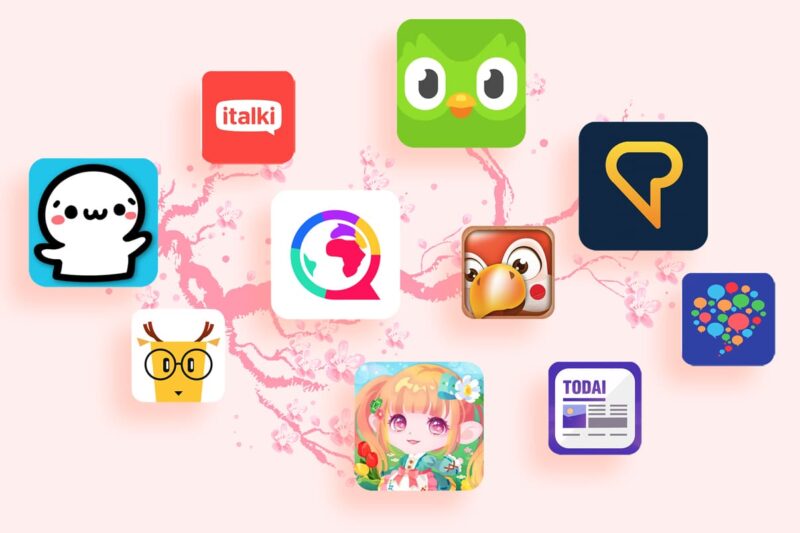
What Features Should the Best Japanese Learning App Have?
When choosing the best app to learn Japanese, it’s essential to consider the features that make learning effective and engaging. Here are some key features to look for:
- Comprehensive Lessons: The app should cover all aspects of the language, including vocabulary, grammar, kanji, hiragana, and katakana.
- Interactive Exercises: Activities like quizzes, flashcards, and speaking practice help reinforce learning.
- Audio Pronunciations: Native speaker audio ensures accurate pronunciation and listening skills.
- Progress Tracking: A system to monitor your progress and identify areas for improvement.
- Gamification: Features like rewards and streaks make learning fun and motivating.
Which App Offers the Best Japanese Vocabulary Practice?
Building a strong vocabulary is crucial for learning Japanese. The best apps for vocabulary practice include:
- Anki: A customizable flashcard app that uses spaced repetition to help you memorize words efficiently.
- Memrise: Offers user-generated courses with mnemonics and videos to make vocabulary memorable.
- Duolingo: Combines vocabulary with grammar and sentence structure in bite-sized lessons.
- LingoDeer: Focuses on Asian languages, including Japanese, with structured vocabulary lessons.
- Quizlet: Allows you to create or use pre-made flashcards for Japanese vocabulary.
What Are the Best Apps for Learning Japanese Kanji?
Kanji is one of the most challenging aspects of Japanese, but these apps make it easier:
- WaniKani: Uses mnemonics and spaced repetition to teach kanji and vocabulary in a structured way.
- Kanji Study: Offers customizable study modes, quizzes, and detailed kanji breakdowns.
- Skritter: Focuses on writing kanji with stroke order and practice exercises.
- Anki: Customizable decks for kanji learning, often paired with vocabulary.
- Kawaii Nihongo: A beginner-friendly app with colorful and engaging kanji lessons.
Which App is Best for Practicing Japanese Speaking Skills?
Speaking is a vital part of language learning, and these apps help improve your Japanese speaking skills:
- HelloTalk: Connects you with native Japanese speakers for language exchange.
- Pimsleur: Focuses on audio lessons to improve speaking and listening skills.
- italki: Offers one-on-one lessons with professional Japanese tutors.
- Speechling: Provides feedback on your pronunciation from native speakers.
- LingQ: Uses real-world content to practice speaking and listening.
What Are the Best Free Apps to Learn Japanese?
If you’re on a budget, these free apps are excellent for learning Japanese:
- Duolingo: Offers a gamified approach to learning Japanese with free lessons.
- Memrise: Free version includes vocabulary and grammar lessons with spaced repetition.
- Anki: Free on most platforms, with access to thousands of user-generated decks.
- LingoDeer: Free version covers basic Japanese lessons with interactive exercises.
- NHK Easy Japanese: Provides simple news articles and lessons for beginners.
What is the most efficient way to learn Japanese?
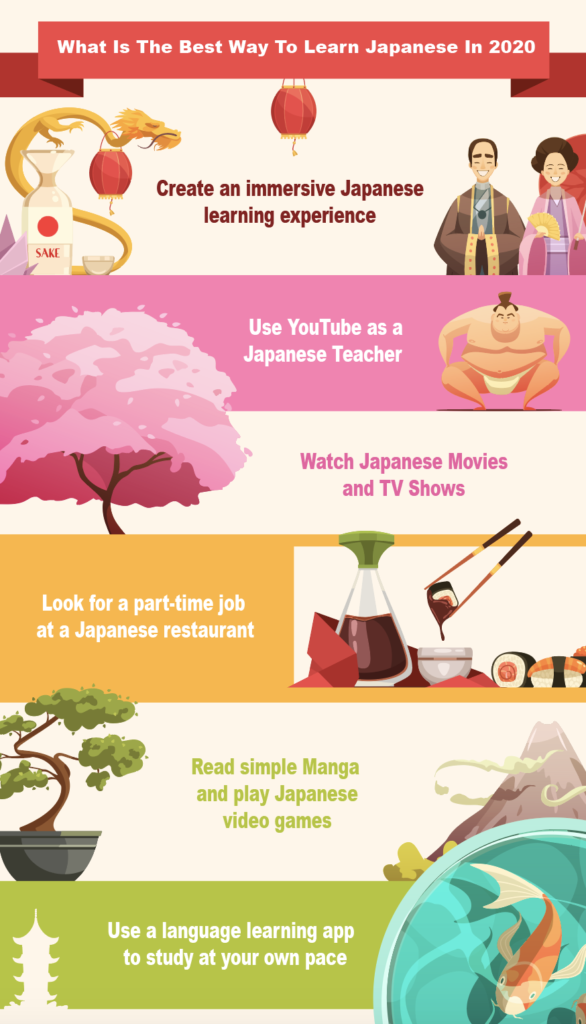
1. Set Clear Goals and Create a Study Plan
To learn Japanese efficiently, it is crucial to set clear goals and develop a structured study plan. Determine whether you want to focus on speaking, reading, writing, or all three. Break down your goals into manageable milestones, such as learning a certain number of kanji or mastering basic grammar within a specific timeframe. Consistency is key, so allocate daily or weekly study sessions and stick to them.
- Define your purpose: Are you learning for travel, work, or personal interest?
- Create a schedule: Dedicate specific times for vocabulary, grammar, and practice.
- Track progress: Use apps or journals to monitor your improvement.
2. Immerse Yourself in the Language
Immersion is one of the most effective ways to learn Japanese. Surround yourself with the language through authentic materials like Japanese TV shows, movies, podcasts, and music. This helps improve listening skills and exposes you to natural speech patterns. Additionally, try to think and speak in Japanese as much as possible, even if you're just starting.
- Watch Japanese media: Use subtitles initially, then gradually remove them.
- Listen to podcasts: Choose content that matches your proficiency level.
- Practice speaking: Use language exchange apps or find a conversation partner.
3. Focus on Core Vocabulary and Grammar
Building a strong foundation in core vocabulary and grammar is essential. Start with the most commonly used words and phrases, as they will appear frequently in everyday conversations. Learn basic sentence structures and gradually move on to more complex grammar rules. Flashcards and spaced repetition systems (SRS) like Anki can help reinforce your memory.
- Learn high-frequency words: Prioritize words used in daily life.
- Master basic grammar: Understand sentence order and particles.
- Use SRS tools: Regularly review vocabulary and grammar with apps like Anki.
4. Practice Writing and Reading Regularly
Reading and writing are fundamental skills for mastering Japanese. Start with hiragana and katakana, then progress to kanji. Practice writing by keeping a journal or copying sentences from textbooks. Reading materials like manga, news articles, or children's books can help you understand context and improve comprehension.
- Learn kana first: Master hiragana and katakana before tackling kanji.
- Practice writing daily: Use workbooks or apps to improve handwriting.
- Read regularly: Choose materials that match your skill level.
5. Use Technology and Language Learning Apps
Leverage technology to enhance your learning experience. Language learning apps like Duolingo, Memrise, or BunPro can provide structured lessons and interactive exercises. Online resources, such as Tae Kim's Guide to Japanese Grammar or WaniKani for kanji, are also invaluable. Additionally, consider using speech recognition tools to improve pronunciation.
- Download language apps: Use apps for vocabulary, grammar, and kanji practice.
- Explore online resources: Access free or paid guides and tutorials.
- Practice pronunciation: Use tools like Google Translate or speech recognition apps.
How far will Duolingo Japanese get you?
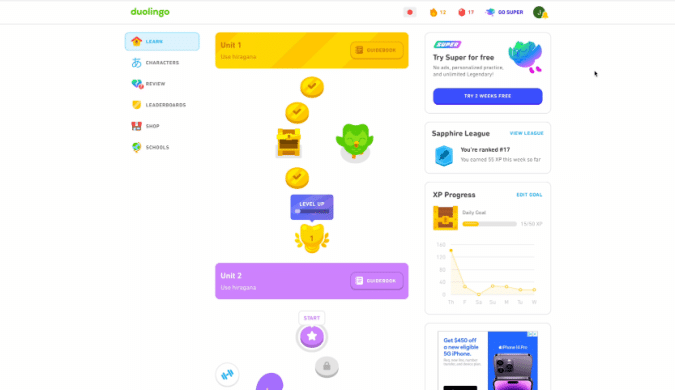
What Level of Japanese Can You Achieve with Duolingo?
Duolingo Japanese is designed to help learners reach a basic to intermediate level of proficiency. By completing the course, you can expect to:
- Understand and use common phrases and expressions in everyday situations.
- Grasp basic grammar structures, such as sentence order and particles.
- Build a vocabulary of around 1,500 to 2,000 words, covering topics like food, travel, and family.
Can Duolingo Japanese Prepare You for JLPT?
Duolingo can be a helpful tool for beginners aiming to take the JLPT N5 or even N4 exams. However, it has limitations:
- It covers basic kanji and vocabulary required for JLPT N5.
- It lacks focused practice on JLPT-specific listening and reading comprehension.
- Supplementing with additional resources like textbooks or practice tests is highly recommended.
How Effective Is Duolingo for Learning Kanji?
Duolingo introduces basic kanji gradually, but its approach has pros and cons:
- It teaches kanji in context, which helps with recognition and usage.
- It does not provide in-depth explanations of stroke order or radicals.
- Learners may need to use additional apps or books to master kanji writing and advanced characters.
Does Duolingo Help with Speaking and Listening Skills?
Duolingo includes listening exercises and speech recognition, but its effectiveness varies:
- It improves listening comprehension through repetitive audio exercises.
- The speech recognition feature helps with pronunciation, but it may not catch subtle errors.
- For advanced speaking practice, engaging with native speakers or using language exchange platforms is essential.
What Are the Limitations of Duolingo Japanese?
While Duolingo is a great starting point, it has several limitations:
- It lacks cultural context and real-life conversational practice.
- The course does not cover advanced grammar or specialized vocabulary.
- It is not sufficient for achieving fluency or professional-level proficiency.
Frequently Asked Questions (FAQ)
Is Duolingo effective for learning Japanese?
Duolingo can be a helpful tool for beginners who are just starting to learn Japanese. The app focuses on vocabulary, basic grammar, and sentence structure, which are essential for building a foundation. However, it may not be sufficient for achieving fluency or mastering advanced concepts. Duolingo's gamified approach makes learning fun, but it lacks in-depth explanations of kanji, cultural context, and conversational practice. For serious learners, combining Duolingo with other resources like textbooks, language exchange partners, or formal classes is recommended.
Does Duolingo teach kanji effectively?
Duolingo introduces kanji gradually, starting with basic characters and progressing to more complex ones. While this approach is beginner-friendly, it may not be comprehensive enough for learners who want to master kanji. The app provides stroke order and pronunciation guides, but it often lacks detailed explanations of radicals or the historical context behind characters. For a deeper understanding of kanji, supplementary resources like Anki or WaniKani are highly recommended.
Can Duolingo help with Japanese pronunciation?
Duolingo includes audio exercises that allow learners to practice pronunciation by repeating words and phrases. While this feature is useful for improving listening and speaking skills, it may not be enough to perfect your accent or intonation. The app's speech recognition technology is decent but not always accurate. To enhance pronunciation, consider practicing with native speakers or using language exchange platforms like HelloTalk or italki.
Is Duolingo suitable for advanced Japanese learners?
Duolingo is primarily designed for beginners and intermediate learners. Advanced learners may find the content too basic or repetitive. The app focuses on everyday phrases and basic grammar, which may not challenge those who already have a solid understanding of Japanese. For advanced learners, resources like NHK News, Japanese podcasts, or advanced textbooks are more appropriate for refining skills and expanding vocabulary.
Leave a Reply
Related Posts