
Learn Chinese efficiently, not quickly

Learning Chinese efficiently is about mastering the language with a focus on long-term retention and practical use, rather than chasing shortcuts. While many promise rapid fluency, true proficiency comes from consistent practice, structured learning, and cultural immersion. This article explores proven strategies to build a strong foundation in Mandarin, emphasizing quality over speed. From prioritizing core vocabulary to engaging with native speakers, we’ll guide you through methods that ensure steady progress. By adopting a mindful approach, you’ll develop not just linguistic skills but also a deeper appreciation for the language. Efficiency, not haste, is the key to unlocking Chinese with confidence and clarity.
Master Chinese Efficiently: A Smarter Approach to Learning
1. Focus on Core Vocabulary First
Learning Chinese efficiently means prioritizing the most frequently used words. Studies show that mastering just 1,000 words covers around 85% of daily conversations. Instead of overwhelming yourself with rare terms, build a strong foundation with high-frequency vocabulary.
| Vocabulary Level | Coverage in Daily Use |
|---|---|
| 500 words | ~75% |
| 1,000 words | ~85% |
| 2,500 words | ~95% |
2. Use Spaced Repetition Systems (SRS)
Efficient learning relies on memory science. Tools like Anki or Pleco Flashcards use spaced repetition to reinforce words just before you forget them. This method reduces wasted time on over-studied material.
See AlsoUltimate Chinese Radicals Quiz What Do They All Mean?| Tool | Key Feature |
|---|---|
| Anki | Customizable flashcards |
| Pleco | Integrated dictionary + SRS |
3. Prioritize Listening and Speaking
Chinese is a tonal language, so efficient learning demands active listening and speaking practice. Spend at least 30 minutes daily on podcasts or shadowing exercises to train your ear and mouth.
| Resource Type | Recommended Time |
|---|---|
| Podcasts | 15-20 mins/day |
| Shadowing | 10 mins/day |
4. Learn Characters Through Radicals
Memorizing characters individually is inefficient. Break them into radicals (building blocks) to recognize patterns. For example, the radical 氵 (water) appears in 河 (river) and 海 (sea).
| Radical | Meaning | Example Characters |
|---|---|---|
| 讠 | Speech | 说 (speak), 话 (words) |
| 心 | Heart/mind | 想 (think), 忙 (busy) |
5. Consistency Over Intensity
Short, daily sessions (e.g., 25 mins) are more effective than marathon study days. The brain retains information better with regular exposure. Track progress with a habit tracker.
See AlsoAn Introduction to Chinese Dialects| Study Duration | Frequency | Retention Rate |
|---|---|---|
| 25 mins/day | Daily | High |
| 4 hours | Once/week | Low |
How long does it realistically take to learn Chinese?
Factors That Influence Learning Chinese
The time it takes to learn Chinese depends on several factors, including:
- Prior language experience: Knowing other tonal languages or Mandarin-based dialects can speed up learning.
- Study intensity: Full-time learners progress faster than those studying casually.
- Learning methods: Immersion programs or one-on-one tutoring yield quicker results than self-study.
Basic Conversational Fluency
Achieving basic conversational fluency in Chinese typically requires:
See AlsoReading aloud in Chinese is really hard- 6–12 months of consistent study (1-2 hours daily) for simple daily interactions.
- Mastery of 500–1,000 words and essential grammar structures.
- Regular practice with native speakers to improve pronunciation and comprehension.
Intermediate Proficiency
Reaching an intermediate level usually takes:
- 2–3 years of dedicated study, including reading and writing characters.
- Knowledge of 2,000–3,000 words to understand more complex conversations.
- Exposure to Chinese media (TV shows, podcasts) to enhance listening skills.
Advanced or Business-Level Chinese
Attaining advanced proficiency for professional use often demands:
- 4–5 years of immersive study, including specialized vocabulary.
- Ability to read newspapers and engage in formal discussions.
- Frequent interaction in work or academic settings to refine fluency.
Native-Like Mastery
Achieving near-native fluency can take:
See AlsoIs Duolingo Accessible: Features for All Users- 5+ years of living in a Chinese-speaking environment.
- Mastery of 5,000+ characters and idiomatic expressions.
- Deep cultural understanding to grasp nuances and regional dialects.
How to learn Chinese as quickly as possible?
Immerse Yourself in the Language Daily
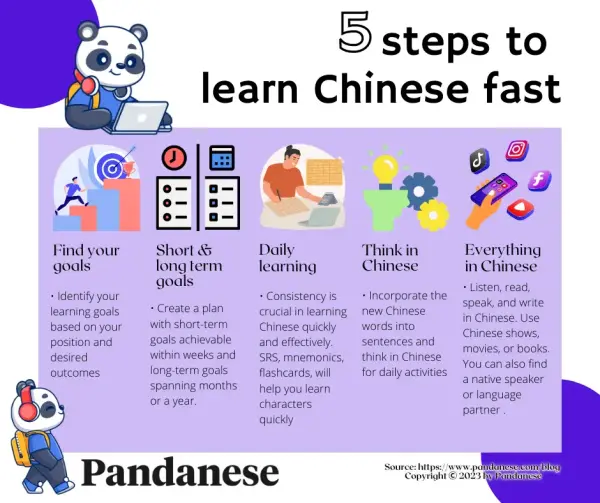
To learn Chinese quickly, surround yourself with the language as much as possible. This means listening, speaking, reading, and writing in Chinese every day. Here’s how:
- Watch Chinese media: Movies, TV shows, and news with subtitles help improve listening and comprehension.
- Listen to podcasts or music: Exposure to native speech patterns accelerates learning.
- Change device languages: Switch your phone or computer to Chinese for constant exposure.
Focus on High-Frequency Vocabulary First
Prioritize learning the most commonly used words and phrases to build a functional foundation quickly. Here’s how:
- Use flashcards: Apps like Anki or Pleco help memorize essential vocabulary efficiently.
- Learn sentence patterns: Master basic structures to form sentences faster.
- Practice daily conversations: Focus on greetings, questions, and common expressions first.
Practice Speaking from Day One
Speaking early and often is crucial for fluency. Here’s how to integrate speaking practice:
- Find a language partner: Use platforms like Tandem or HelloTalk to practice with natives.
- Shadow native speakers: Repeat phrases aloud after hearing them to improve pronunciation.
- Record yourself: Compare your speech to native speakers to identify areas for improvement.
Master Pinyin and Tones Early
Pinyin and tones are the backbone of Chinese pronunciation. Here’s how to tackle them:
- Study tone pairs: Practice combinations to avoid misunderstandings.
- Use tone drills: Apps like ChineseSkill offer targeted exercises.
- Mimic native speakers: Pay attention to pitch and inflection in real conversations.
Leverage Structured Learning Resources
Combining self-study with structured courses speeds up progress. Here’s how:
- Take an intensive course: Programs like HSK prep or university courses provide a clear roadmap.
- Use textbooks and workbooks: Series like Integrated Chinese offer systematic lessons.
- Join online communities: Forums like Reddit’s r/ChineseLanguage provide tips and motivation.
Frequently Asked Questions (FAQ)
What does Learn Chinese efficiently, not quickly mean?
Efficient learning focuses on retention, understanding, and practical application rather than rushing through material. While many programs promise fluency in weeks or months, this approach emphasizes building a strong foundation in Chinese through consistent practice, meaningful context, and long-term memory techniques. It’s about quality over speed, ensuring you truly internalize the language instead of memorizing phrases temporarily.
How can I learn Chinese more efficiently?
To learn Chinese efficiently, prioritize active engagement with the language. This includes spaced repetition for vocabulary, immersive listening to native content, and practicing speaking regularly. Break down complex characters into radicals and components, and focus on high-frequency words first. Additionally, use real-life scenarios to reinforce learning, such as labeling objects or conversing with native speakers. Efficiency comes from consistent, targeted effort, not shortcuts.
Why is learning Chinese quickly often ineffective?
Attempting to learn Chinese too quickly often leads to superficial knowledge and rapid forgetting. Language acquisition requires time for the brain to process and store information deeply. Methods that prioritize speed—like cramming or rote memorization—fail to develop listening comprehension, grammar intuition, or cultural context. Without these, learners struggle in real conversations. Efficiency, on the other hand, ensures steady progress and durable skills.
What tools or methods support efficient Chinese learning?
Effective tools for efficient learning include Anki for spaced repetition, Pleco for dictionary and flashcards, and language exchange apps like Tandem or HelloTalk. Watching Chinese TV shows or listening to podcasts improves comprehension, while writing practice with tools like Skritter reinforces characters. Structured courses with graded readers or textbooks like Integrated Chinese provide a clear progression. The key is combining these resources with daily practice and real-world usage.
Leave a Reply
Related Posts