
Five International Brands That Got it Wrong in China

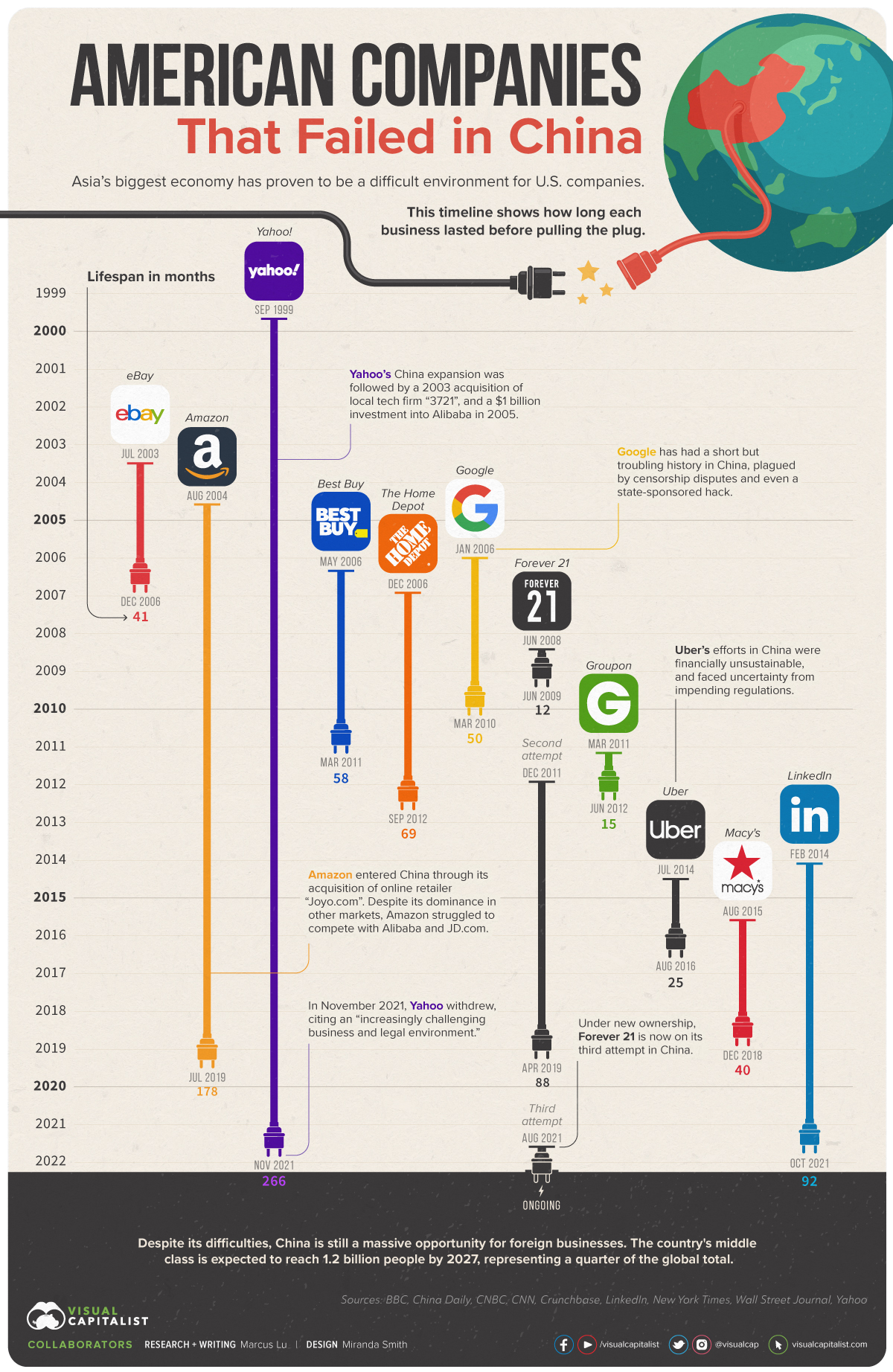
Entering the Chinese market presents immense opportunities, but even global giants have stumbled due to cultural missteps, branding errors, or strategic oversights. From mistranslated slogans to tone-deaf campaigns, international brands often underestimate the complexities of China’s unique consumer landscape. This article explores five major companies that failed to adapt, resulting in costly blunders and damaged reputations. Whether due to ignorance of local preferences or poor crisis management, their stories serve as cautionary tales for businesses aiming to succeed in the world’s largest consumer market. Understanding these failures can help brands navigate China’s competitive and culturally nuanced environment more effectively.
Five International Brands That Failed to Adapt in China
1. Google’s Missteps in the Chinese Market
Google's attempt to penetrate the Chinese market was met with significant challenges. The company initially complied with local censorship laws but later reversed its stance, leading to its eventual withdrawal. Cultural insensitivity and regulatory clashes played a major role in its downfall. Below is a table summarizing key issues:
| Issue | Impact |
|---|---|
| Censorship conflicts | Loss of government trust |
| Local competition (Baidu) | Declining market share |
| Slow adaptation | User dissatisfaction |
2. eBay’s Failure Against Alibaba
eBay entered China with high hopes but failed to compete with Alibaba’s localized strategies. Unlike Alibaba, eBay charged transaction fees, which alienated users. Additionally, its platform lacked cultural customization, making it less appealing. Below is a breakdown of eBay’s missteps:
See AlsoSpaced repetition is not limited to flashcards| Mistake | Consequence |
|---|---|
| High transaction fees | Drove sellers to Alibaba |
| Poor localization | Low user engagement |
| Ignoring local preferences | Lost market dominance |
3. Best Buy’s Struggle with Local Retail Culture
Best Buy attempted to replicate its Western big-box retail model in China but ignored the preference for smaller, bargaining-friendly stores. Chinese consumers favored local competitors like Suning and Gome, which offered more flexible pricing. Here’s a summary of Best Buy’s challenges:
| Problem | Outcome |
|---|---|
| Fixed pricing | Lost price-sensitive customers |
| Large store format | High operational costs |
| Weak local partnerships | Limited market penetration |
4. Uber’s Costly Battle with Didi
Uber invested heavily in China but ultimately lost to Didi due to regulatory hurdles and aggressive local competition. Didi’s deep understanding of Chinese consumer behavior gave it an edge. Below are key factors in Uber’s defeat:
| Challenge | Result |
|---|---|
| Price wars | Massive financial losses |
| Government restrictions | Operational limitations |
| Didi’s local dominance | Forced exit from market |
5. Mattel’s Cultural Misunderstanding with Barbie
Mattel opened a flagship Barbie store in Shanghai, assuming Chinese consumers would embrace Western beauty standards. However, local preferences for modesty and educational toys led to its failure. The table below highlights critical errors:
See AlsoA Guide to Baidu : the First Chinese Search Engine| Error | Effect |
|---|---|
| Ignoring beauty norms | Low product appeal |
| High pricing | Limited customer base |
| Lack of educational focus | Parental disinterest |
What brands failed in China?
Why Did Google Struggle in China?
Google faced significant challenges in China due to strict censorship laws and competition from local players like Baidu. The company initially complied with government regulations but later withdrew its services in 2010, citing cyber-attacks and lack of freedom. Key reasons for its failure include:
- Censorship conflicts: Google refused to fully comply with China's internet restrictions.
- Strong local competition: Baidu dominated the search engine market with better localization.
- Government pressure: Authorities favored domestic tech companies over foreign rivals.
How Did eBay Lose to Alibaba in China?
eBay entered China early but failed to adapt to the local market, losing ground to Alibaba's Taobao. The key missteps included:
See AlsoLearning Chinese through social media- High fees: eBay charged listing fees, while Taobao offered free listings.
- Poor localization: Taobao understood Chinese consumer behavior better.
- Slow adaptation: eBay's global platform didn’t cater to China's unique e-commerce needs.
Why Did Uber Exit the Chinese Market?
Uber's aggressive expansion in China was met with fierce competition from Didi Chuxing, leading to its eventual exit. The main factors were:
- Price wars: Didi's deep discounts and subsidies undercut Uber's profitability.
- Regulatory hurdles: Local laws favored Didi, a domestic player.
- High operational costs: Uber spent heavily on incentives for drivers and riders.
What Caused Best Buy’s Failure in China?
Best Buy struggled to compete with local electronics retailers due to its high-price strategy and lack of localization. Key issues included:
- Uncompetitive pricing: Local rivals like Suning and Gome offered lower prices.
- Limited store presence: Best Buy had fewer locations compared to domestic chains.
- Cultural misalignment: Chinese consumers preferred bargaining, which Best Buy didn’t accommodate.
Why Did Home Depot Close Stores in China?
Home Depot failed to resonate with Chinese consumers due to differences in home improvement culture. Major reasons for its downfall:
- DIY vs. DIFM: Chinese customers preferred Do-It-For-Me over DIY.
- Local competition: Smaller, specialized stores were more popular.
- High real estate costs: Operating large stores in prime locations was unsustainable.
What was Pepsi's translation mistake in China?

Pepsi's Infamous Translation Blunder in China
Pepsi's famous slogan Come Alive with the Pepsi Generation was mistranslated in China as Pepsi brings your ancestors back from the dead. This error occurred due to a lack of cultural and linguistic nuance, turning a vibrant marketing message into a bizarre and unsettling claim. The mistranslation damaged Pepsi's brand perception temporarily, highlighting the importance of accurate localization.
- Literal translation ignored cultural connotations of come alive.
- The phrase was interpreted as a supernatural reference, conflicting with Chinese traditions.
- Pepsi had to rework the campaign to avoid further confusion.
Why Did Pepsi's Slogan Fail in China?
The failure stemmed from poor adaptation of Western idioms into Mandarin. The original English slogan relied on a colloquial expression that didn’t resonate—or worse, backfired—when translated directly.
- Idiomatic disconnect: English metaphors often don’t translate smoothly.
- Lack of cultural vetting: No native speakers reviewed the phrasing.
- Negative associations: Mentioning ancestors inappropriately offended some consumers.
The Impact of Pepsi's Mistranslation on Brand Image
The error made Pepsi a case study in marketing failures, undermining its global credibility. Consumers initially saw the brand as tone-deaf to local sensibilities.
- Short-term ridicule: Memes and jokes spread about the slogan.
- Loss of trust: Some customers questioned Pepsi’s understanding of China.
- Long-term lessons: Other brands became more cautious with translations.
How Could Pepsi Have Avoided This Mistake?
A thorough localization process would have prevented the blunder. Key steps include:
- Hiring native translators to adapt slogans contextually.
- Testing with focus groups to gauge reactions pre-launch.
- Avoiding literal translations of culturally loaded phrases.
Other Examples of Translation Fails in Global Marketing
Pepsi isn’t alone—many brands faced similar mishaps. Examples include:
- KFC’s Finger-lickin’ good becoming Eat your fingers off in Chinese.
- Coors’ Turn it loose slang translated as Get diarrhea in Spanish.
- HSBC’s Assume nothing rebranded after it meant Do nothing in some regions.
Why did Pepsi fail in China?

Cultural Misalignment and Brand Perception
Pepsi struggled in China due to a cultural misalignment with local preferences. While the brand positioned itself as youthful and rebellious in Western markets, this messaging didn’t resonate with Chinese consumers, who valued tradition and family-oriented branding more. Additionally, Pepsi’s flavor profile was considered too sweet for many Chinese palates, unlike Coca-Cola, which adapted its taste to local preferences.
- Youth-centric marketing clashed with China’s collectivist culture.
- Failure to adjust sweetness levels to match regional tastes.
- Competitors like Coca-Cola leveraged local traditions in branding.
Strong Local Competition
Pepsi faced intense competition from both international rivals like Coca-Cola and domestic brands such as Wahaha. These competitors had deeper market penetration and stronger distribution networks. Coca-Cola, in particular, invested heavily in local partnerships, while Pepsi lagged in building relationships with Chinese bottlers and retailers.
- Coca-Cola’s early entry gave it a dominant market share.
- Domestic brands like Wahaha offered cheaper alternatives.
- Pepsi’s distribution network was weaker compared to rivals.
Ineffective Marketing Strategies
Pepsi’s global campaigns often failed to connect with Chinese audiences. While the brand relied on celebrity endorsements and high-energy ads, these tactics didn’t align with local consumer behavior. In contrast, competitors tailored messaging to highlight family values and national pride, which resonated more effectively.
- Over-reliance on Western celebrities with little local appeal.
- Lack of festival-themed campaigns during key holidays like Lunar New Year.
- Competitors used local influencers and storytelling.
Pricing and Distribution Challenges
Pepsi’s pricing strategy was another hurdle. The brand positioned itself as premium, but Chinese consumers preferred affordable options. Additionally, Pepsi’s distribution was inconsistent, especially in rural areas, where competitors had established stronger logistics networks.
- Higher prices made Pepsi less accessible to budget-conscious buyers.
- Limited presence in lower-tier cities and rural markets.
- Competitors like Master Kong dominated cold beverage distribution.
Failure to Adapt Product Portfolio
Unlike rivals that diversified into teas, juices, and dairy drinks, Pepsi over-relied on carbonated beverages. Chinese consumers increasingly favored healthier options, but Pepsi was slow to introduce localized variants, missing key trends like herbal teas and low-sugar drinks.
- Limited non-carbonated offerings compared to competitors.
- Slow to capitalize on health-conscious trends.
- Domestic brands led innovation in functional beverages.
What is the KFC slogan in China?

The KFC slogan in China is Finger Lickin' Good (肯德基好吃到舔手指), which is a localized adaptation of its global slogan. However, KFC China has also used variations like So Good (就是这么好) to resonate with local consumers.
The primary slogan for KFC in China is Finger Lickin' Good, translated as 肯德基好吃到舔手指. This maintains the brand's global identity while adapting to Chinese language and culture.
- The slogan emphasizes flavor and enjoyment.
- It aligns with KFC's global branding while being culturally relevant.
- KFC China occasionally uses localized slogans like So Good for specific campaigns.
How does KFC adapt its slogan for the Chinese market?
KFC modifies its slogans to suit Chinese consumer preferences and cultural nuances.
- Uses direct translations of global slogans with adjustments for clarity.
- Creates region-specific slogans like So Good to enhance relatability.
- Incorporates local idioms to strengthen emotional connections.
Why is KFC's slogan important in China?
The slogan plays a key role in brand recognition and customer loyalty.
- Helps maintain consistency with KFC's global image.
- Strengthens marketing campaigns by being memorable.
- Reflects the brand's commitment to local tastes.
What other marketing strategies does KFC use in China?
Beyond slogans, KFC employs diverse strategies to dominate the Chinese market.
- Offers localized menu items like congee and rice bowls.
- Leverages digital platforms like WeChat for promotions.
- Partners with Chinese celebrities for endorsements.
How does KFC's slogan compare to competitors in China?
KFC's slogan stands out due to its global legacy and local adaptability.
- McDonald's uses I'm Lovin' It (我就喜欢) but lacks deep localization.
- Local chains like Dicos focus on price competitiveness over branding.
- KFC balances international appeal and regional customization.
Frequently Asked Questions (FAQ)
Why did Starbucks struggle with cultural adaptation in China?
Starbucks initially faced challenges in China due to its lack of cultural adaptation. While the brand is globally recognized for its coffee culture, Chinese consumers traditionally prefer tea. Starbucks eventually adjusted by introducing localized beverages like green tea lattes and incorporating traditional Chinese design elements into its stores. However, its early missteps highlight the importance of understanding local preferences before entering a new market.
How did Home Depot fail to understand the Chinese DIY market?
Home Depot failed in China because it misjudged the DIY (Do-It-Yourself) culture. Unlike Western consumers, Chinese homeowners typically hire professionals for home improvement projects. Home Depot's large warehouse stores and emphasis on self-service didn't resonate with local customers. The brand also underestimated competition from local retailers, who offered more tailored services. This case underscores the need for market-specific strategies in retail expansion.
What led to Best Buy's exit from the Chinese market?
Best Buy exited China due to its inability to compete with local electronics giants like Suning and Gome. The company's high-price strategy and large-store format were ill-suited for Chinese consumers, who prefer smaller, more affordable retailers. Additionally, Best Buy struggled with e-commerce competition, as Chinese shoppers increasingly turned to online platforms like JD.com. This failure demonstrates the risks of ignoring local shopping habits and pricing sensitivities.
Why did Mattel's Barbie concept store fail in Shanghai?
Mattel's Barbie flagship store in Shanghai closed after just two years because it misaligned with Chinese cultural values. The brand's emphasis on individualism and Western beauty standards didn't appeal to Chinese parents, who often prioritize educational toys over fashion dolls. Additionally, the store's high-end pricing alienated middle-class families. Mattel's experience shows that even iconic global brands must adapt their messaging to fit local expectations.
Leave a Reply
Related Posts