
Should you use an efficient method for learning Chinese even if you hate it?

Learning Chinese can be a daunting task, especially if you dislike the process. However, efficiency in language acquisition often leads to faster progress and better retention, even when motivation is low. While passion fuels long-term commitment, structured methods can make the journey less painful for reluctant learners. This article explores whether adopting an efficient approach—despite personal aversion—can yield meaningful results. We’ll weigh the benefits of streamlined techniques against the challenges of disengagement, helping you decide if pushing through discomfort is worth the reward. Whether you’re learning out of necessity or curiosity, finding the right balance between efficiency and enjoyment may be the key to success.
Should You Use an Efficient Method for Learning Chinese Even If You Hate It?
1. Why Efficiency Matters in Language Learning
Learning a language like Chinese can be challenging, especially if you dislike the process. However, using an efficient method ensures you spend less time struggling and more time progressing. Techniques like spaced repetition and immersive learning help retain information faster, making the journey less painful.
| Method | Benefit |
|---|---|
| Spaced Repetition | Improves long-term retention |
| Immersive Learning | Enhances real-world application |
2. The Psychological Impact of Forcing Yourself to Learn
If you hate learning Chinese, forcing yourself with an efficient method may feel draining. However, structured learning reduces frustration by providing clear milestones. The key is balancing discipline with self-compassion to avoid burnout.
See AlsoCan English learning materials help you learn Chinese?| Challenge | Solution |
|---|---|
| Lack of motivation | Set small, achievable goals |
| Mental fatigue | Take regular breaks |
3. Can Enjoyment Be Developed Over Time?
Initially, you may dislike learning Chinese, but as you see progress, your attitude might shift. Efficient methods accelerate this by making early successes more attainable, which can spark interest and even enjoyment.
| Stage | Emotional Response |
|---|---|
| Beginner | Frustration |
| Intermediate | Growing confidence |
4. Alternatives to Traditional Learning Methods
If you dislike conventional study techniques, explore alternative methods like learning through music, TV shows, or conversational practice. These can make the process feel less like a chore while still being efficient.
| Alternative | Efficiency Level |
|---|---|
| Watching Chinese dramas | Moderate (improves listening) |
| Language exchange | High (speaking practice) |
5. Weighing the Pros and Cons of Efficient Learning
Using an efficient method despite hating it has trade-offs. You’ll learn faster but may experience mental resistance. Assess whether the benefits outweigh the emotional cost for your personal goals.
See AlsoLearn Chinese efficiently, not quickly| Pros | Cons |
|---|---|
| Faster progress | Potential burnout |
| Clear structure | Lack of enjoyment |
What is the most efficient way to learn Chinese?
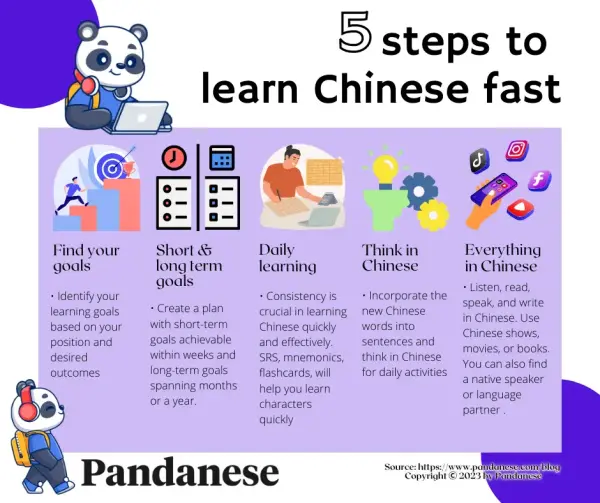
1. Start with the Basics: Pinyin and Tones
The foundation of learning Chinese begins with mastering Pinyin (the romanization system) and the four tones. Without these, pronunciation and comprehension will be difficult.
- Learn Pinyin thoroughly to understand how characters are pronounced.
- Practice the four tones repeatedly to avoid misunderstandings.
- Use apps like Pleco or HelloChinese for interactive tone drills.
2. Build a Strong Vocabulary with High-Frequency Words
Focusing on the most commonly used words and phrases accelerates practical communication.
See AlsoKickstart your learning with the Skritter Character Course- Prioritize learning high-frequency words (e.g., greetings, numbers, daily verbs).
- Use flashcards (Anki or Quizlet) for spaced repetition.
- Label objects in your environment with their Chinese names.
3. Immerse Yourself in Listening and Speaking
Regular exposure to spoken Chinese improves comprehension and fluency.
- Listen to Chinese podcasts or watch TV shows with subtitles.
- Practice speaking daily, even if just repeating dialogues from lessons.
- Use language exchange platforms like Tandem or HelloTalk.
4. Master Characters Through Radicals and Repetition
Learning Chinese characters efficiently requires understanding their structure.
- Study radicals (building blocks of characters) to recognize patterns.
- Write characters repeatedly using stroke order rules.
- Use apps like Skritter for character writing practice.
5. Consistent Practice and Real-Life Application
Consistency and practical use are key to retaining and advancing in Chinese.
- Set daily or weekly study goals to maintain progress.
- Engage in conversations with native speakers whenever possible.
- Join Chinese language communities or forums for motivation.
How long does it realistically take to learn Chinese?

Factors That Influence Learning Chinese
The time it takes to learn Chinese depends on several factors, including:
- Prior language experience: Knowing other tonal languages like Vietnamese or Thai can speed up the process.
- Study intensity: Full-time learners progress faster than those studying casually.
- Learning methods: Immersion programs yield quicker results compared to self-study.
Basic Proficiency: Survival Chinese
Achieving basic proficiency (e.g., greetings, simple questions) typically takes:
- 3–6 months with consistent daily practice.
- Focused vocabulary on high-frequency words is essential.
- Tones and pinyin mastery is critical early on.
Intermediate Level: Conversational Fluency
Reaching conversational fluency (discussing everyday topics) usually requires:
- 1–2 years of regular study and practice.
- Listening and speaking practice with native speakers.
- Character recognition of at least 1,000–1,500 characters.
Advanced Proficiency: Business or Academic Use
Attaining advanced proficiency (for work or academia) often demands:
- 3–5 years of dedicated effort.
- Specialized vocabulary related to your field.
- Reading and writing complex texts fluently.
Native-Like Mastery: Near-Fluent Level
Achieving near-native fluency can take:
- 5+ years of immersion and constant practice.
- Cultural nuances and idiomatic expressions.
- Continuous learning to refine accents and advanced grammar.
What is the hardest thing about learning Chinese?

The Complexity of Chinese Characters
One of the most challenging aspects of learning Chinese is mastering its writing system. Unlike alphabetic languages, Chinese uses logograms, where each character represents a word or a meaningful part of a word. This requires memorizing thousands of unique characters, each with its own stroke order and pronunciation. Key difficulties include:
- Stroke order: Characters must be written in a specific sequence, which can be unintuitive for beginners.
- Homophones: Many characters share the same pronunciation but have different meanings, making context crucial.
- Lack of phonetic clues: Unlike languages with alphabets, characters often don’t provide hints about their pronunciation.
Tonal Pronunciation
Another major hurdle is the tonal nature of Mandarin Chinese. The meaning of a word can change entirely based on its tone, making accurate pronunciation essential. Challenges include:
- Four main tones: Mandarin has four distinct tones (plus a neutral tone), each altering the meaning of a syllable.
- Tone shifts: Tones can change in specific grammatical or conversational contexts, adding complexity.
- Listening comprehension: Distinguishing between tones in rapid speech can be difficult for non-native speakers.
Grammar and Sentence Structure
While Chinese grammar is often considered simpler than that of many European languages, it still presents unique challenges, such as:
- No verb conjugation: Verbs don’t change form for tense, number, or gender, which can be confusing for learners used to inflection.
- Word order: Sentences follow a strict subject-verb-object structure, but nuances like topic-comment sentences can be tricky.
- Measure words: Every noun requires a specific measure word when quantified, adding an extra layer of memorization.
Cultural Context and Idioms
Chinese is deeply tied to its cultural context, making idioms and expressions particularly challenging. Key issues include:
- Chengyu: Four-character idioms often derive from ancient literature or history, requiring cultural knowledge to understand.
- Indirect communication: Politeness and context often override directness, which can confuse learners from more explicit cultures.
- Regional variations: Idioms and slang can differ significantly across dialects like Cantonese or Shanghainese.
Listening and Speaking Fluency
Achieving fluency in spoken Chinese demands consistent practice due to:
- Speed of native speech: Mandarin is often spoken quickly, with contractions and colloquialisms.
- Lack of cognates: Few words resemble those in English or other Indo-European languages, limiting familiar anchors.
- Dialectal diversity: Regional accents and dialects can make comprehension difficult even for advanced learners.
Frequently Asked Questions (FAQ)
Is it worth learning Chinese efficiently if I dislike the language?
Efficiency in learning Chinese can significantly reduce the time and effort required, even if you dislike the process. While personal enjoyment can motivate learning, a structured method ensures progress despite negative feelings. The key is to focus on practical outcomes, such as career opportunities or travel benefits, rather than emotional attachment to the language.
Can an efficient method make learning Chinese less unpleasant?
Using an efficient approach can streamline the learning process, minimizing frustration and making it more manageable. Techniques like spaced repetition or immersive apps can reduce the perceived difficulty. While it may not eliminate dislike entirely, it can transform the experience into a more tolerable and productive endeavor.
How do I stay motivated to learn Chinese if I hate it?
Motivation often stems from clear goals rather than enjoyment. Set specific objectives, like passing a proficiency test or communicating with Chinese-speaking colleagues. Tracking progress and rewarding milestones can also help maintain consistency, even if the process feels tedious.
Are there downsides to forcing myself to learn Chinese efficiently?
While efficiency can accelerate learning, forcing yourself may lead to burnout or resentment. Balance is crucial—combine effective techniques with breaks or complementary activities to avoid mental fatigue. If the dislike is overwhelming, reassessing whether learning Chinese is truly necessary may be worthwhile.
Leave a Reply
Related Posts